Moral Lessons from The Godfather Films

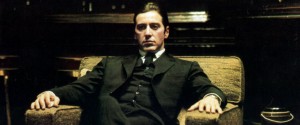
Last week I watched the first two Godfather films with one of my sons, and I was struck again at the brilliance of these movies, both as works of cinematic art and for their insightful themes about human nature, especially regarding moral psychology. So here I am going to highlight three of the more significant “lessons” from the Godfather I and II. I will assume that you have already seen both of these films. (If you haven’t done so, then in the name of aesthetic excellence, please do so as soon as possible!)

The first lesson is this: human beings are capable of rationalizing even the worst forms of wickedness. In the Godfather films, Vito, Michael and other members of the Corleone mafia family consistently refer to their illegal activities, including their most gruesome hits on various enemies, as “business.” This handy euphemism enables godfatherthem to see all of their murders as somehow legitimate. As bizarre and alien as this might seem to us as viewers, it is important to remember that this only differs in degree, not kind, from rationalizations of which we are all guilty. We may not glibly refer to murder as “business,” but we might reconceive our arrogance as “self-confidence,” minimize our inconsiderateness as “competitiveness,” or dismiss our temper tantrums as “venting stress.”

Another important reminder from the Godfather films is that even the best of us is vulnerable to corruption, given the right circumstances. At the start of the film, Vito’s son Michael is the only innocent adult male in the Corleone family. A recent war veteran, Michael is an honorable young man—brave, respectful, self-controlled, and principled. With such virtue, how could he ever be corrupted? Well, when your father is gunned down and you see your family suffering severely as a result, this can tempt anyone to revenge. And, of course, Michael succumbs in dramatic and protracted fashion. Perhaps the only reason you and I have not followed the path of Michael Corleone is—thank God—we’ve never been put in those same circumstances.

Thirdly, some of the most powerful temptations to evil are those which invite us to achieve good consequences. It was Michael’s love for his family and his sense of justice that prompted his outrage at the assassination attempt on his father. And it was this outrage which was the doorway to his corruption. Thus, while the usual temptations to power and wealth were insufficient to turn Michael to the dark side, a reasonable desire to see a wrong made right was sufficient. This serves as a powerful reminder that we are never so virtuous as to be out of the reach of evil, for even our strongest virtues can be leverage points for the most severe moral failures.

The story in the Godfather serves as a cautionary tale about the universal human potential for extreme wickedness. In many ways, the films realistically highlight a significant, if painfully dark, aspect of human nature and the need to guard ourselves in light of this. It is a theme succinctly expressed by the Lord himself in his famous remark to Cain—a man who, like Michael Corleone, faced temptation to murder and who likewise succumbed: “Sin is crouching at your door; it desires to have you. But you must rule over it” (Genesis 4:7). Amen and Amen.

Idealism and Christianity Book Series

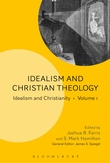
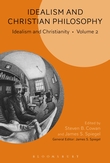
I am happy to announce the release of a two-volume book series entitled Idealism and Christianity, which I edited with the help of my colleagues Steve Cowan, Joshua Farris, and Mark Hamilton. The books are published by Bloomsbury Press and constitute what we hope will be the start of a renaissance of scholarly interest in metaphysical idealism. This is the thesis that mind is most real, and that the 9781628924022entire physical world essentially constitutes the thoughts of that wise and almighty mind—God.

The first volume in the series, entitled Idealism and Christian Theology, explores a variety of issues in theology, including Christology, the resurrection of Jesus, the doctrine of creation, and the knowledge of God. Contributors include Oliver Crisp, William Wainwright, and Keith Yandell. The second volume, Idealism and Christian Philosophy, features essays treating such issues as time, truth, perception, science, miracles, and the mind-body problem. Contributors include Doug Blount, Howard Robinson, Charles Taliaferro, and Keith Ward.

The heroes of the volumes are two 18th century thinkers: George Berkeley and Jonathan Edwards. Both of these 9781628924060great scholars regarded Idealism as amenable to a Christian perspective because it constitutes the most biblical and philosophically plausible way of conceptualizing the world. Idealism effectively addresses skeptical challenges to theism and it provides helpful resources for dealing with all sorts of knotty problems that have plagued philosophers and theologians for centuries.

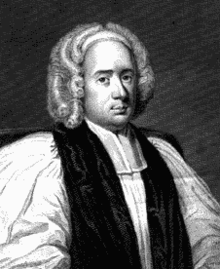
In addition to the scholarly benefits of Idealism, this perspective also has tremendous personal benefits and is a powerful boon to faith. This was the constant refrain of Bishop Berkeley who concluded his classic defense of Idealism by confessing that his purpose in writing was to “inspire my readers with a pious sense of the presence of God and . . . the better dispose them to reverence and embrace the salutary truths of the Gospel, which to know and to practice is the highest perfection of human nature.” Amen to that, good Bishop!

Super Bowl 50: A Contrast of Quarterbacks

I’ve never been so satisfied by the outcome of a game that did not feature one of my favorite teams.  Why?  Because this time I was rooting for a player—Peyton Manning, the so-called “Sheriff” of the NFL.  Yesterday was the perfect culmination of an 18-year NFL career, vividly illustrating that most beautiful of narrative arcs:  the exaltation of the humble.  Here is a guy who has always done it “the right way.”  Of course, we hear that phrase frequently regarding various athletes, but nowhere is it more aptly applied than in the case of Manning.

Unfortunately, Cam Newton illustrated the inverse principle:  the arrogant shall be humbled.  Many of us cringed when we saw his pre-game garb, featuring flashy gold “MVP” shoes, which brought to mind the biblical proverb, “Let someone else praise you, and not your own mouth; an outsider, and not your own lips” (Pr. 27:2).  Then there was Newton’s post-game presser.  Ugh.  (Sports columnist Bill Reiter nails it here, I think.) Newton is not a bad guy.  He’s just an immature 26-year-old who needs to master his emotions in public.  He’ll grow up and hopefully become a model of professionalism.  Twenty years from now, he’ll cringe at how he behaved yesterday—just like

Biography.com
Biography.com

we all cringe at how we behaved in our twenties.  Thankfully, most of us don’t have our youthful petulance broadcast for millions of people to see!

Newton’s lack of maturity and composure serves as a sharp contrast to Peyton Manning’s classy comportment which he’s displayed his entire career (with a few exceptions), including after tough Super Bowl losses.  During the Broncos’ playoff run this post-season, Manning’s humility has been especially evident, as he’s consistently (and correctly) insisted that Denver’s defense was leading the team, rather than his QB prowess.  But this, too, contributed to the beauty of the Manning career narrative.  How fitting that he would conclude his career (yes, I’m assuming he’s retiring) by winning a Super Bowl on the strength of his team’s defense when for so many years Manning dominated at QB on a Colts team with a weak defense (which possibly cost him an additional ring or two).

Also, it is interesting to note that Manning’s final pass of the game yesterday was a completion for a 2-point conversion.  If that turns out to be the final pass of his career, then this too is fitting.  Not only was it perfectly thrown, but the 2-point conversion is, appropriately, a play that provides an “added bonus” point.  And that’s precisely what Peyton Manning has been, not just for NFL football but the sports world generally, for the better part of two decades—a real bonus.

So kudos to the Broncos for winning it all.  But especially congratulations to the class of the NFL, Peyton Manning.  Hats off to you, Sheriff, as you ride off into the sunset of a stellar career.

On Butler’s Argument for Immortality

This semester I am teaching a course entitled “Philosophy of the Afterlife,” which covers a range of issues, including the concept of human immortality, near-death experiences, reincarnation, the doctrines of heaven, hell, and purgatory, and the prospect of achieving immortality via computer technology.  Since this is my first time to teach such a course, I thought it would be fun to post some of my thoughts along the way.  I begin with a critical reflection on one of Joseph Butler’s arguments for human immortality.

*****

In his 1736 book The Analogy of Religion, the English bishop and apologist Joseph Butler offers some arguments in defense of life after death.  His overarching aim with these arguments is not to prove that human beings are immortal but rather to show that we have no good reason to believe that our lives end with the death of our earthly bodies.  Here I will explain and critically assess one of his arguments.

from Wikipedia
from Wikipedia

Butler asks us to “consider what the analogy of nature” might suggest to us regarding what death truly entails.  And he observes that throughout nature we find immense variety, constant change and “degrees of life and perception” among living things.  And in each individual human life we find a vast transformation from our lives in the womb to adulthood.  Thus, Butler concludes, “that we are to exist hereafter in a state as different (suppose) from our present as this is from our former is but according to the analogy of nature.”

Furthermore, Butler argues, there is no evidence that death brings complete extinction of the self.  What we do observe is merely “the dissolution of the flesh, skin, and bones,” but “these effects do in no wise appear to imply the destruction of the living agent.”  Such physical decay indeed “destroys the perceptible proof which we had before their death of their being possessed of living powers, but does not appear to afford the least reason to believe they are then, or by that event, deprived of them.”  In other words, when person dies, the destruction of her body only eliminates positive evidence that she is still alive.  But it does not prove she is no longer alive.  This is an important distinction.  Lack of evidence for X does not necessarily constitute evidence for not-X.

In this way, Butler defends what I will call the “survival thesis”—the notion that human beings survive death in the sense that their conscious lives continue somehow despite the destruction of their physical bodies.  So what are we to make of his claims?  While Butler’s argument is carefully nuanced, aiming just to show that we have no good reason to reject the survival thesis, as opposed to positively arguing for that thesis, some counter-arguments might rebut his defense.

First, one might argue that Butler’s analogy from nature has been rendered irrelevant by the advance of science.  As many naturalists have pointed out, neurophysiology reveals a much more specified analogy that points in the direction of extinction of the self.  As a person develops from infancy to adulthood and then to old age, her cognitive capacities correspond entirely to her brain functionality.  As brain function deteriorates, so does one’s mental function.  And where there is serious damage to the cerebral cortex, there is likewise damage or even complete elimination of the cognitive operations for which that part of the brain is responsible.  What this suggests is that with the complete destruction of the brain there will likewise result complete cessation of cognitive function, and this is tantamount to extinction of the person.

Second, one might challenge—as again many naturalists have—Butler’s assumption that the burden of proof is on the naturalist to show that the survival thesis is false.  Why make this assumption when arguably there is no independent philosophical or scientific evidence to suggest that the survival thesis is true?  Presumably, Butler helped himself to this assumption because at the time and place of his writing—early 18th century Europe—belief in life after death was far more widely affirmed among scholars than it is today in the West.  So this presupposition regarding evidential burden was not controversial for his readers.  Things have changed dramatically during the intervening 280 years, however.  These days most Western scholars are religious skeptics, and a large number are bona fide naturalists.  Accordingly, among scholars today the burden of proof regarding the survival thesis seems to rest squarely on the shoulders of those who affirm it.  One wonders how Butler’s approach to the issue would be different were he writing on the subject today.

The Fates of Jesus Killers

It is interesting to note the fates of those who would destroy Jesus Christ. These included Herod the Great, Judas Iscariot, and Pontius Pilate.

Herod the Great was the Roman king of Judea who reigned from 37 B.C. to 4 or 1 B.C.  He was so brutally ambitious that he even killed his own wife and children.  But his most notorious act was the so-called “Massacre of the Innocents” in Bethlehem and its vicinity, ordered by Herod in an attempt to destroy Jesus in his infancy.  By the time the order was carried out, however, Joseph had been warned

from Wikipedia
from Wikipedia

in a dream to leave the area, which, along with Mary and Jesus, he did, foiling Herod’s plan.

It was not long after this that Herod experienced what the ancient historian Eusebius calls a “terrible end”:

He had an overpowering desire for food, which it was impossible to satisfy, ulceration of the intestines with agonizing pains in the lower bowel, and a clammy transparent humour covering the feet.  The abdomen was in the same miserable state, and in the genitals mortification set in, breeding worms.  Breathing was constricted and only possible when sitting upright, and it was most offensive because of the heavy stench and feverish respiration.  He suffered in every part convulsions that were unbearably severe.  (Ecclesiastical History, 1.8)

A maggot infestation of the scrotum?  Ugh.  No wonder Herod went on to attempt suicide.  But as the Jewish historian Josephus tells us, Herod was prevented from doing so by his cousin.  In any case, Herod’s demise soon followed his torturous illness.

Fast-forward about 33 years, and we find Judas Iscariot attempting to waylay Jesus.  Unlike Herod, Judas succeeds.  For thirty silver coins, Judas betrays Jesus into the hands of the Romans, who would subsequently crucify him.  The Gospel of Matthew tells us that Judas felt extreme remorse for this, saying “I have sinned for I have betrayed innocent blood.”  Matthew then notes that “Judas threw the money into the temple and left.  Then he went away and hanged himself” (Mt. 27:4-5).  According to the book of Acts, Judas first

from Wikipedia
from Wikipedia

purchased a field with some of that money.  Presumably, that’s where he hung himself, and where eventually “he fell headlong and all his intestines spilled out” (Acts 1:18).

It was Pontius Pilate, prefect of Judea, who presided over the trial of Jesus.  Seemingly reluctant to condemn Jesus, Pilate declared, “I find no basis for a charge against this man” (Lk. 23:4).  Nevertheless, he eventually succumbed to the pressure of the crowd and Jewish leaders, sentencing Jesus to be crucified.  Still, he insisted, I am innocent of this man’s blood” (Mt. 27:24) while washing his hands in front of the crowd.

So what became of the duplicitous Pilate?  Apparently he met the same fate as Judas—suicide.  Eusebius explains that, Pilate “was involved in such calamities that he was forced to become his own executioner and to punish himself with his own hand.” (Ecclesiastical History, 2.7)

Herod the Great, Judas Iscariot, and Pontius Pilate—three (would-be or actual) Jesus killers.  It is a macabre coincidence—whether or not mere coincidence—that each died the way he did.  Herod attempted to kill Jesus but failed, though his attempt brought much misery.  Likewise, he attempted to kill himself but failed, and his failure extended his own extreme misery.  Iscariot and Pilate, on the other hand, both succeeded in putting Jesus to death.  Likewise, they both also succeeded in putting themselves to death.

Talk about poetic justice.  To condemn the Source of Life is to condemn one’s own life.  To attack God is to attack oneself at the most foundational level.

The Best and Worst of 2015

It’s been another exciting year, and we want to thank you all for reading and, if applicable, posting comments on our blog. Once again, we would like to close out the year with some summary remarks about good and bad stuff related to film, music, books, sports, food, and family.

Best Film Experiences:

Jim: This was a big year in film, and I was fortunate to catch a lot of good ones, both at the theater and on DVD. A highlight in the latter category was watching Richard Linklater’s amazing Boyhood twice in as many days. All of the superlatives critics have laid on this one—“masterpiece,” “extraordinary,” “historic cinematic achievement”—are accurate. If you haven’t seen it, check it out. Another highlight was the new Star Wars film. With The Force Awakens, J. J. Abrams has saved the Star Wars legacy. He managed to achieve the same organic feel, character-centric storytelling, and campy wit as the originals, all while advancing a narrative that will hopefully keep us captivated for years, if not decades, to come. I also enjoyed Inside Out, which deserves accolades for its unique premise as well as its fine execution. Another major highlight was M. Night Shyamalan’s The Visit, which proved that, after a few stinkers, he can still make a great thriller.

Amy: It feels strange to say I am having a hard time remembering good movie experiences this year. While I loved The Visit as a film, the audience Bailey and I shared the theater with nearly ruined it for me. I wasn’t blown away by Star Wars. I mostly enjoyed things on the smaller screen. The Man in the High Castle for serious-minded alternate reality and Tommy and Tuppence for pure fun. There were some good PBS series this summer and I am holding my breath in hopes that Downton Abbey and Sherlock won’t disappoint this winter.

Jim’s Best Musical Experiences of the Year: The year started slowly but finished strong in terms of discoveries of good artists or new albums from artists I was already into. In the latter category, I finally got Manchester Orchestra’s Cope, which is even more addictive than their albums usually are for me, which is saying a lot. Also, after many recommendations from friends, I picked up an Arctic Monkeys album—Whatever People Say I Am, That’s What I’m Not.  I was not disappointed. And I’ve been getting into the new albums by Alabama Shakes (Sound and Color) and Twenty One Pilots (Blurryface), as well as several albums by Cage the Elephant, which is my most exciting musical discovery in years. A virtue that all of these bands have in common is that they (or, anyway, their main songwriters) have something significant to say. That’s refreshing in an era of predominantly mindless musical fluff.

Amy’s Best Food Experiences of the Year: This year most of my food experiences have been in my own kitchen, the remodeling of which was a major highlight. I have done some experimenting, catered a friend’s wedding and decompressed with some serious baking. We also hosted our first Thanksgiving meal at home and though my rolls were undercooked and I was not impressed with the addition of cinnamon to my usually yummy pecan pie, filling our table with beloved faces and laughter was quite satisfying.

Jim’s Favorite Sports Moments of the Year: I am sincerely hoping that my favorite sports moment of 2015 is yet to come.  This would be Michigan State defeating Alabama in the Citrus Bowl tonight, which is also the NCAA football playoff semi-final. We’ll see. Go Green, roll over the Tide! But if that doesn’t happen, then I would say that watching the Cubs make it all the way to the National League championship series—just a few wins shy of the World Series and thus breaking the “goat curse”—was the 2015 sports highlight for me.

Amy’s Favorite Sports Moments of the Year: Hopefully, Jim will forgive me for this one, but my favorite moment was randomly choosing to represent the Spartans while Jim cheered on the Wolverines in the Michigan intrastate rivalry game and then watching their unbelievable last second win. I felt slightly guilty cheering in his stunned face, but since he is rooting for MSU against Alabama, he must have gotten over it.

Jim’s Most Disappointing Sports Moments of the Year:  I’m not even going to comment on that tragicomic finish in the UM/MSU game… This NFL season has been chock full of disappointments, as none of my three favorite teams—the Colts, Lions, and Saints—will make it to the playoffs.  (Yes, three favorite teams—Amy calls me a promiscuous fan, but I own it proudly). And, regarding baseball, it was pretty deflating to see the Cubs bow out to the New York Mets in the NLCS. However, this made it all the sweeter to see the Kansas City Royals beat them in the World Series.

Amy’s Most Disappointing Sports Moment of the Year: Every year, I tell myself that a true Cubs fan knows they are cursed, has no hope, but cheers for them anyway. Still, hope will find a way to creep in and whisper sweet nothings in my ear only to give way to disappointment…again. This year hurt.

Good and Bad Reads of the Year:

Jim:  As usual, my reading this year was almost exclusively non-fiction, and primarily scholarly stuff, especially having to do with ethics and philosophy of religion. Robert Reilly’s Making Gay Okay: How Rationalizing Homosexual Behavior is Changing Everything (Ignatius, 2014) is one of the best books dealing with ethics, not just sexual issues, that I’ve read in years. Reilly takes a natural law approach to the issue, and the book is replete with bold observations and profound insights. I highly recommend this book to anyone interested in the LGBT issue, whatever one’s perspective might be. My most disappointing read of the year was Thomas Jay Oord’s The Uncontrolling Love of God: An Open and Relational Account of Providence (InterVarsity, 2015).  This book has been touted by some as a step forward for open theism. It is anything but that, as the author’s thesis (that God is essentially limited both in terms of knowledge and power) is problematic in itself. But he also commits glaring mistakes along the way in making his argument (if one can call it that). Steer clear of this one, folks.

Amy: So many good reads this year it’s hard to know where to start. The Wright Brothers by David McCullough. The Sisters Brothers by Patrick Dewitt. The Good Earth by Pearl Buck. Ghost Boy by Martin Pistorius. The Devil in the White City by Erik Larson. Half Broke Horses by Jeannette Walls. Most of the things that I read and didn’t like, I wasn’t really expecting to like in first place. Some disappointing mysteries and less than stellar fiction, but overall this has been a great year of reading for me. Check out my Good Reads page or Book Blurbs here on Wisdom and Folly to see more reviews.

Best 2015 Family Memories:

Amy: The kids and I had some good outings this year. Maggie, Andrew and I visited Dayton, Ohio and took in some Wright Brothers sites as well as Wright Patterson Air Force Museum. We also went to the Dunes in Michigan in the Fall and had a great day climbing in the sand and watching Penny bark at the waves. Teaching Bailey to drive has been memorable, to say the least. Having my niece Rachel living close by as a freshman at Taylor has been pure joy.

Jim: I had lots of good sports (baseball, soccer, and basketball) memories with the boys.  And it was fun to see Maggie become an obsessive Beatles fan. Growing to love our new family member—our standard poodle named Penelope Lane Spiegel (or “Penny Lane,” for short—get it?), whom we adopted a little over a year ago—would probably top the list for 2015. And hiking the Smokies with Amy, the kids and my in-laws was another family highlight.

Best Kids’ Quotes of the Year

As usual, most of the best quotes from our kids this year come from our poet-comedian-dreamer daughter, Maggie (11).  But Andrew (9) got off a few good ones as well:

  • Maggie: “If I were God, the world wouldn’t be nearly so complicated.”
  • Andrew: “Make-up is for people who can’t accept the truth about how they look.”
  • Maggie: “If animals could talk, the world would have a lot more good stories.”
  • Maggie: “This is my favorite hair on my entire head.”
  • Andrew: “Everything that has to do with tomatoes is bad.”
  • Maggie: “A poor man’s wisdom is a rich man’s folly…I’m not sure that that means, but it sound right.”
  • Maggie: “Punching someone in the face is on my bucket list. If I have to, I’ll punch the nurse at my death bed.”

New Year’s Resolutions:

Amy: Not to sweat the small stuff and to keep showing up every day. Maggie and I are embarking on a Bible reading plan this year. Getting through five months with Bailey a continent away (as he attends school in La Paz, Bolivia this Spring) feels like quite the hill to climb so I suppose learning to entrust my kids ever further into God’s plan for their future should be among my loftier goals.

Jim:  Last year my resolution was to read half as much as my wife did this year, which would have meant reading 25 books. I didn’t quite pull that off. Okay, I didn’t even come close. So next year, since it is 2016, I resolve to read at least 16% as many books as Amy. I think I can pull that off, then perhaps add a percentage point each year. By the time the goal becomes unrealistic again, I’ll be able to blame my failure on senility. Yeah, that’s the ticket.

Happy 2016 everyone!

On Lying to Children about Santa Claus

Have you seen this story about a ten-year-old girl, Belle Adams, whose belief in Santa Claus was dashed by her mother?  My wife texted me little Belle’s letter with the comment that the story “confirms one of our parenting decisions.”  That decision, which we made early on (when our oldest son, Bailey, was a toddler), was that we would not lie to our kids about Santa Claus but rather tell them the story while also informing them that it is a popular Western myth.  And to reinforce the fictional nature of it all, I would sometimes throw in extra narrative flourishes, such as that: 1) Santa is a chain-smoker and 2) Santa cheats at golf.  (These additions were not themselves lies, of course, since we were admittedly dealing in the realm of fiction.  When trafficking in cockamamie myths, why not augment along the way?)

Seriously, though, our reservations about participating in the Santa deception (despite the fact that some good friends of ours have done this) boiled down to a few fundamental concerns.  First, it constitutes a lie to one’s kids.  From the start, Amy and I have been committed to being truthful and as trustworthy as possible with our kids, whether regarding ole St. Nicholas or the weightier issues of life.  Being a systematic lie, the Santa deception certainly defies commitment to truthfulness and, when that lie is exposed, parents’ trustworthiness is necessarily undermined.  Little Belle Adams’ furious letter to her parents demonstrates just how serious the impact of this can be.  We might be tempted to think, “Oh, that’s just an immediate reaction; she’ll get over it.”  But, as the testimony of several adults I know confirms, in some cases the recovery is not so swift, and anyway a child’s “getting over it” emotionally is no guarantee that her trust in her parents is not damaged to some degree.  And that is a serious thing, no matter how much fun and silliness might be involved in perpetuating the deception.

Secondly, the Santa deception could set a child up for religious skepticism.  Consider the mythical attributes of the portly fictional elf.  He is omnipotent (as implied by the notion that he can travel at the speed of light and flawlessly deliver billions of presents to children worldwide in just a few hours); he is omniscient (“he knows when you are sleeping; he knows when you’re awake”); and he is omnibenevolent (he’s a moral judge, distinguishing the “naughty” and “nice” —“he knows when you’ve been bad or good, so be good for goodness sake!”).  Notice that these are all essentially divine attributes.  So when a child is eventually shown that her “faith” in Santa was misplaced, an unfortunate precedent is set: when it comes to testimonies about a wondrously wise, powerful, and loving being, don’t believe it, even if the reports come from the authorities in your life that you trust most—your own parents.  Such stories are just too good to be true, a set-up for disappointment.  As they say, fool me once, shame on you.  Fool me twice, shame on me.

I’m not saying that participating in the Santa deception will necessarily turn your kids into agnostics or even incline them at all in the direction of religious skepticism.  But, again, I’ve had adults tell me that their enlightenment about the Santa story did prompt them to consciously entertain doubts about God for just this reason.  And this, too, is a serious thing, however much fun parents and their children might have along the way.

But perhaps, after all, I am the one who is taking Santa Claus too seriously!  I mean, come on—it’s just a fun story that adds to the magic of the Christmas holiday, right?  To that I say:  Is the real Christmas story not magical enough?  Who needs a goofy cultural myth to add to the joy and wonder of the Lord of the universe taking on human flesh?  What good is a remote bearded elf in a funny suit visiting us once yearly when we have an omnipresent Lord who attends to our every prayer?  Who needs an imperfect judge to dole out toys or lumps of coal, depending on one’s degree of goodness, when the real Judge of the world is also the way of atonement, the one who suffered, died, and rose again on our behalf?  In short, why pollute the greatest story ever told with the most kitschy tale ever told?  So, in the final analysis, perhaps the best reason to scuttle the whole Santa story (at least as anything more than a cultural myth) is an aesthetic one:  to emphasize St. Nick over the baby Jesus is to exchange a profoundly beautiful narrative for an insipid one.  Santa Claus might not be a chain-smoker or cheater at golf, but he’s an incomparably less interesting character than the Christ child.

2015 Ethics Bowl Regional Champs

This past Saturday, November 21, the Taylor University Ethics Bowl team won the Central States regional championship for the 5th time in the history of the program.

Photo by Jim Garringer

Twenty-six teams from fifteen colleges and universities participated in this year’s Central States regional competition, which once again was held at Marian University in Indianapolis. The other schools involved were Belmont University, DePauw University, Illinois Wesleyan University (two teams), Indiana University (two teams), IUPUI-Fort Wayne, Marian University, Millikin University (three teams), Mount St. Joseph University (two teams), Northern Kentucky University, Ohio Northern University, Slippery Rock University, St. Mary of the Woods College, University of Arkansas (two teams), University of Southern Indiana, Xavier University, and Youngstown State University.

As usual Taylor entered two teams, and the rosters were as follows:

Team I:

  • Veronica Toth (Senior, English Writing)
  • Blair Hedges (Junior, Political Science)
  • Jackson Wilcox (Sophomore, Accounting)
  • Sarah Manko (Freshman, Exercise Science)
  • Caleb Holleman (Freshman, Math and Philosophy)
  • Loyal Juraschek (Sophomore, Philosophy)

Team II:

  • Kasey Leander (Senior, History and Political Science, Philosophy, & Economics)
  • Sam Moore (Junior, Philosophy and Biblical Studies)
  • Gabriel Harder (Freshman, Philosophy)
  • Chin Ai Oh (Sophomore, Political Science, Philosophy, & Economics)
  • Bo Thomas (Freshman, History and Philosophy)
  • Gloria Talbot (Sophomore, International Business Systems)

The top finishing teams qualify for the national tournament. At the competition each team competes against three other teams, and our teams had a combined record of six wins and no losses:

  • TU team #1 defeated Marian University (149-131), DePauw University (158-149), and Indiana University II (163-141)
  • TU team #2 defeated Univ. of Arkansas II (160-136), Ohio Northern Univ. (158-136), and Mt. St. Joseph Univ. I (149-139)

Taylor now has a combined 18-match winning streak, dating back to nationals earlier this year and regionals last year.

As is typical of Ethics Bowl competitions, very timely issues were debated in the various matches. These included the following:

  • Do religious freedom laws (protecting, say, a baker’s right not to make a cake for a same-sex wedding) properly balance constitutional rights?
  • Is the “Law Enforcement Officers Bill of Rights” (providing that law officers can’t be forced to make a statement within ten days of an incident) morally justifiable?
  • Does the American Freedom Defense Initiative (which ran the “Muhammad cartoon contest”) practice appropriate free speech or unacceptable intolerance?
  • Is the composting of human corpses, as advocated by the Urban Death Project (for environmental reasons) an acceptable way of disposing of the dead?
  • Is the Indian Child Welfare Act (mandating that social services place displaced Native American children with tribal relatives) morally appropriate?

These were just five of fifteen cases that all of the teams had to prepare to address. Other cases pertained to issues as wide ranging as the ethics of physicians’ prescribing hard narcotics to their patients, sexism in video games, a New Zealand species conservation case, special taxes on parents who refuse to vaccinate their children, the ethics of human egg freezing to delay motherhood, and the ethics of forcing parents to have their young teenager undergo chemotherapy. You can find a complete list of cases as well the competition rules and guidelines here.

In the regional competitions (unlike nationals) wins and losses do not impact teams’ overall scores. Rankings are determined entirely by scores awarded by judges. The top five at the conclusion of the day were as follows:

  1. Taylor University I
  2. St. Mary of the Woods College
  3. Illinois Wesleyan University I
  4. Indiana University I
  5. Taylor University II

The national Ethics Bowl competition is scheduled for February 21, 2016 and will be held at the Hyatt Regency Hotel in Reston, Virginia (near Washington, DC).  A total of 36 teams will participate, and Taylor will be striving to defend its national title.

Thoughts on Divine Wrath–Part 3

Another distinction regarding forms of divine wrath is that between what may be called natural and special wrath. By “special” divine wrath I mean any case where the wrathful event is somehow extraordinary, unique, or out of step with the usual course of nature or human events, though not necessarily a violation of the laws of nature. Thus, the cases of the worldwide flood, Sodom and Gomorrah, the Egyptian plagues, Elisha and the bears, and the sudden deaths of Ananias and Sapphira would all qualify as special divine wrath. These are all strikingly special events in that there was nothing routine or predictable about them. Each occurred, as it were, “out of the blue” and, thus, was more easily identified as being divinely orchestrated.

In contrast, what I am calling “natural” wrath does concern events that are in some way ordinary, routine, and predictable, because their natural causes are—at least at this point in scientific history—easily traced and analyzed. However, they may have just as much of a corrective and deterrent effect on those involved as cases of special wrath. They are the sorts of cases to which the biblical proverb applies which says, “there is a way that appears to be right but in the end it leads to death” (Pr. 14:12 and Pr. 16:25) and to which the apostle Paul refers when he declares, “a man reaps what he sows” (Gal. 6:7; see also 2 Cor. 9:6-7). The basic idea is that if you engage in particular kinds of bad behaviors then certain negative consequences will follow. In addition to these general biblical statements we find specific illustrations in Scripture, such as where the deadly effects of adultery are guaranteed in this passage: “For a prostitute can be had for a loaf of bread, but another man’s wife preys on your very life.  Can a man scoop fire into his lap without his clothes being burned? Can a man walk on hot coals without his feet being scorched?” (Pr. 6:26-28).

This is what we might think of as a divinely ordained moral law of reciprocity, in the sense that certain forms of conduct bring very unpleasant consequences. Some extra-biblical examples might include the negative effects—physical, psychological, and relational—of alcohol abuse and the tendency of sexual promiscuity to result in venereal disease or other STDs as well as emotional and relational distress.

This distinction between natural and special wrath is potentially controversial. This is because, depending upon one’s view of divine providence, one will be more or less inclined to accept the natural moral law of reciprocity as featuring enough specific divine intent for the pain and suffering that follows from bad behaviors to properly qualify as divine wrath. (For more on the providence debate, see my book The Benefits of Providence.) Those who hold a “high” view of providence which affirms God’s meticulous governance of all things will no doubt be more amenable to this distinction.

Thoughts on Divine Wrath (part 2): Direct and Indirect Wrath

In my first post about divine wrath (Sept. 11, 2015) I suggested that God’s chastisement of people, though painful and often even involving death, always serves a redemptive purpose, such as rebuke, discipline, and purification. Such ends are valuable for prodding people to greater virtue. And since to love is to be interested in a person’s growth in virtue, it makes sense to say that divine wrath is consistent with perfect love.

Now there are some distinctions to be made that are potentially helpful in analyzing and categorizing particular instances of chastisement.  Thus, we may distinguish between direct and indirect wrath. By “direct” divine wrath I mean those cases where God immediately causes death or suffering, whereas in cases of “indirect” wrath God uses some other agency, whether human, animal, or angelic. Biblical examples of each of these categories are plentiful. Beginning with instances of indirect wrath, we find plenty of wrathful deployments of human beings, such as God’s use of the Israelite army to bring “vengeance” on the Midianites in Numbers 31. Similar instances are to be found throughout the Old Testament and God explicitly declares as much in such passages as Isaiah 10:5 (“Woe to the Assyrian, the rod of my anger, in whose hand is the club of my wrath!”) and Ezekiel 25:14 (“’I will take vengeance on Edom by the hand of my people Israel, and they will deal with Edom in accordance with my anger and my wrath; they will know my vengeance,’ declares the Sovereign LORD.”)

As for divine use of animals to execute wrath, here is one memorable example:

From there Elisha went up to Bethel. As he was walking along the road, some boys came out of the town and jeered at him. “Get out of here, baldy!” they said. “Get out of here, baldy!” He turned around, looked at them and called down a curse on them in the name of the Lord. Then two bears came out of the woods and mauled forty-two of the boys. (2 Kings 2:23-24)

Another case is where the Lord struck the Israelites with venomous snakes in response to their grumbling and complaining during their desert wanderings (see Numbers 21:6).

And as for third category of indirect wrath, where God uses angelic beings to execute his wrath, biblical instances include Exodus 33:2 where God  promises to “send an angel before you and drive out the Canaanites, Amorites, Hittites, Perizzites, Hivites and Jebusites” and 2 Sam. 24:15-17, where the angel of the Lord strikes the Israelites.

Possibly the destruction of Sodom and Gomorrah is an instance of divine deputizing of angels, as regarding the city of Sodom the angels declared to Lot, “we are going to destroy this place” (Gen. 19:13). There are also references to God’s use of a “destroying angel” to execute judgment in such passages as 1 Chron. 21:15, Ps. 78:49, and 1 Cor. 10:10.

As for cases of direct divine wrath, apparent examples include the worldwide flood (Gen. 6-9), the Egyptian plagues (Exod. 7-12), the plague on Israel because of their golden calf idol (Exod. 32:35), and the case of Ananias and Sapphira (Acts 5:1-11). I say guardedly that these are “apparent” cases of direct divine wrath because it is possible that God deployed some deputy agency as well to bring these chastisements, though the texts do not inform us of this. This possibility seems evident in the fact that many of the aforementioned cases of indirect wrath are referred to elsewhere in Scripture (and among extra-biblical writers) simply as cases of divine chastisement without any mention of the secondary finite agencies involved. If it makes sense to refer to these cases in such terms, then it is conceivable that all divine wrath is similarly executed through secondary causes.