
The Ultimate Mystery

A recent episode of the Joe Rogan Experience, featuring a conversation with Rizwan Virk, deals with the possibility (or likelihood) that we are living in something like a computer generated reality. Of course, what this really points to is the age-old notion that the world is the product of some ultimate consciousness, that is, God. Rogan, like all of us, understands the significance of this, which explains why he is uncharacteristically silent through much of the conversation. We are talking about the ultimate question here.

There are really just two fundamental worldviews: Either all comes from Mind or all comes from matter. There are many versions of each, but these are ultimately the two options. It’s really that simple. Those who take the latter view are materialists (or naturalists or physicalists, depending on one’s preferred nomenclature). They are also empiricists and typically regard science as the most reliable or perhaps only way to secure knowledge. Materialists believe in minds and consciousness, of course. They just believe that it is reducible to, or an epiphenomon of, physical reality

Those who take the Mind-most-real view reject strong empiricism, affirming that reason or mystical-religious experiences provide evidence for the reality of a supernatural realm. They do not deny the reality of the physical world but simply deny that it is the ultimate reality. They maintain that this material realm is in some way the product of the workings of an ultimate consciousness. Those among them who maintain that this Mind at the bottom of things is personal are generally called theists. For many such theists, such as Socrates, Plato, and Aristotle, among others, theirs is a purely philosophical conviction. Most others subscribe to a theological tradition, such as Judaism, Christianity, or Islam.
Whichever view one takes, the conviction tends to be held very firmly, often dogmatically. This is despite the fact that whichever view one holds there are serious metaphysical problems and ultimate mysteries that defy ready explanation. This, I suppose, is symptomatic of human arrogance or insecurity or both. Plaguing both views is the ultimate metaphysical question: How did all of this get here? And even more basic is Heidegger’s famous question, Why is there something rather than nothing? (Ways of addressing this question are boundless. For a recent sampling, check out these, most of which miss the point or involve a confusion of some kind.)

Then there are the problems unique to each perspective. For the materialist, the most fundamental problem pertains to how consciousness could emerge from inert matter. The options here are numerous, including philosophical behaviorism, strict identity theory, functionalism, and property dualism. But they all face serious problems, such as that of 1) explaining the particulars of consciousness, including phenomenal qualia, subjectivity, and enduring selfhood, 2) accounting for human freedom, 3) accounting for moral truth, and 4) accounting for rationality—non-natural things like reasons, logic, and evidence influencing the world. Then there are the perennial problems of cosmology (explaining the origin of the universe and cosmic fine-tuning) as well as all sorts of empirical data pointing to the supernatural (e.g., mystical experiences, NDEs, OBEs, etc.).

Materialists may balk and minimize these problems all they want. It’s simple denial. Any self-respecting materialist will at least admit that these are genuinely significant problems with their perspective. It is no wonder that, after a half century of concerted atheism Antony Flew flipped from a materialist view to a Mind-most-real view (see his There is a God) and that the inveterate materialist Thomas Nagel has admitted that materialism is bankrupt and in serious need of overhaul, if not outright rejection (see his Mind and Cosmos).

But Mind-most-real proponents have no grounds to be cocky. They also face serious metaphysical problems. In addition to the ultimate metaphysical question—why is there something rather than nothing?—there are many other thorny questions: How could the ultimate Mind create something so radically different as physical matter? What is the substance of this Mind? How does this being causally act on the world? How much of the cosmos does the Mind control? Does this Mind have a moral nature? If so, then why evil—and why so much evil? Has the Mind communicated to humans? If so, which, if any, of the purported supernatural revelations is genuine? If one of them is, how do we resolve the countless interpretive problems?

As a Mind-most-real advocate, I am happy to be relieved of the problems plaguing the materialist view. But I naturally am interested in many of these other problems. However, as a Berkeleyan immaterialist, I think many of these admit of ready solutions. For on the Berkeleyan idealist view (which the great American theologian Jonathan Edwards essentially affirmed as well), the physical world just is ideas. And since minds naturally traffic in ideas, God’s production and causal influence on the world is not mysterious at all. (For in-depth scholarly discussions of a wide range of issues pertaining to idealism and Christianity, look here and here. And here is a London Lyceum interview with me on topic.)

But there is one particular problem unique to the Mind-Most-Real view that is especially deep and intractable: How does a Mind make another mind? In the theistic traditions, we learn that the primordial Mind (God) created all things. In the Christian tradition, at least since Augustine, we affirm that God created ex nihilo. So how did this ultimate center of consciousness—God—bring into existence minds like yours and mine ex nihilo? How does a subjective consciousness endow another thing/substance with subjectivity? And what exactly is the substance of each of our minds? How are our minds like and unlike the ultimate Mind?

One plausible philosophical answer is theologically problematic, at least from the perspective of Christian orthodoxy: The Mind did not create other minds ex nihilo but rather finite minds are aspects of the primordial Mind. This solution isn’t necessarily pantheistic, but it is panentheistic. (For an interesting discussion of this possibility, see Jordan Wessling’s chapter in this aforementioned book.)

As a convinced theist who believes that Christianity is the most reasonable version of theism, the question of ultimate reality is settled: Mind is most real. The likes of Antony Flew, Thomas Nagel, and Joe Rogan have recently been waking up to this fact, even if they aren’t ready to call themselves theists (or even, in the case of Nagel, a non-materialist). For me, then, the remaining ultimate mystery is just this: How does the Mind make other minds? This will be one of the first questions I ask that Mind when I get to the other side.
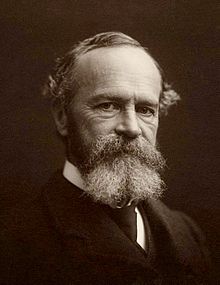
William James on Human Immortality

William James was one of the leading American pragmatists of the late 19th and early 20th centuries. Although highly empiricistic in his bent, his openness and increasing sympathy with belief in a transcendent reality is remarkable. Especially through his research for his Gifford Lectures on religious experience, which culminated in the classic text The Varieties of Religious Experience, James’s views seemed to shift from openness to bona fide belief.

In his 1898 essay “Human Immortality” James argues that even if we assume the brain-dependence of the mind, this does not rule out the possibility of life after death. James begins with the assumption that “thought is a function of the brain” and so asks, “Does this doctrine logically compel us to disbelieve in immortality?” 220px-William_James_b1842cHe answers negatively, and all he needs to do to support his thesis is offer a reasonable way in which such survival is possible even given this assumption. This would show that the functional dependence of the mind on the body “has in strict logic no deterrent power” when it comes to belief in immortality.

“The fatal conclusion of the physiologist,” says James “flows from his assuming off-hand another kind of functional dependence, and treating it as the only imaginable kind.” The truth is that there are several kinds of functional dependence, only one of which is the productive function that materialists assume about the brain-mind.

James asks us to consider two other kinds of functional dependence: (1) a releasing function, as when an obstacle is removed from the bow, allowing the bow to bounce back and, thus, the arrow to be shot away or when a plug is removed from a drain, allowing water to flow into the pipe and (2) a transmissive function, as when a prism or refracting lens allows light to pass through while determining the color, path, and shape of that light as it proceeds. In both of these cases there is functional dependence, but in neither case is the dependence productive.

So the question is whether the functional dependence of the mind on the brain must be productive. James says no, “we are entitled also to consider permissive or transmissive function. And this is what the ordinary psycho-physiologist leaves out of his account.” So James is proposing the possibility that the brain does not produce but rather transmits or releases mental activity, in the sense that there is a realm of consciousness beyond this physical realm—whether a single, monolithic consciousness, as conceived by pantheists or innumerable individual consciousnesses as conceived in orthodox Christian and Jewish traditions—which breaks into the physical realm via our brains.

James writes, “Consciousness in this process does not have to be generated de novo in a vast number of places. It exists already, behind the scenes, coeval with the world. The transmission theory not only avoids in this way multiplying miracles, but it put itself in touch with general idealistic philosophy better than the production-theory does. It should always be reckoned a good thing when science and philosophy thus meet.” As a Berkeleyan idealist myself, I am especially pleased to see James make this important observation. He continues: “On the production-theory one does not see from what sensation such odd bits of knowledge are produced. On the transmission-theory, they don’t have to be ‘produced,’—they exist ready-made in the transcendental world, and all that is needed is an abnormal lowering of the brain-threshold to let them through.” So, on this view, death doesn’t bring destruction of the person. Rather, “all that can remain after the brain expires is the larger consciousness itself as such” whether conceived in a pantheistic or traditionally theistic way.

I find James’ perspective here to be refreshing for a couple of reasons. In the first place, the theory he proposes here is quite plausible—it has significant explanatory power, and it avoids many philosophical problems related to the two major theories of mind—physicalism and substance dualism. Secondly, James’ approach is refreshing because of his open-mindedness and theoretical adventurousness. James’s views evolved throughout his philosophical career, and as he explored issues in the area of religious experience, he showed an admirable willingness to allow his findings to open his mind to the pervasive reality of the supernatural. The proposal he makes in “Human Immortality” is just one instance of this.

A Mind is a Terrible Thing to Close

Recently I was chatting with someone about nutrition and I noted how factory farmed meats pose health hazards. He was skeptical and asked, “Is there any scientific evidence for that?” I replied that there are many studies which confirm this and told him that I was willing to direct him to some of these publications. But my friend smiled and shook his head, saying “You can’t trust scientific studies. You can use them to prove just about anything.” I was dumbfounded. First he demands scientific evidence for my claim, but when I oblige he tells me that he can’t accept it because science can’t be trusted! At this point I realized that I was dealing with a closed mind, so we went on to discuss other things.

I once heard someone say that aging academicians often suffer from “hardening of the categories.” After graduate school, they become locked in their theoretical paradigms and are less and less likely to explore new ideas and engage new perspectives in an open-minded way. I would say this is a universal human tendency, not just a pitfall for scholars. But it certainly is more disturbing to observe this in people who are supposed to be serious about the quest for knowledge and understanding.

I have had some colleagues over the years whose views on major issues—from ethics to politics to theology—changed very little since their college days. It occurred to me that for such a person the “wisdom of their years” is partly a sham, at least as this applies to their supposed exploration of ideas. They might be in their fifties and appear to be the mature product of decades of academic growth. But since they haven’t changed their views in thirty years, how can we call them models of serious inquiry? Their students might as well be listening to a peer.

Have you changed your view on some important issue in the last few years? I’m not talking about beliefs as basic as the existence of God or even whether you are a political liberal or conservative. But if you are a genuinely teachable person, committed to the quest for understanding and willing to consider fresh perspectives, then your mind should change from time to time on various issues. If this is not true of you, then perhaps you are experiencing “hardening of the categories” yourself.

It is understandable that those who are older should change their views less frequently than the young. After all, in most cases those who are older have already reviewed more ideas and are familiar with arguments on both sides of many issues. However, even experienced folks who are very well-travelled in the realm of ideas have not been exposed to every idea or argument. So if they are truly teachable and open-minded, there should be evidence of this in the form of a conversion to a different belief every once in a while, even concerning important issues. Otherwise, I can only conclude that they are not really open to new ideas. And this is sad. A mind is a terrible thing to close.