
The 2026 World Cup is now in the books, and it was, by most accounts, a great success. Fans were entertained, cultural distinctives were showcased, and we saw a lot of high-level soccer skills.
Unfortunately, as usual, the design flaws of soccer were also on full display, to the frustration of players and fans around the world. Numerous games finished with a score of 1-0 or 0-0. In several games, arguably, the inferior  team won with a lucky goal. And some games were essentially decided by a penalty or questionable referee call.
I’ve followed the sport for over three decades, and my son Sam was captain of the Taylor University soccer team, which naturally intensified my interest in the game. While my love for the game has grown, so have my convictions regarding its basic design flaws which lead to these recurring problems. Most fundamentally, there is too little scoring. This, in turn, leads to further problems. The rare scoring leaves too many final outcomes to chance and creates too many situations where a game turns on a single bad referee call. It also reduces the likelihood that the superior team will actually win the game. How often in any other sport, if one team has totally dominated the other do you hear someone say, “I wonder who is going to win”? Yet that is not uncommon in soccer. In fact, that very thing happened in the World Cup final. Spain completely dominated Argentina the entire game but didn’t manage to score until extra time. A lucky bounce or bad call in Argentina’s favor, and the vastly superior team would have lost.
But so it goes with soccer. What can you do, right?
Well, actually, a lot. I have three common-sense suggestions for rule changes that would vastly improve the game.
Change the offside rule!
Problems with the rule: In addition to the fact that the offside rule unduly limits scoring, it is too difficult to call because of moving bodies, and missed calls are frustrating to fans as well as players. Furthermore, the rule frequently leads to agonizing disappointment for fans when they think their team has scored, only to be horribly deflated when they learn their team was offside by a few inches.
Solution: Either eliminate the offside rule altogether or take the hockey approach and make offside relative to a stationary line on the field. The latter would make it much easier to call and much more obvious to fans to judge for themselves even when they aren’t paying much attention to it (as is the case with hockey). And because players would have the benefit of a clear white line, offside infractions would be more rare anyway.
I would favor entirely eliminating the offside rule, because this would eliminate these calls altogether. Others have proposed this, and the objections are predictable and weak. One such objection is that without an offside rule teams would cherry pick easy goals by keeping a player near the opponents’ goal, waiting for a long outlet pass. Of course, this wouldn’t be a problem, since defenses would adjust accordingly.
Another objection is that without the offside rule there would be too much scoring. Not true. I’ve seen experimental games played without the offside rule, and while there is more scoring, the scores are more like 7-5 and 6-4, which is just what is needed to obviate the injustices mentioned earlier. This would also make the games more exciting—again, more like hockey, which is what the game badly needs.
Even if the scores were comparatively astronomical, like 15-12, would anyone really complain? I’ve never heard anyone complain that there is too much scoring in lacrosse or even basketball, when the scores often climb above 100 per team. No matter how much the scoring increased, it would be better than all of these 1-0 snoozers we see in professional soccer, not to mention the 0-0 games that end in shootouts, made all the worse by the fact that penalty kick shootouts basically come down to a matter of lucky guesswork rather than skill. Ugh. Speaking of which . . .
Nuance the penalty kick rule!
The problem with the rule: Not all violations in the box are equal! No matter where the defending team commits a foul in the box, the ball is always placed at the same place for the penalty kick: 12 yards from the goal. It doesn’t matter if the foul was on a breakaway three yards in front of an open goal or at the top 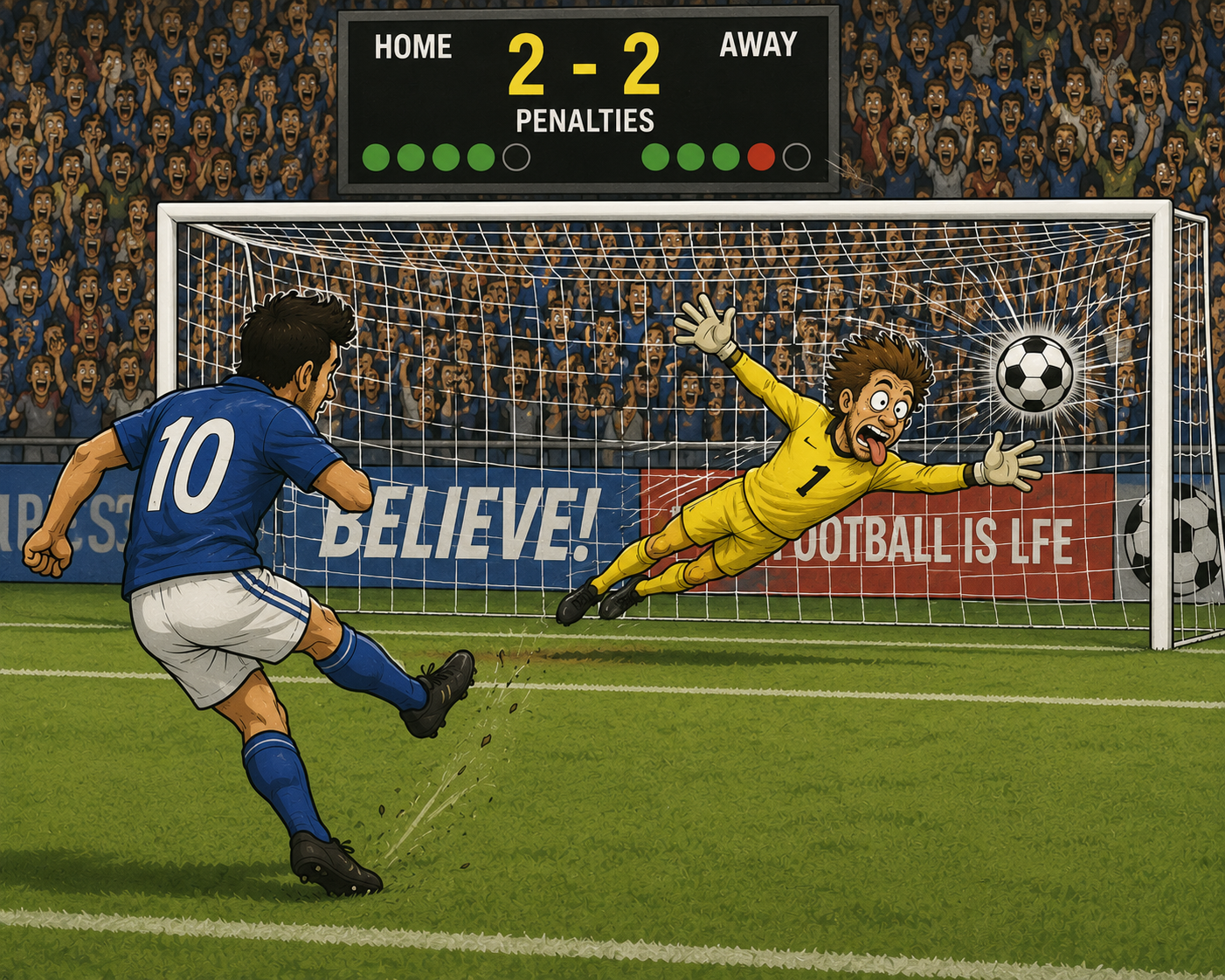 corner of the box in a congested situation when the offensive player had no real chance to square up for a decent shot attempt. This is fundamentally unjust.
Solution: Nuance the ball placement for penalty kicks—say, 12, 16, or 20 yards out, depending on how good of an opportunity to score the offensive player was deprived of when fouled. Here soccer officials could learn something from football, which features a nuanced penalty system, where infractions cost a team 5, 10, or 15 yards, or even more in the case of defensive pass interference on a long pass. This is just common-sense nuancing of penalties. Come on, soccer lords!
Change the red card rule!
The problem: Removing a player for the rest of the game for a red card violation makes for horribly uneven penalizing, because such removal may force a team to play a man down anywhere from 89 minutes to a 1 minute, depending on when the infraction is committed. It doesn’t get any more uneven than this.
Solution: Force a team to play one (or two or three) player(s) down for just 5 or 10 minutes. Perhaps calibrate the number of players down according to the amount of time remaining in the game. Example: The team plays two players down for 20 minutes. If there aren’t 20 minutes left, then make it three players 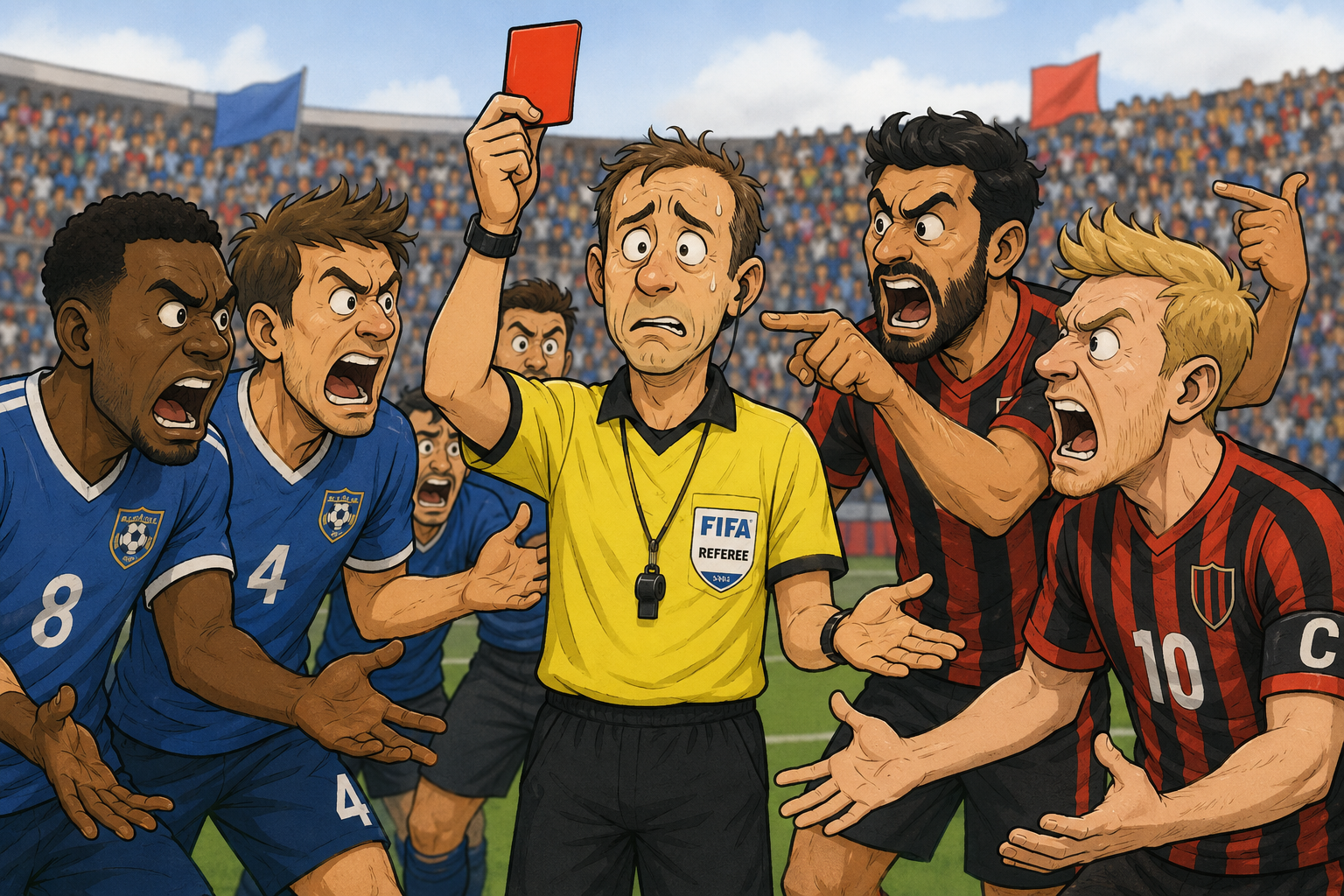 down for 10 minutes. And so on. But make it fair and consistent! And consider nuancing the red card calls themselves, such that there are two or three tiers of infraction severity, again, as in the case of football, hockey, and basketball. Each of these sports features nuanced levels of infraction severity with correspondingly severe penalties, including game suspensions (even up to multiple weeks long) for the guilty player. But in these sports a team isn’t forced to compete a man down for most of the game. Put an end to the draconian red card rule!
So there you go. Three simple rule changes that would dramatically improve the game of soccer. Spread the word, folks! If we work together, we can fix soccer. Let’s make this good game great!