It’s been another exciting year, and we want to thank you all for reading and, if applicable, posting comments on our blog. Once again, we would like to close out the year with some summary remarks about good and bad stuff related to film, music, books, politics, and family.
Best and Worst Film Experiences:
Jim: This was a slow year for me in terms of watching films. Probably the best movie I watched all year was a very old one—The Killing Fields, a classic from 1984 featuring Sam Waterston in his signature role. As for the worst film I viewed this year, that would have to be Gravity. Though visually dazzling—the special effects are perhaps the best I’ve seen—it was almost entirely bereft of character development and a real story. Even Pacific Rim—also with brilliant special effects—had a far better story than Gravity, which is saying a lot (or, I should say, very little).
Amy: Going to see Hunger Games: Catching Fire with our two oldest boys on opening night ranks as my number one theatrical experience of the year. While decidedly not the most intellectually stimulating film I saw this year, I am enjoying Bailey and Sam’s maturation into appreciating more complex story lines and mature content in film. Since Jim stole my pick for worst film of the year, I will go with my second worst, which was City of Bones. I didn’t think it was possible for the film to be worse than the book, but I was wrong. However, I might have missed a few aspects of the film, since—after realizing it was reeeaaalllly bad—I speed watched the DVD in about 30 minutes. Ugh.
Jim’s Best and Worst Musical Experiences of the Year:
Topping my musical list this year are Vampire Weekend’s Modern Vampires of the City and Arcade Fire’s Reflektor. Coincidentally, both of these bands have a strong spiritual perspective, but this aspect of Vampire Weekend did not emerge until Modern Vampires, which is their third album. Musically, it is every bit as rich and textured as their first two albums, but now they are tackling sublime themes, and the result is beautiful. As for Arcade Fire, they’ve taken another dramatic musical turn, this time into a dance-funk direction, but it works. Somehow, for all of their stylistic explorations, this band always sounds like they’re playing to their strengths. As for the biggest disappointment of the year, it was the Killers’ Battle Born album. Somehow this once magical Las Vegas DuranDuran-inspired foursome has lost their edge and inspiration. Let’s hope they get it back.
Amy’s Best and Worst Eating Experiences of the Year:
When I think of the good dining experiences I had this year they have a lot less to do with the food we ate and more to do with the people with whom we shared those experiences. The worst experience of the year was not really an eating experience but rather our assistant pastor’s sermon on gluttony which has me doing some soul-searching regarding my relationship with food. Perhaps this shouldn’t be categorized as a “bad” experience, but I haven’t reached the spiritual maturity to call it “good” either.
Jim’s Favorite Sports Moments of the Year: It had to be watching Michigan State (my alma mater) defeat Ohio State in the Big Ten championship game. I’ve always really, really disliked the Buckeyes (because I’m also, and more fundamentally, a U-M fan, despite my love for MSU). Seeing the Detroit Tigers win their division for the 3rd consecutive year and also return to the American League Championship was a highlight as well.
Amy’ Favorite Sports Moments of the Year: My favorite sports moments are a little closer to home. I enjoyed watching Andrew’s and Bailey’s soccer teams go undefeated for the year and win their championships. Its fun to now have all of our kids playing at a level that is actually enjoyable to watch. Also, watching Andrew hit a home run in his coaches’ pitch league was fun, as well as seeing Sam play goalie on his soccer team—a role he embraced with relish.
Jim’s Most Disappointing Sports Moments of the Year: It’s a three-way tie between (1) watching the now predictable Detroit Lions’ late season swoon, (2) seeing the eventual NBA champion Miami Heat slip by the Indiana Pacers in the Eastern conference championship series, and (3) watching the Tigers falter to the bearded Beantowners. Big Poppi’s grand slam in game two turned the series, and the Tigers never recovered. But there are reasons to be hopeful again on all three counts: the Lions will be getting a new coach, the Pacers are much improved from last year and now have the best record in the NBA, and the Tigers have improved their roster considerably with some smart off-season moves. Hope springs eternal for this Detroit/Indy fan.
Satisfying Reads of the Year:
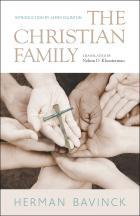
Jim: One would definitely be Thomas Nagel’s Mind and Cosmos. This long-time naturalist philosopher has shown fair-mindedness throughout his career in pointing out serious flaws with the naturalist paradigm. This penchant comes to full fruition in this book the subtitle of which is Why the Materialist Neo-Darwinian Conception of Nature is Almost Certainly False. Another is Herman Bavinck’s The Christian Family, which I reviewed on this blog recently. Profound, practical and, now after 100 years, rather counter-cultural.
Amy: With the kids in school and no home school prep to be done, I had a bit more time to read, so I was able to read over thirty books, which felt good. Among the highlights were Elizabeth Gaskell’s Ruth, Charles Mann’s 1491 and 1493, and Tolkien’s The Hobbit. In an upcoming post I will have more to say about all of the books I read.
Political High Point of the Year:
Jim: Watching Ted Cruz stand his ground in an effort to defund Obamacare. He was excoriated for this, of course. But now he’s being vindicated in what is, well, a political low point.
Amy: The federal government shutdown—because it seemed like there was a glimmer of hope that Republicans would stand their ground.
Political Low Point of the Year:
Jim: Obamacare. And it appears the worst is yet to come in 2014. Gulp.
Amy: Obamacare—especially the fact that so much has been made of the botched website when that’s just the tip of the iceberg.
Best 2013 Memories of Our Kids:
Amy: Our whole family and my dad kayaking the Hiawassee River in Tennessee, as well as camping at the Indiana Dunes with the kids.
Jim: Taking each of the kids, one at a time, out to breakfast. Something I try to do every summer. Also, I enjoyed (nearly) all of the baseball and softball practices I conducted with the kids.
Best Kids’ Quotes of the Year:
Andrew: “What’s so fun about life?”
Maggie: “Don’t you hate it when scientists just guess? I like knowing things.”
Sam: “You need to brain up.”
Bailey: After attending a seminar concerning sex and being asked what he learned: “I learned that when you’re married and you want to have sex with your wife, you have to talk to her for two hours beforehand.”
Most Satisfying Shared Experiences of the Year:
Jim: Purchasing our brand new 9-year-old Toyota Sienna was a highlight, though it was done under duress (our Honda Odyssey having just broken down). And refinishing the floor in what we are now calling our “den” was another highlight—domestic teamwork at its best. However, I fear I lost millions of brain cells in the process. Probably too much polyurethane for both of us, but just look at that shine!
Amy: Enjoying quiet moments together after dropping the kids off at school and watching Jim transform an old dresser into a bathroom vanity for my birthday. My ideas plus his elbow grease—a consistently strong combination when it comes to our home improvement.
New Year’s Resolutions:
Jim: To spend a week in the Bahamas with Amy (as well as the Taylor baseball and golf teams) in January. Okay, so that’s not really a resolution so much as a professional commitment. Hmm…how about I resolve to post more frequently on this blog—especially book reviews. Yep, that’s what I’ll do, Lord willing and the creek don’t rise.
Amy: To be in the best shape of my life when I turn 40 next December. Might not be saying much, but that’s my goal.
Happy 2014 everyone!