
Mill on Immortality

In a posthumously published essay entitled “Theism,” the great 19th century British philosopher John Stuart Mill takes an agnostic stance on life after death. Here I will review some of Mill’s arguments in this essay.

Mill rehearses the standard “correlation argument” against survival (formerly deployed by Lucretius, Hume and others). He observes that “the different degrees of complication of the nervous and cerebral organization, correspond to differences in the development of the mental faculties; and . . . diseases of the brain disturb the mental functions and . . . decay or weakness of the brain enfeebles them. We have therefore sufficient evidence that cerebral action is, if not the cause, at least . . . a condition sine qua non of mental operations.” Mill rightly concedes, John_Stuart_Mill_by_London_Stereoscopic_Company,_c1870however, “these considerations only amount to defect of evidence; they afford no positive argument against immortality.”

Mill further notes that belief in immortality isn’t grounded in philosophical or scientific arguments anyway but rather is inspired by “our own wishes and the general assent of other people.” There is also the fact that immortality is naturally desired, which some (such as Aquinas) have parleyed into an argument in favor of the belief. Mill writes, “We are told that the desire of immortality is one of our instincts, and that there is no instinct which has not corresponding to it a real object fitted to satisfy it.” Mill critiques this argument by comparing it to an inference from the desire for food to the conclusion that we will always have plenty to eat. This is clearly a misunderstanding of the argument, however. Since the inference is not just from the presence of desire to the conclusion that the desire will be fulfilled. Rather, the argument reasons from the fact that there is a natural human desire to the conclusion that that desire can be fulfilled (not that it necessarily will be). So Mill’s criticism doubly misconstrues the argument from desire.

Mill notes another line of argument, which is based in the goodness of God and “the improbability that God would ordain the annihilation of his noblest and richest work . . . and the special improbability that he would have implanted in us an instinctive desire of eternal life and doomed that desire to complete disappointment.” He says the problem with this argument is that it assumes we know more than we do about God’s broader purposes, some element of which might have made it best to give us this desire without its being fulfilled. Mill is certainly correct on this point.

Mill concludes that we have “no assurance whatever of a life after death on grounds of natural religion. But . . . there is no hindrance to his indulging that hope.” This tempered conclusion makes sense given the arguments he discusses, even despite his misconstrual of the argument from desire. Philosophical arguments (or those based on “natural religion,” as he puts it) for life after death, much less human immortality, are probably fall short of providing anything like assurance, at least those arguments available in Mill’s day. (Contemporary arguments based on recent near-death experience research, however, might be a different story. I will explore such in some upcoming posts.) But Mill is also wise to allow for the reasonableness of indulging in the “hope” of life after death. I would certainly say so, given (1) the nearly universal desire for survival, (2) the Kantian point that ethics depends upon immortality, and (3) the theological grounds for immortality, which are considerable.
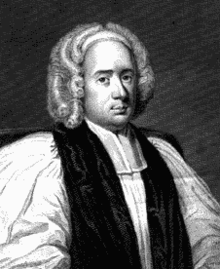
On Butler’s Argument for Immortality

This semester I am teaching a course entitled “Philosophy of the Afterlife,” which covers a range of issues, including the concept of human immortality, near-death experiences, reincarnation, the doctrines of heaven, hell, and purgatory, and the prospect of achieving immortality via computer technology.  Since this is my first time to teach such a course, I thought it would be fun to post some of my thoughts along the way.  I begin with a critical reflection on one of Joseph Butler’s arguments for human immortality.

*****

In his 1736 book The Analogy of Religion, the English bishop and apologist Joseph Butler offers some arguments in defense of life after death.  His overarching aim with these arguments is not to prove that human beings are immortal but rather to show that we have no good reason to believe that our lives end with the death of our earthly bodies.  Here I will explain and critically assess one of his arguments.

from Wikipedia
from Wikipedia

Butler asks us to “consider what the analogy of nature” might suggest to us regarding what death truly entails.  And he observes that throughout nature we find immense variety, constant change and “degrees of life and perception” among living things.  And in each individual human life we find a vast transformation from our lives in the womb to adulthood.  Thus, Butler concludes, “that we are to exist hereafter in a state as different (suppose) from our present as this is from our former is but according to the analogy of nature.”

Furthermore, Butler argues, there is no evidence that death brings complete extinction of the self.  What we do observe is merely “the dissolution of the flesh, skin, and bones,” but “these effects do in no wise appear to imply the destruction of the living agent.”  Such physical decay indeed “destroys the perceptible proof which we had before their death of their being possessed of living powers, but does not appear to afford the least reason to believe they are then, or by that event, deprived of them.”  In other words, when person dies, the destruction of her body only eliminates positive evidence that she is still alive.  But it does not prove she is no longer alive.  This is an important distinction.  Lack of evidence for X does not necessarily constitute evidence for not-X.

In this way, Butler defends what I will call the “survival thesis”—the notion that human beings survive death in the sense that their conscious lives continue somehow despite the destruction of their physical bodies.  So what are we to make of his claims?  While Butler’s argument is carefully nuanced, aiming just to show that we have no good reason to reject the survival thesis, as opposed to positively arguing for that thesis, some counter-arguments might rebut his defense.

First, one might argue that Butler’s analogy from nature has been rendered irrelevant by the advance of science.  As many naturalists have pointed out, neurophysiology reveals a much more specified analogy that points in the direction of extinction of the self.  As a person develops from infancy to adulthood and then to old age, her cognitive capacities correspond entirely to her brain functionality.  As brain function deteriorates, so does one’s mental function.  And where there is serious damage to the cerebral cortex, there is likewise damage or even complete elimination of the cognitive operations for which that part of the brain is responsible.  What this suggests is that with the complete destruction of the brain there will likewise result complete cessation of cognitive function, and this is tantamount to extinction of the person.

Second, one might challenge—as again many naturalists have—Butler’s assumption that the burden of proof is on the naturalist to show that the survival thesis is false.  Why make this assumption when arguably there is no independent philosophical or scientific evidence to suggest that the survival thesis is true?  Presumably, Butler helped himself to this assumption because at the time and place of his writing—early 18th century Europe—belief in life after death was far more widely affirmed among scholars than it is today in the West.  So this presupposition regarding evidential burden was not controversial for his readers.  Things have changed dramatically during the intervening 280 years, however.  These days most Western scholars are religious skeptics, and a large number are bona fide naturalists.  Accordingly, among scholars today the burden of proof regarding the survival thesis seems to rest squarely on the shoulders of those who affirm it.  One wonders how Butler’s approach to the issue would be different were he writing on the subject today.