Saturday Night’s Alright for Fighting

Years ago, my dad sent me S. M. Lockridge’s famous sermon, It’s Friday, but Sunday’s coming. Over time, this has become shorthand between us. Facing hard times? “It’s Friday, but Sunday’s coming.” Frustrated with seemingly unanswered prayers? “It’s Friday, but Sunday’s coming.” It always brings a smile to our faces, but also encouragement and solace as we remember the deep well of comfort Lockridge’s words bring.

If you are unfamiliar with this sermon, it paints a picture of the devastating events of the Friday of Jesus’ betrayal, arrest and crucifixion. The disciples’ abandonment, the accusations of the crowd, the beatings of the Romans. In his beautiful preacher’s voice and cadence, Lockridge layers despair upon despair, until you can practically feel the weight of Jesus’ exhaustion and grief. But he ends each layer with the refrain “Sunday’s coming.”

This week, while discussing a difficult situation with my folks and sister, I threw out the well-worn line and then quipped, “What about poor Saturday? Nobody ever talks about poor Saturday.” I was thinking about “poor Saturday” during the Good Friday service I attended today. Friday gets to be good, Sunday gets TWO names (Palm and Resurrection), but poor Saturday. Nothing. The wallflower of Easter; always a bridesmaid, never the bride.

It seems very human to focus on the dramatic events of Friday and Sunday and not give Saturday another thought. We do this with the events of our own lives as well. We want to rush past the middle of the drama and skip to the part where everything works out, we get the job, the test comes back negative, etc.

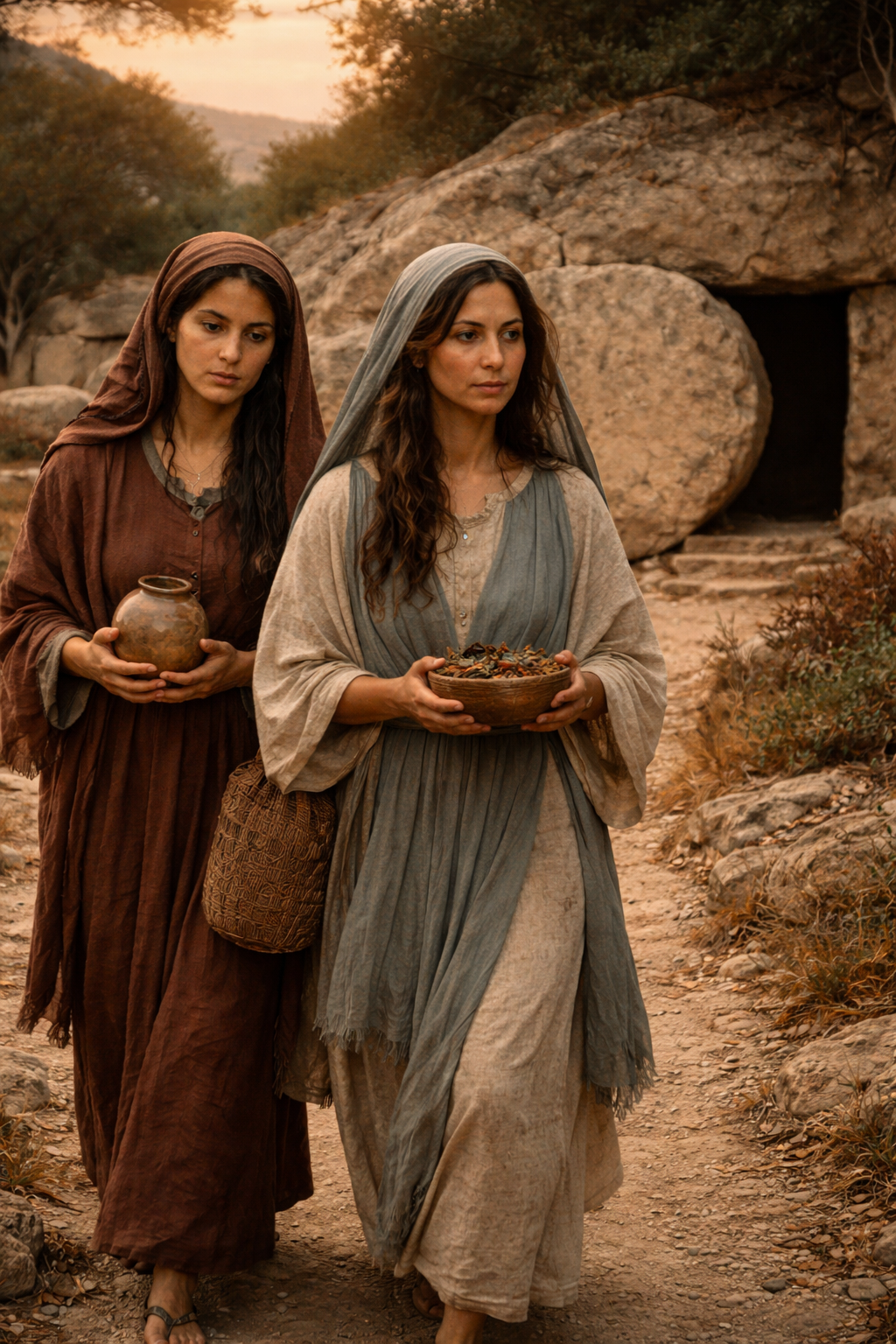
But just for a moment, let’s think about that Saturday. Jesus was dead, so was Judas. The disciples were terrified and without a leader. Peter, I’m sure, was trying not to buckle under the grief and shame of his denials, the bitter tears still hanging in his beard. The women were preparing for Sunday. Not preparing to celebrate with plastic grass and Cadbury eggs. They were preparing to perform as ancient world morticians. To wash away the blood and sweat, cover the stink of death and decay with spices and ointments. Grief and confusion were hanging in the air.

Sure, there had been miraculous signs: unnatural darkness, an earthquake, split rocks, and the Temple’s torn curtain. These are hardly signs to lighten the mood. Tombs were opened and loved ones brought back to life, but this is cold comfort for those whose Hope has just died, naked and crying out to God. At one time, this Hope, this man, had seemed so favored. Heaven had opened, and the Spirit descended on Him while He was proclaimed to be God’s beloved Son.

I don’t know about you, but sometimes Fridays are easier to navigate than Saturdays. During Fridays, I am on high alert, rallying the troops for prayer, seeking wisdom in Scripture and looking for God’s direction. A season of crisis and drama can put me in “hero mode,” at least of a little while. But when the crisis is prolonged, or worse, when it feels like all hope is lost, the tomb of Hope is sealed and guarded, I have a tendency to retreat to habits of consultation, seeking solace in distraction and a good dose of carbohydrates.

But distraction doesn’t prepare me for Sunday. How can I worship if I’m not waiting for the dawn of God’s glory? The women honored to be the first witnesses of Jesus’ resurrection did so because they spent Saturday preparing. Let us do the same. Let us resist the despair of waiting. Let us refuse distraction and the bitterness of unfulfilled expectations. In the words of musical theologian Elton John, “Saturday Night’s Alright for Fighting.” So let us fight the good fight on Saturday. After all, Sunday’s coming.

E Pluribus Unum

E Pluribus Unum. Out of many, one. In a time when our national motto seems in danger of splintering, I am grappling with what it means to be one out of the many, how to maintain the strength of one’s convictions while seeking some sort of unity with those whose convictions are pulling them in the opposite direction. How do we all pull together for a secure and peaceful country that will last for future generations when, at the moment, we seem to be using our oars to bash one another over the head rather than as a means of propelling us forward?

In his recent interview with Joe Rogan, Secretary Robert Kennedy spoke of his surprise discovery that, to paraphrase, all Republicans weren’t greedy Bond villains, rubbing their hands together and only looking to line their pockets and oppress the poor. Despite being the descendant of Democrat royalty, he has found that they share many common aims. I’m sure that if you asked many Republicans, they would share equally hyper-stereotypical impressions of their impression of those on the left.

So I thought it might be a helpful exercise for me, and hopefully for you, to consider the values behind some of the most hotly contested issues of our day and see if, despite dramatically differing conclusions, there are shared principles somewhere in the middle. By doing so, I don’t seek to convince anyone of my conclusions but first to convince myself that my stances are a result of considered examination rather than knee-jerk party line adherences and, secondly, to show those who disagree with me that, despite our disagreement, we share at least some common goals or assumptions. Let us do battle in the arena of ideas rather than attempt to assassinate one another’s character and motives.

Misogyny is an evil reality and should be weeded out. I would define misogyny simply as a degrading attitude towards women as inferior, deserving of objectification and disdain. Surely this is something we can all agree is wrong. How can we be “unum” if we aren’t moral equals? While I am sure most can agree on the definition, the diagnosis and cure are where we differ. I see the masculinization of women in film and popular culture (the omni-competent female action hero who defies biology by besting men in physical as well as mental feats while maintaining a flat, near emotionless cool) as grossly misogynistic. I also believe the movement to include biological men in women’s sports and spaces to be a similar victimization based on sex. You can disagree, but hopefully you can see that a defense of this position doesn’t have to be rooted in hatred; it can be just the opposite—a deep respect and love for women who possess unique and distinct qualities that make them, yes, strong and capable in many ways, but also vulnerable and in need of protection in others.

Speaking of those we seek to protect, I think we can all agree that it is the duty of the strong to protect the weak and defenseless. As a conservative and a Christian, this principle is based on both the biblical mandate to protect widows and orphans and the theological principle that human beings are created in the image of God. It leads me to be pro-life, valuing the unborn as image bearers and seeking to protect them in their helplessness. It is also the basis of my stance on illegal immigration which victimizes so many: the working class who are forced to compete for jobs with those willing to accept lower wages, victims of the crimes committed by those in our country illegally, as well as the illegal immigrants themselves, especially women and children, who suffer horrific brutality on their journey northward, are often subject to trafficking and at a minimum find themselves living in the shadows of our society due to their legal standing, or lack thereof. You may share this desire to protect and serve these groups while landing at dramatically differing viewpoints, but let us together lay down the weapons of slander and gross misrepresentation to reason. Let us turn our ire to those who seek to exploit rather than on those who seek to defend.

Democracy is worth defending. What a noble and, frankly, obvious statement for all patriots to affirm. And yet I have heard this slogan pointedly leveled at the occupants of both sides of the aisle by those who believe themselves to be Lady Liberty’s knight in shining armor. For me, this is the basis of my position on voter ID laws, honoring our laws and those who enforce them, as well as the lawful exercise of our Constitutionally guaranteed freedoms, such as freedom of speech and religion. One’s exercise of these rights must be honored, while acknowledging and respecting the rights of others to do the same.

I would love to hear your honest thoughts on these principles. I know this has been a useful experiment for me, and I hope it has been for you as well. While writing, I have attempted to put myself in the shoes of those with whom I strongly disagree and, rather than dismiss their solutions, look at the foundation on which they are built. Perhaps by doing so, we can all agree to get in the same canoe, put our oars in the water and row together. If done correctly, we can course correct for one another, allowing neither to go too far in one direction or another. Many working to create and preserve the one. God bless you, and God bless the United States of America.

Waking Up

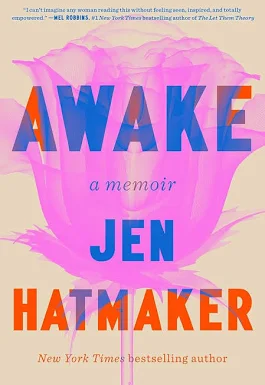
Years ago, as a young mom and aspiring author, Jen Hatmaker was all that I wanted to be. I saw myself in her frazzled authenticity, her flair for the dramatic, her diving in headfirst approach to life and faith. I was disarmed by her self-deprecating humor, which was such a breath of fresh air in the evangelical world of stay-at-home moms. This was the age of the mommy-blog, and Hatmaker struck a chord with those of us “in the trenches”, trying our best to live up to the impossibly high standards set for us, sometimes by others, but often by ourselves. With her big earrings and even bigger smile and personality, Jen felt like an example to aspire to and admire, as well as a reason to be real about one’s own failures and flaws.

I will confess, though, that while I often scrolled through her Insta and laughed and let out a sigh of relief that I wasn’t the only one whose kids were eating in front of the TV and calling it a picnic, relief and relatability weren’t the only feelings she inspired. I was sometimes overcome by feelings of envy and inferiority. It wasn’t just her life I coveted; we shared a publisher, and there were times when her level of success and reach felt so tantalizingly close, like staring over at the cool kid table, longing for someone to make eye contact and ask me to join them.

It wasn’t long into the promotion of my book that I realized the game of self-branding was not for me. I must admit, with regret and shame, that the temptation to view my family and life as a source of content rather than my primary mission in life was real. It is likely God’s grace that He didn’t allow my book sales to skyrocket or my speaking career to extend beyond the local churches of dear friends. At the time, Jen Hatmaker was a mirror into which I looked and saw my own heart’s darkness, a desire to measure myself not by how well I was completing the mission to which I had been called, but against the measure of how well someone else was completing theirs. I set aside my dreams of growing my brand as an author and sought to grow in my knowledge of the Author of my faith.

Fast-forward nearly a decade and a half to the present. I have seen Jen Hatmaker pop up on my radar now and then over the years: on HGTV, having her house renovated, coming out as gay-affirming in 2016, and the sad announcement of her divorce in 2020. By that time, my attention had shifted away from the world of women influencers. I was off social media for the most part and navigating a chaotic time in our own lives.

When, however, I saw Hatmaker had written a memoir, I was curious. Our life Venn diagrams still have a lot of overlap; we are both in our early fifties, learning to straddle the divide of parenting adults and younger kids simultaneously; we have both spoken out on political and cultural issues, though from different sides of the aisle; we both have some harsh critiques regarding the church in America.

Reading Awake, I didn’t walk away with any deep insights, theological or otherwise. I felt a deep compassion for Jen and her children, given the heartache they have experienced and had to navigate in the fishbowl of public interest and attention, though one does need to acknowledge that, for Jen’s part, this was attention she had fostered and benefited from for years. But that doesn’t make her pain less real, just perhaps more avoidable.

I have no desire to personally tear down Jen Hatmaker. And undertaking a deconstruction of her premises feels daunting given the structure, or lack thereof, of Awake. To summarize is impossible, but it does appear to me that Hatmaker has made the fatal mistake of exchanging one form of legalism for another. She notes many examples from her early life growing up and later in ministry of others casting pharisaical judgment on her, while at the same time she casts a plank-filled eye of judgment at those who do not share her political or theological perspectives. While I can certainly sympathize with the pain caused by the former, I believe it to be no more destructive than the latter. She has cast aside the prudes of the evangelical world only to cast her lot in with the puritanical progressives.

My greatest takeaway from the book was a sense of deep sadness that of all of the things Hatmaker has lost, her reliance on the Bible as a firm foundation on which to build (and rebuild) is by far the most tragic. On a much smaller scale, I understand what it is to be uprooted, to lose the part of one’s identity tied to community and public perception. I know the pain and questions that come from life-imploding, faith-threatening events. But I also know the sweet peace that comes after the storm if you anchor in the harbor of God’s trustworthiness.

I have never known the horror of marital betrayal Hatmaker experienced, awakening to the sound of her husband speaking words of love and devotion to another woman. My hope and prayer for her is that one day she will hear our Father’s voice, reminding her of His love and devotion. Then and only then will she be truly awake.

Before and After

Every life has a few before-and-after moments, some that are shared with others and some that are more personal. There are some before-and-afters that seem small but which have profoundly shaped my life. Before and after discovering the world of independent film. Before and after reading Jane Austen. Before and after realizing that food from other countries is better than chicken fingers.

Some moments are deeper and more life-changing. Before and after becoming serious about my Christian faith. Before and after becoming a wife and then a mom. Before and after 9/11, an experience many of us have had, in our own way, together. Wednesday was a day of two before-and-after moments. First, one moment, I was emailing a Hillsdale donor about the impact a single life can have on the world. The next, I was reading a message from Jim saying that Charlie Kirk had been shot. Then, I got on Twitter and inadvertently watched a video of Charlie being shot. One moment, I was waxing poetical about the price of liberty and the next I was watching someone paying the ultimate price. Before and after.

While we won’t know for days, months, or even years how Charlie’s death will reverberate throughout history, I know with certainty how it will echo through mine.

The fact of his death laid bare the stakes we are playing for in our current public discord. Labels of Republican and Democrat no longer really apply. You are now either on the side of life or the side of death. The contrast is too stark to ignore. This should be good news. Surely the cause of life is something most reasonable people can rally around. Aren’t the rights to “life, liberty and the pursuit of happiness,” all things that were just stolen from Charlie Kirk, things we all want to see secured for us all? We might disagree about how to pursue those things, or how to secure them for others, but good gravy, can’t we all say in unison, “I don’t want public figures being gunned down in public because they said something someone else disagrees with”?

So I resolved that I will hold out two hands from this day forward: the first will be a fist so tight that, to quote Ferris Bueller, if it held a lump of coal “in two weeks you would have a diamond.” In that fist, I will hold my unalienable rights, given by God to me and all my fellow citizens. And those rights will only be taken from me by force. I will not strike out with that fist, but I will cling to those rights for me, for my kids, and for all my fellow Americans to whom I will extend that second hand, in an attempt to bridge whatever divide separates us—in a desire to find a way to unite around values and principles we all hold dear. I will not join with those who seek to snatch my rights of life, freedom, and expression, but I will look for common ground wherever it can be found.

I said that I experienced two before-and-after moments on Wednesday. The first when I got the news and the second when I witnessed it with my own eyes. Despite initial news to the contrary, after seeing that video, I knew that Charlie Kirk was dead. Dead and yet . . . in all the horror of that moment, I felt as if I watched Charlie come alive. And that was the second “after.” Seeing that Charlie had not lost anything and he gained everything. My second resolve was to live in the light of that reality, that I have nothing to lose that anyone can take.

In times of discouragement or doubt, I can often be found, driving with the windows down, singing badly, but with great gusto, the Avett Brothers’ song “Ain’t No Man” the chorus of which is:

There ain’t no man can save me. There ain’t no man can enslave me. Ain’t no man or men that can change the shape my soul is in. There ain’t nobody here who can cause me pain or raise my fears. ‘Cause I got only love to share.

While I usually find this song quite uplifting and inspiring, it isn’t entirely true. There is a man who can save me. A man who died for the sake of the truth, and it wasn’t Charlie Kirk. It was the man who saved Charlie and me and anyone who will call upon His name. This is the man who was waiting for Charlie on Wednesday. He is waiting for us all. And this man, Jesus Christ, said of those who will trust Him, I give them eternal life, and they will never perish, and no one will snatch them out of my hand.” May we all reach out, as Charlie did, and take that hand until He sees us home.

Connecting the Dots

Several years ago, the Spiegel family spread out across multiple countries and continents in an unprecedented flurry of world travel. Jim was in Greece, Bailey in Israel, and Sam was in Bolivia while Maggie, Andrew and I kept the home fires burning back in Indiana. Multiple times a day, I would pull up our family chat and check the location of my family members. I got a rush of joy and a feeling of connecting to my far-flung husband and offspring as I watched them move jerkily across the screen like a technological version of the Marauders Map from Harry Potter. I am not sure that I could solemnly swear I was up to no good, but I did develop a terrible addiction. I became a “location dot” addict.

Something about seeing this tiny dot, so far away, made me feel closer to them. When everyone came home, I started checking to see if they had left soccer practice and were on their way home for dinner. Or if they were cutting it close for curfew. Now that we are quasi-empty nesters, I sometimes wake up in the middle of the night and double-check that they have all made it home safe and sound. Ironically, my mom has started doing the same to me. I get texts from her saying, “Are you working from home today?” or “Traffic bad? Why are you stopped in the middle of the interstate?”

I recently learned this is a “thing.” When referring to my locations addiction at work, a male co-worker said, “What is it with women and dots?” Until he asked, I didn’t realize there was a thing with women and their dots. I thought it was just me.

If this is, in fact, a female phenomenon, I imagine there is more than one answer to that question. Typically, women are “running the show” when it comes to the family schedule, coordinating drop-offs and pick-ups, mealtimes and bedtimes, invites, and events. So it makes sense that they would look for a “leg up” in keeping all their family ducks in a row. I will confess to sending an innocently worded “Almost home?” which, given the location of the recipient, could also have read “Why haven’t you left yet?” Entirely a truthful reflection of my knowledge of their whereabouts? No. Highly effective way to both avoid an argument and get them to hightail it home? Heck yeah.

But beyond the convenience as a tool of the homemaker, I think there is something deeper, more visceral that calls to our maternal nature when we seek to “find my.” If you aren’t an Apple user, “Find My” is the app for Mac users to find their devices, items (e.g., air-tagged car keys, etc.) and people. Perhaps it is a stretch, but this app presents women with a temptation eerily similar to that first forbidden fruit of Eden. Tempted by Satan to disobey God, Eve was told that in doing so, “your eyes will be opened and you will be like God, knowing good and evil.” (Genesis 3:5) What Satan predicted came true, Eve’s eyes were opened and she did gain the knowledge of good and evil, but she, along with all the women that followed, sure paid the price. Her relationship with God, Adam, and all of nature, even her own body, was irrevocably altered for the worse. The blessing of womanhood, our beauty, frailty, and unique reproductive role was turned against us in God’s curse and its devastating consequences.

Now I am fairly certain that I do not fall under God’s judgment each time I reach out and check my family’s locations. And I seriously doubt they are struggling under the burden of His wrath because I like to know where they are. But I do think there is a clear connection between Eve’s failure and my own obsession, both are rooted in a lack of trust and a longing for control. Eve didn’t want to obey; she wanted to rule. I don’t just want to know; I want to control. Somehow, I have convinced myself, however subconsciously, that by knowing where they are, I am protecting those I love. As if by knowing where they are, I am watching over them as well. But I am not, because I am not God. Only He can protect. Only He is in control. He not only knows how to find us, He knows how to bring us home. I am just an observer of dots. He is the one connecting us all.

Wanting is Needing

As the great philosopher Britney Spears once said, “Whoops, I did it again.” Or more precisely, we did it again. After two and a half wonderful years in Hillsdale County Michigan, I sit here writing while surrounded by the chaos of a house in flux. Some of the chaos is the kids’ preparing to move out on their own or head to college. While we are sad to have this, likely, final season of all the OG Spiegels under one roof coming to end, we are thrilled to see them moving on to new adventures.

But they aren’t the only ones heading for parts unknown. Jim and I too will be packing up and moving on and I must admit my heart is heavy with the thought of it. It isn’t just the dread of packing and unpacking a lifetime of possessions or choosing a new home, attending a new church, or deciding where to do our weekly grocery shopping. Don’t even get me started on figuring out what gas station carries my favorite beverages and how I can maximize their loyalty reward program. Nor is my grief isolated to the thought of saying goodbye to friends, some of whom it feels like I have waited a lifetime to know. It is all these things and so much more, something deeper that keeps crying out “This is not how it is supposed to be. Human lives aren’t meant for uprooting.”

I fully admit to being a creature of habit. I order the same favorites from my faithful favorite menus. I love to wear my favorite clothes into oblivion and re-watch my favorite films and re-read my favorite books. I value predictability over novelty, comfort over the unknown. If Forrest Gump is right and life is a box of chocolates, I prefer the box containing only one variety, please and thank you.

This afternoon, as I took a break from our pre-photo shoot house cleaning and decluttering session, I mustered up the energy for half-formed prayers of supplication, asking God “Why? Why is this necessary? Why can’t we stay?” And in that entirely predictable God-way, He answered by holding up a mirror to my heart and asking me to respond to my own question. What I saw there made clear the answer. I want things to be predictable because I want to be in control…which, needless to say, I am not. The very thing I want to cling to so badly, the illusion of control, is the thing I desperately need to let go, because it isn’t real. I may feel like I am clinging to reality, but really I’m grasping at thin air.

I’m like a passenger in a self-driving car whose destination has already been punched, but I insist on white-knuckling an imaginary steering wheel, pretending I’m the one driving and then banging my head against the dash when the car fails to respond to my commands. When life doesn’t go according to my plans, it isn’t because my GPS is malfunctioning. I am the problem, and God is gently but firmly reminding me that I’m not even the co-pilot in this scenario.

As I sat throwing an itty-bitty pity committee for myself today, a voice rose above the whining violin in my heart to sing a different song. This song says that loving anything above my Creator isn’t just wrong, it’s harmful. I can pretend it would be better for me to get what I want, but if what I want isn’t Him, then it’s not only not better, it’s the worst. By taking it away, God is revealing an idol, an area of wrongful worship and giving me the chance to lay it down and walk away.

But He isn’t asking me to walk away into the wilderness, into nothing. He isn’t calling me into a land of want, in the sense of deficiency. He is calling me to a land of wanting in the sense of desiring. Desiring the ultimate Good. He wants me to walk away from a place of want, of deficiency of Him in order to pursue wanting Him. And that is what I need even if it isn’t always what I want.

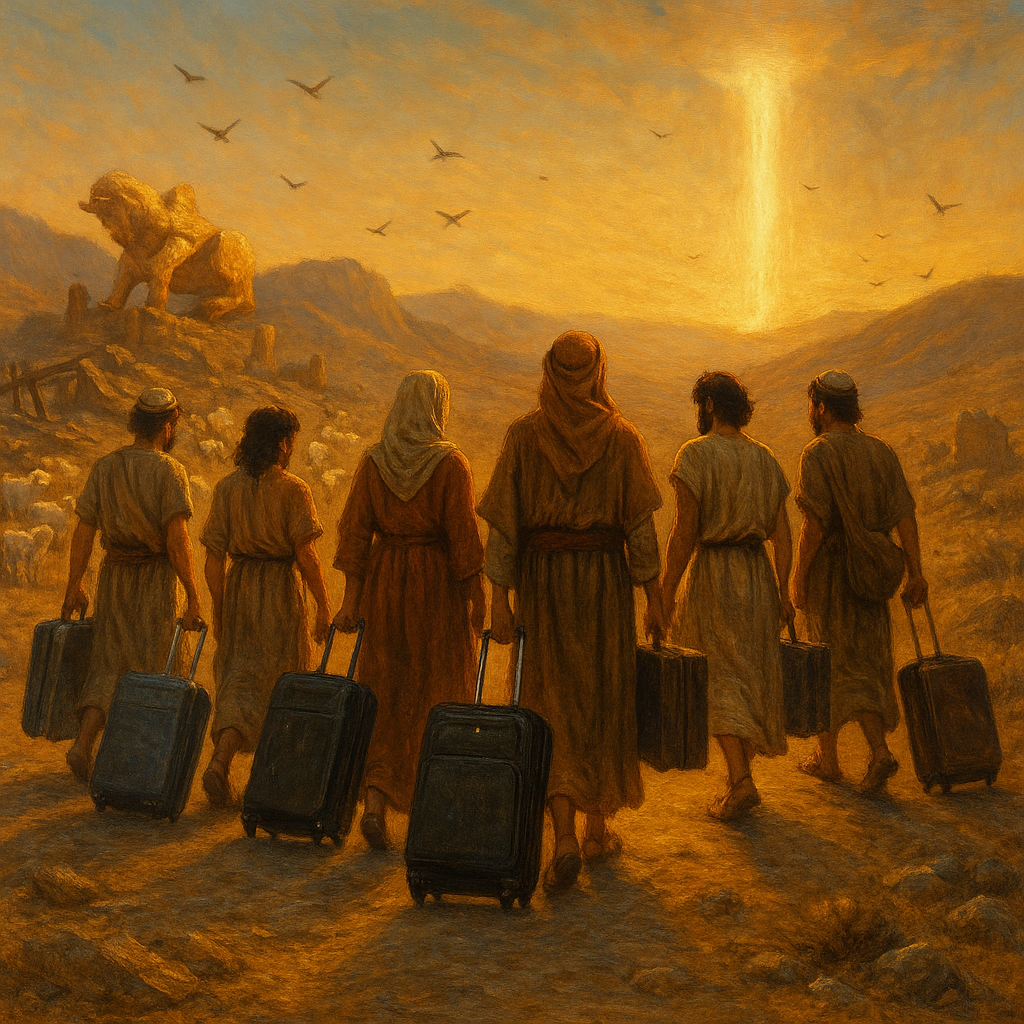
The Israelites walked away from Egypt, a place of great want in which they were slaves. They walked into what looked like a desert but in reality it was a path to the promised land, the land in which God dwelt, a land of plenty in which He would provide all they needed and more. Their short-sighted fallen hearts couldn’t help but look back, like Lot’s wife, longing for the familiar routine of enslavement.

I would love to laugh at them but I can’t. I’m too busy looking over my own shoulder with regret. As I sigh for what I want, I hear the voice of the One I need. And deep down I know, like David, He will turn “my wailing into dancing” and He will “clothe me with joy,” so my heart will sing His praises and not be silent even on the road to who knows where. Because that’s the road that will lead me to the thing I want and need, above all else. I just have to close my eyes, stop trying to navigate the way and tell myself “There’s no place like home. There’s no place like home.”

They Aren’t Just Eating the Dogs and Cats

My mind is often a colliding mix of thoughts and ideas, swirling around in a chaotic soup inside my head. This morning while sitting on a balcony looking out at the Gulf Coast of Florida, Jung’s “devouring mother,” the words of the apostle Paul, and Springfield, Ohio all coalesced into what follows.

Sitting in God’s beautiful creation, I was reading 2 Timothy 3 which outlines “the last days” and what will characterize them. Some of the things listed, frankly, have characterized human civilization since Adam and Eve decided to have a snack from the wrong tree in Eden: lovers of self, lovers of money, proud, arrogant, abusive, disobedient to their parents, ungrateful, unholy, etc. What struck me, however, was the following: “…lovers of pleasure rather than lovers of God, having the appearance of godliness but denying its power. Avoid such people. For among them are those who creep into households and capture weak women, burdened with sins and led astray by various passions, always learning and never able to arrive at a knowledge of the truth” (vs. 4-7).

Could there be a more apt description of the current state of our nation and many in the evangelical church in America? Women, burdened by their guilt with no one calling them to repentance are not only being led astray but leading the charge to assault the most vulnerable among us, our children. Through the ungodly teachings of the woke, which has infiltrated our thoughts on parenting and motherhood, whichever side you land on politically, these women have been persuaded to follow harmful paths, carrying their children along with them into a desolate and dangerous land.

As a frequent consumer of Jordan Peterson’s lectures and podcast, I have become familiar with the concept of the devouring mother. The basic idea, as I understand it and will use it here, is of a mother who has come to depend so heavily on her children for her sense of self-worth that she consumes them with toxic “care” rather than nurturing them into healthy and self-sufficient individuals. Think the “bad” mom in the story of Solomon willing to divide the baby in 1 Kings 3 or Gothel of “Mother Knows Best” fame from Disney’s Tangled.

So, you ask, how does this relate to 2 Timothy’s weak women and the hellscape of morality in modern America? Here are a few current issues where I believe we can see the devouring mother doing battle against, rather than for, her children:

Abortion: I’m not sure I need to say more. Literally a mother killing her child in its most dependent and vulnerable state. What is different now is that women are no longer being told this is a final escape hatch only to be used in case of emergency. We are being encouraged to celebrate doing that which should be devastating even to contemplate. The aim of “rare and necessary” has become “common and discretionary.” Women are being told to rejoice and defend our ability to destroy life; we should instead be marveling and protecting our sacred and unique ability to procreate and carry life.

Trans rights: The response of many women to the onslaught of trans activism is a head-scratcher for me. Allowing their compassion for those they see as marginalized to blind them, these women have aligned themselves with one of the most misogynistic movements in history. I could take a whole post to outline this argument but standing against the mockery and erasure of womanhood, the predatory nature of “gender affirming care” providers who with little thought subject vulnerable young girls to life altering medical procedures, and the physical, emotional and psychological endangering of women in sports and public spaces should be a stance with whom any clear thinking woman agrees. There also seems to be a vampiristic segment of mothers who are encouraging their children to disavow their biological sex. Don’t believe me? Just look at the disproportionate number of celebrities with trans children. These real-life stage moms are exploiting their children’s confusion for social standing rather than helping them navigate their way, as beings created by God in His image, through the confusing waters of childhood and adolescence.

Social media: A non-partisan issue we should all be able to get behind is the harmful effects of social media on the mental health of women, especially young girls. This is an area where I feel most ashamed as a mother and child of God. I have allowed social media to eat away at my soul with envy and greed. I have used my kids as props for online clout building and failed to shelter them from the destructive repercussions of social media consumption. Ironically, it was my daughter who helped to lift the scales from my eyes when she asked me, years ago, to not post pictures of her online. It started me questioning why it was that I wanted to in the first place. I should have been the one protecting her rather than “selling” her image to prove I was worthy of others’ approval. This is to say nothing of the use of social media by predators or the devastating effect of social media on the mental health of children.

After the second presidential debate, I became obsessed with Donald Trump’s delivery of the line “They’re eating the dogs. They’re eating the cats. They’re eating the pets.” Whatever your opinion of the man, you have to admit, he knows how to coin a phrase and create a slew of chuckle-worthy memes. Though the truth of that claim might be in dispute, there is no disputing the perilous danger our children find themselves in, partially due to the cowardice of weak Christian women, myself included. The world is eating our children and our failure to stand up and protect our children, whatever the cost, is a stain on the sacred reputation of motherhood and we must do all we can to remove it. We must refrain from devouring them ourselves and protect them. We must teach them and one another how to live as God’s children. When reminded by Jim that our kids will one day cut the apron strings and fly the coop, I would often say, “Yes, but on the battlefield they always call for their mothers.” Ladies, our children are crying out to us from the battlefield and we must heed their call or they will perish alone.

The devouring mother will not be defeated through politics. This is not a power structure issue; it’s an issue of the heart. And in some ways that’s good news. When it comes to influencing the hearts and minds of our fellow believers, we the Church are in charge, not the political powers that be. Let us stand against the devouring mother and see her transformed into the nurturing, protector she was meant to be. Let us guard her heart with truth and wisdom, as we guard our own, and in doing so we guard her children from destruction.

Book Notes

Hannah Coulter by Wendell Berry: My first reading of Wendell Berry came to me via a book recommendation shared in line at our campus coffee shop and was reinforced by a friend a few days later at a wedding. Somehow this seems a fitting way to discover the world of Port William. I now know this is one of the last in the series and plan to work my way from the beginning. Beautifully written, lush with description and life without being overly fussy. Enjoyable but with depth, Berry celebrates the simplicity of rural life in America without reducing his characters to caricatures. Only now I am sad I didn’t pick up any of his works before now. I fully intend to make up for lost time.

The Road by Cormac McCarthy: Would you be satisfied if I just said “Ugh”? When he decides to dive into the world of fiction, Jim has a nasty habit of taking the plunge with very difficult but quality works. In this instance, he decided to make me share in his suffering and unfortunately for us, the work was difficult without the quality. Reading this book was an act of futile drudgery, devoid of joy or meaning. A bit like the task of “the man,” the main character, walking endlessly with his beloved son; destination and purpose unknown. My issues with McCarthy’s Pulitzer Prize winning work weren’t just the nihilism that seeped from every adverbless, comma avoidant sentence. It lacked imagination, character development, and realism. One can only assume it was meant to be a Hemingwayesque, bare bones narrative whose style reflected the bleakness of the landscape through which the man and boy are traveling after some unnamed event has left Earth in ecological ruin. But Hemingway’s genius was bringing character into sharp relief despite his restrained prose. McCarthy starves the reader’s imagination to death with regards to his characters while forcing them to feast on absurdities like roving bands of cannibals and just-in-the-nick-of-time root cellars. In this case, I’ll choose the road less taken, thank you very much.

Troubled by Rob Henderson: I read this after hearing Henderson interviewed by Jordan Peterson. This memoir is unflinchingly raw and honest about the failings of the foster care system and the adults who raised him but also his about his own behavior. He recounts how the selfishness and unthinking actions of many people impacted his life and worldview with a sympathetic clarity which is to be applauded. Avoiding creating villains and heroes, Henderson allows the reader to draw their own conclusions about the complex motivations of both himself and others. A tragic and triumphant story well worth reading.

Beyond the River: The Untold Story of the Heroes of the Underground Railroad by Ann Hagedorn: This is my favorite style of historical non-fiction. Hagedorn brilliantly draws the reader into the world of 19th century Ripley, Ohio with her immensely well-researched work, often drawing heavily from primary sources which allows the historical figures to tell their own story instead of being spoken for by the author. This book has special meaning to my family because we have vacationed near Ripley the last two summers and had the opportunity to visit both the John Parker House and the John Rankin House for two of the most memorable historical museum visits we’ve ever had. History comes to life as you look across the Ohio River listening to the stories of slaves, aided by hundreds of brave men and women in their desperate bid for freedom. These stories were passed on to Harriet Beecher Stowe, a friend of the Rankin family, and many appear in Uncle Tom’s Cabin. Inspiring stories of courage in the face of unthinkable cruelty, particularly in the dark and clarifying times in which we live.

Honorable Mentions: Close to Death by Anthony Horowitz: Nothing to write home about but the perfect light read; a nice ice cream cone on a summer day. Wrong Place Wrong Time by Gillian McAllister: This one actually annoyed me, a lot but kept me turning pages to get to the end. Not exactly an ice cream cone, more like a slightly squished peanut butter and jelly sandwich halfway through a long hike: you won’t be leaving a five star review but better than nothing at all.

Women’s Work

For years, when our children were small, Jim and I would share a hurried kiss and a “Have a good day” as he left for campus and I began a day at home with the kids. We used to joke that as we went our separate ways, each of us would look at the other with wistful pity and mutter under our breath “Sucker!”

Sure, there were days when, with a heart full of envy, I imagined him gathered around the water cooler (this was truly imagining because they didn’t have a water cooler) with his colleagues, discussing current events, quoting Plato and basking in the luxury of adult time. I am less sure that there were days where he sighed with regret as he pulled out of the driveway, watching the kids and I head out for a walk to the library or a playdate with friends. But for the most part, we were quite comfortable in our roles. He was the main breadwinner, supporting our family financially, not to mention influencing the minds of countless students and readers through his lectures, books, and articles. I was a stay-at-home mom, supporting our family through the various little tasks of home life, planning meals and doing laundry, not to mention educating our kids through elementary and middle school. We were, and still are, a great team, sharing the responsibilities and burdens, as well as the joys and rewards, of raising a family and pursuing a life of purpose and accomplishment.

I have no doubt that Jim, were he left on his own, would not have accomplished as much professionally without my support. Were he to have been a single dad, most of his time and energy would have gone into raising his kids, with little surplus for research and writing. I consider his accomplishments, all the publications, awards, etc., to be shared accomplishments in which I played a vital, though not equal, role. Obviously, he could have been a non-dad and had many more hours for his intellectual pursuits, but without the depth of experience, not to mention the love and encouragement, a family brings which I think has shaped him into a greater man than he would be otherwise.

Similarly, had I been a single mom I’m not sure the kids and I would have made it out of their formative years alive. Putting aside the obvious financial support Jim provided, allowing me the privilege of focusing on raising our family, his emotional and spiritual support was instrumental in my development as a wife, mother, and more generally as a human being. He is quick to credit me with influencing our kids to a greater degree than he has and that is perhaps somewhat true given the sheer quantity of time I was able to spend with them. But that time was made possible through the hours he spent lecturing, grading, doing research, and so on, not to mention the profound impact he has had on me as the spiritual head of our family. Our roles have shifted over the years, with the kids off to school, though I am still more focused on the daily routines of our family while he is focused on providing for our family through a myriad of ways.

This division of labor has worked, with varying degrees of success, for thousands of years. Men and women working together to nurture the next generation. Of course there have been abuses and imbalances of power, but the modern tendency to sneer at “women’s work” in the home as oppressive or demeaning is yet another symptom of the overall mass misogyny of our times. Nowhere is this more apparent in the current petition calling for the dismissal of Kansas City Chief’s player Harrison Butker over comments he made as the commencement speaker for Benedictine College which you may read in full here.

Those supporting this effort have called his comments “sexist, homophobic, anti-trans, anti-abortion and racist.” Well, they at least they got the anti-abortion part right. I won’t go into all their claims but would like to address their accusation that Butker’s remarks were sexist. Many

National Catholic Register

have pointed to the hypocrisy of those leading the charge for Butker’s firing given the numerous instances of domestic abuse and unlawful and violent behavior on the part of countless NFL players which has garnered little attention from the press or fans. What’s most interesting to me about the outcry on the part of some regarding Butker’s comments, however, is hypocrisy in another form.

They believe that a man celebrating the sacrifices and achievements of his wife is sexist. They believe that a woman’s value is to be found in her paycheck and not in her eternal investments in the lives of those entrusted to her care. In other words, they believe that women should be judged by the historically male dominated standards of career and, for lack of a better word, “worldly” accomplishments. Do they think that Butker holds his wife hostage at home? Do they think so little of women’s intellect that we are incapable of deciding for ourselves how we will divide our time and energy? Do they see so little value in the great joys of motherhood and homemaking? This seems the epitome of sexism!

In a world where men have decided that they can simply declare themselves women, invade our private spaces, steal our opportunities in sports and demand our acceptance of them as our equal, can we not at least acknowledge that being a modern woman can take many forms? Can we not celebrate those who work inside the home alongside those who choose to do so outside the home? In a world which demands acceptance of all manner of lifestyle choices, can we not allow for the rights of the traditional alongside the pantheon of “alternatives”?

The petition demanding his firing calls for unity rather than divisiveness. I couldn’t agree more; as our founding fathers put it, “Out of the many, one.” One body with many parts, all working together to function as a whole. This to me is the unity of purpose Harrison Butker wished to celebrate by praising his wife and all she has done from the sidelines to support and enable him and their family. In my eyes, she is playing the better game and winning. There are of course other roles that women can play, roles which hold great value and purpose. But I say Isabelle Butker is the star quarterback for her team. Perhaps you disagree but as for me, I’m a big fan!

Risky Business

As Christmas approaches, this mother’s heart is humming with anticipation. All four of our kids, Lord willing and the creek don’t rise, will be spending the holiday break with us this year. As they grow up and out (of the house that is), I am learning not to take being all together for granted. Gone are the days of me hiding in the kitchen pantry, eating chocolate and trying to get five minutes to myself. Most of the time I’m lucky to have more than one of them sitting at the dinner table and last Christmas we suffered an emigration mix up getting Andrew home from his semester in Bolivia and ended up with only half the crew celebrating with us.

Earlier this week, I was listening to Megyn Kelly discussing the case of Kate Cox. If you haven’t heard of the case, Cox is suing the state of Texas for the right to abort her baby. Texas’ recently enacted laws prohibit abortion once a fetal heartbeat is detected with some exceptions. Despite the fact that Cox’s baby has been diagnosed with Trisomy-18 and is highly unlikely to survive to full-term or the birthing process, the lower Texas courts have denied Cox’s application for an exception to be made. Kelly expressed her belief that forcing a woman to carry a dying baby was a form of “torture” and condemned the Texas law as too extreme, a position I strongly disagree with but not, perhaps, for the reasons you might think.

Surely no one who hears this story can fail to sympathize with Cox, although extremists on the left would have a hard time selling their sympathy to me as genuine. Many, though not all, abortion advocates have moved well past the argument for “legal, safe, and rare” and into the space of gleeful celebration at the death of a helpless unborn child. Those on the opposite end of the spectrum should most definitely offer their condolences to Cox and her family; if you are pro-life, you certainly should seek to comfort those who face such a dreadful diagnosis. But for myself, I believe that in seeking an abortion Kate Cox is not escaping “torture,” as Kelly put it, but rather inflicting further wounds to her psyche. She is already the mother of a dying child and having an abortion will not erase that fact. Being the direct cause of her child’s death, rather than allowing her child’s life to unfold, in my opinion, will only add to her grief. The risk of heartbreak is an inherent part of motherhood and a medical procedure cannot remove this from the job description.

We, as mothers, are all the mothers of dying children and our journey through parenthood is a tortuous one. We bring them into this world knowing that one day, hopefully many decades from now, they will leave it. Not only do they face certain death, we also know there will be many pains and traumas along that path. We hold our breath from the moment we feel that first stirring deep inside our wombs, through their first tottering steps and watch with anxiousness as they are off to school and have their first disappointments and heartbreaks and failures. As their worlds widen, our fears only increase. As they grow, so too do the dangers they face.

But so too do their joys. And through them, our joys increase as well. As they say, with great risk comes great reward. There is no joy in mothering without the sorrow; to love is to venture heartbreak. There is no escaping the tortures of motherhood, whether it be carrying a baby you know is destined to die early or carrying a baby you know will face untold perils as he or she grows. Just as in the throes of labor there is no escaping the pain of birth; all you can do as a mother is grit your teeth and know you are giving birth to something worth the pain.

Years ago in my early days of parenthood, I was complaining about not getting a moment to myself, and a friend wisely shared an insight that pierced my heart. He looked down at one of my toddlers and said “If I had known the last time I held my son or daughter was the last time, I would have held them five minutes longer.” We never know when that last time will be so we should cherish each time as if it is the last.

From the news reports I have read, Kate Cox won’t get that last time, or a first. She has pursued an abortion in another state. For that loss, I grieve for her. I’m sure that this Christmas will be a challenging and sad time for her, to say the least. I will certainly pray for her to experience repentance, forgiveness and healing during the season which celebrates not only Jesus but also his mother Mary. Not only Mary in the stable but also Mary at the temple, dedicating her baby to God and being told by Simeon, according to Luke 2, that He would do great things but at the cost of a sword piercing, not just His side, but also her soul. I think of Michelangelo’s Pieta. Mary holding her son for just five minutes more; the pain of His death and her sorrow bring us who believe the greatest of joys.