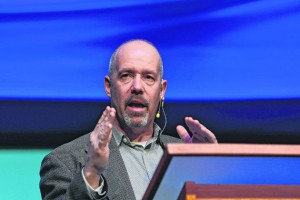
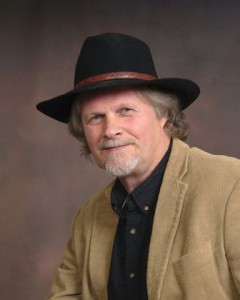
Last week I twice debated atheist author John Loftus. The first debate was hosted by Brookville Road Community Church in Indianapolis. Approximately 600 people attended the event, and you can view it here. The second debate, which was held the very next night, was hosted by the Free Thought Fort Wayne group at the Allen County Public Library auditorium. The audience at this event was smaller—about 150—and consisted of a higher concentration of religious skeptics.
At both events Loftus and I debated the question “Is Religious Faith Rational?” I took the affirmative position while Loftus defended the negative thesis. John is a veteran debater, having gone toe-to-toe with the likes of Dinesh D’Souza, Randal Rauser, David Wood, and others. This was my first experience at formal debate, so I was curious to see how it would go. I certainly enjoyed it, and I found the time constraints to be the most challenging aspect of the experience.
There was an interesting wrinkle regarding the first event. John’s van broke down in Muncie on his way to the Indy debate. So the organizers contacted me to ask if I would pick him up on the way to the church, which I was happy to do. Consequently, John and I were able to spend about an hour together getting to know one another before the first event. We actually hit it off, and I think that helped set the tone for a cordial debate both nights.
Here is a piece about the Indy debate that appeared in the Daily Reporter.
I am interested in doing more debates with other atheists and religious skeptics. In addition to the topic of the reasonableness of religious faith, I am happy to debate such issues as the problem of evil, the existence of God, the prospects of ethics without God, and other issues related to philosophy of religion. So if you or someone you know would like to partner with me to do that, let me know!
Two new publications of mine deal with issues related to sexual ethics. One of these is an article entitled “Great Cloud of Moral Witness,” just published in Touchstone magazine. In the article I develop an historical argument for the traditional Christian view of sex and marriage, noting that for nearly 2000 years no significant Christian theologian or biblical scholar defended the permissivist view on human sexual relations. That is, for all of Christian history until just recently, all major Christian thinkers who addressed the subject have agreed that sexual relations are only appropriate within a marriage between one man and one woman. I argue that forChristians this uniform consensus of scholarly opinion creates a strong presumption in favor of the traditional view and that those who nonetheless reject it display arrogance or ignorance (or perhaps some combination of both).
Another essay of mine, entitled “The Sexual Pluralist Revolution: Reasons to be Skeptical,” appears in the just-released volume Venus and Virtue, edited by Jerry Walls, Jeremy Neill, and David Baggett and published by Cascade Press. (The germ of this piece was a W&F blog post in May 2014. My Touchstone article, however, goes into some depth in highlighting major Christian theologians and biblical scholars who defended the traditional view.)
The Venus and Virtue book consists of sixteen chapters written by men and women from a variety of disciplines (e.g., theology, philosophy, biblical studies, psychology, counseling, youth ministry, etc.), each addressing a different aspect of the sexuality issue. Section headings include “Biblical and Theological Foundations for Human Sexuality,” “Christian Sexuality for Singles,” “Christian Sexuality for Persons with Same-Sex Attraction,” and “Pastoral Wisdom for Christian Sexuality.” I highly recommend this resource for pastors, young adult ministers, college professors, and Sunday school teachers.
Recently I was interviewed by NPR in Arizona regarding my work on the ethics of virtual reality technology. Shayna Skolnik, co-founder and CEO of Navteca, was also featured in the piece. Here is the full interview, which aired earlier this week.
Last week an article of mine, entitled “The Ethics of Virtual Reality Technology: Social Hazards and Public Policy Recommendations,” was published in the journal Science and Engineering Ethics. In the article I discuss a number of issues related to virtual reality technology that are of serious moral concern and which, I argue, warrant the implementation of industry regulations. Here is the article abstract:
This article explores four major areas of moral concern regarding virtual reality (VR) technologies. First, VR poses potential mental health risks, including Depersonalization/Derealization Disorder. Second, VR technology raises serious concerns related to personal neglect of users’ own actual bodies and real physical environments. Third, VR technologies may be used to record personal data which could be deployed in ways that threaten personal privacy and present a danger related to manipulation of users’ beliefs, emotions, and behaviors. Finally, there are other moral and social risks associated with the way VR blurs the distinction between the real and illusory. These concerns regarding VR naturally raise questions about public policy. The article makes several recommendations for legal regulations of VR that together address each of the above concerns. It is argued that these regulations would not seriously threaten personal liberty but rather would protect and enhance the autonomy of VR consumers.
As for the regulations I recommend in the article, they include (1) a standardized rating system for VR technologies, (2) minimum age requirements for some VR products, (3) informational and warning labels, (4) public disclosure mandates, and, depending upon the degree to which VR technology merges with social networks, (5) “no share” laws regarding user data gleaned by VR companies.
To this day I have yet to experience VR technology first hand. This avoidance was not entirely intentional, but now I am pleased that I finished this research project before doing so, as I was somewhat wary of how the experience might bias my thinking about the subject. I am happy to say that all of the arguments and recommendations I make in the piece are based entirely on the research data I explored. But now that the article is published, I’m eager to do give VR a try. Anyone out there want to invite me to join them for a trip to a virtual world? I’m ready to don a headset and make the plunge!
Recently, another article of mine on the virtue of open-mindedness was published, this one in Philosophia: Philosophical Quarterly of Israel. It is entitled “Contest and Indifference: Two Models of Open-Minded Inquiry.” The link takes you to (a read-only version of) the entire article. Here is the abstract:
While open-mindedness as an intellectual trait has been recognized for centuries, Western philosophers have not explicitly endorsed it as a virtue until recently. This acknowledgment has been roughly coincident with the rise of virtue epistemology. As with any virtue, it is important to inform contemporary discussion of open-mindedness with reflection on sources from the history of philosophy. Here I do just this. After reviewing two major accounts of open-mindedness, which I dub “Contest” and “Indifference,” I explore some ideas pertinent to the subject in four philosophers spanning eighteen centuries: Sextus Empiricus, John Locke, John Stuart Mill, and Paul Feyerabend. Despite their varying concerns and terminology, their contributions may valuably inform current reflection on the virtue of open-mindedness, whether construed in terms of the Contest or Indifference account.
This article is the product of research I did while a fellow at the Biola University Center for Christian Thought a couple of years ago. It is my third scholarly publication on open-mindedness (along with articles in Sophia and Theory and Research in Education). My long-term aim is to publish a monograph on the topic. It is certainly an area where such work is needed, both because there are very few book-length treatments of open-mindedness and because in the West, especially the United States, genuine open-mindedness is an endangered intellectual virtue. High-pitched, dogmatic and even abusive rhetoric seem to be carrying the day in our culture. We could benefit from a large dose of this intellectual virtue, in the form of either version of open-mindedness that I discuss in my piece—contest or indifference. I would prefer the former, but let’s take what we can get!
Many atheists and agnostics like to declare that only religious people have faith. However, if by “faith” one means a belief that ventures beyond the evidence or what can be strictly proven, then every (sane) person has significant faith. In fact, all of us exercise lots of faith in many ways every day. It is not only the “religious” folk who do so.
from Salvo Magazine
I explain why this is so in my article “You Gotta Believe” in the latest issue of Salvo. I show how even some of our most basic and common sense beliefs are as unprovable as they are irresistible and that even the most rigorous scientist makes a number of assumptions that are essentially faith ventures. Faith, it turns out, is unavoidable, despite what popular clichés might suggest to the contrary.
By the way, Salvo is a really cool magazine about society, sex and science. So after you read my piece, be sure to subscribe. And encourage all your friends (and enemies) to do so as well.
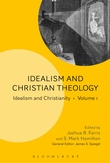
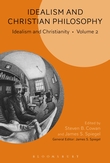
I am happy to announce the release of a two-volume book series entitled Idealism and Christianity, which I edited with the help of my colleagues Steve Cowan, Joshua Farris, and Mark Hamilton. The books are published by Bloomsbury Press and constitute what we hope will be the start of a renaissance of scholarly interest in metaphysical idealism. This is the thesis that mind is most real, and that the entire physical world essentially constitutes the thoughts of that wise and almighty mind—God.
The first volume in the series, entitled Idealism and Christian Theology, explores a variety of issues in theology, including Christology, the resurrection of Jesus, the doctrine of creation, and the knowledge of God. Contributors include Oliver Crisp, William Wainwright, and Keith Yandell. The second volume, Idealism and Christian Philosophy, features essays treating such issues as time, truth, perception, science, miracles, and the mind-body problem. Contributors include Doug Blount, Howard Robinson, Charles Taliaferro, and Keith Ward.
The heroes of the volumes are two 18th century thinkers: George Berkeley and Jonathan Edwards. Both of these great scholars regarded Idealism as amenable to a Christian perspective because it constitutes the most biblical and philosophically plausible way of conceptualizing the world. Idealism effectively addresses skeptical challenges to theism and it provides helpful resources for dealing with all sorts of knotty problems that have plagued philosophers and theologians for centuries.
In addition to the scholarly benefits of Idealism, this perspective also has tremendous personal benefits and is a powerful boon to faith. This was the constant refrain of Bishop Berkeley who concluded his classic defense of Idealism by confessing that his purpose in writing was to “inspire my readers with a pious sense of the presence of God and . . . the better dispose them to reverence and embrace the salutary truths of the Gospel, which to know and to practice is the highest perfection of human nature.” Amen to that, good Bishop!
This past Saturday, November 21, the Taylor University Ethics Bowl team won the Central States regional championship for the 5th time in the history of the program.
Photo by Jim Garringer
Twenty-six teams from fifteen colleges and universities participated in this year’s Central States regional competition, which once again was held at Marian University in Indianapolis. The other schools involved were Belmont University, DePauw University, Illinois Wesleyan University (two teams), Indiana University (two teams), IUPUI-Fort Wayne, Marian University, Millikin University (three teams), Mount St. Joseph University (two teams), Northern Kentucky University, Ohio Northern University, Slippery Rock University, St. Mary of the Woods College, University of Arkansas (two teams), University of Southern Indiana, Xavier University, and Youngstown State University.
As usual Taylor entered two teams, and the rosters were as follows:
Team I:
Veronica Toth (Senior, English Writing)
Blair Hedges (Junior, Political Science)
Jackson Wilcox (Sophomore, Accounting)
Sarah Manko (Freshman, Exercise Science)
Caleb Holleman (Freshman, Math and Philosophy)
Loyal Juraschek (Sophomore, Philosophy)
Team II:
Kasey Leander (Senior, History and Political Science, Philosophy, & Economics)
Sam Moore (Junior, Philosophy and Biblical Studies)
Gabriel Harder (Freshman, Philosophy)
Chin Ai Oh (Sophomore, Political Science, Philosophy, & Economics)
Bo Thomas (Freshman, History and Philosophy)
Gloria Talbot (Sophomore, International Business Systems)
The top finishing teams qualify for the national tournament. At the competition each team competes against three other teams, and our teams had a combined record of six wins and no losses:
TU team #1 defeated Marian University (149-131), DePauw University (158-149), and Indiana University II (163-141)
TU team #2 defeated Univ. of Arkansas II (160-136), Ohio Northern Univ. (158-136), and Mt. St. Joseph Univ. I (149-139)
Taylor now has a combined 18-match winning streak, dating back to nationals earlier this year and regionals last year.
As is typical of Ethics Bowl competitions, very timely issues were debated in the various matches. These included the following:
Do religious freedom laws (protecting, say, a baker’s right not to make a cake for a same-sex wedding) properly balance constitutional rights?
Is the “Law Enforcement Officers Bill of Rights” (providing that law officers can’t be forced to make a statement within ten days of an incident) morally justifiable?
Does the American Freedom Defense Initiative (which ran the “Muhammad cartoon contest”) practice appropriate free speech or unacceptable intolerance?
Is the composting of human corpses, as advocated by the Urban Death Project (for environmental reasons) an acceptable way of disposing of the dead?
Is the Indian Child Welfare Act (mandating that social services place displaced Native American children with tribal relatives) morally appropriate?
These were just five of fifteen cases that all of the teams had to prepare to address. Other cases pertained to issues as wide ranging as the ethics of physicians’ prescribing hard narcotics to their patients, sexism in video games, a New Zealand species conservation case, special taxes on parents who refuse to vaccinate their children, the ethics of human egg freezing to delay motherhood, and the ethics of forcing parents to have their young teenager undergo chemotherapy. You can find a complete list of cases as well the competition rules and guidelines here.
In the regional competitions (unlike nationals) wins and losses do not impact teams’ overall scores. Rankings are determined entirely by scores awarded by judges. The top five at the conclusion of the day were as follows:
Taylor University I
St. Mary of the Woods College
Illinois Wesleyan University I
Indiana University I
Taylor University II
The national Ethics Bowl competition is scheduled forFebruary 21, 2016and will be held at the Hyatt Regency Hotel in Reston, Virginia (near Washington, DC). A total of 36 teams will participate, and Taylor will be striving to defend its national title.
If you’re not familiar with The Conversation, it is a really cool web magazine, essentially the same format as a traditional news magazine (with news reports, commentaries, arts & culture pieces, etc.). However, all of the content is written by scholars with expertise in the areas they write about, as opposed to having staff journalists with no expertise on a given topic attempting to summarize information they gather from scholars and other experts. The Conversation has a very rigorous editorial process, too, which is refreshing.
The editors at The Conversation asked me to write this piece after seeing an article of mine in the journal Think, entitled “Why Flatulence is Funny.” In this article I explore in depth the question that I briefly address toward the end of my Conversation article, namely why it is that farts are funny.
Also, you’ll be interested to know that my precious status as an international authority on the topic was secured with this report last year in the Helsingin Sanomat, which is the largest newspaper in Helsinki, Finland. (You’ll want to read this one very carefully.)
So if you ever hear anyone call me a crap scholar, please correct them. I’m actually a fart scholar. There’s a substantive difference . . . so to speak.
Last weekend’s Rethinking Hell conference at Fuller Seminary in Pasadena went extremely well. Greg Stump, Christopher Date, et al. did a superb job organizing and directing it. Those in attendance represented the spectrum of Christian views on the issue: traditionalists, universalists, and conditional immortalists. I was one of six plenary speakers, three of whom (including me) affirm conditional immortalism.
For those not aware, the three views are as follows. Traditionalists maintain that the damned suffer eternal conscious torment in hell. Universalists believe that, though some may suffer in hell for some indeterminate length of time, everyone is ultimately restored to fellowship
Greg Stump, David Instone-Brewer, Jim Spiegel, Oliver Crisp, Jerry Walls, and Robin Parry
with God. And conditional immortalists maintain that the damned suffer for a finite period in hell and are ultimately annihilated (hence the term “annihilationism” that is sometimes applied to conditionalists).
The plenary speakers featured traditionalists Oliver Crisp and Jerry Walls, universalist Robin Parry, and conditionalists David Instone-Brewer, Christopher Date, and myself. All of their presentations were very good and generated substantive discussion with the audience. And I greatly enjoyed the discussion with them in between the sessions.
Jerry Walls is especially enjoyable to engage with, as he is a zealous Arminian and strong critic of Calvinists (like me) and anyone who shows sympathy with Roman Catholicism (like me). But we do agree on much more than we disagree about, especially when it comes to moral and social issues.
Future Rethinking Hell conferences are tentatively planned for the United Kingdom and Australia. And there is also talk of regional Rethinking Hell conferences. Stay tuned!

 This was my first experience at formal debate, so I was curious to see how it would go. I certainly enjoyed
  it, and I found the time constraints to be the most challenging aspect of the experience.