Two New Publications on Sexual Ethics

Two new publications of mine deal with issues related to sexual ethics.  One of these is an article entitled “Great Cloud of Moral Witness,” just published in Touchstone magazine.  In the article I develop an historical argument for the traditional Christian view of sex and marriage, noting that for nearly 2000 years no significant Christian theologian or biblical scholar defended the permissivist view on 61t3WhQRhXL._SX331_BO1,204,203,200_human sexual relations.  That is, for all of Christian history until just recently, all major Christian thinkers who addressed the subject have agreed that sexual relations are only appropriate within a marriage between one man and one woman.  I argue that for Christians this uniform consensus of scholarly opinion creates a strong presumption in favor of the traditional view and that those who nonetheless reject it display arrogance or ignorance (or perhaps some combination of both).

Another essay of mine, entitled “The Sexual Pluralist Revolution: Reasons to be Skeptical,” appears in the just-released volume Venus and Virtue, edited by Jerry Walls, Jeremy Neill, and David Baggett and published by Cascade Press.  (The germ of this piece was a W&F blog post in May 2014.  My Touchstone article, however, goes into some depth in highlighting major Christian theologians and biblical scholars who defended the traditional view.)

The Venus and Virtue book consists of sixteen chapters written by men and women from a variety of disciplines (e.g., theology, philosophy, biblical studies, psychology, counseling, youth ministry, etc.), each addressing a different aspect of the sexuality issue.  Section headings include “Biblical and Theological Foundations for Human Sexuality,” “Christian Sexuality for Singles,” “Christian Sexuality for Persons with Same-Sex Attraction,” and “Pastoral Wisdom for Christian Sexuality.”  I highly recommend this resource for pastors, young adult ministers, college professors, and Sunday school teachers.


The Ten Cultural Commandments of 21st Century America

American Citizens,

A little more than 130 years ago, through my pugnacious oracle, Friedrich Nietzsche, I announced the death of God in the West. In recent times, this prophecy has finally been realized in America, though, of course, not in the form of widespread disbelief in the Judeo-Christian deity. Alas, verbal affirmations of the deity’s existence abound as always. Rather, the death of God has occurred in the form of practical rejection of the moral standards of this being. For years, many have labored to serve this culture’s new lord—the self—though without the benefit of official guidelines for conduct. Therefore, at last, I now proclaim to you a new and definitive set of standards—a “transvaluation of all values,” one might say—which, through the faithful assistance of Hollywood, major news networks, and, especially, American institutions of higher learning, has now fully triumphed. Here, then, for your thoughtful consideration and lifelong devotion, are the Ten Cultural Commandments of 21st Century America:

  1. Thou shalt love thy own moral autonomy with all thy heart and reject all notions of external or absolute moral authority, for thou art entitled to all things of thy own choosing.
  2. Thou shalt remember that humans are merely highly evolved animals and thus have no fixed essence or nature.
  3. Thou shalt honor empirical science above all other means of knowledge acquisition and therefore render due suspicion on all truth claims related to value, design, or purpose in nature.
  4. Thou shalt not regard any metanarrative as exclusively true or even as more true than its alternatives, except to the extent that such may reinforce belief in the relativity of all values.
  5. Thou shalt respect every truth claim as valid if it is supported by appeal to one’s identity as part of any classifiable group, except, of course, that of white, heterosexual, Anglo-Saxon males.
  6. Thou shalt accept all sexual choices and family arrangements as morally legitimate so long as they are freely and voluntarily made.
  7. Thou shalt declare any expression (spoken or written) to be offensive if it makes you or anyone anywhere at any time the least bit uncomfortable, regardless of any consideration of context, nuance, or factual content.
  8. Thou shalt regard all human problems and failures as arising from flawed social arrangements rather than as resulting from an innate moral defect in the human species.
  9. Thou shalt prioritize personal feelings and experiences over logic and reason in all public discussions regardless of the subject matter.
  10. Thou shalt determine thy own identity and meaning in life, so long as when this is worked out in practice thou dost not transgress any of the above commandments.

Americans, this is the way to self-fulfillment. Fix these words in your hearts and minds, tattoo them on your upper arms, and create abbreviations of them for your vanity license plates.

Now go thou into the world, teaching others to follow these commandments, while ridiculing and destroying the careers of those who fail to respect them.

Triumphally yours,

Zarathustra

New Publication on the Ethics of Virtual Reality Technology

Last week an article of mine, entitled “The Ethics of Virtual Reality Technology: Social Hazards and Public Policy Recommendations,” was published in the journal Science and Engineering Ethics. In the article I discuss a number of issues related to virtual reality technology that are of serious moral concern and which, I argue, warrant the implementation of industry regulations. Here is the article abstract:

This article explores four major areas of moral concern regarding virtual reality (VR) technologies. First, VR poses potential mental health risks, including Depersonalization/Derealization Disorder. Second, VR technology raises serious concerns related to personal neglect of users’ own actual bodies and real physical environments. Third, VR technologies may be used to record personal data which could be deployed in ways that threaten personal privacy and present a danger related to manipulation of users’ beliefs, emotions, and behaviors. Finally, there are other moral and social risks associated with the way VR blurs the distinction between the real and illusory. These concerns regarding VR naturally raise questions about public policy. The article makes several recommendations for legal regulations of VR that together address each of the above concerns. It is argued that these regulations would not seriously threaten personal liberty but rather would protect and enhance the autonomy of VR consumers.

As for the regulations I recommend in the article, they include (1) a standardized rating system for VR technologies, (2) minimum age requirements for some VR products, (3) informational and warning labels, (4) public disclosure mandates, and, depending upon the degree to which VR technology merges with social networks, (5) “no share” laws regarding user data gleaned by VR companies.

To this day I have yet to experience VR technology first hand. This avoidance was not entirely intentional, but now I am pleased that I finished this research project before doing so, as I was somewhat wary of how the experience might bias my thinking about the subject. I am happy to say that all of the arguments and recommendations I make in the piece are based entirely on the research data I explored. But now that the article is published, I’m eager to do give VR a try. Anyone out there want to invite me to join them for a trip to a virtual world? I’m ready to don a headset and make the plunge!

Seneca on Anger

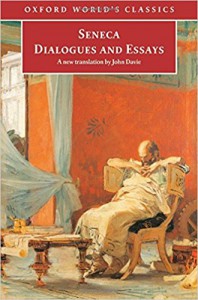
This semester in my Principles of Ethics class I’ve been incorporating some new readings, including several works by the ancient Stoic philosopher Seneca.  A lot of his stuff is not only insightful but also practically beneficial, not to mention beautifully written.  His essay “On Anger” is an excellent case in point.  Personally, I think he goes too far in suggesting that all anger should be avoided, but I think we all can agree that much, if not most, human anger is counter-productive.  And we all would benefit from improving in the area of anger management, especially in these days of division and rancor.  Below I have highlighted some of Seneca’s thoughts on the subject which you may find helpful.  (All quotes below are from the Oxford edition of Seneca’s Dialogues and Essays, translated by John Davie.)

Why Anger Should be Avoided

  1. Anger inflicts harm on oneself: anger makes one a prisoner of one’s own passion. It is more painful to 516fhtlbDsL._SX328_BO1,204,203,200_surrender to anger than to resist it: “every sense of grievance grows to self-torture” (32). “The anger I feel is more likely to do me harm than any wrong you may do me” (40).
  2. It is a sign of greatness to be resistant to all disturbances: “a lofty mind, always composed and established in a peaceful location, suppresses all that produces anger, and so is moderate, well-ordered, and earns respect; none of these things will you find in an angry man” (23).
  3. Anger turns men into savages: Gaius Caesar and many other leaders have allowed their anger to the most extreme cruelties, which extends even to fury on entire nations. Anger begets “every sort of evil, fire and sword. Trampling shame underfoot, it defiles men’s hands with murder . . . and leaves no place free from crime” (50).

Anger is Susceptible to our Control

  1. Many others have pardoned worse sins than you’ve suffered: People have forgiven criminal offenses, so “should I not pardon laziness, carelessness, or chattering?” (39). Even Harpagus controlled his anger when he was forced to eat his own sons, which the Persian king had killed, cooked, and served to him.
  2. You are able to tolerate other forms of irresponsibility, such as “a sick man’s lunatic behavior, a madman’s crazed words, or children’s petulant blows. . . . What difference does it make what fault it is that makes a person behave irresponsibly?” (40).

Guidelines for Avoiding Anger

  1. Take note of the things that provoke you: “It is an advantage to know one’s illness and to destroy its strength before it has scope to grow” (27).
  2. Use humor as a defense: “Let most affronts be turned into amusement and jest.”
  3. Resist the tendency to suspicion and exaggeration: “Very many men manufacture complaints, either by suspecting what is untrue or by exaggerating the unimportant. Anger often comes to us, but more often we come to it” (28).
  4. Put yourself in others’ shoes: Usually anger results from an “unjustified estimate of our own worth” and “an unwillingness to put up with treatment we would happily inflict on others” (28).
  5. Remember that everyone does foolish things: “Even the wisest men do wrong.” “No one is so ripe in judgment that his self-possession is not driven by misfortune into some heated action” (39). “All of us are inconsiderate and imprudent, all unreliable, dissatisfied, ambitious—why disguise with euphemism this sore that infects us all? All of us are corrupt.” (40).
  6. Remember your mortality: Resisting anger will make you more lovable. Better to “spend the brief span we have left in rest and peace” (50). Anyway, the one who offended you will die one day, whether or not you burn with anger toward him.  “Soon we will spit out this little spirit. In the meantime, while we have breath, while we are among our fellow men, let us behave as men should; let us not be a cause of fear or danger to anyone; . . . and let us tolerate with a great mind our short-lived misfortunes” (52).

WANTED: Gay Affirming Christian Scholar from Before 1950

I am currently researching and writing a chapter for an upcoming book on sexual ethics, to be entitled Venus and Virtue (edited by Jerry Walls, Jeremy Neill, and David Baggett and published by Wipf and Stock). The aim of the book is, in the editors’ words, to “recover Christian wisdom about sexuality by exploring again the biblical and theological foundations that teach us how to celebrate sex while seeking sanctification.”

My own chapter, entitled “The Sexual Pluralist Revolution: Reasons to be Skeptical,” will discuss the dramatic shift of perspective that has occurred in the West within the last generation regarding sexual morality—a shift away from the traditional Judeo-Christian ethic of sex as appropriate only within heterosexual marriage and in the direction of affirming any sexual relationship so long as it takes place between consenting adults. I dub this view “sexual pluralism.” I think there are several reasons to be skeptical of sexual pluralism, not the least of which is the fact that there appear to be no gay-affirming Christian scholars (theologians, philosophers, ethicists, etc.) in history until the latter part of the twentieth century. So with this post I am beckoning our readers to help me out here. Can anyone give me a plausible example of such a scholar?

This matter of historical precedent is quite germane to the question of a Christian’s skepticism about sexual pluralism, and here’s why. As Christians we should take seriously the wealth of moral and theological wisdom that has preceded us historically, and where there is strong consensus among our best thinkers about an issue, as there is on the sexual conduct question, then that forms a strong presumption in favor of the prevailing view. Now since sexual pluralism constitutes a rejection of the Christian consensus about sexual ethics, then, to say the least, we ought to be rather skeptical of this view. In fact, it seems to me, to dismiss the strong consensus of all of the greatest Christian minds who have written on the subject down through history is actually quite arrogant or else historically myopic (or perhaps, to a degree, both).

Now it is very clear that there is, as I have said, a strong historical consensus among Christian scholars on sexual ethics until the last few decades. (This point is strongly confirmed in Fortson and Grams’ new book Unchanging Witness.) But what I want to know is whether there is actual unanimity—agreement without exception—among Christian scholars regarding the traditional sexual ethic until the mid-twentieth century. Not that my argument depends on such, of course. One would expect at least a few historical exceptions, given the many thousands of Christian scholars who have weighed in on the issue over nearly twenty millennia. Identifying a few outliers would not undermine the argument. But I am intrigued by the possibility that there are no such outliers and that there really was complete unanimity on the issue among Christian scholars until recently. So again, I beseech your help in identifying an example for me. This would then confirm that I should avoid use of the term “unanimous” in my chapter in describing the Christian scholarly consensus on the issue prior to the mid-twentieth century.

Now, a couple of caveats. First, it will not do to point to a given scholar in history who might appear to have engaged in same-sex practices or to cite historical innuendo in that direction. Not only is this potentially slanderous regarding the scholar in question but it misses the point of my argument, which regards the studied views of Christian scholars down through history, for it is this which carries some epistemic authority for Christians today.

Also, it won’t do to appeal to the dangers of being a sexual pluralist or gay affirming in past times, thus ostensibly explaining the silence of dissenting Christian scholars on the subject. This is because down through history thousands of Christians—scholars and lay people alike—have suffered severely for rejecting other doctrines, even those as relatively minor as particular views on communion and baptism, as well as the doctrine of salvation and creedal matters. (Here is one partial list.) So if some Christian scholars were gay affirming in such dangerous contexts, surely at least a few would have been willing to make this known despite the damaging consequences. Also, the threat of execution or even severe prosecution would not apply to all Christian contexts in all countries down through history. In some places and times, the ramifications for affirming sexual pluralism would be less severe, thus making the supposed “silence” of all sexual pluralist Christian scholars less plausible.

Swinburne, Homosexuality, and the Society of Christian Philosophers

This weekend I attended the Midwest meeting of the Society of Christian Philosophers at Evangel University. The theme of the conference was “Christian Philosophy and Public Engagement.” The keynote speakers included Alexander Pruss (Baylor University), Leigh Vicens (Augustana University) and the eminent Richard Swinburne (Oxford University). Each of the keynoters gave thoughtful and stimulating presentations.

Unfortunately Swinburne’s talk sparked controversy, though it really shouldn’t have. In his presentation, entitled “Christian Moral Teaching on Sex, Family and Life” he addressed, among many other moral issues, homosexuality. img_2160  He noted that the inability of homosexual couples to procreate constitutes a “disability” and referred to those gays and lesbians who are unable to develop heterosexual desires as “incurable.” During the Q&A that followed, an attendee named J. Edward Hackett badgered Swinburne with a Foucauldian rebuke, insisting that Swinburne’s constituted “metaphysical violence.” Hackett never addressed his actual arguments but simply made this indignant accusation, to which Swinburne responded with admirable patience and grace.

The next day Hackett posted about it on the Philosophical Percolations blog. Hackett’s piece is a semi-coherent rant that misconstrues Swinburne’s actual remarks, though he is correct in noting that Swinburne believes—in agreement with Christian scholars throughout church history—that homosexual behavior is morally wrong. This was followed just hours later with disclaimers by both the SCP president Michael Rea and img_2162executive director Christina Van Dyke, distancing the SCP from Swinburne’s remarks. Rea’s statement, posted on his Facebook page, is as follows:

I want to express my regret regarding the hurt caused by the recent Midwest meeting of the Society for Christian Philosophers. The views expressed in Professor Swinburne’s keynote are not those of the SCP itself. Though our membership is broadly united by way of religious faith, the views of our members are otherwise diverse. As President of the SCP, I am committed to promoting the intellectual life of our philosophical community. Consequently (among other reasons), I am committed to the values of diversity and inclusion. As an organization, we have fallen short of those ideals before, and surely we will again.

Not surprisingly, this prompted a lengthy discussion with opinions expressing both support and criticism of Rea’s disclaimer. Personally, I side with those who are critical of Rea’s approach, and for several reasons.

First, while Rea would likely insist (as some supporting him do) that such a disclaimer does not necessarily constitute a rejection of Swinburne’s view, such seems to be implied. Disclaimers like this are only issued when an organization regards someone’s views as embarrassing or problematic and thus effectively amounts to a censure. For an academic society to do this to an invited speaker is really bad form, but it is especially inappropriate when the speaker is someone of the stature of Richard Swinburne, who is one of the top philosophers of religion in the world and whose work for the Society of Christian Philosophers for more than three decades has been immense. If I were Swinburne, I would feel humiliated by this. Talk about “hurt” that is worthy of “regret.”

Second, this disclaimer sets a dangerous precedent and chills the academic air for anyone in the SCP who holds the traditional view on the ethics of homosexuality. Will I be the next one to be called out by an SCP officer if I express the same view at a future conference? While surely not intended to censor the advocacy of the traditional view of Christian sexuality at SCP meetings, from a psychological standpoint Rea’s remarks could be tantamount to this. Some Christian scholars active in the SCP, especially those who are early in their careers, may be intimidated into silence about their traditional views on sexual ethics. This is hardly an atmosphere that is desirable for an academic community where the free and open sharing of ideas is crucial.

Third, it is disturbingly ironic that Rea’s disclaimer distances the SCP from what is an historic Christian conviction regarding the morality of homosexual behavior. Would he have posted a similar disclaimer if a keynote speaker had defended a permissivist view on homosexuality? I doubt it. But now that the traditional view is under fire in our culture, he deems it necessary to disclaim a speaker’s assertion of the view—a stance which, by the way, was not as strong as some assertions in biblical passages such as Romans 1:26-27, 1 Corinthians 6:9-10, and 1 Timothy 1:9-10 (not to mention the language used in Leviticus 18:22 and 20:13). One wonders if Rea would have posted a similar disclaimer if St. Paul himself delivered a keynote address at the SCP. After all, if the apostle simply read the relevant passages from his epistles, his remarks would be no less “hurtful” than Swinburne’s.

I don’t know where this controversy will lead or how this will impact the SCP. But one thing is certain: it is indicative of a dramatic and alarming shift regarding discussions of sexual ethics within the Christian academic community.

Why Tattoos Bug Me (and perhaps you)

For as long as I can remember, I have been annoyed by tattoos. Well, mainly the kind that are prominently displayed, especially on people’s torsos. And for as long as I’ve been bothered by them, I’ve wondered why they bug me. After all, people adorn their bodies in all sorts of other ways—with jewelry, piercings, make-up, etc.—and those things don’t usually annoy me. So why tattoos? My frustration at not knowing why they bother me so much has only been aggravated by the fact that, apparently, they bother many other people too. Yet, as I’ve discussed the matter with a lot of folks who feel the same way, they are almost always at a loss to explain their displeasure and usually throw it up to inexplicable personal distaste. Well, recently the reason for my distaste finally dawned on me, and so I will now share it with you, gentle reader.

from NextLuxury.com
from NextLuxury.com

We’ve all had the experience of encountering the elaborate dragon, butterfly, skull, jungle scene, abstract image or geometrical shape tatted on the back of that guy or gal in front of us at the grocery store, and we’ve been impressed by the exquisite detail or perhaps completely perplexed by what we were seeing. Then when s/he suddenly turned around, we looked away just in time before the person caught us gawking at her/him. Whew. But, then again, while staring at the tattoo, was it really her/him we were looking at?

Tattoos are typically intended to be artistic or, one might say, even genuine works of art. And works of art are supposed to be enjoyable objects of aesthetic pleasure. Art works also welcome study and analysis, and in the case of visual arts this means careful and extensive visual examination. However, the bodies of fellow human beings whom we do not know very well are not properly objects of intensive visual study. To stare at or closely examine another person’s body in public is, well, rude and inappropriate.

And there lies the problem with many tattoos, it seems to me. A prominent, eye-catching tattoo invites or tempts others, even complete strangers, to closely examine the person’s body—that is, to do something that is rude and inappropriate. And the stronger one’s visual aesthetic sensibility, it would seem the stronger that temptation will likely be. Now the tattoo fan will likely respond here by saying “too bad, just ignore it.” Well, of course, that’s just what I struggle to do every time I encounter someone in public who has a prominent tattoo. I restrain myself and look away—anywhere but at that person’s body. But in doing so, I must exert mental energy to avoid doing so. And, the more artistic and aesthetically interesting the tattoo, the more mental energy I must expend and the harder I must work to distract myself from looking at the image.

Now here’s an analogy. We all know—or should know, anyway—that it’s often rude to whistle tunes in public spaces. While the whistler might enjoy the melody s/he is making, it is unwelcome to others and a sonic distraction. Of course, the whistler might say, “too bad, just ignore it.” But that is to give oneself license to sonically impose on others for the sake of their own “art.” Yes, we can ignore it, but many times that’s difficult, and it requires an extra exertion of mental energy to do so. Which is why the whistling is rude and inconsiderate. Similarly, prominent tattoos are an imposition on others—a visual imposition that places a burden on others to exert a bit more mental energy to “ignore” it. And, similarly, it is rude and inconsiderate. But what’s worse in the case of tattoos, the imposition they place on others is also a temptation to do something inappropriate—gawk at a stranger’s body in public. So as annoying as the public whistler is, at least they don’t tempt me to do something inappropriate (assuming their whistling isn’t so bad that I’m tempted to slug them).

In sum, then, prominent tattoos are a rude imposition on others, as they invite people to see the human body as an object and in so doing tempt them to do something inappropriate. That’s why tattoos bug me. And perhaps that’s why they bug you, too.

Moral Lessons from The Godfather Films

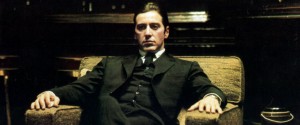
Last week I watched the first two Godfather films with one of my sons, and I was struck again at the brilliance of these movies, both as works of cinematic art and for their insightful themes about human nature, especially regarding moral psychology. So here I am going to highlight three of the more significant “lessons” from the Godfather I and II. I will assume that you have already seen both of these films. (If you haven’t done so, then in the name of aesthetic excellence, please do so as soon as possible!)

The first lesson is this: human beings are capable of rationalizing even the worst forms of wickedness. In the Godfather films, Vito, Michael and other members of the Corleone mafia family consistently refer to their illegal activities, including their most gruesome hits on various enemies, as “business.” This handy euphemism enables godfatherthem to see all of their murders as somehow legitimate. As bizarre and alien as this might seem to us as viewers, it is important to remember that this only differs in degree, not kind, from rationalizations of which we are all guilty. We may not glibly refer to murder as “business,” but we might reconceive our arrogance as “self-confidence,” minimize our inconsiderateness as “competitiveness,” or dismiss our temper tantrums as “venting stress.”

Another important reminder from the Godfather films is that even the best of us is vulnerable to corruption, given the right circumstances. At the start of the film, Vito’s son Michael is the only innocent adult male in the Corleone family. A recent war veteran, Michael is an honorable young man—brave, respectful, self-controlled, and principled. With such virtue, how could he ever be corrupted? Well, when your father is gunned down and you see your family suffering severely as a result, this can tempt anyone to revenge. And, of course, Michael succumbs in dramatic and protracted fashion. Perhaps the only reason you and I have not followed the path of Michael Corleone is—thank God—we’ve never been put in those same circumstances.

Thirdly, some of the most powerful temptations to evil are those which invite us to achieve good consequences. It was Michael’s love for his family and his sense of justice that prompted his outrage at the assassination attempt on his father. And it was this outrage which was the doorway to his corruption. Thus, while the usual temptations to power and wealth were insufficient to turn Michael to the dark side, a reasonable desire to see a wrong made right was sufficient. This serves as a powerful reminder that we are never so virtuous as to be out of the reach of evil, for even our strongest virtues can be leverage points for the most severe moral failures.

The story in the Godfather serves as a cautionary tale about the universal human potential for extreme wickedness. In many ways, the films realistically highlight a significant, if painfully dark, aspect of human nature and the need to guard ourselves in light of this. It is a theme succinctly expressed by the Lord himself in his famous remark to Cain—a man who, like Michael Corleone, faced temptation to murder and who likewise succumbed: “Sin is crouching at your door; it desires to have you. But you must rule over it” (Genesis 4:7). Amen and Amen.

The Best and Worst of 2015

It’s been another exciting year, and we want to thank you all for reading and, if applicable, posting comments on our blog. Once again, we would like to close out the year with some summary remarks about good and bad stuff related to film, music, books, sports, food, and family.

Best Film Experiences:

Jim: This was a big year in film, and I was fortunate to catch a lot of good ones, both at the theater and on DVD. A highlight in the latter category was watching Richard Linklater’s amazing Boyhood twice in as many days. All of the superlatives critics have laid on this one—“masterpiece,” “extraordinary,” “historic cinematic achievement”—are accurate. If you haven’t seen it, check it out. Another highlight was the new Star Wars film. With The Force Awakens, J. J. Abrams has saved the Star Wars legacy. He managed to achieve the same organic feel, character-centric storytelling, and campy wit as the originals, all while advancing a narrative that will hopefully keep us captivated for years, if not decades, to come. I also enjoyed Inside Out, which deserves accolades for its unique premise as well as its fine execution. Another major highlight was M. Night Shyamalan’s The Visit, which proved that, after a few stinkers, he can still make a great thriller.

Amy: It feels strange to say I am having a hard time remembering good movie experiences this year. While I loved The Visit as a film, the audience Bailey and I shared the theater with nearly ruined it for me. I wasn’t blown away by Star Wars. I mostly enjoyed things on the smaller screen. The Man in the High Castle for serious-minded alternate reality and Tommy and Tuppence for pure fun. There were some good PBS series this summer and I am holding my breath in hopes that Downton Abbey and Sherlock won’t disappoint this winter.

Jim’s Best Musical Experiences of the Year: The year started slowly but finished strong in terms of discoveries of good artists or new albums from artists I was already into. In the latter category, I finally got Manchester Orchestra’s Cope, which is even more addictive than their albums usually are for me, which is saying a lot. Also, after many recommendations from friends, I picked up an Arctic Monkeys album—Whatever People Say I Am, That’s What I’m Not.  I was not disappointed. And I’ve been getting into the new albums by Alabama Shakes (Sound and Color) and Twenty One Pilots (Blurryface), as well as several albums by Cage the Elephant, which is my most exciting musical discovery in years. A virtue that all of these bands have in common is that they (or, anyway, their main songwriters) have something significant to say. That’s refreshing in an era of predominantly mindless musical fluff.

Amy’s Best Food Experiences of the Year: This year most of my food experiences have been in my own kitchen, the remodeling of which was a major highlight. I have done some experimenting, catered a friend’s wedding and decompressed with some serious baking. We also hosted our first Thanksgiving meal at home and though my rolls were undercooked and I was not impressed with the addition of cinnamon to my usually yummy pecan pie, filling our table with beloved faces and laughter was quite satisfying.

Jim’s Favorite Sports Moments of the Year: I am sincerely hoping that my favorite sports moment of 2015 is yet to come.  This would be Michigan State defeating Alabama in the Citrus Bowl tonight, which is also the NCAA football playoff semi-final. We’ll see. Go Green, roll over the Tide! But if that doesn’t happen, then I would say that watching the Cubs make it all the way to the National League championship series—just a few wins shy of the World Series and thus breaking the “goat curse”—was the 2015 sports highlight for me.

Amy’s Favorite Sports Moments of the Year: Hopefully, Jim will forgive me for this one, but my favorite moment was randomly choosing to represent the Spartans while Jim cheered on the Wolverines in the Michigan intrastate rivalry game and then watching their unbelievable last second win. I felt slightly guilty cheering in his stunned face, but since he is rooting for MSU against Alabama, he must have gotten over it.

Jim’s Most Disappointing Sports Moments of the Year:  I’m not even going to comment on that tragicomic finish in the UM/MSU game… This NFL season has been chock full of disappointments, as none of my three favorite teams—the Colts, Lions, and Saints—will make it to the playoffs.  (Yes, three favorite teams—Amy calls me a promiscuous fan, but I own it proudly). And, regarding baseball, it was pretty deflating to see the Cubs bow out to the New York Mets in the NLCS. However, this made it all the sweeter to see the Kansas City Royals beat them in the World Series.

Amy’s Most Disappointing Sports Moment of the Year: Every year, I tell myself that a true Cubs fan knows they are cursed, has no hope, but cheers for them anyway. Still, hope will find a way to creep in and whisper sweet nothings in my ear only to give way to disappointment…again. This year hurt.

Good and Bad Reads of the Year:

Jim:  As usual, my reading this year was almost exclusively non-fiction, and primarily scholarly stuff, especially having to do with ethics and philosophy of religion. Robert Reilly’s Making Gay Okay: How Rationalizing Homosexual Behavior is Changing Everything (Ignatius, 2014) is one of the best books dealing with ethics, not just sexual issues, that I’ve read in years. Reilly takes a natural law approach to the issue, and the book is replete with bold observations and profound insights. I highly recommend this book to anyone interested in the LGBT issue, whatever one’s perspective might be. My most disappointing read of the year was Thomas Jay Oord’s The Uncontrolling Love of God: An Open and Relational Account of Providence (InterVarsity, 2015).  This book has been touted by some as a step forward for open theism. It is anything but that, as the author’s thesis (that God is essentially limited both in terms of knowledge and power) is problematic in itself. But he also commits glaring mistakes along the way in making his argument (if one can call it that). Steer clear of this one, folks.

Amy: So many good reads this year it’s hard to know where to start. The Wright Brothers by David McCullough. The Sisters Brothers by Patrick Dewitt. The Good Earth by Pearl Buck. Ghost Boy by Martin Pistorius. The Devil in the White City by Erik Larson. Half Broke Horses by Jeannette Walls. Most of the things that I read and didn’t like, I wasn’t really expecting to like in first place. Some disappointing mysteries and less than stellar fiction, but overall this has been a great year of reading for me. Check out my Good Reads page or Book Blurbs here on Wisdom and Folly to see more reviews.

Best 2015 Family Memories:

Amy: The kids and I had some good outings this year. Maggie, Andrew and I visited Dayton, Ohio and took in some Wright Brothers sites as well as Wright Patterson Air Force Museum. We also went to the Dunes in Michigan in the Fall and had a great day climbing in the sand and watching Penny bark at the waves. Teaching Bailey to drive has been memorable, to say the least. Having my niece Rachel living close by as a freshman at Taylor has been pure joy.

Jim: I had lots of good sports (baseball, soccer, and basketball) memories with the boys.  And it was fun to see Maggie become an obsessive Beatles fan. Growing to love our new family member—our standard poodle named Penelope Lane Spiegel (or “Penny Lane,” for short—get it?), whom we adopted a little over a year ago—would probably top the list for 2015. And hiking the Smokies with Amy, the kids and my in-laws was another family highlight.

Best Kids’ Quotes of the Year

As usual, most of the best quotes from our kids this year come from our poet-comedian-dreamer daughter, Maggie (11).  But Andrew (9) got off a few good ones as well:

  • Maggie: “If I were God, the world wouldn’t be nearly so complicated.”
  • Andrew: “Make-up is for people who can’t accept the truth about how they look.”
  • Maggie: “If animals could talk, the world would have a lot more good stories.”
  • Maggie: “This is my favorite hair on my entire head.”
  • Andrew: “Everything that has to do with tomatoes is bad.”
  • Maggie: “A poor man’s wisdom is a rich man’s folly…I’m not sure that that means, but it sound right.”
  • Maggie: “Punching someone in the face is on my bucket list. If I have to, I’ll punch the nurse at my death bed.”

New Year’s Resolutions:

Amy: Not to sweat the small stuff and to keep showing up every day. Maggie and I are embarking on a Bible reading plan this year. Getting through five months with Bailey a continent away (as he attends school in La Paz, Bolivia this Spring) feels like quite the hill to climb so I suppose learning to entrust my kids ever further into God’s plan for their future should be among my loftier goals.

Jim:  Last year my resolution was to read half as much as my wife did this year, which would have meant reading 25 books. I didn’t quite pull that off. Okay, I didn’t even come close. So next year, since it is 2016, I resolve to read at least 16% as many books as Amy. I think I can pull that off, then perhaps add a percentage point each year. By the time the goal becomes unrealistic again, I’ll be able to blame my failure on senility. Yeah, that’s the ticket.

Happy 2016 everyone!