What Might Be or Could Have Been: Thoughts on Anxiety, Faith, and Providence

Several weeks ago a young friend of our family—I’ll call her Lisa—choked on a grape and required assistance in order to clear her windpipe and regain the ability to breathe. Once the grape was dislodged she was fine, and no medical attention was needed. However, understandably, Lisa was very shaken up by the incident, as were her parents.

In the days that followed, their entire family was prompted to some deep reflection about Lisa’s brush with death and the tragedy that was averted. As good friends of the family, we too reflected on the horrible “would could have been.” Eventually, this thought occurred to me: It was never God’s intention for Lisa to die that day, as is obvious from the fact that she did not die. In fact, from the standpoint of divine providence, it wasn’t even close. From our finite human perspective, yes, it seemed like “a close call.” But with God there are no close calls. There are just two categories: what he ordains and figments of our own imaginations.

A question for us, then, is whether we will let our imaginations cause us anxiety and fear.

Regarding the past, we may experience anxiety as we either regret or cringe over “close calls.” “If only I had done X, then situation Y would not have occurred.” Here we let our failure or oversight haunt us indefinitely. Or we may think, “if I had not done X, then this horrible thing would have happened. Oh no—I might not be so lucky next time!” In that case, we displace a positive turn of events with anxiety over a bad thing that nearly happened but didn’t.

And regarding the future, we worry over what might happen. “What if X happens, then Y or Z follows, which would be terrible!” Here we are allowing another kind of figment of our imagination to torment us. If it never happens, then we burden ourselves with something completely fictional. We are victims of our own psychological self-torture.

But, we may rationalize, doesn’t worry at least serve the positive function of preparing us for circumstances that will eventually come to pass? Well, not usually. This recent study showed that over 91% of the things we worry about never come true. And in the cases of many people, 100% of the things they dreaded never came to pass. This seems to suggest that worrying really is a waste of time and mental energy.

In all such cases, we choose to live in the subjunctive mood rather than reality. And we pay a costly price: peace of mind.

Of course, worry is a universal human experience. We all struggle with anxiety about the past and the future. The only differences among us is how much we do this.

In his Sermon on the Mount, Jesus addressed the problem, saying, “Do not be worried about your life, as to what you will eat or what you will drink; nor for your body, as to what you will put on. Is not life more than food, and the body more than clothing?” (Mt. 6:25). And his disciple Peter would later say, “cast all your anxiety on the Lord, because he cares for you” (1 Pet. 5:7).

These and other biblical admonitions seem to suggest that worry is under our control. As Kant’s dictum goes, “ought implies can.” That is, if there is a duty to do X, then we must be capable of doing X. If Scripture tells us to cast our anxiety on the Lord, then it must be possible to do this. But how?

I wish I had a simple formula, but I don’t. Prayer is an obvious starting point. Perhaps it’s also the ending point. And all the points in between. Also, I believe consciously leaning on the fact of divine providence is critical. If God really is in ultimate control of all that happens and “all the days ordained for me were written in [His] book before one of them came to be” (Ps. 139:16), then there is no reality beyond what he stipulates. I have found that serious meditation on this fact can be a powerful mental salve.

What could be or what would be (logical possibilities and causal counterfactuals) may be worth our attention for the sake of contingency planning. But we are wise to fight against the temptation to obsess over them. And it is the fight of a lifetime, since the temptation to worry is among the most persistent of all temptations in human experience.

So, in the end, like all temptations, worry is a test of faith. How much do we really trust God’s power, love, and faithfulness?

Death vs. Ascension

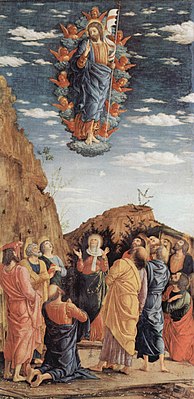
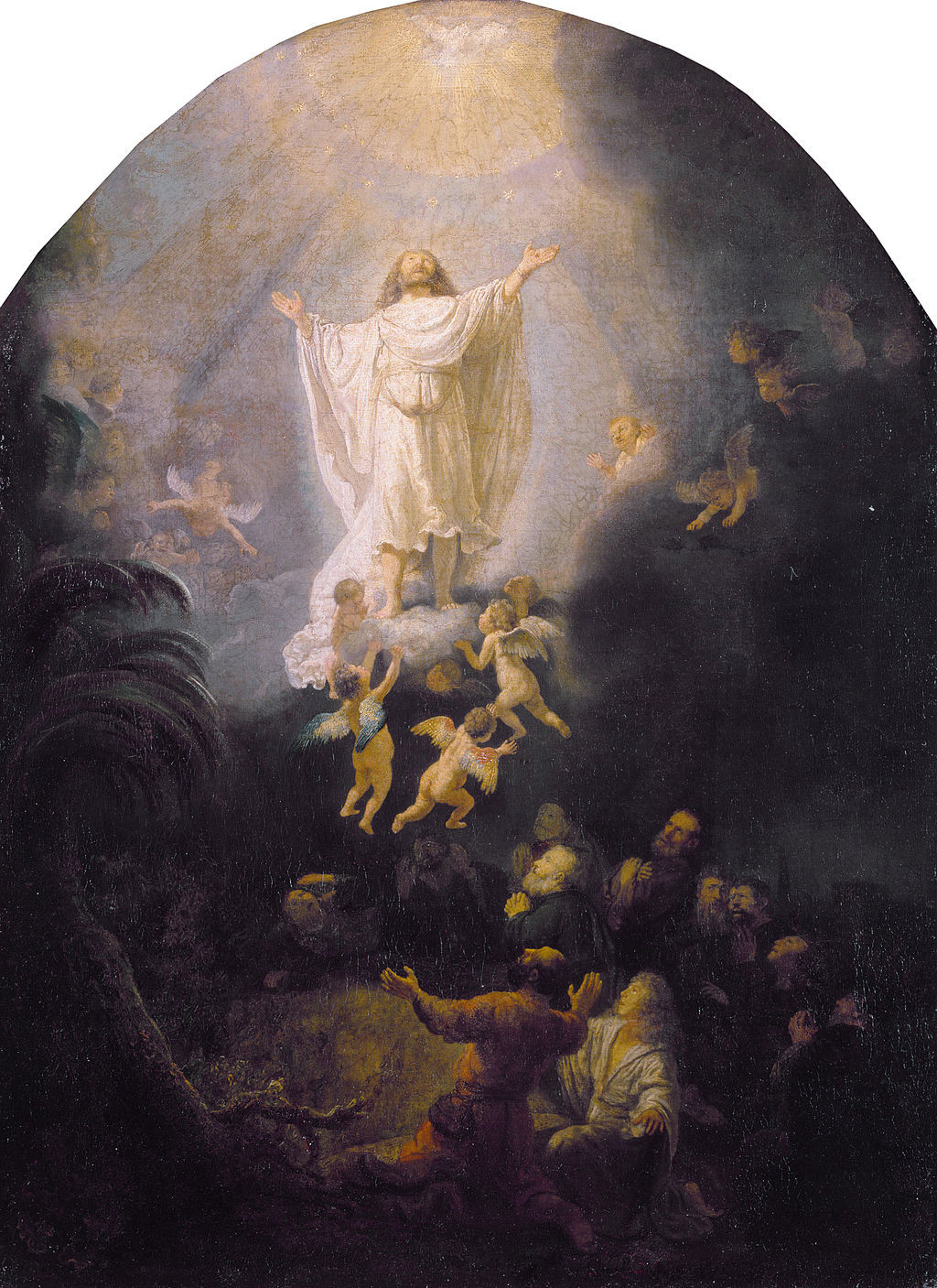
One of the most fascinating scenes in the New Testament—to my mind, at least—is the ascension of Jesus Christ. As Luke records the event in the book of Acts, he notes that after his resurrection, Jesus appeared to his disciples over a period of forty days and on one occasion:

They gathered around him and asked him, “Lord, are you at this time going to restore the kingdom to Israel?”

He said to them: “It is not for you to know the times or dates the Father has set by his own authority. But you will receive power when the Holy Spirit comes on you; and you will be my witnesses in Jerusalem, and in all Judea and Samaria, and to the ends of the earth.”

After he said this, he was taken up before their very eyes, and a cloud hid him from their sight.

They were looking intently up into the sky as he was going, when suddenly two men dressed in white stood beside them. “Men of Galilee,” they said, “why do you stand here looking into the sky? This same Jesus, who has been taken from you into heaven, will come back in the same way you have seen him go into heaven.” (Acts 1:6-11).

And that was the last they saw of Jesus. It was their final, unceremonious goodbye. And yet, apparently, there was no weeping or wailing. No one cried. No one mourned. In fact, the disciples simply got to work building the church and joyfully proclaiming the Good News.

What a contrast between this and when Jesus died six weeks earlier. And yet, from the standpoint of saying goodbye, at least as far as anyone could tell at the time, the situation was no different. A beloved friend was leaving for good. Why such a different response?

Was it the manner of death? This can’t be the explanation, since it is the loss of our loved ones that we mourn, not their manner of death. This is reflected in the (very reasonable) common expression, “I’m sorry for your loss.” We never say, “I’m sorry your loved one died the way they did.” Yes, an especially painful or violent death may exacerbate the pain of loss. But the essence of sorrow regards the loss of the person, not how they died. And yet, when Jesus ascended, the disciples lost their friend. So why no mourning?

Was it the presence of Jesus’ dead body that made his death so much more painful than his ascension? No, this can’t be it. If your loved one were to die in such a way that their body is out of sight or irretrievable (e.g., sunken in the ocean depths, lost in space, etc.) you would mourn every bit as much as if their lifeless body was present. The presence of a corpse may make some psychological difference (for better or worse), but that’s not the source of our sorrow. Again, it is the loss of the person we mourn.

Or maybe the difference lies in the fact that by the time Jesus ascended, he had proven he was the Messiah, that the disciples’ personal investment in him was not in vain, and that their trust in him was vindicated. Perhaps this is why
the disciples didn’t mourn his ascension. Again, this doesn’t account for the fact that, just as in the case of a physical death, by ascending Jesus was leaving them for good.

Or was he? It seems to me that the key to understanding the different responses is that Jesus’ ascension proved his departure was only temporary. That by his resurrection he proved that he had conquered death and that he could be trusted in his promise that he was going to return and bring about his everlasting kingdom. This meant, again, that the goodbye was not permanent but only temporary.

So the difference has to do with Gospel hope, something that the disciples definitely did not have immediately after Jesus was crucified and buried. In fact, they had lost all hope. But with the fact that the ascension occurred after his resurrection made all the difference. Moreover, his resurrection proved that all death is conquered and that, as Christians, all of our goodbyes are only temporary. And this is why the Apostle Paul would later dare to mock death, saying, “Where, O death, where is your victory? Where, O death, where is your sting?” (1 Cor. 15:55).

Of course, I am not saying that our mourning the death of friends and loved ones is not rational or that we lack faith in doing so. Rather, we mourn with hope. And, as Christians, we understand that our goodbyes really are temporary—that we, too, ascend after death and, like our Lord, we go to await our final reunion with the people of God. That is Gospel hope, and it makes all the difference in the world.

Staying on the Cross

In Martin Scorsese’s film The Last Temptation of Christ, Jesus’s last temptation is represented as the domestic life—to come down from the cross, take a wife, have kids, and live a normal family life. The film is a bit of fanciful celluloid imagination, but it gets this much right: Christ’s final temptation on earth was created by the mockers who challenged him to take himself down from the cross:

“It was nine in the morning when they crucified him. The written notice of the charge against him read: ‘The King of the Jews.’ They crucified two rebels with him, one on his right and one on his left. Those who passed by hurled insults at him, shaking their heads and saying, ‘So! You who are going to destroy the temple and build it in three days, come down from the cross and save yourself!’ In the same way the chief priests and the teachers of the law mocked him among themselves. ‘He saved others,’ they said, ‘but he can’t save himself! Let this Messiah, this king of Israel, come down now from the cross, that we may see and believe.'” (Mark 15:25-32)

Jesus resisted this temptation—something he could very easily have done, to relieve himself of such extreme torment and humiliation. But doing so would have undermined God’s perfect plan for the salvation of humanity. Jesus had to suffer in full in order to provide complete atonement for the human race. So Jesus had to submit completely, and, thankfully, he did.

Sometime before his crucifixion, Jesus told his disciples, “If anyone would come after me, let him deny himself and take up his cross and follow me. For whoever would save his life will lose it, but whoever loses his life for my sake will find it” (Mt. 16:24-26). This remark—like so many cryptic statements by Jesus—must have utterly confused them, not the least because they had no idea what fate shortly awaited Jesus. As we now know, it is not just a quaint, poetic expression but a metaphor we should seriously ponder for how it applies to us as Christ followers.

One application context is personal offense, specifically when a person refuses to apologize for a serious wrong committed against you, especially when this leads to public humiliation. If ever there was a time to urge someone to apologize, the sin of slander would probably be as compelling a reason as any. If you have already taken the steps of personal rebuke prescribed in Matthew 18 but to no avail, it can be tempting to “take matters into your own hands,” such as through spiteful treatment, public shaming, or worse. In the days of social media when discretion is an increasingly rare virtue, this can be especially tempting.

However, if their wronging you put you on this cross, so to speak, then any such responses may essentially be efforts to take yourself down from the cross rather than to “carry” it to the full extent God has ordained for you. When the Matthew 18 steps have been exhausted, I’ve resolved to eschew additional efforts and submit to whatever remaining suffering and slander may be meant for me. If Jesus tells me to deny myself, take up my cross, and follow him, then presumably this means I should be willing to remain on that cross as long as he stipulates.

Of course, there is a time and place to “escape” the torment of others, whatever form that might take, whether physical or psychological abuse, etc. And there is a time to confront people who owe you an apology for injustices and other wrongs that have caused you to suffer (as, again, we know from Matthew 18). But there is also a time to recognize when, humanly speaking, none of this is possible and only God can redeem the situation. Such is the time to remain on the cross and trust God for a moral resurrection within a human heart that only he can effect. That is my resolution, anyway, and it has been a blessed approach.

They Aren’t Just Eating the Dogs and Cats

My mind is often a colliding mix of thoughts and ideas, swirling around in a chaotic soup inside my head. This morning while sitting on a balcony looking out at the Gulf Coast of Florida, Jung’s “devouring mother,” the words of the apostle Paul, and Springfield, Ohio all coalesced into what follows.

Sitting in God’s beautiful creation, I was reading 2 Timothy 3 which outlines “the last days” and what will characterize them. Some of the things listed, frankly, have characterized human civilization since Adam and Eve decided to have a snack from the wrong tree in Eden: lovers of self, lovers of money, proud, arrogant, abusive, disobedient to their parents, ungrateful, unholy, etc. What struck me, however, was the following: “…lovers of pleasure rather than lovers of God, having the appearance of godliness but denying its power. Avoid such people. For among them are those who creep into households and capture weak women, burdened with sins and led astray by various passions, always learning and never able to arrive at a knowledge of the truth” (vs. 4-7).

Could there be a more apt description of the current state of our nation and many in the evangelical church in America? Women, burdened by their guilt with no one calling them to repentance are not only being led astray but leading the charge to assault the most vulnerable among us, our children. Through the ungodly teachings of the woke, which has infiltrated our thoughts on parenting and motherhood, whichever side you land on politically, these women have been persuaded to follow harmful paths, carrying their children along with them into a desolate and dangerous land.

As a frequent consumer of Jordan Peterson’s lectures and podcast, I have become familiar with the concept of the devouring mother. The basic idea, as I understand it and will use it here, is of a mother who has come to depend so heavily on her children for her sense of self-worth that she consumes them with toxic “care” rather than nurturing them into healthy and self-sufficient individuals. Think the “bad” mom in the story of Solomon willing to divide the baby in 1 Kings 3 or Gothel of “Mother Knows Best” fame from Disney’s Tangled.

So, you ask, how does this relate to 2 Timothy’s weak women and the hellscape of morality in modern America? Here are a few current issues where I believe we can see the devouring mother doing battle against, rather than for, her children:

Abortion: I’m not sure I need to say more. Literally a mother killing her child in its most dependent and vulnerable state. What is different now is that women are no longer being told this is a final escape hatch only to be used in case of emergency. We are being encouraged to celebrate doing that which should be devastating even to contemplate. The aim of “rare and necessary” has become “common and discretionary.” Women are being told to rejoice and defend our ability to destroy life; we should instead be marveling and protecting our sacred and unique ability to procreate and carry life.

Trans rights: The response of many women to the onslaught of trans activism is a head-scratcher for me. Allowing their compassion for those they see as marginalized to blind them, these women have aligned themselves with one of the most misogynistic movements in history. I could take a whole post to outline this argument but standing against the mockery and erasure of womanhood, the predatory nature of “gender affirming care” providers who with little thought subject vulnerable young girls to life altering medical procedures, and the physical, emotional and psychological endangering of women in sports and public spaces should be a stance with whom any clear thinking woman agrees. There also seems to be a vampiristic segment of mothers who are encouraging their children to disavow their biological sex. Don’t believe me? Just look at the disproportionate number of celebrities with trans children. These real-life stage moms are exploiting their children’s confusion for social standing rather than helping them navigate their way, as beings created by God in His image, through the confusing waters of childhood and adolescence.

Social media: A non-partisan issue we should all be able to get behind is the harmful effects of social media on the mental health of women, especially young girls. This is an area where I feel most ashamed as a mother and child of God. I have allowed social media to eat away at my soul with envy and greed. I have used my kids as props for online clout building and failed to shelter them from the destructive repercussions of social media consumption. Ironically, it was my daughter who helped to lift the scales from my eyes when she asked me, years ago, to not post pictures of her online. It started me questioning why it was that I wanted to in the first place. I should have been the one protecting her rather than “selling” her image to prove I was worthy of others’ approval. This is to say nothing of the use of social media by predators or the devastating effect of social media on the mental health of children.

After the second presidential debate, I became obsessed with Donald Trump’s delivery of the line “They’re eating the dogs. They’re eating the cats. They’re eating the pets.” Whatever your opinion of the man, you have to admit, he knows how to coin a phrase and create a slew of chuckle-worthy memes. Though the truth of that claim might be in dispute, there is no disputing the perilous danger our children find themselves in, partially due to the cowardice of weak Christian women, myself included. The world is eating our children and our failure to stand up and protect our children, whatever the cost, is a stain on the sacred reputation of motherhood and we must do all we can to remove it. We must refrain from devouring them ourselves and protect them. We must teach them and one another how to live as God’s children. When reminded by Jim that our kids will one day cut the apron strings and fly the coop, I would often say, “Yes, but on the battlefield they always call for their mothers.” Ladies, our children are crying out to us from the battlefield and we must heed their call or they will perish alone.

The devouring mother will not be defeated through politics. This is not a power structure issue; it’s an issue of the heart. And in some ways that’s good news. When it comes to influencing the hearts and minds of our fellow believers, we the Church are in charge, not the political powers that be. Let us stand against the devouring mother and see her transformed into the nurturing, protector she was meant to be. Let us guard her heart with truth and wisdom, as we guard our own, and in doing so we guard her children from destruction.

Another Metaphysical Mystery for Theists

As a follow up to my recent post on the “ultimate mystery,” I want to touch on another mystery pertaining to God and the cosmos.

One of the distinctive aspects of an orthodox Christian doctrine of creation is that of divine creation ex nihilo—the notion that God created the cosmos “out of nothing.” That is, God did not use any pre-existing materials to make the world. This sharply contrasts with many Eastern cosmologies as well as that of the ancient Greeks. Plato, for example, though a theist, regarded matter as co-eternal with God. Similarly with Aristotle. According to him, God was necessary to explain change in the world but not the existence of the world itself.

The biblical picture of divine creation is that God spoke every aspect of the cosmos into existence. The first century A.D. Jewish scholar Philo of Alexandria might have been the first to formalized this into the concept of creation ex nihilo. The first Christian thinker to articulate the doctrine was Theophilus of Antioch a century later. By the time Augustine affirmed the doctrine a few centuries after that, the concept of creation ex nihilo was becoming a firmly established pillar of church doctrine.

It is easy to see why early Christian scholars so readily embraced this idea, as the alternative view, creation ex materia (the notion that matter is eternal and divine creation is simply a reforming of this primordial material) does seem to conflict with the Genesis creation account and the general biblical portrait of God as alone eternal.

But here is an interesting question as regards divine creation—and I suppose it is as much of a quandary for the ex materia as it is for the ex nihilo view: where did God derive his ideas for creating the things he made—planets, stars, plants, animals, insects, etc.? The easy—and not very useful—answer is that God simply thought of these things out of his own infinite imagination. But how? Without any pre-existing things to prompt or inspire creative possibilities, what could have been the basis of the content of God’s creative choices?

Whenever human beings create we always do so with existing resources, things we have seen, heard, read, or otherwise experienced. So none of what we make is creative in the ultimate sense. Even our most “original” works are somehow derivative. So how does a mind come up with ideas purely and simply? We have no category for such a thing.

This is actually the hardest thing to comprehend about divine creation ex nihilo. It is not the act of creation ex nihilo—which I take to be essentially the sharing of ideas with other minds—so much as the devising of the ideas to share. It is this conceptual first step that boggles my mind. How did God conceive of the idea of a dog or a tree or even biological systems in the first place? This invites the question, out of what divine stuff did God conceive of these original ideas? Here we see the temptation to entertain some kind of Platonism which posits the eternal existence of certain ideas or forms. But, alas, such a view encounters the same problems that plague creation ex materia, as it affirms things that are co-eternal with God.

Another option would be to say that there are eternal ideas but they are not external to God but in God. This alternative essentially places the Platonic field of forms within the divine mind. But this option faces other difficulties, such as making sense of why just certain ideas are fundamental to the divine mind and not others (when, after all, there is presumably no reason to think that the idea of, say, a dog or tree is a necessary aspect of the divine mind). Here one might be tempted to avoid this problem by supposing that all possible ideas are eternally in the divine mind. But this faces the problematic implication that the mind of God is eternally loaded not only with rich and wonderful ideas but also with frivolous and random ideas from feces and pimples to hideously ugly potential plants and animals.

In any case, these are vexing questions, and I welcome any suggestions for potentially promising theories. Oh, and for more ruminations on the metaphysics of the divine mind, check out the book Four Views on Christian Metaphysics, a volume to which I contributed the chapter on idealism.

The Ultimate Mystery

A recent episode of the Joe Rogan Experience, featuring a conversation with Rizwan Virk, deals with the possibility (or likelihood) that we are living in something like a computer generated reality. Of course, what this really points to is the age-old notion that the world is the product of some ultimate consciousness, that is, God. Rogan, like all of us, understands the significance of this, which explains why he is uncharacteristically silent through much of the conversation. We are talking about the ultimate question here.

There are really just two fundamental worldviews: Either all comes from Mind or all comes from matter. There are many versions of each, but these are ultimately the two options. It’s really that simple. Those who take the latter view are materialists (or naturalists or physicalists, depending on one’s preferred nomenclature). They are also empiricists and typically regard science as the most reliable or perhaps only way to secure knowledge. Materialists believe in minds and consciousness, of course. They just believe that it is reducible to, or an epiphenomon of, physical reality

Those who take the Mind-most-real view reject strong empiricism, affirming that reason or mystical-religious experiences provide evidence for the reality of a supernatural realm. They do not deny the reality of the physical world but simply deny that it is the ultimate reality. They maintain that this material realm is in some way the product of the workings of an ultimate consciousness. Those among them who maintain that this Mind at the bottom of things is personal are generally called theists. For many such theists, such as Socrates, Plato, and Aristotle, among others, theirs is a purely philosophical conviction. Most others subscribe to a theological tradition, such as Judaism, Christianity, or Islam.

Whichever view one takes, the conviction tends to be held very firmly, often dogmatically. This is despite the fact that whichever view one holds there are serious metaphysical problems and ultimate mysteries that defy ready explanation. This, I suppose, is symptomatic of human arrogance or insecurity or both. Plaguing both views is the ultimate metaphysical question: How did all of this get here? And even more basic is Heidegger’s famous question, Why is there something rather than nothing? (Ways of addressing this question are boundless. For a recent sampling, check out these, most of which miss the point or involve a confusion of some kind.)

Then there are the problems unique to each perspective. For the materialist, the most fundamental problem pertains to how consciousness could emerge from inert matter. The options here are numerous, including philosophical behaviorism, strict identity theory, functionalism, and property dualism. But they all face serious problems, such as that of 1) explaining the particulars of consciousness, including phenomenal qualia, subjectivity, and enduring selfhood, 2) accounting for human freedom, 3) accounting for moral truth, and 4) accounting for rationality—non-natural things like reasons, logic, and evidence influencing the world. Then there are the perennial problems of cosmology (explaining the origin of the universe and cosmic fine-tuning) as well as all sorts of empirical data pointing to the supernatural (e.g., mystical experiences, NDEs, OBEs, etc.).

Materialists may balk and minimize these problems all they want. It’s simple denial. Any self-respecting materialist will at least admit that these are genuinely significant problems with their perspective. It is no wonder that, after a half century of concerted atheism Antony Flew flipped from a materialist view to a Mind-most-real view (see his There is a God) and that the inveterate materialist Thomas Nagel has admitted that materialism is bankrupt and in serious need of overhaul, if not outright rejection (see his Mind and Cosmos).

But Mind-most-real proponents have no grounds to be cocky. They also face serious metaphysical problems. In addition to the ultimate metaphysical question—why is there something rather than nothing?—there are many other thorny questions: How could the ultimate Mind create something so radically different as physical matter? What is the substance of this Mind? How does this being causally act on the world? How much of the cosmos does the Mind control? Does this Mind have a moral nature? If so, then why evil—and why so much evil? Has the Mind communicated to humans? If so, which, if any, of the purported supernatural revelations is genuine? If one of them is, how do we resolve the countless interpretive problems?

As a Mind-most-real advocate, I am happy to be relieved of the problems plaguing the materialist view. But I naturally am interested in many of these other problems. However, as a Berkeleyan immaterialist, I think many of these admit of ready solutions. For on the Berkeleyan idealist view (which the great American theologian Jonathan Edwards essentially affirmed as well), the physical world just is ideas. And since minds naturally traffic in ideas, God’s production and causal influence on the world is not mysterious at all. (For in-depth scholarly discussions of a wide range of issues pertaining to idealism and Christianity, look here and here. And here is a London Lyceum interview with me on topic.)

But there is one particular problem unique to the Mind-Most-Real view that is especially deep and intractable: How does a Mind make another mind? In the theistic traditions, we learn that the primordial Mind (God) created all things. In the Christian tradition, at least since Augustine, we affirm that God created ex nihilo. So how did this ultimate center of consciousness—God—bring into existence minds like yours and mine ex nihilo? How does a subjective consciousness endow another thing/substance with subjectivity? And what exactly is the substance of each of our minds? How are our minds like and unlike the ultimate Mind?

One plausible philosophical answer is theologically problematic, at least from the perspective of Christian orthodoxy: The Mind did not create other minds ex nihilo but rather finite minds are aspects of the primordial Mind. This solution isn’t necessarily pantheistic, but it is panentheistic. (For an interesting discussion of this possibility, see Jordan Wessling’s chapter in this aforementioned book.)

As a convinced theist who believes that Christianity is the most reasonable version of theism, the question of ultimate reality is settled: Mind is most real. The likes of Antony Flew, Thomas Nagel, and Joe Rogan have recently been waking up to this fact, even if they aren’t ready to call themselves theists (or even, in the case of Nagel, a non-materialist). For me, then, the remaining ultimate mystery is just this: How does the Mind make other minds? This will be one of the first questions I ask that Mind when I get to the other side.

Risky Business

As Christmas approaches, this mother’s heart is humming with anticipation. All four of our kids, Lord willing and the creek don’t rise, will be spending the holiday break with us this year. As they grow up and out (of the house that is), I am learning not to take being all together for granted. Gone are the days of me hiding in the kitchen pantry, eating chocolate and trying to get five minutes to myself. Most of the time I’m lucky to have more than one of them sitting at the dinner table and last Christmas we suffered an emigration mix up getting Andrew home from his semester in Bolivia and ended up with only half the crew celebrating with us.

Earlier this week, I was listening to Megyn Kelly discussing the case of Kate Cox. If you haven’t heard of the case, Cox is suing the state of Texas for the right to abort her baby. Texas’ recently enacted laws prohibit abortion once a fetal heartbeat is detected with some exceptions. Despite the fact that Cox’s baby has been diagnosed with Trisomy-18 and is highly unlikely to survive to full-term or the birthing process, the lower Texas courts have denied Cox’s application for an exception to be made. Kelly expressed her belief that forcing a woman to carry a dying baby was a form of “torture” and condemned the Texas law as too extreme, a position I strongly disagree with but not, perhaps, for the reasons you might think.

Surely no one who hears this story can fail to sympathize with Cox, although extremists on the left would have a hard time selling their sympathy to me as genuine. Many, though not all, abortion advocates have moved well past the argument for “legal, safe, and rare” and into the space of gleeful celebration at the death of a helpless unborn child. Those on the opposite end of the spectrum should most definitely offer their condolences to Cox and her family; if you are pro-life, you certainly should seek to comfort those who face such a dreadful diagnosis. But for myself, I believe that in seeking an abortion Kate Cox is not escaping “torture,” as Kelly put it, but rather inflicting further wounds to her psyche. She is already the mother of a dying child and having an abortion will not erase that fact. Being the direct cause of her child’s death, rather than allowing her child’s life to unfold, in my opinion, will only add to her grief. The risk of heartbreak is an inherent part of motherhood and a medical procedure cannot remove this from the job description.

We, as mothers, are all the mothers of dying children and our journey through parenthood is a tortuous one. We bring them into this world knowing that one day, hopefully many decades from now, they will leave it. Not only do they face certain death, we also know there will be many pains and traumas along that path. We hold our breath from the moment we feel that first stirring deep inside our wombs, through their first tottering steps and watch with anxiousness as they are off to school and have their first disappointments and heartbreaks and failures. As their worlds widen, our fears only increase. As they grow, so too do the dangers they face.

But so too do their joys. And through them, our joys increase as well. As they say, with great risk comes great reward. There is no joy in mothering without the sorrow; to love is to venture heartbreak. There is no escaping the tortures of motherhood, whether it be carrying a baby you know is destined to die early or carrying a baby you know will face untold perils as he or she grows. Just as in the throes of labor there is no escaping the pain of birth; all you can do as a mother is grit your teeth and know you are giving birth to something worth the pain.

Years ago in my early days of parenthood, I was complaining about not getting a moment to myself, and a friend wisely shared an insight that pierced my heart. He looked down at one of my toddlers and said “If I had known the last time I held my son or daughter was the last time, I would have held them five minutes longer.” We never know when that last time will be so we should cherish each time as if it is the last.

From the news reports I have read, Kate Cox won’t get that last time, or a first. She has pursued an abortion in another state. For that loss, I grieve for her. I’m sure that this Christmas will be a challenging and sad time for her, to say the least. I will certainly pray for her to experience repentance, forgiveness and healing during the season which celebrates not only Jesus but also his mother Mary. Not only Mary in the stable but also Mary at the temple, dedicating her baby to God and being told by Simeon, according to Luke 2, that He would do great things but at the cost of a sword piercing, not just His side, but also her soul. I think of Michelangelo’s Pieta. Mary holding her son for just five minutes more; the pain of His death and her sorrow bring us who believe the greatest of joys.

The Best and Worst of 2022

It has been another eventful year. Jim continued his work as Head of School at Lighthouse Christian Academy in Bloomington, and Amy continued her role as an agent with State Farm Insurance. Now we are looking forward to the next chapter of our lives, as we will be moving to Hillsdale, Michigan where Jim starts work at Hillsdale College next week. As usual, we are closing out the year with summary remarks about good and bad stuff related to film, music, books, sports, food, and family.

Film Experiences

Jim: 2022 was not a particularly good year for me, as regards film. I didn’t have the time to take in as many movies as I normally do. And most of the films I watched were oldies, from the Silver Chalice (Paul Newman’s film debut) to several classic Dirty Harry and James Bond films. Among the new releases I did see, Amsterdam was noteworthy. Well-acted with a strong script and an interesting, if somewhat predictable, plotline. This year we watched the conclusion to Better Call Saul, the Breaking Bad prequel. While never matching the quality of Breaking Bad (what TV series possibly could?), Better Call Saul is nonetheless compelling, if only for the tremendous performances by Bob Odenkirk and Rhea Seehorn. I also enjoyed The Thief, His Wife, and the Canoe, a fascinating four-episode drama about a man who faked his own death in order for insurance money to avoid bankruptcy. Based on a true story, it is a powerful cautionary tale about the tragic outcome that may follow if you refuse to face the just consequences of your actions. If the series had a subtitle, it could be “How to Make a Bad Situation Far Worse.”

Amy: Like Jim, this wasn’t the year of the film for me, not because I didn’t have time but because I have lost patience with Hollywood’s agenda pushing. Most of my watching hours were spent with crime series, true and otherwise. You may call it dark voyeurism, but nothing thrills me more than watching the good guys and gals track down the bad ones. The Puppet Master, Untold: The Girlfriend Who Never Existed, Girl in the Picture, Bad Vegan, Heist and The Tinder Swindler were some of my favorites. The Unbearable Weight of Massive Talent with Nicholas Cage was a surprising gem, though somewhat profane. A few disappointments were An Enemy of the People (starring Steve McQueen, just in case we are tempted to think Hollywood went woke in this century), The Glass Onion: A Knives Out Mystery (a victim of poor casting despite the treasure trove of talented actors and lack of plot creativity, though the visuals were superb) and Persuasion (I have been anticipating this film version of my favorite Jane Austen novel in “half agony, half hope.” It wasn’t the anachronistic casting that bothered me but the complete reinvention of the characters, especially my beloved Anne Elliot, which lowered it’s worth in my eyes. If you want to make a film about a cynical, alcoholic spinster, fine; just refrain from hijacking the heroine of someone else’s creation and go make your own.)

Food and Music

Amy’s Best Food Experiences of the Year: This year I, along with my senses of taste and smell, fell victim to Covid . . . twice. Therefore, food became a lot more about the company I was sharing it with than the meal itself, which wasn’t such a bad thing. Meals shared with new friends in Bloomington and old friends passing through. A meal graciously brought to my dad’s hospital room and eaten with my sister and mom while we rejoiced in my dad’s recovery from life-threatening blood clots. And, of course, any meal we got to eat as a whole family since those are rare these days. I did conquer the art of croissant making this year, which I am quite proud of. There is nothing more heavenly than layer upon layer of flaky butteriness.

Jim’s Best Musical Experiences of the Year: In terms of listening experiences, my 2022 highlights were Weezer and Sinatra. Since the early 2000s I had not followed Weezer’s releases very closely. But last Spring their 2021 OK Human album caught my eye—a fully orchestrated collection of songs that is now my favorite Weezer album. The band immediately followed this with Van Weezer, which hails their metal heroes, and in 2022 a series of four 7-song EPs entitled SZNZ, each named for, and released on the first day of, one of the four seasons. That’s nearly 50 songs over the past two years from these guys. And it’s all wonderful stuff. In a completely different stylistic vein, I have greatly enjoyed Frank Sinatra’s Watertown, a concept album released in 1970. The only album in which Sinatra sang over pre-recorded instrumental tracks, it has a very different feel than all of his other material, and in a good way. There is a certain intimacy in the songs that you don’t hear in his other work. Upon its release, the album was met with tepid reviews. But a half century later, Watertown is now widely regarded as one of Sinatra’s best. If nothing else, I recommend you check out my favorite cut from the album, “I Would Be In Love Anyway.” Beautiful.

Sports

Jim’s Favorite Sports Moments of the Year: Watching Sam emerge as starting goal keeper on the Taylor University soccer team. He had some spectacular moments in goal this year, and he was recently named as a captain on next year’s team. That’s my boy.

Amy’s Favorite Sports Moments of the Year:  Watching Sam play is almost equal parts thrill and terror for me, so I don’t know that I can say I enjoy it until it’s over. With Andrew away during most of the NFL season, I became Jim’s companion for Sunday football watching and thoroughly enjoyed it. We predicted winners and losers each week and I even managed to come out on top a few times. I also loved watching my Tennessee Volunteers return to their former glory. Go Vols!

Jim’s Most Disappointing Sports Moments of the Year: The Atlanta Braves getting bounced by the Phillies in the National League Division Series playoffs. I really don’t like how this new playoff system effectively punishes the best teams with long layoffs before their first playoff games. Unlike many other sports, in baseball such layoffs disrupt players’ rhythms, especially hitters, and therefore hurt rather than help teams. Oh well. Hopefully, MLB officials will recognize this and revise the playoff format.

Amy’s Most Painful Sports Moment of the Year:  Falling victim repeatedly to renewed hopes that the Colts really did deserve my allegiance as well as witnessing the demise of Tom Brady. I have never liked the guy, on or off the field, but it’s just sad. As one of the greats, you’ve gotta know when to walk away. 

Good Reads

Jim: I highly recommend Carl Trueman’s The Rise and Triumph of the Modern Self, an astute study of the historico-philosophical developments which led to the sexual revolution and ultimately our current confused cultural condition regarding sexuality. Rod Dreher was right in calling this one of the most important books of the decade. I also appreciated Pete Hegseth’s Battle for the American Mind, which I used for an LCA faculty book study this Fall. Hegseth traces the history of the progressivist takeover of American public education and issues a compelling call to the growing classical Christian education movement. But the best read of the year for me was a work of fiction: Alexander Dumas’ Count of Monte Cristo. At 1250 pages, reading this book takes commitment, but it is well-worth the journey in terms of the moral and even theological insights that Dumas’s rich, multi-layered narrative provides.

Amy:  My reading slowed down quite a bit this year but I managed to read some great ones: Man’s Search for Meaning by Viktor Frankl, Lonesome Dove by Larry McMurtry, The Midnight Library by Matt Haig, A Kim Jong-II Production by Paul Fischer, Intellectuals by Paul Johnson, Ordinary Men by Christopher Browning, and Soundtracks by Jon Acuff. Some were heavier than others but all insightful and well worth the time.

Best 2022 Family Memories 

Jim: Although it wasn’t a family memory as such, the highlight of the year for me was when we sent Sam and Maggie down to Bolivia to spend six days with Bailey and Andrew the week before Christmas. A cross-cultural experience for all of our kids to remember, for sure. And they sent us some spectacular photos.

Amy: The birth of Austen’s puppies was definitely the highlight for me. Life truly is a miracle and our dogs are a focal point of love we all share. Car rides with the kids and walks with Jim and the dogs. Watching Bailey launch himself into the world after graduating from college.

New Year’s Resolutions

Amy: Getting off the couch and getting more active. Spend more time reading and less streaming.

Jim:  To post more consistently on Wisdom & Folly!

Happy 2023 everyone!

The End of a Matter

There is a passage in the book of Ecclesiastes that has always fascinated me. It is Ecclesiastes 7:8, which says, “The end of a matter is better than its beginning, and patience is better than pride.” Specifically, the first clause has always struck me. Why is the end of a matter better than its beginning? Why is finishing better than starting? My quest for a better understanding of this idea naturally prompted me to consult biblical commentaries on the passage, but I found that in most cases the commentators skirt past this clause to focus on the second clause which is far easier to understand and explain, however strange it might be to contrast patience with pride (as opposed to impatience).

So I’ve essentially been left to my own devices to understand why the end of a matter is better than its beginning. Fortunately, personal experience has proven to be an effective interpretive tool in this case. As the years have passed, I have been struck by the vivid truth of this passage as it applies to various events in my life and in human experience generally. It hit me again two weeks ago as we celebrated the graduating class of Lighthouse Christian Academy where I serve as head of school. And it hit me a week before that when our oldest son, Bailey, graduated from Taylor University. In both cases, there was a celebration of completion, the attainment of long sought goals, the realization of the telos for which the students strived for so many years. And that is most definitely a very good thing, even better than the beginning of the journey for each of the graduates, however fun or exciting that might have been for them.

Graduations are positive outcomes, of course. But many human experiences are quite negative, even horrifically so. Here again Ecclesiastes 7:8a is clearly applicable. Whether we are talking about a painful trip to the dentist, an unhealthy dating relationship, or any number of other negative experiences, it is certainly good when such things come to an end. After some such event, it is not uncommon to hear people say, “Man, I’m glad that’s over with!” This seems to be a tacit affirmation of the negative pole of the Ecclesiastes 7:8a principle.

So I would sum up my analysis like this. The end of a matter is better than its beginning because any particular “matter” (experience/event/project) is either good or bad. If the matter is bad, then it is good to have it over with. And if the matter is good, then you still benefit from and even enjoy and celebrate the achievement. Either way, then, the end is better than the beginning.

One might object, however, that it is sad when good things end, such as when a virtuous person dies or when a good friend moves away. How could the end of wonderful things like this be better than their beginning? One of Aristotle’s observations about happiness is useful here. He notes that you cannot know you have had a happy life until it is over. This is because until a life is actually completed it is always possible that it can go awry in some way. Only when a person is dead can it be truly said with confidence that that person had an overall good life. And what is true of an entire lifetime is true of particular events (e.g., a good game or a good evening with friends). So for all of the sadness of saying goodbye to a loved one or to a sweet phase in one’s life, it is nonetheless a blessed thing to be able to say with confidence, “Old Joe was a tremendous guy” or “Didn’t we have wonderful times together!”

All of this thinking about “ends” naturally prompts me to think about the ultimate end of things—the culmination of human history as promised in Scripture. Numerous times in the Bible we are reminded that the end of the matter when it comes to the course of history will be marked by the return of Jesus Christ in power and glory. And that will be goodness on a colossal scale. The writer of Genesis says that when God created the heavens and the earth and everything in them, he repeatedly declared them “good.” But as great as that was, it doesn’t compare to what will be achieved in the end—a glory that we are told, often cryptically, is beyond our ability to fathom (cf. Rom. 8:18, 1 Cor. 2:9), a time when “He will wipe every tear from their eyes. There will be no more death or mourning or crying or pain, for the old order of things has passed away.” A time when Christ will rule with perfect justice and righteousness, and perfect joy and fellowship among his people will be established forevermore (Isa. 9:6-7). Now that is an end that is truly better than its beginning!

Thoughts on the “Body of Christ” Metaphor

In numerous places in the New Testament the apostle Paul refers to the church using the metaphor of the “body of Christ.” For example, he addresses the church at Corinth saying, “you are the body of Christ, and each one of you is a part of it.” (1 Cor. 12:27). In Ephesians he says, “the husband is the head of the wife as Christ is the head of the church, his body, of which he is the Savior” (Eph. 5:23). And elsewhere he declares, “my brothers and sisters, you also died to the law through the body of Christ, that you might belong to another, to him who was raised from the dead, in order that we might bear fruit for God” (Rom. 7:4).

In using this metaphor, Paul deploys the standard teaching methodology of Jesus, who constantly used figurative language (e.g., “born again,” “light of the world,” “living water,” sheep and shepherds, etc.) to convey deep moral-spiritual truths. Like all recurrent biblical metaphors, the “body of Christ” concept warrants close attention. What are the features of a literal body and what are the implications for this metaphor used by Paul?

  • A body is composed of many parts working together. The same is true of the church, as it is a collection of individual persons who work together to do God’s work on earth;
  • A body’s parts (e.g., hands, feet, lungs, kidneys, etc.) perform a variety of functions. Similarly, the various people in the church serve different functions (teachers, prophets, administrators, etc.);
  • The parts of a body must be nourished to grow and function properly. Each individual Christian must practice the disciplines of the faith (i.e., prayer, study, worship, fellowship, etc.) in order to effectively function in the work of the church;
  • If a body part fails or is damaged, the whole body suffers. Just as tissue damage in one part of our physical body compromises the ability of our body as a whole to carry out its functions, when an individual Christian suffers or struggles in some way, the church suffers as a whole;
  • Tensions between parts enable growth. Just as pressure and tension are important for the building of muscle, the different parts of Christ’s body—individual people—grow through suffering; this may even include conflicts with other people (cf. Pr. 27:17—“iron sharpens iron”).

The “body of Christ” metaphor also suggests some significant parallels between Christ’s body and the Church which we should find encouraging. First, as Christ suffered, so must his body (the church) suffer. As Christians in this world we tend to regard our troubles and difficulties as nuisances that get in the way of our primary occupations in this world. But what if our suffering is actually the better part of our business here on earth? As the prophet Isaiah tells us, Jesus was the “man of sorrows,” purposefully stricken, afflicted, and oppressed for a greater good. As members of Christ’s body, we should take a similar perspective on our own suffering. After all, James tells us toConsider it pure joy, whenever you face trials of many kinds, because you know that the testing of your faith produces perseverance. Let perseverance finish its work so that you may be mature and complete, not lacking anything” (James 1:2-4). Apparently, our trials are essential to our spiritual maturity, an immense good to be sure.

Secondly, as Christ’s body died and then rose again, so too will his metaphorical body (the church) die but rise again. The great promise of the Gospel is that those who are in Christ—who are members of his body—will live eternally with the Lord and his people. This is precisely because of our being united with him in his death. As the Apostle Paul says, “if we have been united with him in a death like his, we will certainly also be united with him in a resurrection like his. For we know that our old self was crucified with him so that the body ruled by sin might be done away with, that we should no longer be slaves to sin—because anyone who has died has been set free from sin” (Rom. 6:5-6).

Thirdly, our being united with Christ in this way, as members of his body, implies that a premium must be placed on personal repentance, as Paul emphasizes in that Romans 6 passage. If we are united with Christ, and thus crucified with him (cf. Gal. 2:20), then our lives now should reflect this. As Paul says, “do not let sin reign in your mortal body so that you obey its evil desires. Do not offer any part of yourself to sin as an instrument of wickedness, but rather offer yourselves to God as those who have been brought from death to life” (Rom. 6:12-13). This means daily renewing our resolve to resist temptation and honor God in all of our thoughts, words, and deeds. And this, of course, requires that we pray faithfully, remain steadfast students of Scripture, and practice other spiritual disciplines as well (e.g., fasting, confession, meditation, fellowship, etc.).

These are just some of the lessons we can glean from the biblical metaphor of the church as the body of Christ. Rich and inspiring stuff!