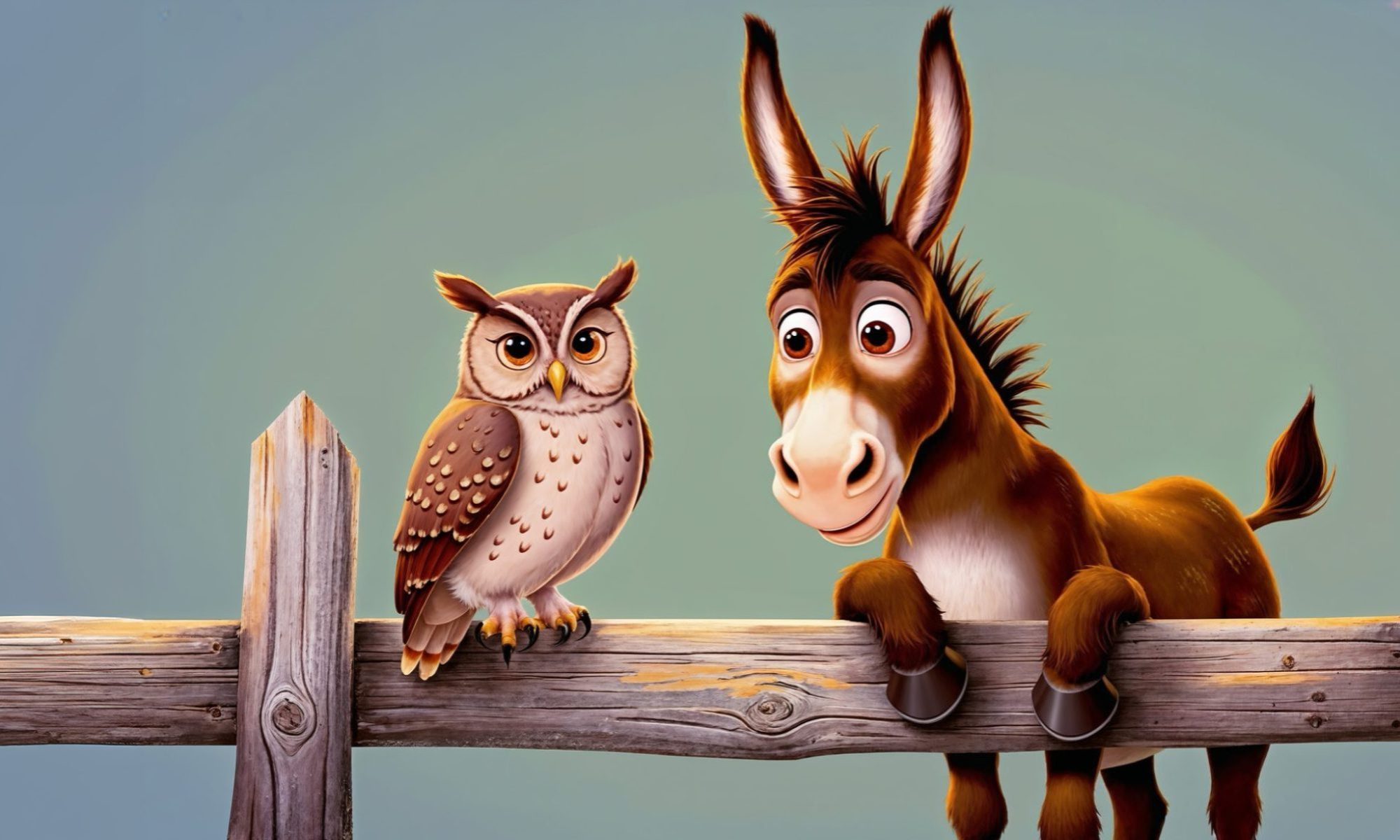
The Beauty of Contrast

As someone who greatly enjoys cooking, I have always wished I was one of those who-needs-instructions-let’s-just-throw-some-stuff-in-a-pot-and-see-what-happens kind of gal. Sadly, there is not an impulsive culinary bone in my body and I rarely stray from the recipe. One of the things I fear about going off the food preparation grid is screwing up the flavors. Intuitively knowing what spices will work well together is a true gift, and like all gifts it is God-given.

God is pretty good at the whole putting things together in just the right way thing. Just look at the world He has created, how the blue of the sky dotted with the white of the clouds sets off the green of the grass or what a first-rate job He did in designing all those animals, even the ones you have to examine very closely in order to truly appreciate.  And all of nature is full of the beauty of contrasting and accenting colors.

God’s greatest display of contrast is of course Himself. He is Father (strong and yet full of compassion), Son (a brother and yet a savior) and Spirit (mysterious and yet most closely known). Each person of God contrasts not only with Himself but with the other persons of the Godhead as well. As the three personalities of the Trinity, they are not opposites but rather perfect co-existing complements whose characteristics and “personalities” work together to achieve flawless completion.  Having been made in His image, we humans are made with similar complementary characteristics. He didn’t make us all the same but divided us into two separate genders; distinct and yet one.

While having a great appreciation for the unique qualities that make up both males and females of our kind, there are times when, frankly, I have doubts as to the wisdom of this division of the species. Recently, I suffered such doubts as Jim and I struggled to reach an agreement about the most efficient route to our travel destination. In exasperation I cried “Why do men ask you what to do just so they don’t have to make the decision and then criticize your logic after the fact?” to which Jim replied “Why do women continue to nag you even after they have gotten their way?” Despite my frustration, I had to admit we were both right. So why would God create creatures that are inescapably drawn to one another and yet find one another’s ways so very irritating? Seems like a recipe for disaster.

I suppose the answer lies in the fact that we are both reflective of the nature of God but also horribly warped in our current condition. In our original nature, we were meant to highlight one another’s strengths with the contrasts in our design. In our earthly state, sin has so twisted us that the places where we meet, rather than lining up as the earth meets the heavens, are all out of sorts and our differences irritate as much as they complement.

Still, even this irritation is not without it’s mercies. While I am sure we don’t take advantage of the opportunities as often as we should, each little rub is an opportunity for grace and patience. And one day, we will fellowship in complete harmony, truly reflecting the communion of the our great Creator—the perfect combination of flavors for all eternity.

Why Beauty is an Objective Quality in the World

In my February 12 post I presented an anti-naturalist argument from beauty.  A key premise of this argument is that beauty is an objective quality in the world.  This view is known as aesthetic objectivism.  Before offering some reasons in defense of this view, let me first explain the contrary perspective known as aesthetic relativism.  The aesthetic relativist maintains that aesthetic values, such as “beautiful,” “elegant,” “ugly,” “sublime,” or “poignant,” are entirely relative to the preferences of individuals or cultures.  So, for example, an aesthetic subjectivist would say that all aesthetic judgments are relative to the individual.  Or, as it is popularly expressed, “beauty is in the eye of the beholder.”  The somewhat less common brand of relativism is aesthetic cultural relativism, which says that all aesthetic judgments are relative to particular cultures.

Notice that both forms of aesthetic relativism deny that there is any objective sense in which beauty or other aesthetic values exist in the world.  So according to relativism, an artwork (such as a poem or a film) or a part of nature (such as a flower, a sunset, or a human face) is not beautiful in itself but is only pleasing to a person or group of people.  Aesthetic judgments (like “this song is lovely” or “that painting is ugly”) do not reveal facts about the world but only reflect observer responses to aspects of the world.

While the claim that all aesthetic judgments are relative to a person or culture has a generous ring about it, a bit of reflection reveals the view to be absurd.  First, consider the implications of aesthetic relativism when it comes to comparing works of art.  My four-year-old daughter, Maggie, loves to draw, and on our refrigerator there are several samples of her recent work, including a crude drawing of three horses.  It is rendered entirely with a pink marker, and the horses have rectangular bodies and triangular heads.  So, we might ask, how does Maggie’s Three Horses composition compare, in terms of aesthetic quality, to, say, Leonardo Da Vinci’s Mona Lisa?  Is one of these works superior (i.e. more objectively beautiful) to the other?  Not according to aesthetic relativism.  Remember, on this view no work of art can be objectively superior to another, because the relativist maintains that beauty is entirely relative to individual or cultural preference.  So if I happen to prefer Maggie’s Three Horses to Da Vinci’s Mona Lisa, then the former is superior to the latter for me.  Or if a given culture—because of, say, a prevailing fancy for the color pink—preferred Maggie’s drawing, then Three Horses would be superior for that culture.  In neither case could it be said that the Da Vinci painting is aesthetically superior to Maggie’s drawing in an absolute sense.

Such a relativist view contradicts common sense.  Obviously the Mona Lisa is superior to Maggie’s line drawings, regardless of how fond I might be of my daughter’s efforts.  But the only way this judgment can make sense is if beauty is an objective fact, not merely a matter of individual or cultural preference.  Only an objectivist view can account for the common sense distinction we ordinarily make between personal tastes and real excellence in works of art.  So if we are to maintain (as we should) that the Mona Lisa is better than my daughter’s drawing, we must admit that aesthetic qualities (whether good or bad) are public facts about the world.  In other words, beauty is an objective quality of things. 

A second argument for aesthetic objectivism appeals to the universal, time-tested appreciation of many works of art.  Educated people will agree, as they have for centuries, that Shakespeare’s King Lear is a great play, that Handel’s Messiah is an excellent piece of music, and that Michelangelo’s David is a superb sculpture.  How do we explain this consensus of opinion among intelligent connoisseurs of art, except by acknowledging that the tremendous aesthetic qualities of these works are public facts?  If aesthetic relativism is true, then the convergence of opinion by hosts of art critics is mere coincidence.  There just happen to have been similarly positive responses to these artworks across cultures for hundreds of years.  But, of course, this is absurd.  So aesthetic objectivism must be true.

Third, consider the fact that we often debate the quality of artworks and we sometimes change our opinions about whether a film, book, or song is good or not.  We might find ourselves defending the merit of a novel we have read or saying something like “I was wrong about that film.  I think it is good after all.”  These are everyday occurrences in discussions of art, and they confirm the basic intuition that aesthetic judgments are objective, whether correct or incorrect.  Aesthetic qualities must be public facts and not simply subjective or cultural responses.  Otherwise, we could not meaningfully argue about them or improve our views on works of art.

For such reasons as these, we can safely say that beauty and related aesthetic attributes are not merely in the eye of the beholder or a matter of cultural preference.  They are objectively real facts about the world. 

[My arguments here are adapted from my article “Good Art and Bad Art: What is the Difference?” in Areopagus Journal, 4:1 (January-February 2004).  For an extended defense of aesthetic objectivism, including an elaboration on some of the arguments that I employ here, see Eddy M. Zemach, Real Beauty (University Park, PA: Penn State Press, 1997).]

An Anti-Naturalist Argument from Beauty

The history of philosophy has seen many “theistic proofs” or arguments for the existence of God, dating at least as far back as Plato in the 4th century B.C.  Some of the standard arguments reason to God’s existence from apparent design in nature (the teleological argument), human consciousness (the argument from mind), the causal dependence of the cosmos (the cosmological argument), the existence of moral values (the moral argument), and the very concept of God (the ontological argument).

There is another line of reasoning which I believe holds much promise as an argument for theism—the argument from beauty.  While aesthetic evidence for God may be presented in a variety of ways, I prefer to appeal to beauty as an argument against naturalism.  If successful, such an argument serves, ipso facto, to prove the truth of supernaturalism, which in turn provides strong evidence for theism.  Succinctly put, my argument is as follows.  According to naturalism, the entire physical world is fully describable in scientific terms (statements about the physical world).  However, beauty and other aesthetic features cannot be captured in purely scientific terms.  Therefore, it is not the case that the whole of reality can be described scientifically.  So naturalism is false.

Here is a modified version of the argument which makes explicit a crucial assumption about the nature of beauty. 

1. Beauty is an objective quality in the world.

2. Beauty is an evaluative concept—specifically, an aesthetic value.

3. Therefore, there are objective aesthetic values.  [from 1 & 2]

4. If naturalism is true, then there are no objective aesthetic values.

5. Therefore, naturalism is false.  [from 3 & 4]

Propositions 3 and 5 each follow validly from prior premises (1 & 2 and 3 & 4, respectively).  Proposition 2 is a widely accepted observation about the meaning of the term “beauty”—that to describe something as beautiful is to recognize that it has significant aesthetic value.  And proposition 4 follows from the meaning of naturalism, which asserts that the physical world can be completely described in terms of physics (i.e. assertions about physical entities and relationships).  Clearly, beauty (and other aesthetic features, such as “ugly,” “elegant,” “insipid” and “poignant”) cannot be physically analyzed.  Thus, according to naturalism, aesthetic values cannot be a real or objective quality of things.

So, then, what about the crucial first proposition—that beauty is an objective quality of certain things?  What grounds do we have to believe this?  In my next post I will defend this claim, but for now it seems that I have at least shown that the naturalist must reject the first premise—and thus deny the reality of beauty.  That is, if my argument works, the naturalist must accept the implication that neither the world as a whole, nor anything in it, is beautiful (or ugly) in itself—from artworks such as the Mona Lisa to a Shakespearean sonnet to Bach’s Brandenburg Concertos to aspects of nature such as a tiger, butterfly, sunset, or human face.  This is a significant—I would say unacceptable—price to pay for naturalism.  But, again, as I will show later, even this option is not open to the naturalist.