Civil Public Discourse and the Virtue of Open-mindedness


This past weekend I gave a presentation at the Association for Practical and Professional Ethics in Chicago.  My presentation was entitled “Civil Public Discourse and the Virtue of Open-mindedness.”  Here I will summarize the content of my talk.

Today there is a lot of anger and division about political and moral issues.  How do we demonstrate civil discourse in the midst of this? Our natural responses to conflict are essentially fight or flight.  We either withdraw from those with whom we disagree or we challenge them to show them where they are wrong.  But neither approach is constructive because withdrawal kills dialogue and challenge makes people defensive.  In neither case is civil discourse achieved.

I argue that the proper alternative is open-minded engagement.  I affirm Jason Baehr’s definition of open-mindedness as a willingness to transcend one’s default cognitive standpoint on an issue (The Inquiring Mind, Oxford, 2011).  A person who is open-minded in this sense displays a readiness to take seriously alternative perspectives and a willingness to welcome new evidence that could overturn their current beliefs.  Although people generally admire those who display such open-mindedness, it is difficult to do so because our current belief set is comfortable, open-mindedness challenges our intellectual pride, and open-mindedness requires moral work, specifically development and application of the virtues of self-control and patience.

Obviously, we should not be open-minded about everything (e.g., being open to the idea that my spouse is actually an alien or that rape is morally acceptable).  We should be foreclosed about many things.  But regarding issues where reasonable people disagree, we should strive to keep an open mind.  I argue that in such cases open-mindedness is an intellectual duty.  This is because each of us has many false beliefs, as evident in the fact that we all disagree with many people who are at least as intelligent and responsible as we are.  Other factors also guarantee that I have false beliefs about various issues, including the fallibility of my reasoning skills and perceptual abilities, as well as the fact that I don’t have the time or ability to thoroughly vet all of my beliefs.

Some other reasons to be open-minded are that this trait is critical for learning, and open-mindedness follows from the Golden Rule: I want others to seriously consider my truth claims and welcome the evidence I present to them, so I should do the same regarding others’ truth claims and arguments.

So how does one become more open-minded?  Here are three practical tips for transcending one’s default perspectives: (1) intentionally build your moral imagination, (2) practice active listening—resolve to speak less than your conversation partner, and (3) be Socratic—develop the art of questioning (which can also expose problems in others’ views).

Finally, it is important to remember that open-mindedness is effective for changing others’ minds.  This is because open-mindedness is disarming; it prevents others from becoming defensive.  It can also be contagious.  If you display an open mind, then your neighbor is more likely to do so also.  But even where minds don’t change, open-mindedness improves civility because it makes us less defensive, makes us feel less threatened by those with whom we disagree, and enhances our capacity for calm and patient dialogue.

The 2015 Annual CCT Conference

Last week I attended the conference of the Biola Center for Christian Thought, which is the annual capstone event at the CCT.  This year’s research theme was “Intellectual Virtue and Civil Discourse,” and the conference featured a number of noteworthy scholars who have done significant work in areas related to the theme.  Among them were Robert Audi (University of Notre Dame),

Robert Audi and Storm Bailey

Jason Baehr (Loyola Marymount University), Elaine Howard Ecklund (Rice University), George Marsden (University of Notre Dame, retired), Robert Roberts (Baylor University), Richard Mouw (Fuller Theological Seminary, retired), and Martin Marty (University of Chicago, retired).  In addition to the presentations by these plenary speakers, there were many other excellent presentations at breakout sessions.

Thanks to the John Templeton Foundation, I was honored to be a CCT research fellow during the Fall semester this past academic year.  My research project regards the virtue of open-mindedness, and I was able to make significant progress on what I hope will culminate in a monograph on the subject.  My presentation at the CCT conference, entitled “Open-

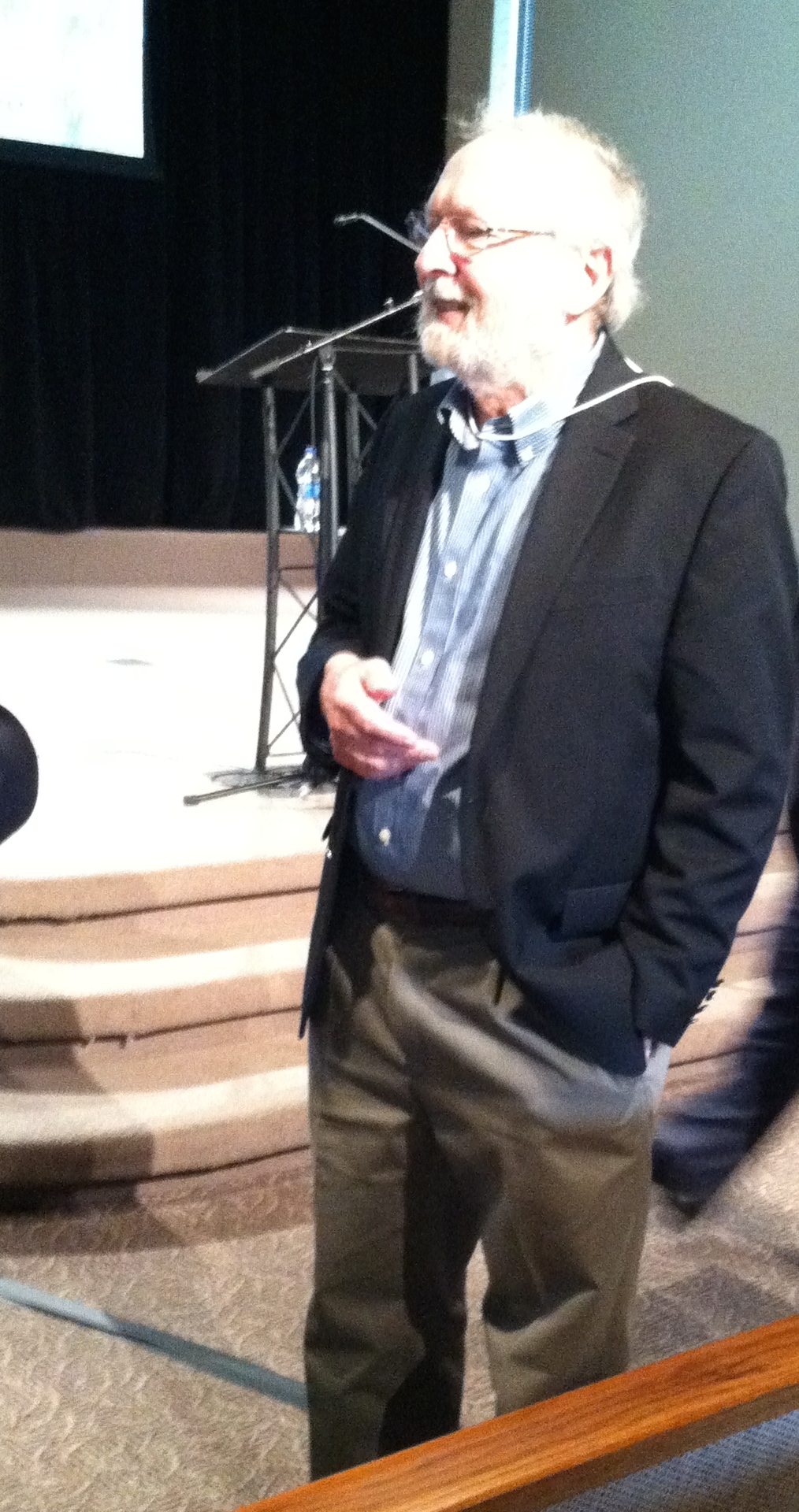
George Marsden
George Marsden

mindedness and Disagreement,” explored the connection between two topics that are germane to this year’s theme.  With regard to the issue of disagreement, the question is whether, or to what extent, confidence in your belief about an issue should be tempered by the fact that some epistemic peers disagree with you.  And, depending upon your view regarding the epistemic implications of peer disagreement, what does it mean to remain open-minded about the issue?  My session was well-attended, and I received helpful feedback, which I am looking forward to implementing in my paper as I revise it and eventually submit it for publication.

The most enjoyable thing about the conference was catching up with some of the scholars I’ve gotten to know through the CCT and other contexts, as well as becoming acquainted with a number of other scholars whom I’d never met before.  Some of these I had only admired from afar, such as the eminent

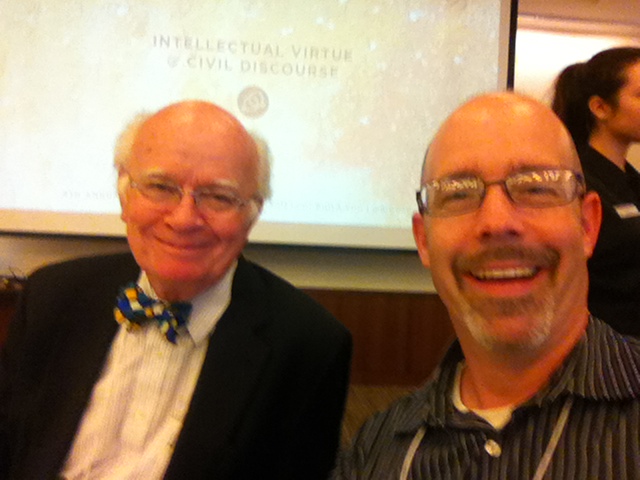
Martin Marty and me
Martin Marty and me

epistemologist Robert Audi and religious scholar Martin Marty, who might be the greatest living scholar in the English speaking world—author of more than 80 books, winner of numerous scholarly awards, member of two U.S. Presidential Commissions, and holder of 80 (yes, eighty) honorary doctorates.  Somehow I ended up sitting next to Marty at the evening banquet at the CCT conference, and I was struck by the warm humor and genuine humility of the man.  What an inspiration.

In fact, the word “inspiring” well captures my entire experience at the Biola Center for Christian Thought this year.  The CCT directors—Thomas Crisp, Steve Porter, and Gregg Ten Elshof—as well as staff members Evan Rosa and Laura Pelser, are all wonderful folks who know how to create a dynamic community atmosphere for rich scholarly research and dialogue.  The Center is currently accepting proposals for the 2016-17 research theme: “Humility: Moral, Religious, and Intellectual.”  If you do work related to this topic and would like an opportunity to dig a lot deeper, then consider submitting a proposal.  I guarantee that the experience would be a highlight of your academic career!