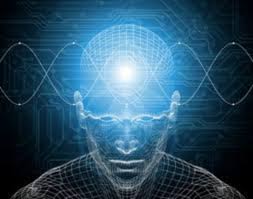
A recent episode of the Joe Rogan Experience, featuring a conversation with Rizwan Virk, deals with the possibility (or likelihood) that we are living in something like a computer generated reality. Of course, what this really points to is the age-old notion that the world is the product of some ultimate consciousness, that is, God. Rogan, like all of us, understands the significance of this, which explains why he is uncharacteristically silent through much of the conversation. We are talking about the ultimate question here.
There are really just two fundamental worldviews: Either all comes from Mind or all comes from matter. There are many versions of each, but these are ultimately the two options. It’s really that simple. Those who take the latter view are materialists (or naturalists or physicalists, depending on one’s preferred nomenclature). They are also empiricists and typically regard science as the most reliable or perhaps only way to secure knowledge. Materialists believe in minds and consciousness, of course. They just believe that it is reducible to, or an epiphenomon of, physical reality
Those who take the Mind-most-real view reject strong empiricism, affirming that reason or mystical-religious experiences provide evidence for the reality of a supernatural realm. They do not deny the reality of the physical world but simply deny that it is the ultimate reality. They maintain that this material realm is in some way the product of the workings of an ultimate consciousness. Those among them who maintain 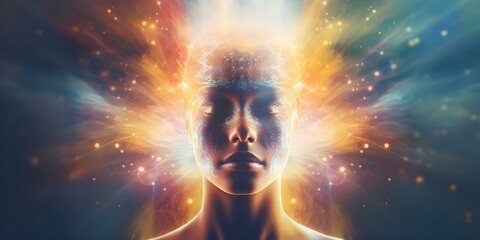 that this Mind at the bottom of things is personal are generally called theists. For many such theists, such as Socrates, Plato, and Aristotle, among others, theirs is a purely philosophical conviction. Most others subscribe to a theological tradition, such as Judaism, Christianity, or Islam.
Whichever view one takes, the conviction tends to be held very firmly, often dogmatically. This is despite the fact that whichever view one holds there are serious metaphysical problems and ultimate mysteries that defy ready explanation. This, I suppose, is symptomatic of human arrogance or insecurity or both. Plaguing both views is the ultimate metaphysical question: How did all of this get here? And even more basic is Heidegger’s famous question, Why is there something rather than nothing? (Ways of addressing this question are boundless. For a recent sampling, check out these, most of which miss the point or involve a confusion of some kind.)
Then there are the problems unique to each perspective. For the materialist, the most fundamental problem pertains to how consciousness could emerge from inert matter. The options here are numerous, including philosophical behaviorism, strict identity theory, functionalism, and property dualism. But they all face serious problems, such as that of 1) explaining the particulars of consciousness, including phenomenal qualia, subjectivity, and enduring selfhood, 2) accounting for human freedom, 3) accounting for moral truth, and 4) accounting for rationality—non-natural things like reasons, logic, and evidence influencing the world. Then there are the perennial problems of cosmology (explaining the origin of the universe and cosmic fine-tuning) as well as all sorts of empirical data pointing to the supernatural (e.g., mystical experiences, NDEs, OBEs, etc.).
Materialists may balk and minimize these problems all they want. It’s simple denial. Any self-respecting materialist will at least admit that these are genuinely significant problems with their perspective. It is no wonder that, after a half century of concerted atheism Antony Flew flipped from a materialist view to a Mind-most-real view (see his There is a God) and that the inveterate materialist Thomas Nagel has admitted that materialism is bankrupt and in serious need of overhaul, if not outright rejection (see his Mind and Cosmos).
But Mind-most-real proponents have no grounds to be cocky. They also face serious metaphysical problems. In addition to the ultimate metaphysical question—why is there something rather than nothing?—there are many other thorny questions: How could the ultimate Mind create something so radically different as physical matter? What is the substance of this Mind? How does this being causally act on the world? How much of the cosmos does the Mind control? Does this Mind have a moral nature? If so, then why evil—and why so much evil? Has the Mind communicated to humans? If so, which, if any, of the purported supernatural revelations is genuine? If one of them is, how do we resolve the countless interpretive problems?
As a Mind-most-real advocate, I am happy to be relieved of the problems plaguing the materialist view. But I naturally am interested in many of these other problems. However, as a Berkeleyan immaterialist, I think many of these admit of ready solutions. For on the Berkeleyan idealist view (which the great American theologian Jonathan Edwards essentially affirmed as well), the physical world just is ideas. And since minds naturally traffic in ideas, God’s production and causal influence on the world is not mysterious at all. (For in-depth scholarly discussions of a wide range of issues pertaining to idealism and Christianity, look here and here. And here is a London Lyceum interview with me on topic.)
But there is one particular problem unique to the Mind-Most-Real view that is especially deep and intractable: How does a Mind make another mind? In the theistic traditions, we learn that the primordial Mind (God) created all things. In the Christian tradition, at least since Augustine, we affirm that God created ex nihilo. So how did this ultimate center of consciousness—God—bring into existence minds like yours and mine ex nihilo? How does a subjective consciousness endow another thing/substance with subjectivity? And what exactly is the substance of each of our minds? How are our minds like and unlike the ultimate Mind?
One plausible philosophical answer is theologically problematic, at least from the perspective of Christian orthodoxy: The Mind did not create other minds ex nihilo but rather finite minds are aspects of the primordial Mind. This solution isn’t necessarily pantheistic, but it is panentheistic. (For an interesting discussion of this possibility, see Jordan Wessling’s chapter in this aforementioned book.)
As a convinced theist who believes that Christianity is the most reasonable version of theism, the question of ultimate reality is settled: Mind is most real. The likes of Antony Flew, Thomas Nagel, and Joe Rogan have recently been waking up to this fact, even if they aren’t ready to call themselves theists (or even, in the case of Nagel, a non-materialist). For me, then, the remaining ultimate mystery is just this: How does the Mind make other minds? This will be one of the first questions I ask that Mind when I get to the other side.