Open-mindedness, Civility, and Our National Crisis

During the last month turmoil around the nation has been dizzying. From Officer Derek Chauvin’s hideous killing of George Floyd to the wave of protests and riots which followed to BLM’s calls for defunding the police to the CHAZ/CHOP protest occupation of downtown Seattle to a rash of firings and public shaming of college professors and other professionals who have critiqued some of BLM’s tactics. More recently, Atlanta police officer Garrett Rolfe has been charged in the murder of Rayshard Brooks, and protesters have begun to topple statues and monuments all around the country.

While these events seem to highlight a deepening rift in our nation, one thing about which nearly all Americans agree regarding all of this is that Officer Chauvin’s killing of Floyd was a horrific act which warrants severe punishment. And we should all agree that racism in this country has been and remains a serious problem. But there is disagreement over whether Chauvin’s act was racially motivated or a manifestation of systemic racism, whether Chauvin should be charged with manslaughter or second-degree murder, whether this heinous act is symptomatic of widespread police corruption in the U.S., whether such corruption warrants a fundamental restructuring of law enforcement, whether there is Edward Colston statue toppled in Bristolany merit to the Black Lives Matter call for defunding the police, whether the Black Lives Matter protest tactics are morally legitimate, whether local law enforcement responses to the protests and riots have been appropriate, whether Officer Rolfe’s killing of Brooks was justified, and whether Rolfe should be charged with murder. It is tragic that despite the gravity of these questions, cool-headed, rational discussions have been rare over the last several weeks. Many insist that high-pitched emotions are understandable and appropriate, given the issues at stake. While this may be true, none of us should allow our emotions to cloud our judgment or prevent us from a rational appraisal of evidence and coming to logical conclusions about these issues. Allowing feelings to reign over reason can only lead toward more division and turmoil as many of the residents of cities impacted by the rioters can attest.

Oxford University ethicist Neil Levy has observed that “part of the reason that controversial moral and political questions are controversial is that there is something to be said on each side.” Levy says that a belief is controversial when “conflicting beliefs are held by a significant number of relevantly well-informed, intelligent, and rational people over an extended period of time” (from Open-Mindedness and the Duty to Gather Evidence, Public Affairs Quarterly, p. 56). It is interesting to note that while everyone will readily admit that the above noted issues are controversial, many people will refuse to admit that there is, as Levy says, “something to be said on each side”—and by this I suppose Levy means that there is something reasonable to be said on each side which should be acknowledged and respected by those who disagree. There are, after all, intelligent and well-informed people on all sides of the current debates over racism and law enforcement in the U.S. So why are we seeing so much hysteria and so little respect between people who disagree on these issues?

In recent years I have published several articles and book chapters on open-mindedness and am currently working on a book on the subject. Most people believe, as I do, that open-mindedness is an intellectual virtue. It is a trait which, as virtue epistemologist Jason Baehr would say, involves a willingness to transcend one’s default cognitive standpoint on an issue. This means that the open-minded person is willing to consider that her view on an issue might be false and to seriously entertain evidence which contradicts her perspective. Open-mindedness seems especially appropriate when it comes to controversial issues, for the reasons that Levy notes: whatever view you hold—on say, the nature of racism in America and how it should be addressed—there are well-informed, intelligent people who disagree with you. So, as difficult as it is, you have an intellectual duty to listen carefully, respond patiently, and proceed respectfully as you engage the debate. To do otherwise is uncivil and does little to advance dialogue and productive work toward solutions. If we are going to remain (or return to being) a rational and civil culture, we absolutely must conduct ourselves with at least a modicum of intellectual virtue, especially open-mindedness.

I have despaired at the level of dogmatism and foreclosure when it comes to many of the above noted issues. This is especially dismaying when I consider how many important moral and epistemic questions are being ignored or particular answers to them are being taken for granted (despite the fact that intelligent, well-informed people would demur at those assumptions). Here are just some of those questions. As you read each one, ask yourself: How would I answer that question? And what are my evidence-based reasons for my answer?

  • What is the primary carrier of human sin? Is it systems and institutions or is it individual human hearts?
  • What exactly is “systemic racism”? What are the criteria for ascertaining when a system or institutional structure is racist? Are these criteria statistical? If so, then what are they? If not, then what is the nature of these criteria? In any case, how are they established?
  • Given one’s view on whether the sin of racism is fundamentally rooted in individual human hearts or institutional systems, how does this impact our approach to addressing this sin? In either case, what are the prospects for fully eradicating racist sin from society?

These are just some of the more foundational questions which are being widely overlooked, ignored, or only dogmatically addressed. There are many other questions that are not as foundational but still very important, such as these: Why is it no longer acceptable to question or critique some of the tactics and precepts of the Black Lives Matter organization, even if one emphatically affirms, as we all should, the understatement that black lives matter? Since many college professors and other professionals are being fired for critiquing BLM, how might this affect our national conversation about racial issues? Is the firing of people for raising critical points about BLM likely to make people more or less sympathetic with the BLM cause? Also, what criteria should be used to evaluate the continued display of historical statues and monuments? And how can we balance historical relevance with a desire to atone for past injustices?

Again, these are just some important questions. No doubt other questions come to your mind, perhaps even questions about why I list the questions that I do. That’s fine. The point is that we need to address these and other vital questions in a rational, evidence-based, and open-minded way. Such is essential to the maintenance of a civil society.

In closing, it is fitting to recall the standard set by Martin Luther King, Jr., who consistently demonstrated an evidence-based, rational, and civil approach. It is also noteworthy that he grounded his civil rights work methodology in the biblical themes of imago Dei, unconditional love, and non-violent resistance. (See my recent article on the subject here.) Why are these ideals not prevailing during our current unrest? What would it take for these values to take root (again) in our society? Without these values becoming preeminent today is there any real hope for pervasive racial justice and reconciliation in this country? These, too, are challenging and controversial questions, and they are more urgent than ever.
The Best and Worst of 2014

It’s been another exciting year, and we want to thank you all for reading and, if applicable, posting comments on our blog. Once again, we would like to close out the year with some summary remarks about good and bad stuff related to film, music, books, sports, and family.

Best and Worst Film Experiences:

  • Jim:  This was a down year for me in terms of watching films. I viewed a lot of “tweeners” that wouldn’t fall anywhere near the “best” or “worst” categories—e.g., Interstellar, The Grand Budapest Hotel, and The Hobbit: The Battle of the Five Armies.  Probably the best film I watched all year was the Israeli drama Fill the Void, a powerful story of a young Haredic Jewish woman who is pressured by her family to marry the widower of her older sister, who died in childbirth. On a lighter note, but just as memorable, is the endearing Jon Favreau comedy Chef. As for my worst film experience of the year, the choice is easy: Gone Girl, which Amy and I reviewed here and here.
  • Amy:  While Jim was in California, I pretty much anesthetized myself with any television series I could get my Netflixed hands on. While there was a great deal of loving or listing it, hunting for houses and cousins with kitchen, I did watch some quality shows, most of them dark and mysterious. I think the new paradigm of shows created directly for streaming and released in their entirety has real potential. Here are a few to which I became hopelessly addicted, with the usual disclaimer that since they are mostly British, they tend to be a wee smutty and anti-religious, but well-written and well-acted: Hinterlands, The Killing, Happy Valley, The Fall. My best experience, however, was watching Mockingjay: Part One with my older boys. I know it isn’t saying much to say it is the best in the series so far, but it was. There was popcorn and bonding, so take that and stuff it in your high culture hat.

Jim’s Best and Worst Musical Experiences of the Year:  The highlights for me were Morrissey’s World Peace is None of Your Business (despite the Moz’s increasingly sardonic perspective on life) the Black Keys’ Turn Blue (my review of which is here), and U2’s Songs of Innocence (despite the popular trend of hating this album just because it was simultaneously gifted to millions of people). The low point, as it probably could be most years, was catching “highlights” of the MTV awards. Blecch.

Amy’s Best and Worst Eating Experiences of the Year: Best: Finally got to experience (free range) pork belly and it did not disappoint. Like pork chops wrapped in bacon. Thank you, Barn Brassiere in Muncie, Indiana.  Worst: The hundredth Subway tuna sandwich on flat bread I ate with the kids while traveling back from California. Every woman has her fast food sub-sandwich limit and I reached mine somewhere in Kansas.

Jim’s Favorite Sports Moments of the Year:  It was a thrill to see both the Ole Miss and Mississippi State football teams in the top five, with the latter enjoying the #1 position for several consecutive weeks of the season.  I also enjoyed the Kansas City Royals’ exciting run to the World Series.  And as I write this I’m enjoying the Detroit Lions season culminating in a playoff appearance, though I expect the end of their run will make my “most disappointing sports moments” for 2015.

Amy’ Favorite Sports Moments of the Year:  Watching all my kids play soccer this fall. I had to step up my spectator skills in order to do play-by-play for Jim while he was in California. I saw Bailey score his first goal in a high school game, Sam play keeper (a position he and his high threshold of stimulation were born for), Maggie deceive many an opponent with her flighty demeanor, and Andrew take charge of his defense. So fun to watch them all, though the rides home were admittedly a little stinky (but only literally).

Jim’s Most Disappointing Sports Moments of the Year:  Although I’m not a Kansas City Royals fan, I got caught up enough in their improbable playoff run to be really deflated by their falling just short in game 7 of the World Series.  If Salvador Perez swings just half an inch higher on that final pitch, the Royals win the championship on a walk-off two-run homer rather than losing on a feeble pop-out. It’s a game of inches… And speaking of disappointments related to teams I don’t normally root for, it was also painful to watch Peyton Manning’s Broncos so thoroughly dismantled by the Seahawks in the Super Bowl.

Amy’s Most Painful Sports Moment of the Year: Having to tell Jim, who was suffering from amnesia at the time, that Peyton Manning didn’t play for the Colts anymore. He looked so devastatingly baffled. At least he forgot about it five minutes after I told him.

Satisfying Reads of the Year:

  • Jim:  I was delighted to have the time to finally read Melville’s Moby Dick, my reflections on which you can see here.  I also enjoyed Marilynne Robinson’s Pulitzer Prize-winning Gilead—an achievement that is as subtle as it is profound.  The best work in philosophy I read this year was Jason Baehr’s The Inquiring Mind, a rich and insightful work on virtue epistemology.  Also, I greatly enjoyed—and was happy to do a back-cover endorsement for—the book Rethinking Hell, a compendium of important articles and essays defending the doctrine of hell known as conditional immortalism (the view that the damned are eventually annihilated, as opposed to suffering eternally).
  • Amy:  I read so many good books this year. From contemporary fiction to 19th century memoirs, this was a great reading year for me. Here are just a few of my recommendations: The Warden by Anthony Trollope, People of the Book by Geraldine Brooks (though I hated Brooks’ March), Where’d you go, Bernadette? by Maria Semple, a couple by P. G. Wodehouse, 12 Years a Slave by Solomon Northup, Half-Broke Horses by Jeannette Walls, The Year 1000 by Robert Lacey, Crossing to Safety by Wallace Stegner, Extraordinary, Ordinary People by Condoleezza Rice and The Life of Charlotte Bronte by Elizabeth Gaskell.

Best 2014 Memories of Our Kids:

Amy:  Our trip out west was the big one. Sitting on the beach with Jim at Big Sur watching the kids playing in the water and looking for creatures was a near perfect moment. Looking at their happy and surprised faces when Jim told them we were getting a dog was priceless. Not being found first every time during Christmas bedtime hide and seek was pretty sweet too.

Jim:  Traveling through Arizona and California with my family in October, experiencing together such sites as the Grand Canyon, Sequoia National Park, Yosemite National Park, the Pacific coastal highway, and Alcatraz. Our kids have always been good travelers, but they blew us away with their endurance on this extended sojourn.

Best Maggie Quotes of the Year:

In the past we’ve reserved this spot for memorable quotes from all of our kids, but this was such a great year for quotes from our daughter Maggie (who is ten years old), we decided to simply list some of her more memorable ones:

  • “When I grow up, I’m gonna make an exact copy of the earth, then cut it in half with a big knife to see if the center of the earth is really so hot.”
  • “Sometimes being hungry can be satisfying. Unsatisfaction can be satisfying.”
  • “I never talk to myself when I’m alone in my room. I just talk to the Beatles and my stuffed animals.”

Most Satisfying Shared Experiences of the Year: 

  • Amy:  There were quite a few this year: Kayaking through the beautiful mangrove forest and onto the open ocean while in the Bahamas. Seeing so many beautiful places on our trip out west. The night Jim surprised me for my 40th birthday by driving me around to collect lovely, encouraging notes from my friends. However, number one has to be picking him up from the airport in December, knowing he was home to stay.
  • Jim:  Dittos on all of that.

New Year’s Resolutions:

  • Amy:  Somehow managing to maintain the new perspective Jim’s being gone gave me. Appreciate him more, worry about the little things less. Enjoy and encourage my kids more, criticize and hide from them less. Accomplish the fitness goals I set but didn’t quite reach for 2014. Watch more quality films with Jim. Put more time and energy into plans for my professional future and of course, read lots and lots of books.
  • Jim:  To read half as much as my wife did this year, which would mean reading twenty-six books next year. Good luck to me on that.

Happy 2015 everyone!

Three Great Books on Intellectual Virtue

This semester I have the honor of working as a Templeton Fellow at the Biola University Center for Christian Thought.  Each year the CCT focuses on a different topic, and the theme this year is intellectual virtue and civil discourse.  My research topic, which fits naturally within this theme, is one that I’ve been working on the last few years—open-mindedness.  What does it mean to be open-minded?  Why is it a virtue?  When is it not virtuous to be open-minded?  And is it possible to be simultaneously open-minded and religiously devout?  For some of my thoughts about these questions, look here.

In the course of my research, I’ve read some really good stuff on intellectual virtue.  So I thought I’d provide a brief introduction to, at least in my assessment, three of the best books on the topic.

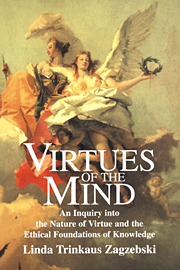
9780521578264Linda Zagzebski, Virtues of the Mind (Cambridge, 1996) — This book is considered by many to be a contemporary classic in the field of virtue epistemology, and for good reason.  Zagzebski not only develops a plausible theory of intellectual virtue, but also offers rich discussions of related and sub-issues along the way, including practical wisdom, understanding, and a critical assessment of Alvin Plantinga’s epistemology.  She conceives knowledge as “cognitive contact with reality arising out of acts of intellectual virtue.”  Although her account overreaches at times, it is nonetheless insightful at nearly every turn.  And, as is the case with all landmark works of philosophy, even her mistakes are instructive.


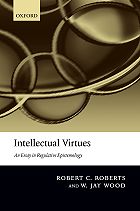
9780199283675_140Robert Roberts and Jay Wood, Intellectual Virtues (Oxford, 2007) — Rather than defending a particular theory of virtue epistemology, Roberts and Wood offer what they call a “regulative epistemology” which aims instead to “generate guidance for epistemic practice.”  For those who are more interested in the practical implications and applications of virtue epistemology, this is a book to check out, which is chock full of insights about the moral life.  After clarifying a number of key concepts, including just what a virtue is, they explore the meaning and practical dimensions of a number of particular intellectual virtues, including intellectual courage, intellectual humility, intellectual autonomy, intellectual generosity, and practical wisdom.


9780199604074_140Jason Baehr, The Inquiring Mind (Oxford, 2011) — In a work that is a bit more theoretical and advanced than the previous two works, Baehr (who is also a CCT fellow this semester) develops and defends what he calls a “personal worth” conception of intellectual virtue.  Along the way he argues for the relevance of considerations of intellectual virtue, whatever one’s view, whether one holds to a reliabilist or evidentialist epistemological theory.  After making his cases for these theoretical points, he explores in-depth two important intellectual virtues:  intellectual courage and open-mindedness.  Baehr’s discussion of the latter of these is especially interesting to me, of course.

These are rigorous, enriching texts which provide theoretical and practical insights—improving our understanding regarding both the nature of knowledge and how we ought to live.  In word, they make us wiser.  Philosophy doesn’t get any richer than this.