
Years ago, as a young mom and aspiring author, Jen Hatmaker was all that I wanted to be. I saw myself in her frazzled authenticity, her flair for the dramatic, her diving in headfirst approach to life and faith. I was disarmed by her self-deprecating humor, which was such a breath of fresh air in the evangelical world of stay-at-home moms. This was the age of the mommy-blog, and Hatmaker struck a chord with those of us “in the trenches”, trying our best to live up to the impossibly high standards set for us, sometimes by others, but often by ourselves. With her big earrings and even bigger smile and personality, Jen felt like an example to aspire to and admire, as well as a reason to be real about one’s own failures and flaws.
I will confess, though, that while I often scrolled through her Insta and laughed and let out a sigh of relief that I wasn’t the only one whose kids were eating in front of the TV and calling it a picnic, relief and relatability weren’t the only feelings she inspired. I was sometimes overcome by feelings of envy and inferiority. It wasn’t just her life I coveted; we shared a publisher, and there were times when her level of success and reach felt so tantalizingly close, like staring over at the cool kid table, longing for someone to make eye contact and ask me to join them.
It wasn’t long into the promotion of my book that I realized the game of self-branding was not for me. I must admit, with regret and shame, that the temptation to view my family and life as a source of content rather than my primary mission in life was real. It is likely God’s grace that He didn’t allow my book sales to skyrocket or my speaking career to extend beyond the local churches of dear friends. At the time, Jen Hatmaker was a mirror into which I looked and saw my own heart’s darkness, a desire to measure myself not by how well I was completing the mission to which I had been called, but against the measure of how well someone else was completing theirs. I set aside my dreams of growing my brand as an author and sought to grow in my knowledge of the Author of my faith.
Fast-forward nearly a decade and a half to the present. I have seen Jen Hatmaker pop up on my radar now and then over the years: on HGTV, having her house renovated, coming out as gay-affirming in 2016, and the sad announcement of her divorce in 2020. By that time, my attention had shifted away from the world of women influencers. I was off social media for the most part and navigating a chaotic time in our own lives.
When, however, I saw Hatmaker had written a memoir, I was curious. Our life Venn diagrams still have a lot of overlap; we are both in our early fifties, 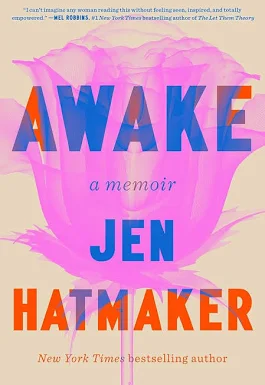 learning to straddle the divide of parenting adults and younger kids simultaneously; we have both spoken out on political and cultural issues, though from different sides of the aisle; we both have some harsh critiques regarding the church in America.
Reading Awake, I didn’t walk away with any deep insights, theological or otherwise. I felt a deep compassion for Jen and her children, given the heartache they have experienced and had to navigate in the fishbowl of public interest and attention, though one does need to acknowledge that, for Jen’s part, this was attention she had fostered and benefited from for years. But that doesn’t make her pain less real, just perhaps more avoidable.
I have no desire to personally tear down Jen Hatmaker. And undertaking a deconstruction of her premises feels daunting given the structure, or lack thereof, of Awake. To summarize is impossible, but it does appear to me that Hatmaker has made the fatal mistake of exchanging one form of legalism for another. She notes many examples from her early life growing up and later in ministry of others casting pharisaical judgment on her, while at the same time she casts a plank-filled eye of judgment at those who do not share her political or theological perspectives. While I can certainly sympathize with the pain caused by the former, I believe it to be no more destructive than the latter. She has cast aside the prudes of the evangelical world only to cast her lot in with the puritanical progressives.
My greatest takeaway from the book was a sense of deep sadness that of all of the things Hatmaker has lost, her reliance on the Bible as a firm foundation on which to build (and rebuild) is by far the most tragic. On a much smaller scale, I understand what it is to be uprooted, to lose the part of one’s identity tied to community and public perception. I know the pain and questions that come from life-imploding, faith-threatening events. But I also know the sweet peace that comes after the storm if you anchor in the harbor of God’s trustworthiness.
I have never known the horror of marital betrayal Hatmaker experienced, awakening to the sound of her husband speaking words of love and devotion to another woman. My hope and prayer for her is that one day she will hear our Father’s voice, reminding her of His love and devotion. Then and only then will she be truly awake.
