Risk Takers

Great artists and intellectuals take risks.  They dare to challenge prevailing paradigms of thought and popular practice, which guarantees they’ll receive resistance and ridicule.  Gregor Mendel’s pioneering work in genetics was ignored by his peers.  Claude Monet endured abuse by both critics and the public.  Marcel Proust was rejected by publishers more times than he could count.  Galileo’s and Einstein’s insights were profound and eventually world-changing, but they were strongly opposed before their ideas eventually took hold.  Aldous Huxley and Bob Dylan were hated by many even after they were established in their fields.  And Socrates, Joan of Arc, Gandhi, and Martin Luther King were killed because of the risks they took.

Risk is a standard feature of innovation.  This guarantees opposition, an unfortunate deterrent to proposing new ideas.  So along with the fact that innovation demands strong imagination and intelligence, the innovator must be courageous, willing to be hated or humiliated for the sake of the truth or beauty they pursue.

HistoryCollection.com

Risk also guarantees occasional, if not frequent, failure, as illustrated in the lives of Thomas Edison, Winston Churchill, and the Wright Brothers.  So eventual success requires persistence and even an obstinate personality.  The innovator, then, must be a well-differentiated person, defining him- or herself by a standard beyond public opinion.  To many s/he will necessarily appear insensitive or even insane.

The oft-repeated exhortation to “be a risk-taker”—a favored bromide at graduation ceremonies every Spring—is almost never fully serious or else it is hypocritical, because most people only like risk-takers in the abstract.  They resent and are annoyed by the real, concrete risk takers in their lives (though all of us have benefitted from them).  This is one more sad fact about the human condition.

Perhaps a better or more realistic exhortation is “be patient with risk takers” or “be open to new innovations.”  Not everyone has the disposition to be a genuine risk-taker, so why encourage everyone to do so?  But all of us encounter risk-takers and are forced to decide whether to ignore, resist, ridicule, or even hate them because their ideas cut against the cultural grain and challenge our own beliefs or values.  This doesn’t mean we shouldn’t subject their ideas to rigorous critical review.  On the contrary, rational critique is the mature, responsible response to new challenging ideas.  It is good for the world of arts and ideas and good for risk-takers themselves.

So if you’re not a risk-taker in the sense of pursuing innovations in your field, then at least take the risk of patiently considering and perhaps reasonably responding to the risk-takers in your life.  Their latest risk might be one of their mistakes, but your demonstrating this through rational argument will help them and the rest of the world more than empty ridicule or blithe dismissal.

The Best and Worst of 2015

It’s been another exciting year, and we want to thank you all for reading and, if applicable, posting comments on our blog. Once again, we would like to close out the year with some summary remarks about good and bad stuff related to film, music, books, sports, food, and family.

Best Film Experiences:

Jim: This was a big year in film, and I was fortunate to catch a lot of good ones, both at the theater and on DVD. A highlight in the latter category was watching Richard Linklater’s amazing Boyhood twice in as many days. All of the superlatives critics have laid on this one—“masterpiece,” “extraordinary,” “historic cinematic achievement”—are accurate. If you haven’t seen it, check it out. Another highlight was the new Star Wars film. With The Force Awakens, J. J. Abrams has saved the Star Wars legacy. He managed to achieve the same organic feel, character-centric storytelling, and campy wit as the originals, all while advancing a narrative that will hopefully keep us captivated for years, if not decades, to come. I also enjoyed Inside Out, which deserves accolades for its unique premise as well as its fine execution. Another major highlight was M. Night Shyamalan’s The Visit, which proved that, after a few stinkers, he can still make a great thriller.

Amy: It feels strange to say I am having a hard time remembering good movie experiences this year. While I loved The Visit as a film, the audience Bailey and I shared the theater with nearly ruined it for me. I wasn’t blown away by Star Wars. I mostly enjoyed things on the smaller screen. The Man in the High Castle for serious-minded alternate reality and Tommy and Tuppence for pure fun. There were some good PBS series this summer and I am holding my breath in hopes that Downton Abbey and Sherlock won’t disappoint this winter.

Jim’s Best Musical Experiences of the Year: The year started slowly but finished strong in terms of discoveries of good artists or new albums from artists I was already into. In the latter category, I finally got Manchester Orchestra’s Cope, which is even more addictive than their albums usually are for me, which is saying a lot. Also, after many recommendations from friends, I picked up an Arctic Monkeys album—Whatever People Say I Am, That’s What I’m Not.  I was not disappointed. And I’ve been getting into the new albums by Alabama Shakes (Sound and Color) and Twenty One Pilots (Blurryface), as well as several albums by Cage the Elephant, which is my most exciting musical discovery in years. A virtue that all of these bands have in common is that they (or, anyway, their main songwriters) have something significant to say. That’s refreshing in an era of predominantly mindless musical fluff.

Amy’s Best Food Experiences of the Year: This year most of my food experiences have been in my own kitchen, the remodeling of which was a major highlight. I have done some experimenting, catered a friend’s wedding and decompressed with some serious baking. We also hosted our first Thanksgiving meal at home and though my rolls were undercooked and I was not impressed with the addition of cinnamon to my usually yummy pecan pie, filling our table with beloved faces and laughter was quite satisfying.

Jim’s Favorite Sports Moments of the Year: I am sincerely hoping that my favorite sports moment of 2015 is yet to come.  This would be Michigan State defeating Alabama in the Citrus Bowl tonight, which is also the NCAA football playoff semi-final. We’ll see. Go Green, roll over the Tide! But if that doesn’t happen, then I would say that watching the Cubs make it all the way to the National League championship series—just a few wins shy of the World Series and thus breaking the “goat curse”—was the 2015 sports highlight for me.

Amy’s Favorite Sports Moments of the Year: Hopefully, Jim will forgive me for this one, but my favorite moment was randomly choosing to represent the Spartans while Jim cheered on the Wolverines in the Michigan intrastate rivalry game and then watching their unbelievable last second win. I felt slightly guilty cheering in his stunned face, but since he is rooting for MSU against Alabama, he must have gotten over it.

Jim’s Most Disappointing Sports Moments of the Year:  I’m not even going to comment on that tragicomic finish in the UM/MSU game… This NFL season has been chock full of disappointments, as none of my three favorite teams—the Colts, Lions, and Saints—will make it to the playoffs.  (Yes, three favorite teams—Amy calls me a promiscuous fan, but I own it proudly). And, regarding baseball, it was pretty deflating to see the Cubs bow out to the New York Mets in the NLCS. However, this made it all the sweeter to see the Kansas City Royals beat them in the World Series.

Amy’s Most Disappointing Sports Moment of the Year: Every year, I tell myself that a true Cubs fan knows they are cursed, has no hope, but cheers for them anyway. Still, hope will find a way to creep in and whisper sweet nothings in my ear only to give way to disappointment…again. This year hurt.

Good and Bad Reads of the Year:

Jim:  As usual, my reading this year was almost exclusively non-fiction, and primarily scholarly stuff, especially having to do with ethics and philosophy of religion. Robert Reilly’s Making Gay Okay: How Rationalizing Homosexual Behavior is Changing Everything (Ignatius, 2014) is one of the best books dealing with ethics, not just sexual issues, that I’ve read in years. Reilly takes a natural law approach to the issue, and the book is replete with bold observations and profound insights. I highly recommend this book to anyone interested in the LGBT issue, whatever one’s perspective might be. My most disappointing read of the year was Thomas Jay Oord’s The Uncontrolling Love of God: An Open and Relational Account of Providence (InterVarsity, 2015).  This book has been touted by some as a step forward for open theism. It is anything but that, as the author’s thesis (that God is essentially limited both in terms of knowledge and power) is problematic in itself. But he also commits glaring mistakes along the way in making his argument (if one can call it that). Steer clear of this one, folks.

Amy: So many good reads this year it’s hard to know where to start. The Wright Brothers by David McCullough. The Sisters Brothers by Patrick Dewitt. The Good Earth by Pearl Buck. Ghost Boy by Martin Pistorius. The Devil in the White City by Erik Larson. Half Broke Horses by Jeannette Walls. Most of the things that I read and didn’t like, I wasn’t really expecting to like in first place. Some disappointing mysteries and less than stellar fiction, but overall this has been a great year of reading for me. Check out my Good Reads page or Book Blurbs here on Wisdom and Folly to see more reviews.

Best 2015 Family Memories:

Amy: The kids and I had some good outings this year. Maggie, Andrew and I visited Dayton, Ohio and took in some Wright Brothers sites as well as Wright Patterson Air Force Museum. We also went to the Dunes in Michigan in the Fall and had a great day climbing in the sand and watching Penny bark at the waves. Teaching Bailey to drive has been memorable, to say the least. Having my niece Rachel living close by as a freshman at Taylor has been pure joy.

Jim: I had lots of good sports (baseball, soccer, and basketball) memories with the boys.  And it was fun to see Maggie become an obsessive Beatles fan. Growing to love our new family member—our standard poodle named Penelope Lane Spiegel (or “Penny Lane,” for short—get it?), whom we adopted a little over a year ago—would probably top the list for 2015. And hiking the Smokies with Amy, the kids and my in-laws was another family highlight.

Best Kids’ Quotes of the Year

As usual, most of the best quotes from our kids this year come from our poet-comedian-dreamer daughter, Maggie (11).  But Andrew (9) got off a few good ones as well:

  • Maggie: “If I were God, the world wouldn’t be nearly so complicated.”
  • Andrew: “Make-up is for people who can’t accept the truth about how they look.”
  • Maggie: “If animals could talk, the world would have a lot more good stories.”
  • Maggie: “This is my favorite hair on my entire head.”
  • Andrew: “Everything that has to do with tomatoes is bad.”
  • Maggie: “A poor man’s wisdom is a rich man’s folly…I’m not sure that that means, but it sound right.”
  • Maggie: “Punching someone in the face is on my bucket list. If I have to, I’ll punch the nurse at my death bed.”

New Year’s Resolutions:

Amy: Not to sweat the small stuff and to keep showing up every day. Maggie and I are embarking on a Bible reading plan this year. Getting through five months with Bailey a continent away (as he attends school in La Paz, Bolivia this Spring) feels like quite the hill to climb so I suppose learning to entrust my kids ever further into God’s plan for their future should be among my loftier goals.

Jim:  Last year my resolution was to read half as much as my wife did this year, which would have meant reading 25 books. I didn’t quite pull that off. Okay, I didn’t even come close. So next year, since it is 2016, I resolve to read at least 16% as many books as Amy. I think I can pull that off, then perhaps add a percentage point each year. By the time the goal becomes unrealistic again, I’ll be able to blame my failure on senility. Yeah, that’s the ticket.

Happy 2016 everyone!
Book Blurbs

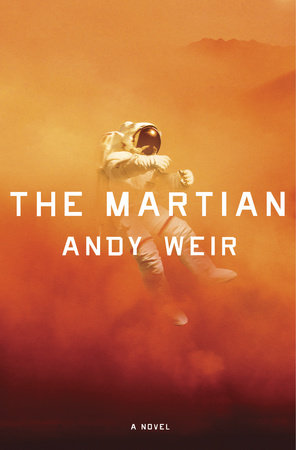
The Martian by Andy Weir: When I saw the preview for the Matt Damon movie based on this book, my thought was, “Bet that is a great story that will be turned into a mediocre movie.” While I can’t give an opinion on the film, I loved the book. If science fiction and action adventure had an alien baby with a good sense of humor and a bit of a potty mouth, it would be The Martian. Enough science to keep 9780804139021this chemistry dummy on my toes and with enough drama to keep me turning the pages as fast as I could read them. If you haven’t seen a preview of the movie or heard of the book, the plot is simple. Mark Watney is separated from the rest of his crew during a mission to Mars. Believing Watney dead, the crew begins their journey home only to discover that he is, in fact, alive. My favorite aspect of the book, besides the fact that the main character is a Chicago Cubs fan, is Watney’s perspective on the obstacles standing in the way of his safe arrival back to earth. While author Andy Weir infuses Watney’s quest to survive with breathless suspense, he never tips the scale in favor of melodrama. The book reads more like a guide on alien planet survival, calmly presenting one’s options when trapped in outer space. A huge thumbs up.

The Sisters Brothers by Patrick deWitt: Finally! A contemporary author, other than J.K. Rowling, whose book releases I will now mark on my calendar. I tracked this book down after hearing the author being interviewed on public radio and when I finished, I promised myself to be kinder to NPR regarding its antidotal news coverage. Wow. If Quentin Tarantino and Wes Anderson got together and wrote a book and then Alfred Hitchcock edited out most of the stylized violence, language and sex, the book would be something like this. Well-developed and gripping characters inhabiting an engulfingly reality of showdowns and amazing discoveries. I don’t even want to summarize it for you for fear of robbing you of the joy of discovering the plot and characters yourself. Just go out and read it. Now.

The Wright Brothers by David McCullough: How does he do it? David McCullough has the gift of taking monumental figures and moments in history, fleshing them out and making them feel like the neighbors next door, all without losing site of the big picture. I the-wright-brothers-9781476728742_hrliterally could not stop recommending this book to people. The Wright brothers are the kind of men you wish we had more of these days. Clever, hard-working, loyal and principled. I took some of the kids to Dayton on fall break to visit their cycle shop and museum. Thanks to McCullough, as we walked around Huffman Prairie, where they practiced with and perfected their flying machine, I felt like I had been there before. The man makes history come to life in the best possible fashion.

Maisie Dobbs series by Jacqueline Winspear: For me, mystery novels are like comfort food, I try not to overdo it, but indulge in them as often as I can. This series is a bit of an enigma. In an attempt to help Maisie Dobbs stand out in a crowded sea of detectives, the author has muddied the waters a little too much for my taste. The main character is part detective, part psychologist, part clairvoyant, and sometimes you can’t tell if you are reading a mystery novel, a study in psychology, or supernatural historical fiction. Having said that, I keep reading them so there must be some merit there after all. Like Grandma’s cheesy potato casserole, too good to turn down, but after a while you just have to say enough’s enough.

Finding Mom by Stephen Messer: One of my book club’s selections this year, this book was written by a Taylor University history professor who graciously led our group discussion. When he was only six years old, Messer’s mother committed suicide and after 50 years of silence, he set out on a journey to discover more about her life, family and struggle with depression. Finding Mom is a quick read which helps you see the tragedy of suicide from all sides. An inspirational story of healing that kindled a desire for many of us in the group to discover our parents outside of their role as mom or dad and more as people in their own right.

The Mighty and the Almighty by Madeleine Albright: I have to confess the pickings were slim in the audiobook section when I chose this book. I also have to confess I only had a vague recollection of who exactly Madeleine Albright was before I started. The topic, the role of religion has played in foreign affairs past and present, as well as Albright’s opinion of what role it should play in the future, is an interesting one. It was made more interesting to me coming from the other side of the political aisle. There were your predictable jabs at the right and not surprisingly all the examples of good diplomacy came from the left, but I appreciated Albright’s desire to present a fair and balanced case for religion in the public square. Nothing earth shattering and somewhat outdated given the current state of the affairs in the Middle East, but it was a good exercise in walking a mile in someone else’s political viewpoint.

The Light Between Oceans by M. L. Stedmen: This book deals with a classic case of good people making a very bad choice. An interesting story centering on the isolated yet beautiful life of a lighthouse keeper and his wife off the coast of Australia. It will probably come more to life when I get a chance to discuss it with the person who recommended it to me. A few unconvincing characters and turn of events, but I would read it again.

The Night of One Hundred Thieves by Devon Trevarrow Flaherty: This book is by a friend whom I both love and respect, as a person and a writer, so I have no excuse for having taken this long to getting around to reading it. When I saw Devon recently after several years, I thought, “I love everything she has to say! Why on earth have I not read her book?” The genre, medieval fantasy (is that really a genre or did I just make that up), is not really my cup of tea so it should speak to the book’s quality that I read it. A bit Chaucer meets Tolkien. Devon has created a world that feels real with a character who feels the same. Looking forward to making up for lost time and reading her other novel, Benevolent.