These days a lot of liars are in the news. Busted PED-user Ryan Braun not only repeatedly and emphatically denied his guilt but was self-congratulatory while meeting with the press after his successful appeal last year. Check out Gregg Doyel’s excoriating piece on Braun.
And then  there’s Anthony Weiner. In addition to his narcissism and sexual perversion, he’s a pathological liar. How many lies have we heard from him? One reporter with the Daily Beast counted 68 lies in just eight minutes during one interaction with the press.
So why is lying so offensive? The best analysis of the evil of lying that I have seen comes from Charles Fried, former law professor at Harvard University (in his book Right and Wrong, chapter 3 [Harvard, 1978]). According to Fried, being faithful to truth is fundamental to rationality and, therefore, morality. This means believing on the basis of truth, rather than to choose truth. Truth, Fried reminds us, is not owned by anyone in particular. But to lie is to essentially to choose truth, to claim it as one’s own, and this contradicts rationality (and morality).
Fried also analyzes the evil of lying in terms of disrespect. Rationality is the respect for truth. Lying disrespects truth and so is fundamentally irrational. And since moral agents must be rational and act rationally, lying is inimical to morality (which is to say it is immoral). Furthermore, to lie is to disrespect others by undermining their interest in the truth.
Furthermore, Fried points 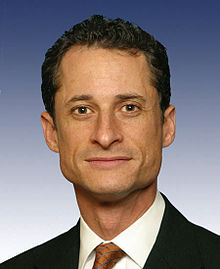 out that the evil of lying can be analyzed in terms of the way it undermines community. Language, he notes, is a communal affair, a means by which we share in rationality. For language to work there must be a shared commitment to truth and morality. To lie is to break that trust and thus is a blow to our communal bond of reason.
To Fried’s philosophical analysis, I would offer a theological point, which might be the most fundamental problem of all when it comes to lying. Scripture tells us that God is truth (Jn. 14:6). Of course, this point itself begs for careful analysis and interpretation. But, whatever this means it surely implies that the concept of truth is somehow grounded in the divine and thus sacred.
Remembering these points about truth is crucial at times like these, when lies seem especially rampant among public figures. I find it helpful not only to understand my own anger at liars but also as a reminder why I must remain solidly committed to believing, telling, and searching for truth in all domains of life. For the commitment to truth is fundamental to what it means to be rational, moral, and religiously devout.