Problems with the Genderbread Person

A few years ago Sam Killermann (author of The Social Justice Advocate’s Handbook: A Guide to Gender) came out with his “Genderbread Person,” an edugraphic aimed at providing us with the complex “truth” about human sexuality, as he explains here.  The graphic went viral and has spawned much discussion and critique.  Consequently, Killermann has revised the graphic several times, and it is currently at version 3.3.  Here is one of the more recent versions.

Interestingly, very little critique of the Genderbread Person graphic on the Internet has come from traditionalists.  Since there are significant problems with the graphic that aren’t well represented on the Internet, I thought I would briefly point out some of these.  Some have to do with its substantive claims or implications, while other problems pertain to subtle, yet important, aspects of the way the concepts are presented.

First, I’m always wary when someone says things like “everyone thinks they understand X, but they don’t” and then they proceed to give you the correct analysis.  With his Genderbread Person graphic Sam Killermann does this.  In earlier versions the various factors (identity, expression, biological sex) were each presented along a continuum such that there was an inverse relationship between male/masculine and female/feminine.  In more recent versions (the multiplicity of which is itself telling), such as the current v3.3, these have been supplanted with spectra which keep these things independent.  Well, how do we know, in each case, that they really are independent variables?  Depending on the factor, there are some potentially compelling reasons to think that they are not (e.g., in terms of biological sex, the more “male” one’s genitalia, the less “female” they tend to be).

Second, the way it is laid out, biological sex appears no more significant than any of the other factors for determining “gender.”  This is more of a point of presentation, but it surely has a psychological effect on the reader regarding the relative importance of the various factors.  The old dictum “the medium is the message” is applicable here in certain ways.

Third, it could be argued that the graphic assumes an overly individualistic/atomistic humanist perspective on gender, as the factors that are presumably definitive of the concept are almost entirely inherent to a particular person, including his/her own thinking and behavior.  What about a separate social factor?  A cultural factor?  A theological factor?  Are none of these significantly relevant to our thinking about gender?  And, of course, we could go many directions in light of each of those questions.  (The Oxford Dictionary definition of “gender” actually prioritizes socio-cultural considerations to the exclusion of Killermann’s non-biological individualistic factors.  Many other lexicographical accounts do the same.)

Finally, there are numerous other questions to be posed about the graphic.  Does Killermann propose to report current usage/understanding of the term “gender” or to refine or reconceptualize current usage/understanding?  If the former, then that’s problematic because the graphic is at odds with so many lexicographic (dictionary) definitions of the term.  But if the latter, on what basis does he propose such a reconceptualization?  What research and studies?  And why trust that research or those studies?  I don’t see any empirical basis or reference to such on any of the Genderbread Person graphics.  Looking over his website, I don’t see any references to relevant studies, with the exception of a link to the Alfred Kinsey Wikipedia page. (And I trust we all know how notoriously flawed the Kinsey research was.)

Now someone could reply, “Hey, this is just a graphic—a handy heuristic device for prompting dialogue.  Of course, its imperfect.”  But hopefully you’ll agree that even such simple graphics ought not to be exempt from critical scrutiny, especially when they are ones that go viral (as this has) and can have a deep and profound effect on how people think and talk about crucial issues.

The Sexual Pluralist Revolution: Reasons to be Skeptical

In the United States the last generation has seen a decisive move away from the Judeo-Christian sexual norms that have reigned in the West for centuries.  This shift has involved a move toward sexual pluralism, the view that any sexual behavior is morally permissible so long as it takes place between mutually committed adults.  This is nothing short of revolutionary, as it constitutes a radical and abrupt change of practice and moral perspective.  This should be troubling to anyone who prizes the values of the Judeo-Christian tradition, because it flouts both natural law and biblical teaching on sexuality.  But it is also troubling for non-theological reasons.  Here I will consider several reasons why we should be especially skeptical of the rise of sexual pluralism.  I will give special attention to homosexual conduct both because this issue is so heavily emphasized by sexual pluralists and because it is now a point of controversy within some Christian communities.

One reason to be skeptical of sexual pluralism is that this movement has not been driven by rational argument, unlike other revolutionary developments such as the Protestant Reformation, the scientific revolution, and the abolitionist movement.  Rather, the sexual pluralist revolution has been powered by postmodern relativism, pop culture influences, and a confused view of tolerance that is really a disguised form of dogmatism.

Many say the sexual pluralists do have an argument, specifically the argument from nature—science has proven that our sexual orientation is innate, not under one’s control.  Yet here is another reason to be skeptical of sexual pluralism.  The so-called argument from science is spurious.  No credible studies have proven a biological basis for homosexual orientation.  Some cite the LeVay or Bailey-Pillard studies of the early 1990s, but these are seriously flawed.  Moreover, even if there were a genetic or congenital disposition toward homosexual attraction, this proves nothing regarding whether homosexual practice is ever morally appropriate.  For even if homosexual orientation is biologically determined, this does not imply that such people must choose to behave accordingly or that they are not morally culpable for their sexual choices.  To insist so is to embrace hard determinism, the view that since human choices are caused we are neither free nor morally responsible for our behavior.  The fact that sexual pluralists must appeal to such deterministic thinking shows how thin their rational grounds are.

A third reason that Christians should be skeptical of sexual pluralism is the fact that significant disagreement about the issue within the Church is historically unprecedented.  Never before the last generation was there ever serious debate among Christian theologians or ethicists regarding the moral legitimacy of homosexual behavior.  In fact, there has been considerably more debate about such fundamental doctrines as the Trinity and the divinity of Christ than there has been about this.  Other sexual issues (e.g., polygamy) have been debated, of course.  But not until the late twentieth century have Christians seriously debated the moral permissibility of homosexual practice.

This leads to a final reason to be skeptical about sexual pluralism: debate in the Church has occurred almost exclusively in North America and parts of Europe.  Christians in Africa, Asia, and South America almost uniformly affirm the traditional view.  Because of this, it is extremely misleading, even ethnocentric, to glibly declare that “Christians are very divided on the homosexuality issue” as some are wont to do.  Consult a typical Christian in Kenya or China or Brazil, and they will shake their heads in disbelief, perhaps even asking “What is wrong with American Christians that they could actually disagree about this issue?”  Good question.

For these reasons Christians are well-advised to hold fast to the historic Judeo-Christian sexual ethic.  In the coming years, doing so will be increasingly difficult, since this will demand a firm resolve to resist cultural currents.  Those on the side of biblical orthopraxy will be dismissed or, worse, persecuted.  And although sexual pluralism has no rational grounds—theologically, historically, or scientifically—it might be useless to resist with rational argument.  For a view which rises to prominence by abandoning reason can hardly be defeated through the use of reason.

John Hick and Human Progress

An interesting philosophical question concerns whether human beings are making progress.  Great thinkers have fallen on either side of the issue, as you can see here.

Some who take the negative view on this issue use lack of human moral progress as an objection to theism.  After all, wouldn’t God want human beings to improve?  And, being omnipotent, wouldn’t he find a way to ensure that happened?  Thus, the notion that God exists seems to be undermined by the fact that human beings are not making any moral progress.

I happen to agree with the no-moral-progress thesis.  I believe that human beings in the early 21st century are no better, and no worse, than we were a century ago, just prior to the first of two hideous world wars.  And we are no better or worse than we were during the Renaissance, the Dark Ages, or the Iron Age.   From a moral standpoint, human nature has remained constant—since the Fall, anyway—notwithstanding salient eruptions of evil (e.g., the Mongol conquests, the Nazis, etc.) and bursts of goodness (e.g., the birth of the university, the abolition of Western slavery, etc.).

But granting the no-progress thesis regarding the human race generally, it doesn’t follow that there is no significant human moral progress at all.  Just because the human race doesn’t improve as a whole, this doesn’t mean there is no individual progress.  On the contrary, I think such progress is the norm throughout the world.  And it is here that we see the moral work of God on a global scale.

In his classic book Evil and the God of Love, philosopher of religion John Hick insightfully addressed this issue:

Because this is a pilgrimage with in the life of each individual, rather than a racial evolution, the progressive fulfillment of God’s purpose does not entail any corresponding progressive improvement in the moral state of the world. . . .  It is probable that human life was lived on much the same moral plane two thousand years ago or four thousand years ago as it is today.  But nevertheless during this period uncounted millions of souls have been through the experience of earthly life, and God’s purpose has gradually moved towards its fulfillment within each one of them, rather than within a human aggregate composed of different units in different generations. (Evil and the God of Love [Harper & Row, 1966], p. 292)

Hick was a religious pluralist and a universalist, but one need not affirm either pluralism or universalism to see the sense in his proposal here—that God works redemptively in the individual lives of people—perhaps the overarching majority of people worldwide—and this is consistent with the disappointing fact that the human race shows no signs of moral progress.  In fact, Hick even suggests that the lack of aggregate human improvement makes for a better environment for individual moral growth.  After all, as free agents, we all must choose to pursue the good and live faithfully before God, all the while resisting temptation, dealing with strife and disappointment, recuperating from failure, and persevering through suffering in order to do so.  In short, the struggle against evil is precisely how we grow in this world.  This is Hick’s so-called “soul-making” theodicy—an approach to the problem of evil that I find particularly compelling philosophically.  Moreover, it enjoys some biblical support as well, as is evident in such passages as James 1:2-4, Rom. 5:3-4, and 1 Pet. 1:6-7.  While I don’t regard this theodicy as a final and complete solution to the problem of evil, I do think it is an essential part of a Christian response to the problem.

There is also a moral-psychological (or, one might say, existential) benefit in this way of thinking about the human condition.  For if God is ever at work in people, accomplishing his work of redemption in the lives of individuals, then I need not despair over the “current state of the world” or lose hope when considering what appears to be a general moral decline of our society.  Nor should those of us who work to improve human institutions and social structures despair if we see no net improvements.  For God is still at work in the lives of those we meet.  He always has been and he always will be.

On Hatmaker on Marriage

Being critical of popular writer and speaker Jen Hatmaker feels a bit like kicking puppies. If you are unfamiliar with Hatmaker, she is a blogging, self-depreciating, too-much-info sharing pastor’s wife and author of Seven and Interrupted. She manages to be funny and heartfelt all the while sharing her clear desire to see the Gospel impact the world around her. She also has a great collection of oversized earrings that I confess to greatly envy.

Since setting off on my journey to become a published writer, Jen Hatmaker has served as a model for what I would like to achieve; walking that razor-thin line of approachable yet substantive. She is authentic and real but without making excuses or compromising her convictions. Do you sense the giant “but” approaching? Here it comes…

BUT, having enjoyed and been inspired by her writing so much, I was that much more disappointed when I read Hatmaker’s recent blog post regarding World Vision and it’s since reversed decision to allow for the hiring of married gay employees.

www.fellowshipwomenonline.com

It isn’t Hatmaker’s position on gay marriage that disappoints me since her position is unclear. (She has clarified her position in her latest post if you care to know.) What I find so disturbing is her dangerous mischaracterization of the nature of biblical truth and our ability to discern that truth, all in the name of peacemaking.

Hatmaker says “…the Christian community is not going to reach consensus on gay marriage.” I actually disagree with this view since the church has historically been in agreement on this issue for thousands of years. But putting that aside, supposing that we will never agree, in her opinion, mean that we should throw in the towel and just agree to disagree?

What if the early church fathers had taken this approach regarding the biblical canon or heresies that plagued the early church? Should they have simply thrown up their hands and agreed to disagree? Despite her claims that there was a significant lack of agreement among the early church regarding major aspects of the faith, we have hard won creeds and doctrines that have been passed down to us that say differently.

Speaking of the early church fathers, this brings me to my second beef with Hatmaker’s assertions that “we” will never agree. When it comes to the church—and I mean the church beyond 21st century evangelical protestant America—and its view of same-sex marriage, there is actually a larger consensus than she is willing to admit. When one takes into account the whole of the church, through history and across continents, the overwhelming majority comes down on the side of traditional marriage. I find it ironic that too often those who claim to speak for the open-minded crowd neglect the opinions and perspectives of literally billions of believers.

Hatmaker asserts that “Thousands of churches and millions of Christ-followers faithfully read the Scriptures and with thoughtful and academic work come to different conclusions on homosexuality (and countless others). Godly, respectable leaders have exegeted the Bible and there is absolutely not unanimity on its interpretation. There never has been.” This is simply not true. It isn’t true of homosexuality and it isn’t true of any of the major tenets of the Christian faith. If it were, we wouldn’t be a single religion but rather a collection of sects.

Has there been disagreement among certain traditions regarding issues such as baptism, predestination, and more culturally relevant issues such as slavery and the role of women? Absolutely. But there is also a rich history of common ground that as Christians we all enjoy and should fight, yes fight, to defend.

I absolutely agree with Jen Hatmaker that the world needs to see the Church work through these issues with love and respect. I just don’t want to see us sacrifice what is true in the name of let’s-all-just-get-alongitus. For then, if we allow the truth to slip away while we are too busy making nice with one another, what will we have to offer a lost and dying world? What Good News will there be left to tell?

We must wrestle with the truth and with one another not in order to prove we’re right or win points for our side. We must preserve it in order to give it to those who so desperately need it. The truth is there to be discovered and in the end it will set us all free.

Hodgepodge

1. What is love?  Here is a fascinating compendium of kids’ definitions of love that will make you laugh, reflect, and maybe even cry.

2. Check out this film short entitled Sight which portends where Augmented Reality Technology is leading (some of?) us.  Where have you gone, Neil Postman?  Our nation turns its lonely eyes to you . . .

3. Here’s a bold and insightful reflection on something that the author, Anthony Esolen, calls “temptation mysticism.”

4. Finally, from the Don’t-Put-The-Lord-To-The-Test department…I’d never watched a video that gave me vertigo before…until I watched this.

True Marital Bliss

This week Jim and I have the amazing good fortune to be in the Bahamas on a somewhat paid-for vacation. He is teaching two classes to Taylor students while I am catching up on my HGTV watching and getting ahead of schedule on my book reading challenge for the year. Can you guess which one of us is getting paid?

In some of my mindless web surfing free time, I discovered a post entitled “I’m Dating Someone Even Though I’m Married” that annoyed me greatly, but not in the way you might think. The post was written by Jarrid Wilson, a pastor and author, who is not an adulterer, because the woman he is dating is, in fact, his wife. Wilson encourages his readers “to date your spouse, pursue them wholeheartedly, and understand that dating shouldn’t end just because you said, ‘I do.’”

“Why would anyone find a man challenging married couples to pursue one another annoying?” you might ask. Well, here’s why: I don’t think married life is not primarily about being happy; nor do I think being married is about finding your soul mate, best friend or the love of your life.

Now before y’all start feeling sorry for Jim because he is obviously married to a heartless cynic, let me explain. Jim is my favorite person. I never knew a person could be so morally outstanding yet interesting and fun until I met him. Somehow, despite my miserable failings, poor basketball skills and occasional emotional outbursts, I convinced this man to marry me and haven’t regretted it for a moment.

But happiness shouldn’t be the main focus of our marriage. That sort of self-focused, hedonistic approach to married life is one of the reasons why divorce is wreaking havoc in the church. I know it can certainly wreak havoc in mine.

When we were first married, I wanted to have the perfect marriage, and my pursuit of the perfect relationship nearly killed both of us. When we argued, I had to analyze it to death in order to discover the deeper source of discord. I thought if I just dug deep enough I could fix it and then everything would be perfect. What I came to realize, though, was that in marriage, as in life, there is no perfect.

The root of the problem in my marriage, and every other marriage out there, is sin—my sin and his. Not just small instances of sin here and there but the sin that has soaked into every cell and that must be fought at every turn. It might sound like a depressing thought, but for me it was liberating. It transformed my understanding of the purpose of marriage.

Marriage isn’t about making each other happy, though that is often a bi-product of the self-sacrifice and selfless love it demands. Marriage is about making each other good. It isn’t about pursuing one another. It is about pursuing righteousness. And it can get ugly.

But should that surprise us? When Christ pursued our righteousness, it wasn’t with a romantic gesture, with flowers and a box of chocolates. It was with an instrument of torture, with a bloody cross, and a crown of thorns. Married life should be marked with blood, sweat and tears. We should expect to be wounded and scarred as we battle for a greater good.

Of course that isn’t the end of the story. Christ’s pursuit didn’t end in sorrow but in the ultimate joy, salvation for all who will accept it. And our pursuit can reflect that joy. Adjusting our understanding of marriage isn’t about lowering our standards, but rather about raising them to new heights.

When we stop trying to make each other, and ourselves, happy and start trying to make each other, and ourselves, good, that is when we begin to understand the true purpose of marriage. The question isn’t do I pursue Jim wholeheartedly in order to make him feel loved. The question is do I pursue Christ in order to love Jim with a love only Christ can give. And the answer is, of course, “I do.”

On the Evil of Lying

These days a lot of liars are in the news.  Busted PED-user Ryan Braun not only repeatedly and emphatically denied his guilt but was self-congratulatory while meeting with the press after his successful appeal last year.  Check out Gregg Doyel’s excoriating piece on Braun.

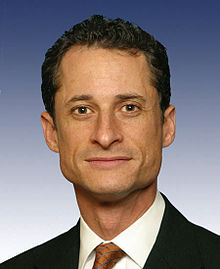
And then Ryan_Braunthere’s Anthony Weiner.  In addition to his narcissism and sexual perversion, he’s a pathological liar.  How many lies have we heard from him?  One reporter with the Daily Beast counted 68 lies in just eight minutes during one interaction with the press.

So why is lying so offensive?  The best analysis of the evil of lying that I have seen comes from Charles Fried, former law professor at Harvard University (in his book Right and Wrong, chapter 3 [Harvard, 1978]).  According to Fried, being faithful to truth is fundamental to rationality and, therefore, morality.   This means believing on the basis of truth, rather than to choose truth.  Truth, Fried reminds us, is not owned by anyone in particular.  But to lie is to essentially to choose truth, to claim it as one’s own, and this contradicts rationality (and morality).

Fried also analyzes the evil of lying in terms of disrespect.  Rationality is the respect for truth.  Lying disrespects truth and so is fundamentally irrational.  And since moral agents must be rational and act rationally, lying is inimical to morality (which is to say it is immoral).  Furthermore, to lie is to disrespect others by undermining their interest in the truth.

Furthermore, Fried points 220px-Anthonyweinerout that the evil of lying can be analyzed in terms of the way it undermines community.  Language, he notes, is a communal affair, a means by which we share in rationality.  For language to work there must be a shared commitment to truth and morality.  To lie is to break that trust and thus is a blow to our communal bond of reason.

To Fried’s philosophical analysis, I would offer a theological point, which might be the most fundamental problem of all when it comes to lying.  Scripture tells us that God is truth (Jn. 14:6).  Of course, this point itself begs for careful analysis and interpretation.  But, whatever this means it surely implies that the concept of truth is somehow grounded in the divine and thus sacred.

Remembering these points about truth is crucial at times like these, when lies seem especially rampant among public figures.  I find it helpful not only to understand my own anger at liars but also as a reminder why I must remain solidly committed to believing, telling, and searching for truth in all domains of life.  For the commitment to truth is fundamental to what it means to be rational, moral, and religiously devout.

Disguised Moral Terms for Relativists

We live in a peculiar age.  Moral relativism is probably the dominant ethical perspective in American culture, yet at the same time there is a strong tendency among Americans (1) to dogmatically oppose certain forms of behavior and speech and (2) to be highly judgmental, even to the point of absolute condemnation, regarding those who do not fall in line with the prevailing norms of our society.  Paula Deen’s recent fall from glory is highly illustrative of this, as her racist remarks from many years ago have been judged so egregious as to be unforgivable—by the brass at the Food Network, as well as many others who have affirmed their decision to can her.  (Interestingly, there has been a very different response to Alec Baldwin’s recent abusive, anti-gay tirade.  Double standard, perhaps?  By the way, this CBS report, like many others, failed to mention the most severe and disgusting anti-gay slur in Baldwin’s tirade.  Hmm.)

When such stories hit the news, it’s always amusing to hear how people attempt to mask the moral judgments they make.  Nowadays there is a common stock of terms and phrases which serve as stand-ins for moral judgments.  By using them, one has the freedom to vent one’s moral outrage without presenting oneself as a moral judge.  And, thus, one retains plausible deniability when it comes to the charge of being a moral absolutist, while enjoying the freedom of making dogmatic moral pronouncements.  Here are some of my favorites:

  • “That’s inappropriate” – I believe it was in the early 1990s when I first became aware of the popular usage of this phrase, mainly by people in the social sciences.  It’s a favorite relativist phrase these days because what counts as “in/appropriate” can be construed at any of a number of different levels, from a whole culture to a local community to an individual person.  Very handy.
  • “That’s offensive” – This one is interesting because it teeters on the brink of an absolute moral claim while retaining the element of subjectivity (i.e., it offends me or I find it offensive).  President Obama famously resorted to this phrase during a 2012 debate with Mitt Romney, when the latter had the temerity to suggest that Obama had somehow failed regarding the Benghazi attacks.  All Obama had to do was use this phrase, accompanied by a petulant stare, and that was enough to get Romney to back off.  Again, very handy.
  • “I’ve got a problem with that” – This is a favorite of ESPN sports commentator Dan Patrick, who uses the phrase regularly on his radio show.  I recall one instance where he was touting the “live and let live” line.  One of his fellow hosts then asked him whether he’d have that same attitude if his daughter decided to work in the porn industry.  Uh, not so much.  But rather than offend anyone by calling such a choice immoral, Patrick simply said, “I’d have a problem with that.”

The ubiquity of such phrases in a largely relativist culture reflects the fact that moral judgments are irrepressible.  This is a good thing insofar as it shows that we are inherently moral beings who can’t help but make moral judgments.  But it also reveals a certain unwitting duplicity on the part of relativists, which perhaps means most Americans these days.  And there is another reason to be concerned:  such apparently morally neutral terminology might, in the end, work too well.  By veiling moral judgment and dogmatism, it can be used to oppress those who don’t share the majority opinion on certain issues.  Indeed, we are already seeing this at work when it comes to the issue of same-sex marriage, as traditionalists are increasingly being presented as “offensive” for maintaining that marriage is properly defined as a union of one man and one woman.  The recent Supreme Court decision suggests that this oppression might be coming sooner rather than later.  I’ll address this in my next post.

Planned Parenthood and Infanticide

In February I presented a paper at an ethics conference in which I critiqued a Journal of Medical Ethics article that defended infanticide.  The thesis of the article is that so-called “’after-birth abortion’” (killing a newborn) should be permissible in all the cases where abortion is, including cases where the newborn is not disabled.”  Upon its on-line publication a year ago, the article generated so much controversy that it was temporarily taken off-line.  The authors and editors had apparently underestimated the severity of outrage that a serious defense of infanticide would generate.

However, the authors of the article, Alberto Giubilini and Francesca Minerva, are far from the first moral philosophers to defend infanticide.  In recent decades the practice has been advocated by such prominent scholars as Mary Ann Warren and Peter Singer.  And in ancient Greece Plato notoriously defended the practice in his classic work The Republic.

However, it is one thing for a practice to be embraced by a small minority of scholars.  It is quite another for it to be accepted by the most prominent reproductive health organization in the country.  In a recent hearing in the Florida state legislature, a Planned Parenthood official, Alisa LaPolt Snow, essentially defended the right of abortion providers to kill newborn babies—in particular, those which are born alive after a failed abortion.  Snow was pummeled with questions from several legislators, inviting her to acknowledge that such newborn babies have a right to life.  But Snow coolly demurred, insisting that “any decision that’s made should be left up to the woman, her family, and the physician.”  Of course, “any decision” would include the decision to kill the baby.  You can see an excerpt of the discussion here.  As you watch, bear in mind that Planned Parenthood is an organization that our tax dollars support.

This is a vivid and disturbing example of how yesterday’s most implausible academic theories become today’s horrific practices.  But given the demise in our culture of a Judeo-Christian ethic and its core notion of the sanctity of human life (as opposed to a quality of life ethic), we shouldn’t be surprised.  Ideas have consequences.  And when a society reject an idea that is crucial to the preservation of basic morality, extreme evil will follow.  Infanticide is such an evil.

Psychologizing Wickedness

In the media coverage of the recent “movie massacre” in Colorado we have continually heard analysts try to “make sense” of this atrocity.  The same language that has been used to describe pedophile Jerry Sandusky and mass murderer Anders Brevik is now being applied to James Holmes as well.  He is “sick” or “insane” or “delusional” or otherwise psychologically twisted.  But I still have yet to hear anyone call him “evil” or “wicked.”  Evidently, reporters and commentators are reluctant to use moral terminology to assess pedophilia, rape and murder, which is unfortunate because to call these acts evil is to call them what they are and is the best way to “make sense” of them.

Why are we so quick to psychologize brazen killers and rapists rather than to simply identify their acts as extreme wickedness?  I suppose this comes from two impulses.  For one thing, we simply want to understand how someone could commit such horrific acts.  In the age of science we look for causes or sufficient conditions for everything, and this includes human behaviors.  Secondly, we naturally desire to distance ourselves from extreme evil.  If Holmes, Sandusky, and Brevik (or Adolf Hitler, for that matter) are just “mentally sick” or otherwise extremely irrational, then I can comfort myself with the thought that their actions are well beyond what I am capable of.  Psychologizing the wicked in this way reassures me that, for all my faults, I would never do that.

But such thinking is problematic for many reasons.  While it’s certainly appropriate to analyze the human mind in order to identify causal influences on our choices, the danger is that this may undermine a proper sense of freedom and moral responsibility.  If we are truly free, if we are genuinely moral beings with the capacity to make autonomous choices, then shouldn’t we grant a bit of mystery about why we do the things we do at times?  Or shouldn’t we at least admit that any one of us might have done what these wicked men have done?

These leads us to the second problem, which is the fact that psychologizing the wicked suggests a false view of human nature.  According to scripture, “all have sinned and fall short of the glory of God” (Rom. 3:23).  But more than this, we all suffer from an innate inclination toward immorality, a moral fact known as “original sin.”  To suggest that one must be especially mentally warped to do extreme evil fails to recognize this natural moral corruption from which we all suffer.  Now Holmes, Sandusky, and Brevik might in fact be mentally ill as well, but the point is that this is not a necessary condition for wicked behavior.  All of us in our natural state satisfy the most basic conditions for evil, even of the most extreme kind.

And this points to yet another problem with the psychologizing of wickedness, which is the way it breeds pride and false security regarding one’s moral condition.  Again, if it takes extreme mental “sickness” to do what these wicked men have done, then I can be secure in the thought that I am not so wicked as they are.  But if I really am an autonomous being with the freedom to misuse my freedom, along with a fallen nature that predisposes me toward selfishness and immorality, then, well, I really am potentially as wicked as any mass murderer or pedophile.  So what keeps me from engaging in such radical acts of wickedness?  The old cliché applies: “There but for the grace of God go I.”