
U2’s Songs of Innocence: A Review

When U2 dropped their new album, Songs of Innocence, on half a billion people two weeks ago, it was greeted with a range of responses, from jubilation (“At last, the new U2 record is here!”) to annoyance (“What?!  I didn’t ask for this musical spam on my phone!).  I suppose I felt something of both of these emotions.  I was happy to have the album, but I was put off by the annoyingly clever marketing maneuver, which enabled them to simultaneously appear generous (Here, have a free album!) while pocketing a ton of cash (upwards of 100 million dollars, by some estimates—thank you, Apple).

U2’s conscious commitment to remaining as popular as possible is evident in their new production team—Danger Mouse (Black Keys, Norah Jones), Paul Epworth (Coldplay, Adele) and Ryan Tedder (Adele, Beyonce, Maroon 5).  Since these guys have all presided over massively popular recent pop albums, one would Article Lead - narrow6136128010f7g9image.related.articleLeadNarrow.353x0.10j6o0.png1411107347492.jpg-300x0-1expect the gamble will pay off and this album will be extremely popular.  Given that it was instantly placed in the hands and ears of 500 million people, it sure doesn’t need any more promotion.  But not so fast.  The backlash prompted by the intrusiveness of the automatic download has negatively impacted public perception of the album, and this is evident in some otherwise inexplicable album reviews.
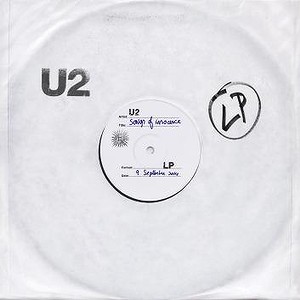
So the band’s preoccupation with popularity and profit might have backfired.  But I can’t help but wonder why these mega-millionaires are still being so careful to maximize their profits?  I thought they were liberal-progressives, not hard-core capitalists.  Consequently, I did not want to like this album.  I wanted it to be an aesthetic failure to match what I, like so many others, regard as a pragmatic flop.  And yet, as I listened and listened some more, I was thoroughly disappointed.  Yep, I must admit, it’s actually a really good album.  Dang.

Some people are put off by the production, which is more disciplined and clean than ever, making every song radio ready.  Some complain that they long for the raw energy of their older sound.  But U2 hasn’t sounded like that in more than twenty years, so why expect it now?  Anyway, I say don’t begrudge a band’s willingness to explore, even when that exploration takes them in musical directions you don’t like, such as toward a more polished, popular sound.  As annoying as their preoccupation with “staying relevant” might be, if the result is actually better music, then the quality of the music shouldn’t be denied, which is what I think a lot of listeners are doing—allowing the controversy around the music to prevent them from giving the music a fair hearing.

Nowhere is the more disciplined production approach more apparent than in Bono’s vocals, which sound as strong as they have since the 1980s.  Lyrically, too, Songs of Innocence works as well as any of their records, excepting The Joshua Tree.  The inspiration of most of the tracks is drawn from experiences in their youth (hence the album title), and many of the topics are intensely personal.  There are songs about Bono’s wife (“Song for Someone”), Bono’s mother who died when he was a teenager (“Iris”), the street where he grew up (“Cedarwood Road”), and an Irish paramilitary bombing in Ireland that impacted the lives of some of the band’s friends (“Raised by Wolves”).

There is a lot of longing and introspection on this album—deep emotions that defy the slick production.  In “Every Breaking Wave,” which has a Killers flavor to it, Bono sings, “Every sailor knows that the sea is a friend made enemy, and every shipwrecked soul knows what it is to live without intimacy.  I thought I heard the captain’s voice, but it’s hard to listen while you preach.   Like every broken wave on the shore, this is far as I could reach.”  And in “California,” which suggests an Arcade Fire influence with its rumbling drum section and string textures, Bono declares, “Everyone’s a star in our town.  It’s just your light gets dimmer if you have to stay.”

And the song “This is Where You Can Reach Me Now” is a tribute to the Clash, whom Bono has called “the greatest band ever.”  Bono explains: “After we saw the Clash, it was a sort of blueprint for U2.  We knew we couldn’t possibly hope to be as cool, and that’s proven to be true, but we did think we could get behind a sort of social justice agenda.”  And so Bono sings, “Soldier, soldier, we signed our lives away.  Complete surrender, the only weapon we know.  Soldier, soldier, we knew the world would never be the same.  Soldier, this is where you can reach me now.”  It’s a fitting tribute to the Clash, with Bono’s creative use of military images for their musical mission.  The only weapon they know?  Music.  And as career rock and roll social activists, U2 certainly did sign their lives away—to their art, their social causes and, yes, a whole lot of money.

The album concludes with “The Troubles,” which features additional vocals by Swedish indie singer Lykke Li.  The song makes for a haunting closer with its dreamy string section and ominous lyric: “Somebody stepped inside your soul.  Somebody stepped inside your soul.  Little by little they robbed and stole till someone else was in control.”  This might seem like an unexpected choice to close an album about innocence, unless it is supposed to be portentous.  Indeed it might be, if Bono’s intimations about an imminent follow-up themed “Songs of Experience” (with a nod to William Blake) is to be taken seriously.  Whether the next album comes sooner or later, time will tell.  But I think we can be confident of one thing—they won’t force it on us next time.
The Black Keys’ Turn Blue: A Review

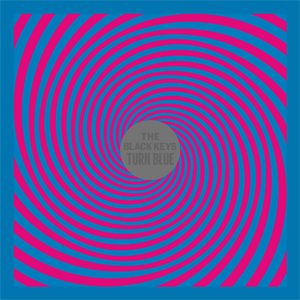
Some of the great albums in music history have been borne out of divorce.  From Bruce Springsteen’s Tunnel of Love to Willie Nelson’s Red Headed Stranger to Bob Dylan’s Blood on the Tracks, it seems the devastation of the end of a marriage brings out the best in songwriters.  The latest confirmation of this sad psycho-aesthetic fact is the Black Keys’ most recent effort, Turn Blue.  Release of the album was apparently delayed by singer-guitarist Dan Auerbach’s divorce proceedings, which were particularly dark and full of disturbing allegations.

Black_Keys_Turn_Blue_album_coverThe songs on Turn Blue reflect what must have been some rough years for Auerbach, beginning with the haunting and patient opener “Weight of Love,” featuring some extended, anguished guitar solos that reinforce Auerbach’s grim declarations:  “Used to think, darlin’, you never did nothing.  But you were always up to something.  Always had a run in, yeah.  I got to think those days are coming to get ya.  Now no body want to protect ya.  They only want to forget ya.”

A few songs later, Auerbach’s grudge has turned to dismissive contempt:  “You wanted to love but you didn’t know how. That’s okay, it’s up to you now.  Its got so bad to where I wouldn’t allow, but no more.  It’s up to you now. (I’ll) let you go, so you can grow old.”  (“It’s up to You Now”).  Elsewhere, things get even more gloomy when he declares that even death would be preferable to his current situation: “Bullet in the brain I prefer than to remain the same” (“Bullet in the Brain”).  And in the title track, there are more ominous lines:  “I really don’t think you know there could be hell below, below.”

Vengeance, contempt, condemnation, suicidal thoughts.  Yep, that’s the psychological landscape of the death of a marriage, as anyone who has been through divorce will testify.

But what is interesting about this record is that it isn’t a dark or brooding album from a musical standpoint.  Much like their 2010 album Brothers, there is an early 70s era Motown vibe to many of the songs (especially “In Time,” “Waiting on Words” and “10 Lovers”).  Also, several tracks are upbeat, and the album is full of melodic hooks.  These are hardly qualities of a depressing album.  This probably explains why most reviewers of the album haven’t properly attended to the heaviness of the lyrics.

Auerbach and drummer Patrick Carney set out to make an album unlike their previous release, El Camino, which was loaded with radio-ready track.  This one, they resolved, would be devoid of pop songs.  In spite of themselves, the album does contain some catchy pop-rock tunes, including “Fever,” with its addictive keyboard line, as well as the insta-classic closer “Gotta Get Away.”  Even more so than the rest of the album the music of “Gotta Get Away” defies its lyrics.  The chord progression and triumphant guitar solo feel like liberation and triumph.  But what Auerbach tells us is that he’s just glad to have escaped, even if there is no hope of finding love again:  “I went from San Berdoo to Kalamazoo just to get away from you.  I searched far and wide, hoping I was wrong, but maybe all the good women are gone.

And so the album ends, perhaps appropriately, on a pessimistic note.  Maybe Auerbach will find love again, as his newly remarried bandmate Patrick Carney apparently has.  Fortunately, all the good women are not gone.  So although he’s turned blue for now, he doesn’t need to stay that way.

My Favorite Morrissey Songs

I’ve been reading Morrissey’s Autobiography (which I will review for Books and Culture soon), and of course this has sent me into quite a fit of listening to his music, both the Smiths and his solo stuff.  The Pope of Mope certainly has built an impressive catalogue.  And, being the lover of top ten lists that I am, I’ve been thinking about my favorite Moz solo tunes.  So here they are, lightly annotated for your reading pleasure.  To save myself the agony of trying to rank order them, I’ve decided to list them chronologically.

  1. “The Girl Least Likely To” (1989) – Morrissey is known for his lyrical daggers.  This one, directed at one of the singer’s many benighted critics, is as good as it gets.  “She lives for the written word, and people come second or possibly third,” the Moz sings over an addictive arpeggio guitar line.  Some call this Morrissey’s very best solo tune, and they might be right.
  2. “Interesting Drug” (1989) – More beautifully melodic jangly guitar lines, a tumbling drum part played by former Smiths band-mate (and eventual despised enemy) Mike Joyce, as well as a rare female harmony vocal (by Kirsty MacColl), all couch a truly depressing lyric: “A government scheme designed to kill your dream. Oh mom, oh dad.”  It works.  Man, does it work.

    From theguardian.com
    From theguardian.com
  3. “The Last of the Famous International Playboys” (1989) – Featuring some “Suffragette City”-esque keyboards played by producer Stephen Street, this song is an ironic musical ode to two notorious British gangsters from the 1960s.  “In our lifetime those who kill, the news world hands them stardom…”  So sadly true.
  4. “National Front Disco” (1992) – There are several great songs on Morrissey’s rockabilly-tinged Your Arsenal album.  This one might be the best, featuring some vintage guitar work by Boz Boorer and Alain Whyte.  Unfortunately, the song created controversy because of supposed racist lyrics (e.g. “England for the English”).  Never understood that fatuous charge.
  5. “Hold on to Your Friends” (1994) – Steve Lillywhite’s debut at the production helm for the Moz resulted in a classic with Vauxhall and I, including this beauty—a veritable feast of melodic guitar parts (Boorer and Whyte, again, at their best) as well as some genuine practical wisdom: “Give up your job, squander your cash, be rash…just hold on to your friends.”  Amen to that.
  6. “The More You Ignore Me the Closer I Get” (1994) – This is the very next song on Morrissey’s Vauxhall and I album, and its just as musically scrumptious.  It also has an unusually bold and confident lyric for the Moz:  “Beware, I hold more grudges than lonely high court judges.  When you sleep, I will creep into your thoughts like a bad debt that you can’t pay.  Take the easy way and give in.”  Wow.
  7. “First of the Gang to Die” (2004) – After a seven-year hiatus, Morrissey returned right in stride with You are the Quarry.  This dark anthem is one of the album highlights.  “Hector was the first of the gang with a gun in his hand and a bullet in his gullet and the first lost lad to go under the sod… And he stole all hearts away.”  More classic Moz dark humor.
  8. “The Youngest Was the Most Loved” (2006) – Under the direction of legendary producer Tony Visconti, Ringleader of the Tormentors featured some classic Morrissey tunes that took real chances, like this one with its powerful use of a children’s choir and a gritty mellotron.  “There is no such thing in life as normal.”  Indeed.
  9. “In the Future When All’s Well” (2006) – Human mortality is an abiding theme on Ringleader, and it is especially pronounced on this song, which hammers home the message with harmonizing Rickenbacker guitar lines.  “I will lie down and be counted in the future when all’s well.”  Won’t we all.
  10. “That’s How People Grow Up” (2009) – During his younger years, Morrissey’s perpetual lovelorn state was an invitation to pity.  Decades later (after many “years of refusal,” as the album title declares) it is a badge of maturity:  “I was wasting my time praying for love—for a love that never comes from someone who does not exist.  And that’s how people grow up.”

Got your own top ten (or top five or top three) Moz tunes?  I’d love to see it.

Arcade Fire’s Reflektor: A Review

After three acclaimed albums—Funeral (2004), Neon Bible (2007), and The Suburbs (2010)—the expectations for Arcade Fire’s fourth album were exceptionally high, particularly when it was announced this one would be a double album. On The Suburbs, Win Butler and Co. had fully found their stride, both in terms of musical innovation and lyrical maturity. Where would they go next? Well, naturally, to James Murphy of LCD Soundsystem to help produce the album. Who would have guessed? No one—which is a credit to Butler and the rest of the band. They love to morph stylistically and refuse to stay in one artistic place.

imagesWin Butler’s musical vision is very expansive, evidently because he’s a devout musical historian. With this album the main influences seem to be early 80s European dance rock and, to a lesser degree, Caribbean and world music, a la the Clash’s Sandinista album and the Jam’s The Gift (there’s even a song on Reflektor that dissolves into Jamaican street noise much like on Sandinista—which I consider a tip of the hat to the Clash), and there’s even a bit of Smiths influence (on “You Already Know”). Some reviewers referred to Stones and Beatles influences, but I don’t hear it. Others have suggested a Bowie influence, which makes more sense. But whatever the real influences, Reflektor is a sonic treat, bursting with fresh ideas and creatively re-treaded ones.
Lyrically, the album revisits a number of themes the band has explored before but also goes in new directions. How many bands today seriously explore questions about personal identity and the afterlife and offer lamentations over youth obsessions with pornography, all the while drawing themes from ancient mythology and offering serious cultural critiques of the excesses of contemporary Western culture? Arcade Fire does all of this on Reflektor, and you’ve got to love their ingenuity and artistic security in doing so. Perhaps the main theme of the album—evident in the title—is the idea that this world is only a reflection of the next world, the afterlife. As on The Suburbs, the main theme is only directly dealt with on a few songs, but the other songs on the album deal with issues that are somehow consonant with the main concept. As usual for Arcade Fire, the album works as a coherent whole.
It’s been interesting to see the wide range of opinions about Reflektor among reviewers. Some, such as this reviewer for Paste, complain that the album is too sprawling and contains “filler.” Others, such as the writer of this Pitchfork review, regard some of the same features as assets to an album that is, overall, a “triumph.” I agree with the latter assessment for several reasons. Not only because the songs themselves are well-crafted but because they work so well within the genres to which each gestures (e.g., the Caribbean “Here Comes the Night Time,” the electronica-infused “Awful Sound,” the dub-styled approach in “Flashbulb Eyes,” and the disco-funk of the title track).

Fans and music critics alike will, no doubt, continue to debate about Reflektor. But this is often the case with the most innovative albums (Bowie’s Low and Radiohead’s Kid A come to mind). Reflektor is a significant achievement and will eventually be regarded as such, even by those poor benighted souls who don’t quite get it now.  In the meantime, Arcade Fire will no doubt continue to explore new musical vistas.

Hodgepodge

1. Cursive handwriting is almost a thing of the past, a fact that is bemoaned by many people.  Check out this piece in Prospect about the “Curse of Cursive Handwriting.”  My sentiments exactly.

2. Here is an interesting piece from the Chronicle of Higher Education about “The Quest for Permanent Novelty.”  It provokes reflection about the nature and purpose of art but also—presumably aside from the author’s intentions—thoughts about the ineradicable human desire for what is eternal.

3. And, in case you missed it, take a look at this clip where Senator Ted Cruz repeatedly asks U. S. Attorney General Eric Holder this question:  Would it be constitutional for a government drone to kill a suspect who poses no imminent threat.  Simple, right?  Not for Eric Holder.  Gulp.

4. Lastly, here is my Books & Culture review of Bob Dylan’s latest album, Tempest.

The Best and Worst of 2012

It’s been another exciting year, and we want to thank you all for reading and, if applicable, posting comments on our blog.  Once again, we would like to close out the year with some summary remarks about good and bad stuff related to film, music, books, politics, and family.

Best Film Experiences:

  • Jim:  This year I was blown away by two films whose plots involved the silent film era:  Hugo and The Artist.  The former, directed by Martin Scorsese, is a powerfully redemptive story that is a visual and emotional delight.  Even given his impressive filmography, I regard Hugo as one of Scorsese’s best.  And The Artist is a true original at a time when Hollywood needed a breath of fresh air.
  • Amy: What have I watched this year? Obviously nothing that great or I would be able to remember. I did love the experience of watching Lincoln, but I told Jim afterward, I don’t know if I loved it because it was a great movie or because it was such an amazing performance by Daniel Day Lewis.  He is so good, it’s hard to evaluate the film as a whole.  From a pure experience standpoint, gasping in shock surprise with several girlfriends and a theater full of shocked fellow watchers in Twilight: Breaking Dawn was a highlight.

Worst Film Experiences:

  • Jim:  I didn’t see any really bad films this year, but Hunger Games was a definite disappointment.  I read the book, and then watched the film, and they were equally disappointing.  The problem: none of the characters made any reference to God, prayer, the afterlife, etc.  Given that death and physical trauma figure into the story so prominently, this is highly unrealistic and a significant flaw in the narrative.
  • Amy: This year has seen a lot of disappointments for me, more in the shows that I watch than in films.  Frankly I expect most movies to be bad but several favorites on the small screen turned into just another agenda driven lecture punctuated by commercialist drivel. I guess one of the worst would be Snow White and the Huntsman but was I really expecting that one to be good or did I just want to get out of the house?  Hmm.

Best and Worst Musical Experiences of the Year:

  • Jim:  The new Dylan album, Tempest, was the highlight of the year for me.  These days, every new Dylan album, especially given the fact that the man is so well along in years, is a treat.  And the fact that his music is as good as ever is really astounding.  Unprecedented, in fact.  What other popular artist is still writing and recording great songs into his/her 70s?  Another highlight was the Black Keys concert in Cincy that I attended last March.  Those guys are finally getting the recognition they deserve.  But will their popularity undermine their creativity from here forward?  Time will tell.
  • Amy:  I don’t really do musical experiences.  Concerts give me vertigo and my iPod is mostly full of stuff for the kids.  But I did enjoy discovering The Tallest Man on Earth, The Temper Trap, Grace Potter and The Nocturnals, and Edward Sharpe and the Magnetic Zeros.

Jim’s Favorite Sports Moments of the Year:  Seeing the Detroit Tigers win the American League Championship was definitely a thrill.  But like 2006, they swept their way there (defeating those darn Yankees 4-0), while the Giants had to go the distance to defeat the Cardinals in the NLCS.  So, just like 2006, the Tigers were hurt by the long layoff and got swept in the World Series.  Hopefully, next year, the Tigers can win the ALCS in a more protracted series so they’ll be well-tuned for the World Series.

Jim’s Most Disappointing Sports Moments of the Year:  Watching the Giants sweep the Tigers hurt, but the whole “Bounty-gate” debacle concerning the New Orleans Saints hurt even worse.  Ugh.

Amy’s Best Eating Experience of the Year:  Eating curried goat with my hubby in the Bahamas.  I seriously would have licked the plate had no one been watching.

Amy’s Worst Eating Experience of the Year: I made the mistake of purchasing heavily scented yet temptingly discounted dishwasher detergent a few months back and paid dearly for my frugality when it “tainted” all of our dishes.  No matter what we ate, all I tasted was synthetic lavender.  Yuck.

Satisfying Reads of the Year:

  • Jim:  In the scholarly category, it’s Plantinga’s Where the Conflict Really Lies.  As is typical for Plantinga, it is lucid and well-argued—the best treatment of science and religion I’ve ever read.  Also, this year I resolved to read three classics every year, and this year they were Virgil’s Aeneid, George Eliot’s Silas Marner, and Eusebius’s History of the Church (which I am still reading).  Three very different books, but each rich with insight and deserving of the moniker “classic.”  I also greatly enjoyed reading another superb apologetics book by Paul Copan—When God Goes to Starbucks.  He tackles some really challenging questions, such as regarding homosexuality and the Old Testament “holy wars,” and his responses are consistently insightful and sensitive.
  • Amy:  This has been a good book reading year for me. If I am going for mind-expanding, worldview-challenging it would be The Fountainhead.  I realize she would think I am a mindless religious zombie but I still love Ayn Rand.  I read a lot of history this year, my favorite being Destiny of the Republic about the assassination of James Garfield.  For sheer pleasure, Roald Dahl’s Boy and Going Solo were pure delight.

Political High Point of the Year:  Jim:  Still waiting for one.  Amy:  Ditto.

Political Low Point of the Year:  The presidential election.  Nuff said.

Best 2011 Memories of Our Kids:

  • Bailey: “There is no better feeling than picking up a heavy whipped cream can.”
  • Sam: Through tears and cries of pain over a splinter “You promise it’s just a thin layer of tissue?”
  • Maggie: “Mom, do you have a town inside your head where you go when you are bored?”
  • Andrew as he hands us his front tooth after riding the bummer cars: “That was the most awkward time I ever lost a tooth.”  And another good one from Andrew, when explaining that he would rather listen to Rascal Flats than my gospel choice: “I don’t like this one, no offense to God.”

Most Satisfying Shared Experiences of the Year:

  • Jim:  Our time in the Bahamas last January with the Taylor softball team.
  • Amy:  Redoing our upstairs bathroom.

New Year’s Resolutions:

  • Jim:  To take my wife out on even more dates and to avoid sugary carbonated soft drinks.
  • Amy: To limit the number of times I begin sentences with the phrase “I am so sick and tired…” and to take time every day to remember what an awesome guy I married.

Happy 2013 everyone!

Billy Joe Shaver

In his 2009 song “I Feel a Change Coming On,” Bob Dylan sings, “I’m listening to Billy Joe Shaver and I’m reading James Joyce.”  When I first heard that line I didn’t know who Billy Joe Shaver was.  Since then, however, I’ve become familiar with his music and have realized how fitting it was for Dylan to mention him with James Joyce.  For, in their respective artistic realms, both Shaver and Joyce adapt styles and ideas in unique ways.

BJSurl
chrisfelver.com

Shaver’s songs have been recorded by rock and country legends, including Elvis Presley, Kris Kristofferson, Willie Nelson, and Waylon Jennings.  And he has worked with many other notables, including Johnny Cash, Tanya Tucker, and Charlie Daniels.  To me, some of Shaver’s most intriguing recordings are his gut-punching Gospel songs.  Check out the videos of “If You Don’t Love Jesus (Go to Hell)” and “Get Thee Behind Me Satan.”  These are what happens when you combine a bar brawling sensibility with Pentecostal theology.  And here’s Shaver performing a live version of a bit more tender Gospel tune: “You Can’t Beat Jesus Christ.”

Whatever you think of the appropriateness of the lyrics or message, this is darned good country music.

Manchester Orchestra’s Simple Math: A Review

I vaguely recall about five years ago reading a rave review of the first Manchester Orchestra album, I’m Like a Virgin Losing a Child.   Strange name for an album, I thought.  The reviewer noted what a strong songwriter the front man, Andy Hull was, especially as a 19-year-old.  What?  A strong songwriter that young?  I’ll have to check them out, I thought.  But then I forgot to check them out.  Until a few months ago when a colleague of mine insisted that I pick up the new Manchester Orchestra album, Simple Math.  Again, I was slow to act, so my colleague went out and bought it for me!  So I listened…then listened again and again and again.  I was enthralled by Andy Hull’s entire artistic sensibility.  Now a seasoned 25-year-old rock and roll veteran, he really is a tremendous songwriter, but I came to learn that he’s also a profoundly interesting person.

For me, the first immersion in Manchester Orchestra’s music was much like my experience of early U2 or the Smiths.  In these cases, the front men—Bono and Morrissey—explored their own emotional landscape in every song.  Yet it never seemed to be an exercise in self-indulgence because their experiences were really everyone’s experiences (or so they made you feel).  And, anyway, even if they were self-indulgent, you really didn’t mind because they were such interesting guys.  Well, Andy Hull is like that, and his band has just as much musical depth as U2 or the Smiths to give his lyrics the sonic context they deserve and reinforce the earnest passion in Hull’s unique voice.

After several more listenings, another thing hit me about Hull’s songwriting.  He never succumbs to cliché and almost never even resorts to idioms.  Although sometimes vague or ambiguous, like good poetry, even when you can’t secure a definite interpretation of a line, or even an entire stanza, it somehow still works and pulls you in even further.

The album’s title track (the video for which you can see here) begins:

Hunter eyes
I’m lost and hardly noticed, slight goodbye
I want to rip your lips off in my mouth
And even in my greatest moment doubt
The line between deceit and right now

Here he seems to be speaking to his wife regarding their relationship, which, Hull has said in recent interviews, was troubled by his own irresponsible behavior.  The entire album consists of songs that explore his own mistakes and renewed resolve to be the man he’s failed to be.  So Simple Math is really a sort of concept album with a refreshingly hopeful, if sometimes painfully honest, theme.

Hull also wrestles with God at different points on the album, even as he has on previous records.  Though, unlike before, he’s not blaming anyone but himself for his troubles, even if he recognizes that life will be just as hard even when he’s gotten his act together:

Finding out that you had lost the little one inside you
Not a sound, but chalk that you had dropped on the floor
And I could tell that when you fell the future never planned on getting easier
God has never been afraid to fill our cups with more than they could hold
Til they all overflow and we drown once and for all  (“Apprehension”)

On some tracks, such as “April Fool,” it feels like a three-way wrestling match between Hull, his wife, and God:

I don’t know where I’ve been, what I’ve done
I am the once now irreplaceable son
I’m antichrist in your home
I’ll come around this time to let you suck from my soul
Let me go

For all its lyrical depth, Simple Math is just as interesting from a purely musical standpoint.  The arrangements are ambitious and sometimes surprising, enhanced by strings, horns, and even a children’s choir.  This is rich stuff in every way.  Check it out.  But don’t wait as long as I did.

The Best and Worst of 2011

2011 was another exciting year, and we want to thank you all again for reading and, if applicable, posting comments on our blog.  Here are our annual summary remarks about good and bad stuff related to film, music, books, politics, and family.

Best Film Experiences:

  • Jim:  Tree of Life was easily my pick for the year’s best film.  Emotionally gripping and theologically profound, with brilliant directing by Terrence Malick and superb acting all around—even by the child actors.  See my October 3 post for a full review.  But I also loved Sherlock Holmes: A Game of Shadows.  Riveting action and great intellectual stimulation.  Can’t say that about too many films.
  • Amy: Not my favorite year for movies but Winter’s Bone was definitely a bright spot or albeit a rather dark, bright spot. It has haunted me. I wanted to choose the latest version of Jane Eyre but couldn’t forgive the poor handling of the last 30 seconds.

Worst Film Experiences:

  • Jim:  Batman: The Dark Knight.  Yep, I’m a few years late on this one.  I planned to avoid it altogether, but finally gave in at the request of a friend.  It was just as bad as I feared.  Yes, Heath Ledger’s performance was excellent.  But the screenplay is dull, and the overarching theme of the basic goodness of human beings is, well, just false.  Am I taking it too seriously?  Not as seriously as many hardcore Batman fans, I’m afraid.
  • Amy: I have to agree with Jim on this one. It was dull, so very dull. But at least it was super, super long. I would also throw in Thor and Black Swan, both featuring Natalie Portman. Still trying to figure out if she can really act or not.

Best and Worst Musical Experiences of the Year:

  • Jim:  The Black Keys’ El Camino is an instant classic.  Just when you thought these guys couldn’t get any better (after last year’s album, Brothers), they blow us away with this effort, produced by Danger Mouse.  It’s still soul-tinged blues rock, but bit more polished and radio ready.  Can’t wait to see these guys live in Cincy on March 2.  As for the worst, it’s easily Rebecca Black’s Friday.  Or does she win for “Most Nasal Vocal Performance of the Year”?  Gotta love the lyrics.  “We so excited!”
  • Amy: My musical experiences are much more low brow than Jim’s, though I wholeheartedly agree regarding The Black Keys. Mostly I listen to the stuff the kids are into (Party Rock Anthem and Uprising) and whatever will keep me moving on the treadmill. I have been rolling in the deep with Adele and no one can accuse her of being low brow. My worst experience involved creating the perfect Christmas playlist for the “Jingle Bell Jog” (a 5k held to benefit lighthouse trips) only to be stuck in front of the Taylor Women’s Cross Country singing “Rudolph the Red Nosed Reindeer.” I don’t know which was worse: not being able to hear Sufjan Stevens’ amazing version of “I Saw Three Ships” or the obvious fact that they were not winded at all.

Jim’s Favorite Sports Moments of the Year:  The Detroit Tigers winning the American League Central Division was definitely a thrill.  But, even as a non-Denver sports fan, following the Tim Tebow-led Broncos’ comebacks for much of the NFL season was pretty exciting, too.  Watching him scramble while trying to find an open receiver has been fun, but its been just as fun watching football pundits scramble to find ways to justify their hatred of the guy.

Jim’s Most Disappointing Sports Moments of the Year:  It was hard to watch the Texas Rangers dispatch the Tigers in the ALCS two months ago.  (After their World Series heartbreak, I bet they wished they’d been bounced earlier.)   Watching the Saints lose to the lowly Seahawks in the NFL playoffs last January was tough too.

Amy’s Best Eating Experience of the Year:  Oven-roasted tomato soup topped with a slice of French bread and cheddar cheese. It’s just a bubbling pot of love!

Amy’s Worst Eating Experience of the Year:  This would be a tie between two experiences, one which involved not eating. On the way to Jim’s mom’s house, we stopped at Subway for lunch. Faced with a long line and with Cracker Barrel gift cards burning a hole in our collective wallet, we hustled the kids back into the van. Faced with an even longer line, we hustled the now really hungry and annoyed kids back into the car. Lots of whining and a 45 minute car ride later, we met with an even longer line and gave up on the Barrel altogether. Ten minutes down the road, Chick-fil-A came to the rescue. The other experience was least dramatic and involved my forcing the fam to eat whole wheat oatmeal pancakes only to discover they weren’t exaggerating when they said they were “awful.” Sorry guys.

Satisfying Reads of the Year:

  • Jim:  In the scholarly category, I loved Roger Scruton’s Beauty, an insightful and elegant little book, aesthetically satisfying in a way the subject matter deserves.  Also, I enjoyed Craig Evans’ Fabricating Jesus.  It works as an introduction to Jesus studies and New Testament scholarship, as well as a powerful critique of many of the popular biblical skeptics (e.g., Bart Ehrman).  And as for general audience stuff, I appreciated Wesley Hill’s Washed and Waiting, a deeply personal reflection on living as a celibate homosexual.  I highly recommend this for anyone who struggles in this area.
  • Amy:  One Thousand Gifts by Ann Voskamp has deeply inspired me as a believer and a writer. On the non-fiction front, Unbroken by Laura Hillenbrand was amazing, especially given the author’s back story. I enjoyed Killing Lincoln and 1776 and for pure pleasure reading The Hunger Games was a great story if not perfectly executed.

Political High Point of the Year:  Jim: Were there any high points?  Amy: Yes, any time Chris Christie opened his mouth.

Political Low Points of the Year:  Anything having to do with the “Occupy” movement.  As if all the rapes, deaths, theft, and property destruction, weren’t enough, we still haven’t heard a coherent position statement from OWS folks, particularly regarding why they take their protests to “Wall Street” rather than Capitol Hill.  Come on, ya’ll.  And what’s the deal with those creepy masks?

Best 2011 Memories of Our Kids:

  • Our summer trip to the Indiana Dunes and then, via train, to Chicago (notwithstanding Andrew’s nausea at one point—happily we got him to a trash can before he “tossed his groceries”).
  • Going to the midnight showing of Harry Potter and the Deathly Hallows Part 2 with Bailey.
  • Watching all our kids ride the “big” roller coasters at Dollywood.
  • Seeing Sam give his first public performance as a percussionist (on bongos).  He has so much rhythm, we’re wondering if he might have been accidentally switched with a Brazilian baby at the hospital nine years ago.

Most Satisfying Shared Experiences of the Year:

  • Jim:  Helping to edit Amy’s fantastic first book.  Can’t wait till May, honey-bunny!  (BTW, will you share some of the royalty money with me?)
  • Amy:  Redoing our upstairs bathroom. (BTW, yes but only if you promise not to spend it on anything practical.)

New Year’s Resolutions:

  • Jim:  To take my wife out on more dates and read more John Updike essays.
  • Amy: To have more in-house dates with my husband that don’t require a babysitter or me folding laundry.  And to read the entire New Testament, even the really convicting parts.

Happy 2012 everyone!

Hodgepodge

Goodbye, Congressman Weiner — The last two weeks have we’ve seen American public life sink to a new low.  Finally, with Weiner’s resignation, we have some closure.  I was astonished at how many people defended the guy when the story first broke and he hemmed and hawed his way through interviews.  Then when he finally admitted the truth, there were yet others who insisted he didn’t need to resign.  Wow.  Perhaps the most disturbing thing about this story is how it reveals that our public threshold for shock and outrage continues to rise.  Recently I heard someone remark, “Our tolerance for sin rises with our tolerance for that same sin in our own lives.”  Scary thought.

Just Deserts — There are three different theories of punishment.  Retributivists maintain that we should punish criminals because it is what they deserve.  Deterrentists say that punishment properly aims to deter crime.  And reformativists argue that punishment is justified as a means of rehabilitating the criminal.  The fate of this rapist, severe though it is, just might satisfy the aims of all three paradigms.  In any case, I’d like to see more of them meet the same fate.

Mavs Over Heat — I’m on roll with my pro sports championship predictions, as the Mavericks defeated the Heat last week.  (Well, I was on roll, as just a couple days later the Boston Bruins knocked off the Vancouver Canucks for the NHL Stanley Cup—defying my prediction.  Oh well, all streaks eventually end.)  The Mavs’ win was doubly satisfying, at least for me.  Dirk Nowitzki finally “got his ring,” as sports journalists love to put it.  I’m just glad that now they’ll shut up about his “not winning the big one” (what a crock that is, not just here but in every case that hackneyed line is used to concoct a sports “story”—blecch!)  It’s also satisfying to see how the bluster of the “Three Kings of Miami” was not rewarded.  Remember LeBron’s talk last summer about winning eight championships?  I expect the Heat will win one eventually, perhaps more.  But King James will first need to take a cue from the Mavs’ owner, Mark Cuban, who actually shut his mouth and ate some humble pie, only after which did his team win one.

Vampire Weekend — Have you discovered the world’s best Ivy League, preppie-styled, chamber rock quartet?  If not, you need to check them out.  Their two albums are deservedly highly acclaimed.  And their videos are consistently innovative and fun.  Here are two of my faves:  A-Punk and Holiday.  And check out these live performances in the KCRW studio:  Ottoman, Run, Horchata, and California English.