My Debates with John Loftus

Last week I twice debated atheist author John Loftus.  The first debate was hosted by Brookville Road Community Church in Indianapolis.  Approximately 600 people attended the event, and you can view it here.  The second debate, which was held the very next night, was hosted by the Free Thought Fort Wayne group at the Allen County Public Library auditorium.  The audience at this event was smaller—about 150—and consisted of a higher concentration of religious skeptics.

At both events Loftus and I debated the question “Is Religious Faith Rational?”  I took the affirmative position while Loftus defended the negative thesis.  John is a veteran debater, having gone toe-to-toe with the likes of Dinesh D’Souza, Randal Rauser, David Wood, and others.  Spiegel at Indy DebateThis was my first experience at formal debate, so I was curious to see how it would go.  I certainly enjoyed Loftusit, and I found the time constraints to be the most challenging aspect of the experience.
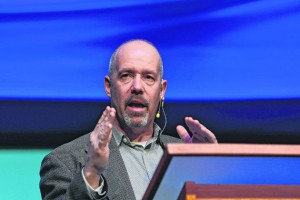

There was an interesting wrinkle regarding the first event.  John’s van broke down in Muncie on his way to the Indy debate.  So the organizers contacted me to ask if I would pick him up on the way to the church, which I was happy to do.  Consequently, John and I were able to spend about an hour together getting to know one another before the first event.  We actually hit it off, and I think that helped set the tone for a cordial debate both nights.

Here is a piece about the Indy debate that appeared in the Daily Reporter.

I am interested in doing more debates with other atheists and religious skeptics.  In addition to the topic of the reasonableness of religious faith, I am happy to debate such issues as the problem of evil, the existence of God, the prospects of ethics without God, and other issues related to philosophy of religion.  So if you or someone you know would like to partner with me to do that, let me know!


On Disagreement and Civility

I am not a big fan of Facebook. Or rather, I am not a big fan of what Facebook brings out in me. A few years back, I took a much welcomed hiatus that only ended with my need to utilize social media in order to promote my book. I have enjoyed being back in the loop more than I thought I would. I like challenging an old friend to a game of Words With Friends or learning about the marathon that a college classmate that I don’t really remember just ran. When things turn political, however, I get a bit uncomfortable. There is often something presumptuous in the way people post their political opinions online, an assumption that by being “friends” we must share more than just part of our past.

When confronted with strongly worded missives from either side of the aisle, I must confess, I have been tempted to simply de-friend the offender or at least hide any further posting. But the other day, a college acquaintance threw down the gauntlet and I chose to face the challenge head on. I carefully worded my comment, attempting to at least fake open-mindedness, though I hoped I was doing more than faking it. And guess what? My acquaintance didn’t reach through the computer screen and yell at me. He responded with great civility and we moved on to new recipes and amusing e-cards.

While I was pleased with this encounter with civil political discourse, I was embarrassed to realize how hesitant I am to share my political views in an unfiltered environment. Admitting a strong leaning to one political affiliation or another feels like an invitation for backslapping from one side of the aisle and discord with another. Why is arguing about politics such a big deal? I have debated with people about plenty of issues, so why should I shy away from doing so on political topics?

I guess the problem boils down to the fact that I love being right but hate making other people feel “wrong.” I discovered this when I finally won a game of Settlers of Catan only to realize that in order for me to win, other people had to loss. I have always assumed the same to be true of political battles. One side wins and the other loses. But what if this isn’t necessarily true? Isn’t our country based on the idea of checks and balances? Aren’t there plenty of goals we all agree on? The differences seem to be ones of means rather than ends. I don’t hate poor people or the environment. I don’t stay up late at night hoping for more wars or economic disaster. When did politics become such a winner takes all proposition?

I have been greatly encouraged by Mitt Romney’s recent comments regarding the issue of compromise. He has said he isn’t willing to compromise on the goals but the methods are up for negotiation. While some might say this is a lack of clear planning, I see it as an opportunity for bi-partisanship. Maybe if we all stop looking at the future of the country as a mere game, we just might all manage to win.