Waking Up

Years ago, as a young mom and aspiring author, Jen Hatmaker was all that I wanted to be. I saw myself in her frazzled authenticity, her flair for the dramatic, her diving in headfirst approach to life and faith. I was disarmed by her self-deprecating humor, which was such a breath of fresh air in the evangelical world of stay-at-home moms. This was the age of the mommy-blog, and Hatmaker struck a chord with those of us “in the trenches”, trying our best to live up to the impossibly high standards set for us, sometimes by others, but often by ourselves. With her big earrings and even bigger smile and personality, Jen felt like an example to aspire to and admire, as well as a reason to be real about one’s own failures and flaws.

I will confess, though, that while I often scrolled through her Insta and laughed and let out a sigh of relief that I wasn’t the only one whose kids were eating in front of the TV and calling it a picnic, relief and relatability weren’t the only feelings she inspired. I was sometimes overcome by feelings of envy and inferiority. It wasn’t just her life I coveted; we shared a publisher, and there were times when her level of success and reach felt so tantalizingly close, like staring over at the cool kid table, longing for someone to make eye contact and ask me to join them.

It wasn’t long into the promotion of my book that I realized the game of self-branding was not for me. I must admit, with regret and shame, that the temptation to view my family and life as a source of content rather than my primary mission in life was real. It is likely God’s grace that He didn’t allow my book sales to skyrocket or my speaking career to extend beyond the local churches of dear friends. At the time, Jen Hatmaker was a mirror into which I looked and saw my own heart’s darkness, a desire to measure myself not by how well I was completing the mission to which I had been called, but against the measure of how well someone else was completing theirs. I set aside my dreams of growing my brand as an author and sought to grow in my knowledge of the Author of my faith.

Fast-forward nearly a decade and a half to the present. I have seen Jen Hatmaker pop up on my radar now and then over the years: on HGTV, having her house renovated, coming out as gay-affirming in 2016, and the sad announcement of her divorce in 2020. By that time, my attention had shifted away from the world of women influencers. I was off social media for the most part and navigating a chaotic time in our own lives.

When, however, I saw Hatmaker had written a memoir, I was curious. Our life Venn diagrams still have a lot of overlap; we are both in our early fifties, learning to straddle the divide of parenting adults and younger kids simultaneously; we have both spoken out on political and cultural issues, though from different sides of the aisle; we both have some harsh critiques regarding the church in America.
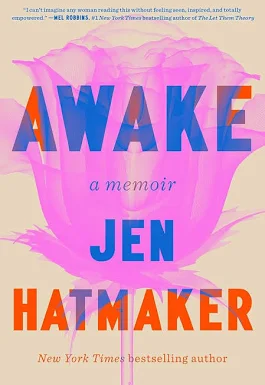
Reading Awake, I didn’t walk away with any deep insights, theological or otherwise. I felt a deep compassion for Jen and her children, given the heartache they have experienced and had to navigate in the fishbowl of public interest and attention, though one does need to acknowledge that, for Jen’s part, this was attention she had fostered and benefited from for years. But that doesn’t make her pain less real, just perhaps more avoidable.

I have no desire to personally tear down Jen Hatmaker. And undertaking a deconstruction of her premises feels daunting given the structure, or lack thereof, of Awake. To summarize is impossible, but it does appear to me that Hatmaker has made the fatal mistake of exchanging one form of legalism for another. She notes many examples from her early life growing up and later in ministry of others casting pharisaical judgment on her, while at the same time she casts a plank-filled eye of judgment at those who do not share her political or theological perspectives. While I can certainly sympathize with the pain caused by the former, I believe it to be no more destructive than the latter. She has cast aside the prudes of the evangelical world only to cast her lot in with the puritanical progressives.

My greatest takeaway from the book was a sense of deep sadness that of all of the things Hatmaker has lost, her reliance on the Bible as a firm foundation on which to build (and rebuild) is by far the most tragic. On a much smaller scale, I understand what it is to be uprooted, to lose the part of one’s identity tied to community and public perception. I know the pain and questions that come from life-imploding, faith-threatening events. But I also know the sweet peace that comes after the storm if you anchor in the harbor of God’s trustworthiness.

I have never known the horror of marital betrayal Hatmaker experienced, awakening to the sound of her husband speaking words of love and devotion to another woman. My hope and prayer for her is that one day she will hear our Father’s voice, reminding her of His love and devotion. Then and only then will she be truly awake.

They Aren’t Just Eating the Dogs and Cats

My mind is often a colliding mix of thoughts and ideas, swirling around in a chaotic soup inside my head. This morning while sitting on a balcony looking out at the Gulf Coast of Florida, Jung’s “devouring mother,” the words of the apostle Paul, and Springfield, Ohio all coalesced into what follows.

Sitting in God’s beautiful creation, I was reading 2 Timothy 3 which outlines “the last days” and what will characterize them. Some of the things listed, frankly, have characterized human civilization since Adam and Eve decided to have a snack from the wrong tree in Eden: lovers of self, lovers of money, proud, arrogant, abusive, disobedient to their parents, ungrateful, unholy, etc. What struck me, however, was the following: “…lovers of pleasure rather than lovers of God, having the appearance of godliness but denying its power. Avoid such people. For among them are those who creep into households and capture weak women, burdened with sins and led astray by various passions, always learning and never able to arrive at a knowledge of the truth” (vs. 4-7).

Could there be a more apt description of the current state of our nation and many in the evangelical church in America? Women, burdened by their guilt with no one calling them to repentance are not only being led astray but leading the charge to assault the most vulnerable among us, our children. Through the ungodly teachings of the woke, which has infiltrated our thoughts on parenting and motherhood, whichever side you land on politically, these women have been persuaded to follow harmful paths, carrying their children along with them into a desolate and dangerous land.

As a frequent consumer of Jordan Peterson’s lectures and podcast, I have become familiar with the concept of the devouring mother. The basic idea, as I understand it and will use it here, is of a mother who has come to depend so heavily on her children for her sense of self-worth that she consumes them with toxic “care” rather than nurturing them into healthy and self-sufficient individuals. Think the “bad” mom in the story of Solomon willing to divide the baby in 1 Kings 3 or Gothel of “Mother Knows Best” fame from Disney’s Tangled.

So, you ask, how does this relate to 2 Timothy’s weak women and the hellscape of morality in modern America? Here are a few current issues where I believe we can see the devouring mother doing battle against, rather than for, her children:

Abortion: I’m not sure I need to say more. Literally a mother killing her child in its most dependent and vulnerable state. What is different now is that women are no longer being told this is a final escape hatch only to be used in case of emergency. We are being encouraged to celebrate doing that which should be devastating even to contemplate. The aim of “rare and necessary” has become “common and discretionary.” Women are being told to rejoice and defend our ability to destroy life; we should instead be marveling and protecting our sacred and unique ability to procreate and carry life.

Trans rights: The response of many women to the onslaught of trans activism is a head-scratcher for me. Allowing their compassion for those they see as marginalized to blind them, these women have aligned themselves with one of the most misogynistic movements in history. I could take a whole post to outline this argument but standing against the mockery and erasure of womanhood, the predatory nature of “gender affirming care” providers who with little thought subject vulnerable young girls to life altering medical procedures, and the physical, emotional and psychological endangering of women in sports and public spaces should be a stance with whom any clear thinking woman agrees. There also seems to be a vampiristic segment of mothers who are encouraging their children to disavow their biological sex. Don’t believe me? Just look at the disproportionate number of celebrities with trans children. These real-life stage moms are exploiting their children’s confusion for social standing rather than helping them navigate their way, as beings created by God in His image, through the confusing waters of childhood and adolescence.

Social media: A non-partisan issue we should all be able to get behind is the harmful effects of social media on the mental health of women, especially young girls. This is an area where I feel most ashamed as a mother and child of God. I have allowed social media to eat away at my soul with envy and greed. I have used my kids as props for online clout building and failed to shelter them from the destructive repercussions of social media consumption. Ironically, it was my daughter who helped to lift the scales from my eyes when she asked me, years ago, to not post pictures of her online. It started me questioning why it was that I wanted to in the first place. I should have been the one protecting her rather than “selling” her image to prove I was worthy of others’ approval. This is to say nothing of the use of social media by predators or the devastating effect of social media on the mental health of children.

After the second presidential debate, I became obsessed with Donald Trump’s delivery of the line “They’re eating the dogs. They’re eating the cats. They’re eating the pets.” Whatever your opinion of the man, you have to admit, he knows how to coin a phrase and create a slew of chuckle-worthy memes. Though the truth of that claim might be in dispute, there is no disputing the perilous danger our children find themselves in, partially due to the cowardice of weak Christian women, myself included. The world is eating our children and our failure to stand up and protect our children, whatever the cost, is a stain on the sacred reputation of motherhood and we must do all we can to remove it. We must refrain from devouring them ourselves and protect them. We must teach them and one another how to live as God’s children. When reminded by Jim that our kids will one day cut the apron strings and fly the coop, I would often say, “Yes, but on the battlefield they always call for their mothers.” Ladies, our children are crying out to us from the battlefield and we must heed their call or they will perish alone.

The devouring mother will not be defeated through politics. This is not a power structure issue; it’s an issue of the heart. And in some ways that’s good news. When it comes to influencing the hearts and minds of our fellow believers, we the Church are in charge, not the political powers that be. Let us stand against the devouring mother and see her transformed into the nurturing, protector she was meant to be. Let us guard her heart with truth and wisdom, as we guard our own, and in doing so we guard her children from destruction.

On Lying to Children about Santa Claus

Have you seen this story about a ten-year-old girl, Belle Adams, whose belief in Santa Claus was dashed by her mother?  My wife texted me little Belle’s letter with the comment that the story “confirms one of our parenting decisions.”  That decision, which we made early on (when our oldest son, Bailey, was a toddler), was that we would not lie to our kids about Santa Claus but rather tell them the story while also informing them that it is a popular Western myth.  And to reinforce the fictional nature of it all, I would sometimes throw in extra narrative flourishes, such as that: 1) Santa is a chain-smoker and 2) Santa cheats at golf.  (These additions were not themselves lies, of course, since we were admittedly dealing in the realm of fiction.  When trafficking in cockamamie myths, why not augment along the way?)

Seriously, though, our reservations about participating in the Santa deception (despite the fact that some good friends of ours have done this) boiled down to a few fundamental concerns.  First, it constitutes a lie to one’s kids.  From the start, Amy and I have been committed to being truthful and as trustworthy as possible with our kids, whether regarding ole St. Nicholas or the weightier issues of life.  Being a systematic lie, the Santa deception certainly defies commitment to truthfulness and, when that lie is exposed, parents’ trustworthiness is necessarily undermined.  Little Belle Adams’ furious letter to her parents demonstrates just how serious the impact of this can be.  We might be tempted to think, “Oh, that’s just an immediate reaction; she’ll get over it.”  But, as the testimony of several adults I know confirms, in some cases the recovery is not so swift, and anyway a child’s “getting over it” emotionally is no guarantee that her trust in her parents is not damaged to some degree.  And that is a serious thing, no matter how much fun and silliness might be involved in perpetuating the deception.

Secondly, the Santa deception could set a child up for religious skepticism.  Consider the mythical attributes of the portly fictional elf.  He is omnipotent (as implied by the notion that he can travel at the speed of light and flawlessly deliver billions of presents to children worldwide in just a few hours); he is omniscient (“he knows when you are sleeping; he knows when you’re awake”); and he is omnibenevolent (he’s a moral judge, distinguishing the “naughty” and “nice” —“he knows when you’ve been bad or good, so be good for goodness sake!”).  Notice that these are all essentially divine attributes.  So when a child is eventually shown that her “faith” in Santa was misplaced, an unfortunate precedent is set: when it comes to testimonies about a wondrously wise, powerful, and loving being, don’t believe it, even if the reports come from the authorities in your life that you trust most—your own parents.  Such stories are just too good to be true, a set-up for disappointment.  As they say, fool me once, shame on you.  Fool me twice, shame on me.

I’m not saying that participating in the Santa deception will necessarily turn your kids into agnostics or even incline them at all in the direction of religious skepticism.  But, again, I’ve had adults tell me that their enlightenment about the Santa story did prompt them to consciously entertain doubts about God for just this reason.  And this, too, is a serious thing, however much fun parents and their children might have along the way.

But perhaps, after all, I am the one who is taking Santa Claus too seriously!  I mean, come on—it’s just a fun story that adds to the magic of the Christmas holiday, right?  To that I say:  Is the real Christmas story not magical enough?  Who needs a goofy cultural myth to add to the joy and wonder of the Lord of the universe taking on human flesh?  What good is a remote bearded elf in a funny suit visiting us once yearly when we have an omnipresent Lord who attends to our every prayer?  Who needs an imperfect judge to dole out toys or lumps of coal, depending on one’s degree of goodness, when the real Judge of the world is also the way of atonement, the one who suffered, died, and rose again on our behalf?  In short, why pollute the greatest story ever told with the most kitschy tale ever told?  So, in the final analysis, perhaps the best reason to scuttle the whole Santa story (at least as anything more than a cultural myth) is an aesthetic one:  to emphasize St. Nick over the baby Jesus is to exchange a profoundly beautiful narrative for an insipid one.  Santa Claus might not be a chain-smoker or cheater at golf, but he’s an incomparably less interesting character than the Christ child.

The Difference Between Children and Wild Animals

Amy and I love our children.  In fact, we think they are the most fascinating creatures in the world.  But it sure is a lot of work trying to civilize those little people.  “Maggie, please stop making that chirping sound.”  “Bailey, don’t make fun of your brother.” “Andrew, why didn’t you tell us you needed to poop?”  It’s as if kids were pre-programmed to create chaos and generally make life difficult for their parents.  Recently it dawned on me how much easier it would be to domesticate a wild animal (just name a species) than a human child.  And, being an obsessive list-maker, I came up with ten reasons why.  So I present that list to you now for your consideration.  Bear in mind that these items pertain to various ages, basically covering the age range of our own kids at this time:  2 to 9 years.

Unlike kids, wild animals do not

1. Have to be taught the value of work and self-discipline.

2. Fight over unimportant matters.

3. Make random noises just to irritate those around them.

4. Say or do things solely for the sake of hurting someone else.

5. Tell lies and fabricate stories.

6. Boast and brag.

7. Grumble and complain, even when all of their needs are met.

8. Envy.

9. Try to embarrass others for sheer entertainment.

10. Excrete on their own bodies.

This might seem depressing, but I take heart in the fact that I, too, was once such a savage beast.  Somehow my parents managed to tame me, so perhaps we will have some similar success with our little wild ones.  May God keep us sane as we try.  And may he bless the efforts of the rest of you zookeepers . . . uh, I mean . . . parents out there.

Bumblebees, Band-Aids, and the Whitewashing of Childhood

I sometimes wonder if I have been blessed with the unique gift of maternal instincts. Yes, I can change a diaper at lightning speed and hit the floor running at any hour when I hear the word “Mommy!” But in other areas, I feel I am grossly lacking. “What are they?” you ask. I always burn grill cheese sandwiches. Despite my vigilant efforts to remain by the frying pan, I am inevitably drawn away for an instant, and wham!, they pass golden brown straight to black.  Another strike against me? When I play my kids in games, I never let them win on purpose. I am so competitive that you can’t get me to throw a game of Chutes and Ladders.

But perhaps the worst of my failings as a mom is my inability to turn off my overly analytical mind when watching videos with my kids or reading them books. I just can’t get over all the obviously implausible and sometimes illogical premises, no matter how many times I tell myself “It’s just a book. It’s for kids. Leave it alone.” What is worse, I can’t help but point it out to the kids. “See there, Maggie. Did you notice that Papa Bear is a complete idiot who can’t find his elbow without Mama Bear’s help?” “Sam, have you ever noticed that Little People are all kids and yet where are their parents? Why are they completely unsupervised and where are Child Protective Services?” (This is to say nothing regarding the inconsistencies of such award winning programs as Little Bear where animals that are otherwise regarded as predator and prey buddy up to one another or Franklin where the turtle gets a name and everyone else is known simply by their animal type.) It’s a sickness, I know.

Just the other day, we were riding in the car, enjoying a lovely rendition of “Bringing Home a Baby Bumblebee.” This is one of the boys’ favorite songs because it involves both violence and mess-making, which is rare in children’s music. We arrived at the tragic moment when the bee stings the little kid and the bee’s life is tragically ended and here I quote the revised lyrics: “Oh! It stung me! It didn’t hurt. I’m setting free my baby bumblebee…  Sorry, Mr. Bumblebee!” Are you kidding me? “It didn’t hurt”? Now I have swallowed a great deal of political correctness served up Sesame-Street-style in my days as a mom, but this takes the cake. I’ll take my burned grilled cheese and poor sportsmanship any day over this lie-to-the-children-because-the-truth-is-unpleasant bull hockey. Life is messy and, yes, sometimes painful, but without bee stings we wouldn’t have comforting hugs from Mommy. Without scraped knees, there would be no need for band-aids, which we all know make everything so much better.

Big Families and the Environment

As a father of four kids, I am sometimes asked whether my wife and I “intended” to have “so many” children.  They say, “I don’t want to be rude, but…”  Well, the answer is yes; we did intend to have so many children.  While it is very challenging, having a large family has many benefits, both for us and, especially (we hope) for our society.  We strive to raise our kids to be thoughtful, productive Christians, who will impact culture in many positive ways.  And we hope that they, in turn, will have many kids of their own who do the same.  This is the way cultures are renewed, and we aspire to be a link in that causal chain in our own culture, which so badly needs renewal.

However, I occasionally encounter people who take a very different view of the matter.  The Earth is already overpopulated, they tell me, and having children only adds further stress to the planet.  Each kid means one more massive carbon footprint, a net loss to Earth.  Thinking themselves conscientious environmentalists, they suggest that the path my wife and I have chosen is actually irresponsible.  While these conversations rarely turn into debates, I am prepared to show my skeptical friends the flaws in their thinking.

First of all, such thinking assumes that our kids will be environmentally irresponsible, which we are working hard to prevent.  None of our lives need be a “net loss” to the planet.  In fact, if our kids turn out to be as environmentally responsible as we hope they will be, then we can expect net gains because of them.  For one thing, we practice a form of vegetarianism which has tremendous environmental benefits.  In terms of reducing greenhouse gases, abstaining from meat is one of the most significant contributions that one can make.  And we expect that our kids will likely continue this family practice into adulthood, perhaps teaching their own progeny to do the same.  On top of this, there is the potential that one of our kids will become an environmental scientist and make a profound contribution to the field.  The reasoning of my skeptical friends rules this possibility out of hand a priori.

This brings up another point which is rather exasperating.  None of the no-kids-because-of-the-environment folks I know are vegetarians.  They are so concerned about the planet that they refuse to procreate, but they refuse to do this very beneficial thing for the environment: abstain from meat.  For a while this puzzled me, but then it hit me.  The refusal to have kids and indulgence in meat have something in common-both choices are easy and convenient.  Raising kids and maintaining a vegetarian diet, on the other hand, are difficult and inconvenient.

Finally, and most disappointing from the standpoint of moral reasoning, the no-kids environmentalists are (or tend to be) guilty of one-track thinking when it comes to family planning.  By making environmental concerns the single overriding factor in their choice not to have children, they make this a moral trump card.  But even if environmental concerns did support the small family approach, why should we ignore the many other considerations which support the opposite perspective?  What about the countless ways that well-trained children can benefit society when they become adults (or even while they are still young)?  When there are so many other significant factors to take into account when doing family planning, a purely environmental approach seems narrow-minded and, well, irresponsible.  In fact, it makes me suspect that something other than environmental issues are at play here.  But, of course, this is not something I would ever say to the no-kids environmentalists.  I wouldn’t want to be rude.