
The Best and Worst of 2019

It’s been another exciting year, and we want to thank you all for reading and, if applicable, posting comments on our blog. Once again, we would like to close out the year with some summary remarks about good and bad stuff related to film, music, books, sports, food, and family.


Film Experiences

Jim:  Most of the new films I saw this year were good. The biggest loser of the year was Joker. Yes, Joaquin Phoenix’s acting is superb, but the script is poor, the violence is gratuitously graphic, and the plot has more holes than a cheese grater. Ugh. But a big thumbs up for the film Us, which is freaky scary but somehow fun at the same time. From here on out, I’ll be seeing every Jordan Peele film as a matter of principle. I enjoyed Star Wars: The Rise of Skywalker and consider it an appropriate finish to the nine-part saga that took four decades to complete. But the best film I saw this year was Rian Johnson’s Knives Out, a superbly written who-dunnit which isn’t impeded by its star-studded cast. A close runner-up was Once Upon a Time in Hollywood. Who can build a comical, poignant, and redemptive story around a despondent fading Hollywood star and the Manson murders in the ill-fated summer of 1969? Quentin Tarantino, that’s who.

Amy:  Several of my best movie experiences were with Jim this year so we have quite a bit of overlap with Star Wars: The Rise of Skywalker, though I wasn’t as keen on it as Jim, Knives Out, which I thought was great, and Once Upon a Time in Hollywood. I did have some small screen experiences that were quite good: Unbelievable, Great British Baking Show, The Good Place, and Monk were a few of the shows I enjoyed this year.


Food and Music

Amy’s Best Food Experiences of the Year:  Like most exceptionally delightful food experiences, the one that tops my list this year was a combination of delicious food, wonderful company, and conversation enjoyed in an ideal setting. Jim, some of the kids, and I were invited to join a graduating student and his family for dinner at Bluebeard in downtown Indianapolis. The food was simple but quirky in its creativity (roasted cauliflower and mint!) but one of my favorite parts of the evening was that rather than ordering individual meals, we got a few bites of everything. It was a night we won’t soon forget shared with people dear to our hearts. A close second was a breakfast shared with Sam while visiting him in Bolivia. A good croissant with homemade jam is hard to beat but throw in a son you haven’t seen in months who can’t wait to share with you all of his adventures and it’s a meal to remember.

Jim’s Best Musical Experiences of the Year:  This was an exciting year for new album releases by many of my favorite artists, including the Black Keys’ solid but not ground-breaking Let’s Rock, the Avett Brothers’ sometimes preachy Closer Than Together, and Taylor Swift’s Lover, which I reviewed on this blog a few months back. My favorite album of the year was Vampire Weekend’s Father of the Bride. It is a rich, thoughtful, and memorable record—perhaps the band’s best, which is saying a lot. But the highlight of the year for me was seeing Bob Dylan in concert at Ball State’s Emens Auditorium in November. This is the sixth time I’ve seen Dylan in concert, and I continue to be amazed at his endless rearrangements and reinventions of his songs. Incredible.


Sports

Jim’s Favorite Sports Moments of the Year:  I loved watching Drew Brees break two NFL records in the same game two weeks ago, as he eclipsed the all-time career touchdown passing mark and had the all-time highest completion percentage for a single game (29 for 30!) in the New Orleans Saints’ defeat of the Indianapolis Colts on Monday Night Football. Incredible.

Amy’s Favorite Sports Moments of the Year:  I watched Andrew play a lot of basketball this past winter which is always a treat, especially when there is fresh popcorn involved. He also treated me to Buffalo Wild Wings to watch the NFL playoffs which was a pleasure.

Jim’s Most Disappointing Sports Moments of the Year:  The New Orleans Saints were robbed of an NFC championship and Super Bowl appearance due to a blown pass interference call against the Los Angeles Rams last January (which did result in a league rule change, which I guess counts for something). This makes for the second consecutive year in which the Saints have finished their season in heartbreak fashion, as the 2017-18 season ended with the “Minneapolis Miracle.” Ugh. The retirement of Colts quarterback Andrew Luck was another disappointment, but hope was renewed by the emergence of Jacoby Brissett as a solid starting quarterback, only to be dashed by a rash of injuries to several Colts offensive players. Oh well.

Amy’s Most Painful Sports Moment of the Year: Seeing Joe Maddon dismissed as the Cubs manager was a knife to the heart. Andrew Luck’s retirement has seen my interest in the Colts fall to zero, having grandfathered him after Peyton.


Good Reads

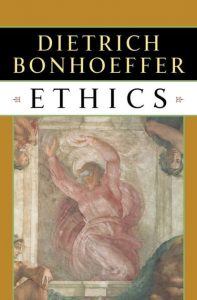
Jim:  As usual, most of my reading this year pertained either to classes I was teaching or publication projects I was working on. Regarding the latter, I read dozens of journal articles and book chapters on divine and human agency, in preparation for a book chapter I’ve nearly finished on George Berkeley’s view on the subject. As for new reads for classes, I enjoyed Dietrich Bonhoeffer’s Ethics, a work that is especially intriguing because it was written during the final years of Bonhoeffer’s life when he was wrestling with one of the most excruciating of moral issues, namely how to respond to a tyrannical national leader. Knowing that Bonhoeffer ultimately took part in a plot to kill the Nazi Führer casts a fascinating light on his discussion of the legitimacy of civil disobedience. My favorite book among those I read this year was James Waller’s Becoming Evil: How Ordinary People Commit Genocide and Mass Killing—a work that is as insightful as it is disturbing regarding human nature.

Amy:  My reading this year is clearly delineated into two eras: pre-working and post. In the first category are some of my favorite reads in quite some time: The Great Divorce by C.S. Lewis,  Life on the Mississippi by Mark Twain, The Goldfinch by Donna Tartt, The Unlikely Pilgrimage of Harold Fry by Rachel Joyce and Rules of Civility by Amor Towles and several by P. D. Wodehouse. The post-working era is dominated by books on sales and business which I would never have predicted enjoying but which have taught me a great deal, both professionally and personally. A few favorites have been: Sell or Be Sold and Be Obsessed or Be Average by Grant Cardone, The Entitlement Cure by John Townsend, and The Top Ten Mistakes Leaders Make by Hans Finzel. I also listened to the entire Harry Potter series while driving for work and loved every magic filled minute of it despite the fact that J. K. Rowling uses the word “sniggered” entirely too often.


Best 2019 Family Memories

Jim:  Like his older brother, Bailey, did a few years ago, our son Sam spent the Spring semester living in La Paz, Bolivia attending Highlands International School. It was fun to witness his personal development through this experience and especially thrilling to hear him speak Spanish fluently upon his return in June. Then this past Fall semester we hosted a friend that Sam made during his time in Bolivia. It was fun knowing that the experience here in the U.S. for Sam’s friend would be as life-changing as was Sam’s experience in Bolivia.

Amy: I got to visit Sam in Bolivia this spring which was a thrill. Being gone so much for work this fall has honestly made any time with the kids feel like a gift, except when I’m tired and they are being annoying—ha ha. Our Christmas felt special with Bailey home from college and watching the kids connect with one another more as adults than kids; their shared humor, conflicting opinions, and overall weather-beaten affection is something to behold.


Best Kids’ Quotes of the Year

As usual, most of the best quotes of the year come from Maggie:

  • Maggie: “What’s the difference between a Presbyterian and a normal person?”
  • Bailey: “I could spice up cardboard and make it taste better than anything you’ve ever eaten.”
  • Maggie: “If you don’t do anything wrong, then you won’t get caught doing it.”
  • Maggie (Regarding my giving her some spending money): “Dad, you’re like a young male grandma.”
  • Maggie (after my sugar-holic daughter hypocritically lectured me about the sugar content in a food product I was buying): “I don’t obey the rules, but I know the rules.”


New Year’s Resolutions

Amy:  To continue to introduce more discipline into my time management. To figure out how to keep up my love of reading and cooking despite working full-time. To be ambitious in my Bible reading plan for this year.

Jim:  To pray more, to fast more, and to remember that this world and our time in it is, as Kanye West puts it, a “God dream.”


Happy 2020 everyone!
Bonhoeffer on Telling the Truth

In the final years of his life, Dietrich Bonhoeffer worked on a book on ethics and was never completed, though he made substantial progress on it. It was eventually published posthumously. In his Ethics, Bonhoeffer discusses the question, what is meant by telling the truth? And in the course of addressing this question, he also considers what it means to lie.

Bonhoeffer begins by recognizing that there is a general demand for truthfulness, but he notes that the context of relations is crucial for understanding the demand. Thus, for example, a parent’s claim on a child is different than a child’s claim on the parent when it comes to truthfulness. There are many things that an adult understands about a given subjects that simply cannot be comprehended by a child, and this has implications for just how much a parent is duty-bound to communicate to a child.

The truthfulness we owe God is both truth in principle and concrete, since God has placed us in real, concrete relations with one another. And this is a deeply moral matter because “the ethical cannot be detached from reality,” and when we speak we express an account of reality. Therefore, Bonhoeffer says,

the real is to be expressed in words. That is what constitutes truthful speech. Every word I utter is subject to the requirement that it shall be true. Quite apart from the veracity of its contents, the relation between myself and another man which is expressed in it is in itself either true or untrue. I speak flatteringly or presumptuously or hypocritically without uttering a material untruth; yet my words are nevertheless untrue, because I am disrupting and destroying the reality of the relationship between man and wife, superior and subordinate, etc. An individual utterance is always part of a total reality which seeks expression in this utterance. If my utterance is to be truthful it must in each case be different according to whom I am addressing, who is questioning me, and what I am speaking about (360).

Significantly, then, Bonhoeffer essentially affirms what is known as the correspondence theory of truth. On this view, dating back to the ancient Greeks, a statement is true if and only if what it asserts corresponds to some actual or “real” state of affairs.

Context is crucial when it comes to truthful speech, Bonhoeffer tells us. “Every utterance or word lives and has its home in a particular environment” (361). This is why it is very difficult to say what actually constitutes a lie. “The usual definition of the lie as a conscious discrepancy between thought and speech is completely inadequate. This would include, for example, even the most harmless April fool joke” (363). So, Bonhoeffer says, “joking has nothing whatever to do with lying, and the two must not be reduced to a common denominator.”

Nor can we define lying as “deliberate deception of another man to his detriment,” since this would imply that even the deception of an enemy in war is wrong. Bonhoeffer concludes that “the lie cannot be defined in formal terms as a discrepancy between thought and speech” (364). In fact, he says, such discrepancy is not even a necessary condition for lying, since one may be quite truthful when intentionally misleading someone, such as through omissions or ambiguity.

The truth about lying, says Bonhoeffer, exists “at a far deeper level than in the discrepancy between thought and speech.” The essence of lying consists in consciously denying God’s reality, whether through speaking or otherwise. Note that this follows directly from Bonhoeffer’s correspondence theory of truth and Bonhoeffer’s conviction that what is real is just is what God has made actual—the world which God has “spoken” into existence (cf. Gen. 1).

It further follows, then, that a “lie is a contradiction of the word of God, which God has spoken in Christ, and upon which creation is founded. Consequently, the lie is the denial, the negation, and the conscious and deliberate destruction of the reality which is created by God and which consists in God, no matter whether this purpose is achieved by speech or by silence.”

Again, “God’s reality” is the world which God “spoke” into existence. The world is, as it were, God’s speech, his public word. So when we deny, negate, or misrepresent reality, we contradict God’s words. To lie is to directly challenge the Lord, perhaps even to implicitly declare oneself to be God. Here we see why lying is such a serious thing and why the trait of being a consistent truth-teller is a significant moral virtue.

Bonhoeffer’s account also helps us to understand a few things about the biblical account of Satan, the ultimate challenger of God and his reality. In Scripture we learn that Satan is fundamentally a liar and called by Jesus “the father of lies.” Without a proper understanding of the significance of truth and truth-telling, the moniker of “liar” might appear to be a random or even petty vice with which to identify the arch enemy of God. However, when we understand that truth is God’s reality and that a lie constitutes a fundamental challenge to God, we recognize how appropriate this description is, as is the very name of Satan’s, which means “deceiver.”

Bonhoeffer’s account also highlights the significance of Jesus statement, “I am the way and the truth and the life” (Jn. 14:6). We learn in John’s gospel that all things were made through Christ (Jn. 1:3), and the Apostle Paul tells us that all things were created in Christ, through Christ, and for Christ (Col. 1:16) and that “in him all things hold together” (Col. 1:17). In short, Christ is the ontological ground of all that is. So we might even say that he essentially is reality. And this is to say, on Bonhoeffer’s account of truth, Christ literally is truth.

These insights place a premium on truth-telling that is seldom acknowledged, perhaps because lying is so common. Evidently, we are natural born liars, and most people lie on a regular basis. In one sense, this shouldn’t shock us, since Scripture tells us that we are all innately moral rebels. “All have sinned and fall short of the glory of God” (Rom. 3:23), and we challenge God every time we sin, whether by lying or in other ways. But in another sense, the essentially Satanic nature of lying should shock us and even terrify us about our natural moral condition. Whenever we lie, after all, we are essentially doing Satanic work.

These points should reinforce our commitment to honesty, sincerity, and truth-telling. While there are certainly plenty of appropriate contexts for discrepancies between belief and speech, such as when joking, as well as when playfully deceiving in non-verbal ways (e.g., in athletic contests and surprise parties), genuine lies are an affront to the Lord and should not be a part of our lives.

Ten Lessons from Great Christian Minds

Recently, I was invited to give a “last sermon,” as is a popular trend these days.  At first I pondered various topics that are dear to me.  Then I considered how I would want to be sure my words lived on after me.  I realized there was no better way to ensure this than by echoing the words of those whose profound teachings have already proven the test of time and/or rigorous scrutiny. 

Also, in the rabbinic tradition, I thought it appropriate to use a method that would be given to easy memorization.  So I decided to exploit that most revered method of the top ten list.  In addition to being an outline of my hypothetical “last sermon,” I intend this to be a handy reference for those of you who are now putting together your summer reading list. 

So here we go—profound lessons from ten great Christian minds.  All of these lessons are practical, but some are more personal than others.  I will begin with the more public and civic themes and drive to those which are moral and personal.  Also, I tried to order these chronologically, but couldn’t quite pull that off.  Still, with a few exceptions, they do go in chronological order.

Lesson #1—Augustine (5th century):  Remember that you are a citizen of another kingdom.  Augustine is the greatest theologian of the first millennium of the Christian era, and his ideas have shaped the thoughts of every Christian since, to one degree or another.  In his magnum opus, The City of God, Augustine notes that there are two great cities:  the earthly city—a perishing, imperfect order, with human rulers, typified by the Roman Empire—and the heavenly city, an imperishable, perfect order where God rules.  These cities are distinguished by their loves, respectively of self and of God.  When the two come into conflict, remember where your ultimate citizenship lies.

Lesson #2—Martin Luther (16th century):  Expect politicians to be corrupt.  Have you ever wondered why politicians tend to be so corrupt?  Have you ever considered why God allows this to happen—why he permits such smarmy people as the former Illinois governor, Rod Blagojevich, to get into power?  Luther gives a simple and strangely encouraging answer:  It is because our leaders reflect us.  As a people, frankly, we don’t deserve any better.  In fact, having corrupt leaders keeps us humble and reminds us of the heavenly city of which we are citizens first.  As Luther puts it in his powerful little essay “On Secular Authority,” “Frogs must have their storks.”  Keep this in mind, and you’ll be wiser without becoming cynical.  You’ll be wiser because you won’t be gullible, and you won’t be cynical because you’ll know that God does occasionally bless us with some morally decent public leaders, though they may be rare.

Lesson #3—Thomas Aquinas (13th century):  God has made himself known in nature.  Aquinas was a Dominican priest who has been more influential than perhaps any other Christian theologian.  In his massive Summa Theologica he emphasized the fact that while scripture gives us a wealth of theological knowledge, nature and experience also provide knowledge of God, which Aquinas calls “natural theology.”  This is crucial because:  1) it reminds us that no one has an excuse not to believe in God (as Paul explains the first chapter of Romans) and 2) it inspires us to learn about God in all that we study, not just scripture.  Science, history, psychology, math, and every other subject teach us about God.  In fact, this idea is the inspiration of the concept of a liberal arts college, like the one where I teach.

Lesson #4—John Calvin (16th century):  God is sovereign over all, including our suffering.  Calvin was not only a great Church Reformer, but he wrote the only systematic theology to come out of the Protestant Reformation:  The Institutes of the Christian Religion. The lesson of God’s sovereignty is far from being uniquely Calvinist, since it was emphasized by Augustine and Luther and many other great Christian theologians.  But for various reasons it is most commonly associated with Calvin, perhaps partly because he articulated this point as clearly and eloquently as anyone.  In any case, it is a teaching plainly taught in Scripture, most clearly in such passages as Psalm 139, James 1:2-4, and Romans 8:28.

Lesson #5—Jonathan Edwards (18th century):  God is beautiful, and all beauty is divine.  The fine historian Mark Noll—who spoke here at Taylor last week—has called Jonathan Edwards the “greatest evangelical mind.”  If that isn’t an incentive to study this man’s brilliant work, then nothing is.  Like Augustine, Luther, and Calvin, Edwards emphasized the sovereignty of God.  Everything God does, he does for his own glory.  This is, in fact, the point of history and the point of your life and mine:  the glory of God.  But Edwards recognized that the concept of glory is essentially an aesthetic concept.  It falls within the category of beauty.  So what this world is all about is showing the beauty of God.  And all of our longing for beauty—whether in the form of art, good music, good films, poetry, or the beauty of other people—is really an aspect of our longing for the One who is beauty itself.  And all of the finitely beautiful things we experience are so many expressions of God’s beauty.

Lesson #6—Thomas a’Kempis (15th century):  Practice self-denial with a passion.  Born in Prussia in 1380 to a peasant family, Thomas entered a monastery in the Netherlands at age 20.  As a monk he penned the great classic Of the Imitation of Christ, which has been translated into more languages than any other book except the Bible.  The theme of the book regards how to faithfully follow Christ, but more specifically it is focused on humility and self-denial, the defining characteristics of Christ, as we learn in Philippians 2:5-11, where Paul tells us to imitate Christ in being a radical servant.  If even the God-man refused to lay claim to his rights, then what does this say about the approach we should take?  a’Kempis unpacks this theme in profound ways that will transform your life if you put them into practice.

Lesson #7—John Wesley (18th century):  Be disciplined and make the best use of your time.  Wesley was the founder of the Methodist church and very much a social activist, known as much for his organizational and motivational skills as for his Christian preaching.  Wesley worked especially hard on two major social justice issues of his day:  prison reform and the abolition of slavery.  He also devoted himself diligently to the spiritual disciplines and the pursuit of holiness and personal sanctification.  Wesley was never idle but worked constantly.  Early on in his life he resolved to live on a certain modest amount of money, and despite the huge increases in his personal income, he died with few possessions, having given away his wealth to people in need.

Lesson #8—Fyodor Dostoevsky (19th century):  God’s grace can reach anyone.  Dostoevsky was a Russian novelist who is sometimes regarded as the greatest writer next to Shakespeare.  His insight into human nature is profound, and this, combined with his Christian sensibility, make reading him immensely profitable.  Dostoevsky nearly didn’t survive to have a long writing career.  When he was in his twenties he was arrested for being part of an insurrection and sentenced to death, but the death sentence was revoked and he was sent to a prison camp instead—an experience which had a lasting impact on his life and thought.  In his classic novel Crime and Punishment, Dostoevsky paints the portrait of a young man, Raskolnikov, who dares to challenge the concept of moral law through murder.  As Raskolnikov is consumed by guilt, so is the reader.  But the reader also vicariously participates in the severe divine grace that finds this seemingly hopeless man.  Nowhere else in the history of literature is there a more compelling picture of Christian redemption.

Lesson #9—Dietrich Bonhoeffer (20th century):  Beware of cheap grace.  Bonhoeffer was another Christian thinker who took part in an insurrection (a plot to kill Adolf Hitler).  Bonhoeffer, too, was sentenced to death.  In this case, however, the death sentence was not revoked and he was hung with his conspirators just prior to the end of World War II.  Fortunately, however, Bonhoeffer had already completed many great works of theology, including his classic book The Cost of Discipleship.  This work contains profound insights into the importance of self-denial and suffering for the Christian, thus echoing the same emphasis in Augustine, a’Kempis, Calvin, and Edwards.  Bonhoeffer distinguishes between cheap grace (preaching forgiveness without repentance) and costly grace (which is premised upon repentance).  There is no such thing as cheap grace, Bonhoeffer reminds us.  Jesus tells us to take up our cross and turn from sin.  If we don’t do so, then we are not truly under grace.

Lesson #10—Alvin Plantinga (21st century):  Moral virtue is crucial for intellectual health.  Plantinga is one of the premier Christian thinkers of the last generation.  At a time when theists were retreating in the philosophical community, he had the temerity to suggest that belief in God is not only reasonable but is in fact a proper starting placefor knowledge.  This was, of course, axiomatic for the Reformers, but Plantinga made a persuasive philosophical case for the idea.  In light of this insight, he has developed a rich Christian psychology (especially in his Warranted Christian Belief), complete with an arresting account of how sin corrupts cognition and how, correlatively, right living is crucial for the proper function of our cognitive faculties.  Virtue, as it turns out, is as important for the mind as the mind is for the life of virtue.