
Waking Up

Years ago, as a young mom and aspiring author, Jen Hatmaker was all that I wanted to be. I saw myself in her frazzled authenticity, her flair for the dramatic, her diving in headfirst approach to life and faith. I was disarmed by her self-deprecating humor, which was such a breath of fresh air in the evangelical world of stay-at-home moms. This was the age of the mommy-blog, and Hatmaker struck a chord with those of us “in the trenches”, trying our best to live up to the impossibly high standards set for us, sometimes by others, but often by ourselves. With her big earrings and even bigger smile and personality, Jen felt like an example to aspire to and admire, as well as a reason to be real about one’s own failures and flaws.

I will confess, though, that while I often scrolled through her Insta and laughed and let out a sigh of relief that I wasn’t the only one whose kids were eating in front of the TV and calling it a picnic, relief and relatability weren’t the only feelings she inspired. I was sometimes overcome by feelings of envy and inferiority. It wasn’t just her life I coveted; we shared a publisher, and there were times when her level of success and reach felt so tantalizingly close, like staring over at the cool kid table, longing for someone to make eye contact and ask me to join them.

It wasn’t long into the promotion of my book that I realized the game of self-branding was not for me. I must admit, with regret and shame, that the temptation to view my family and life as a source of content rather than my primary mission in life was real. It is likely God’s grace that He didn’t allow my book sales to skyrocket or my speaking career to extend beyond the local churches of dear friends. At the time, Jen Hatmaker was a mirror into which I looked and saw my own heart’s darkness, a desire to measure myself not by how well I was completing the mission to which I had been called, but against the measure of how well someone else was completing theirs. I set aside my dreams of growing my brand as an author and sought to grow in my knowledge of the Author of my faith.

Fast-forward nearly a decade and a half to the present. I have seen Jen Hatmaker pop up on my radar now and then over the years: on HGTV, having her house renovated, coming out as gay-affirming in 2016, and the sad announcement of her divorce in 2020. By that time, my attention had shifted away from the world of women influencers. I was off social media for the most part and navigating a chaotic time in our own lives.

When, however, I saw Hatmaker had written a memoir, I was curious. Our life Venn diagrams still have a lot of overlap; we are both in our early fifties, learning to straddle the divide of parenting adults and younger kids simultaneously; we have both spoken out on political and cultural issues, though from different sides of the aisle; we both have some harsh critiques regarding the church in America.
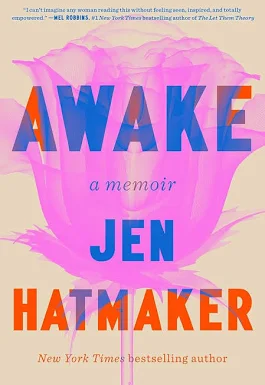
Reading Awake, I didn’t walk away with any deep insights, theological or otherwise. I felt a deep compassion for Jen and her children, given the heartache they have experienced and had to navigate in the fishbowl of public interest and attention, though one does need to acknowledge that, for Jen’s part, this was attention she had fostered and benefited from for years. But that doesn’t make her pain less real, just perhaps more avoidable.

I have no desire to personally tear down Jen Hatmaker. And undertaking a deconstruction of her premises feels daunting given the structure, or lack thereof, of Awake. To summarize is impossible, but it does appear to me that Hatmaker has made the fatal mistake of exchanging one form of legalism for another. She notes many examples from her early life growing up and later in ministry of others casting pharisaical judgment on her, while at the same time she casts a plank-filled eye of judgment at those who do not share her political or theological perspectives. While I can certainly sympathize with the pain caused by the former, I believe it to be no more destructive than the latter. She has cast aside the prudes of the evangelical world only to cast her lot in with the puritanical progressives.

My greatest takeaway from the book was a sense of deep sadness that of all of the things Hatmaker has lost, her reliance on the Bible as a firm foundation on which to build (and rebuild) is by far the most tragic. On a much smaller scale, I understand what it is to be uprooted, to lose the part of one’s identity tied to community and public perception. I know the pain and questions that come from life-imploding, faith-threatening events. But I also know the sweet peace that comes after the storm if you anchor in the harbor of God’s trustworthiness.

I have never known the horror of marital betrayal Hatmaker experienced, awakening to the sound of her husband speaking words of love and devotion to another woman. My hope and prayer for her is that one day she will hear our Father’s voice, reminding her of His love and devotion. Then and only then will she be truly awake.

Connecting the Dots

Several years ago, the Spiegel family spread out across multiple countries and continents in an unprecedented flurry of world travel. Jim was in Greece, Bailey in Israel, and Sam was in Bolivia while Maggie, Andrew and I kept the home fires burning back in Indiana. Multiple times a day, I would pull up our family chat and check the location of my family members. I got a rush of joy and a feeling of connecting to my far-flung husband and offspring as I watched them move jerkily across the screen like a technological version of the Marauders Map from Harry Potter. I am not sure that I could solemnly swear I was up to no good, but I did develop a terrible addiction. I became a “location dot” addict.

Something about seeing this tiny dot, so far away, made me feel closer to them. When everyone came home, I started checking to see if they had left soccer practice and were on their way home for dinner. Or if they were cutting it close for curfew. Now that we are quasi-empty nesters, I sometimes wake up in the middle of the night and double-check that they have all made it home safe and sound. Ironically, my mom has started doing the same to me. I get texts from her saying, “Are you working from home today?” or “Traffic bad? Why are you stopped in the middle of the interstate?”

I recently learned this is a “thing.” When referring to my locations addiction at work, a male co-worker said, “What is it with women and dots?” Until he asked, I didn’t realize there was a thing with women and their dots. I thought it was just me.

If this is, in fact, a female phenomenon, I imagine there is more than one answer to that question. Typically, women are “running the show” when it comes to the family schedule, coordinating drop-offs and pick-ups, mealtimes and bedtimes, invites, and events. So it makes sense that they would look for a “leg up” in keeping all their family ducks in a row. I will confess to sending an innocently worded “Almost home?” which, given the location of the recipient, could also have read “Why haven’t you left yet?” Entirely a truthful reflection of my knowledge of their whereabouts? No. Highly effective way to both avoid an argument and get them to hightail it home? Heck yeah.

But beyond the convenience as a tool of the homemaker, I think there is something deeper, more visceral that calls to our maternal nature when we seek to “find my.” If you aren’t an Apple user, “Find My” is the app for Mac users to find their devices, items (e.g., air-tagged car keys, etc.) and people. Perhaps it is a stretch, but this app presents women with a temptation eerily similar to that first forbidden fruit of Eden. Tempted by Satan to disobey God, Eve was told that in doing so, “your eyes will be opened and you will be like God, knowing good and evil.” (Genesis 3:5) What Satan predicted came true, Eve’s eyes were opened and she did gain the knowledge of good and evil, but she, along with all the women that followed, sure paid the price. Her relationship with God, Adam, and all of nature, even her own body, was irrevocably altered for the worse. The blessing of womanhood, our beauty, frailty, and unique reproductive role was turned against us in God’s curse and its devastating consequences.

Now I am fairly certain that I do not fall under God’s judgment each time I reach out and check my family’s locations. And I seriously doubt they are struggling under the burden of His wrath because I like to know where they are. But I do think there is a clear connection between Eve’s failure and my own obsession, both are rooted in a lack of trust and a longing for control. Eve didn’t want to obey; she wanted to rule. I don’t just want to know; I want to control. Somehow, I have convinced myself, however subconsciously, that by knowing where they are, I am protecting those I love. As if by knowing where they are, I am watching over them as well. But I am not, because I am not God. Only He can protect. Only He is in control. He not only knows how to find us, He knows how to bring us home. I am just an observer of dots. He is the one connecting us all.

Women’s Work

For years, when our children were small, Jim and I would share a hurried kiss and a “Have a good day” as he left for campus and I began a day at home with the kids. We used to joke that as we went our separate ways, each of us would look at the other with wistful pity and mutter under our breath “Sucker!”

Sure, there were days when, with a heart full of envy, I imagined him gathered around the water cooler (this was truly imagining because they didn’t have a water cooler) with his colleagues, discussing current events, quoting Plato and basking in the luxury of adult time. I am less sure that there were days where he sighed with regret as he pulled out of the driveway, watching the kids and I head out for a walk to the library or a playdate with friends. But for the most part, we were quite comfortable in our roles. He was the main breadwinner, supporting our family financially, not to mention influencing the minds of countless students and readers through his lectures, books, and articles. I was a stay-at-home mom, supporting our family through the various little tasks of home life, planning meals and doing laundry, not to mention educating our kids through elementary and middle school. We were, and still are, a great team, sharing the responsibilities and burdens, as well as the joys and rewards, of raising a family and pursuing a life of purpose and accomplishment.

I have no doubt that Jim, were he left on his own, would not have accomplished as much professionally without my support. Were he to have been a single dad, most of his time and energy would have gone into raising his kids, with little surplus for research and writing. I consider his accomplishments, all the publications, awards, etc., to be shared accomplishments in which I played a vital, though not equal, role. Obviously, he could have been a non-dad and had many more hours for his intellectual pursuits, but without the depth of experience, not to mention the love and encouragement, a family brings which I think has shaped him into a greater man than he would be otherwise.

Similarly, had I been a single mom I’m not sure the kids and I would have made it out of their formative years alive. Putting aside the obvious financial support Jim provided, allowing me the privilege of focusing on raising our family, his emotional and spiritual support was instrumental in my development as a wife, mother, and more generally as a human being. He is quick to credit me with influencing our kids to a greater degree than he has and that is perhaps somewhat true given the sheer quantity of time I was able to spend with them. But that time was made possible through the hours he spent lecturing, grading, doing research, and so on, not to mention the profound impact he has had on me as the spiritual head of our family. Our roles have shifted over the years, with the kids off to school, though I am still more focused on the daily routines of our family while he is focused on providing for our family through a myriad of ways.

This division of labor has worked, with varying degrees of success, for thousands of years. Men and women working together to nurture the next generation. Of course there have been abuses and imbalances of power, but the modern tendency to sneer at “women’s work” in the home as oppressive or demeaning is yet another symptom of the overall mass misogyny of our times. Nowhere is this more apparent in the current petition calling for the dismissal of Kansas City Chief’s player Harrison Butker over comments he made as the commencement speaker for Benedictine College which you may read in full here.

Those supporting this effort have called his comments “sexist, homophobic, anti-trans, anti-abortion and racist.” Well, they at least they got the anti-abortion part right. I won’t go into all their claims but would like to address their accusation that Butker’s remarks were sexist. Many

National Catholic Register

have pointed to the hypocrisy of those leading the charge for Butker’s firing given the numerous instances of domestic abuse and unlawful and violent behavior on the part of countless NFL players which has garnered little attention from the press or fans. What’s most interesting to me about the outcry on the part of some regarding Butker’s comments, however, is hypocrisy in another form.

They believe that a man celebrating the sacrifices and achievements of his wife is sexist. They believe that a woman’s value is to be found in her paycheck and not in her eternal investments in the lives of those entrusted to her care. In other words, they believe that women should be judged by the historically male dominated standards of career and, for lack of a better word, “worldly” accomplishments. Do they think that Butker holds his wife hostage at home? Do they think so little of women’s intellect that we are incapable of deciding for ourselves how we will divide our time and energy? Do they see so little value in the great joys of motherhood and homemaking? This seems the epitome of sexism!

In a world where men have decided that they can simply declare themselves women, invade our private spaces, steal our opportunities in sports and demand our acceptance of them as our equal, can we not at least acknowledge that being a modern woman can take many forms? Can we not celebrate those who work inside the home alongside those who choose to do so outside the home? In a world which demands acceptance of all manner of lifestyle choices, can we not allow for the rights of the traditional alongside the pantheon of “alternatives”?

The petition demanding his firing calls for unity rather than divisiveness. I couldn’t agree more; as our founding fathers put it, “Out of the many, one.” One body with many parts, all working together to function as a whole. This to me is the unity of purpose Harrison Butker wished to celebrate by praising his wife and all she has done from the sidelines to support and enable him and their family. In my eyes, she is playing the better game and winning. There are of course other roles that women can play, roles which hold great value and purpose. But I say Isabelle Butker is the star quarterback for her team. Perhaps you disagree but as for me, I’m a big fan!

Courage, Faith, and a Little Bit of Crazy: Reflections on Entering the Corporate World

There are leaps of faith one takes in life which take all three. Getting married. Having kids. Jumping out of airplanes, though I think marriage and parenthood take a lot more courage, faith, and crazy. At 45, I thought I was past making those big leaps but last summer I proved myself wrong. Obviously, Jim and I are still happily married and our baby-making days are behind us. I didn’t go parachute jumping, though at times it felt like I had. Ironically the scariest decisions I’ve made in decades involved protecting people from the risks and dangers of life.

After years of staying home with the kids and struggling on one income, we knew it was time for me to find a full-time job. I loved being home with the kids, most of the time anyway; anyone who tells you they “loved every minute of it” has either forgotten a lot of minutes or is lying. To be honest, I have never seen myself as someone who would have a career. If money weren’t a factor, I would have been happy to stay at home. But with a kid in college and three to follow, that wasn’t in the cards.

So, after twenty years of odd jobs and false starts, I set out to get a job. I had some ideas of what I would like to do and what I thought I would be good at. I cleaned up my resume and waited. And waited and waited and waited. I had known it might be tricky for me to get my foot in the door, but I won’t lie—my pride took a hit. Out of desperation, I went to an interview with American Income Life, a life insurance company I had never heard of.

I sat through the interview thinking, “There is no way in a million years I am going to do this.” I studied for my licensing test thinking “I’ll do this while I look for something else.” And I prayed “Lord, if you don’t want me to do this, please help me to FAIL this test.” And I repeated that prayer many times during the 60+ hour weeks of training to become an insurance agent, right up to the point where I fell in love with my job and the people I work with and serve.

I won’t bore you with all the details of my job. I’ve done that to my family enough already. But I do want to share a few lessons I’ve learned over the last seven months. Hopefully they will speak to you next time life requires a big leap on your part.

Lesson 1: Don’t let plans get in the way of following the path God has clearly laid before you. It’s hard to believe all the friendships, opportunities, not to mention paychecks, I would have missed out on if I hadn’t taken this job.

Lesson 2: You are never just a missionary. You are always getting back as much, if not more, than you are getting. In the office and when I’m meeting with prospective clients and policyholders, I’m always looking for ways to make their day a little better. But I can’t count the times someone has offered a kind word just when I needed it the most; a glass of water or a shared laugh or a cry. Try not to be too selfish to help when you can, but pray to be humble enough to take help when it’s offered. You never can tell where that help is going to come from. I’ve spent many a delightful afternoon with clients thinking I was there to help them only to realize they were the ones that lifted my spirits or brightened an otherwise gloomy day.

Lesson 3: Don’t quit. That’s all you have to do. When I hear of the amazing things people in my office and company are accomplishing, the common thread that runs through all their stories is that they didn’t quit. That’s it. Of course there are times when quitting is the prudent thing to do, but we are capable of so much more than we think we are. Just keep going and you will surprise yourself.

Lesson 4: You are never in a holding pattern. You might feel like you are living in limbo but there is no such thing. I spent twenty years at home, changing diapers, doing laundry, etc. and assumed that I wasn’t acquiring any additional marketable skills. But when I came to work for American Income Life, I realized I had developed mad skills in hard work, patience, and persistence that I definitely didn’t have in my twenties.

I sell life insurance but in reality there is no such thing. There is no insurance that gives you the future for which you are planning. I can help you protect your family’s financial future in the event of your death. But I can’t prevent that death. Or all of the unexpected bumps along the way to that death. But sometimes those bumps and detours and unexpected side trips turn out not be detours at all. Sometimes it takes a while to realize you are headed in the right direction after all. It just takes a little courage, faith, and, of course, crazy.

Best Spiegel Kids’ Sayings of 2011

As every parent knows, children say the darnedest things.  So the last couple of years I’ve taken to writing down some of my kids’ choicest verbal morsels.  Here is an annotated list of the most memorable ones from the past year.

Andrew (5):

“Don’t give that to me.  I’m full-handed.” — Nothing profound or poetic here.  Just a funny spontaneous expression from our youngest.

“You can’t be nowhere or do nothing.”  — This was a genuine metaphysical epiphany for our little guy.  After making this general observation, he proceeded to give illustrations, concluding that no matter what the situation, you’re always someplace doing something.  Right on, little man.

Maggie (7):

“When I hear music I feel like I’m in a movie.”  — Perhaps no surprise, given that she’s our little drama princess.

“Sometimes I’m afraid of coffee.” — Interesting.  Good news and bad news, I suppose.

“I’m a good fart-holder.”  — Awesome, Maggie.  And for this, we bless you.

Sam (9):

“You need to brain up.”  — Sam’s way of saying “think harder” . . .  I think.

“My hair looks like a tornado went through a circus parade.”  — This was actually a good description of what his hair looked like that morning.

Bailey (12):

“Government is like a big fat man who won’t move or change his mind.”  — As I recall, Bailey uttered these exasperated words after Amy’s pleas to the Fairmount town council for an ordinance permitting chickens within the city limits had been denied.  We brought Bailey and Sam to that town council meeting in hopes that they would see how well local government works.  Sadly, they witnessed something more along the lines of Bailey’s simile.

“Dad, is God a perfectionist?” — This is just one of Bailey’s recent theological questions.  Um . . . let’s see . . . hmm . . . define your terms, son.

Okay, shhh . . . .  While she’s not looking, here are a couple of gems from Amy:

Amy (37): 

“I’m not in the mood for democracy today.” — Uttered on a family trip after I politely suggested that we vote as a family on where we should stop to eat.

“It doesn’t need to be a competition.  I just want to be first.” — I can’t recall the context.  This was one of Amy’s classic semi-intentional ironies.  She really should be a writer.

Confessions of a Home Schooler

You know that sick, forehead slapping feeling you get in the pit of your stomach when a regrettable discovery makes its way to the forefront of your mind just a little too late, when there is nothing to be done but sigh and live with the consequences? Sometimes those consequences are fairly minor like the brownies being a little flat because you forgot to add the baking soda. Hey, a brownie is just a brownie, right? And sometimes the consequences are more severe like realizing that candy bar does have peanuts in it right after your highly allergic son swallows it. And then, of course, there is the middle ground somewhere between flat brownies and a long night of Benadryl and vomit. This week I have found myself occupying this middle ground of regret.

It all started a few weeks back when a fellow “home educator” recommended a website selling pre-packaged unit studies for homeschoolers. Want to do a study of dolphins? Autumn? Or a wide variety of other topics? This enterprising saint of a woman has taken loads of cut outs, web resources, and reading lists and put them all together. For a small fee, you download all of it and away you and your child go to learn about the selected topic. Normally, this tips go in one ear and out the other, but I actually liked the idea and followed up on it. So this week, I found myself cross-legged on the floor, helping our youngest two do leaf rubbings and mini-books about the pigments found in trees. This may not seem like a particularly revolutionary act, but when I decided to begin homeschooling years ago I erected a mental force field around myself, blocking out any voices that might destroy my peace of mind. It wasn’t that I am unwilling to learn from the experience of others; in fact it was quite the opposite. I seem incapable of refraining from making comparisons. Their six-year-old is reading at a college level? I should read to my children seven hours a day so they don’t fall behind. Their kid is learning Latin while still in the womb? My children will obviously end up as homeless vagrants. It isn’t that I want my kids to be better or brighter than other kids. Like most other moms, I just don’t want to let them down.

So, in order to avoid a complete mental breakdown, for the most part I avoided large gatherings of moms and their above-grade-level learners, fearing the shattering of my ever-fragile mommy ego. I steered clear of homeschooling literature and blogs and would rather have run naked through the streets of Fairmount than attend a homeschooling convention. Granted, this is an overreaction to the natural impulse to compare ourselves to those around us, and the absurdity of my behavior struck me like one of David’s five smooth stones as I watched my kids benefit from my friend’s suggestion. How many other enriching activities had we missed out on due to my insecurities and fear of failure? True, sometimes mommy gatherings can turn ugly, but for the most part it’s just bunch of women like myself, looking for affirmation and support. Who can say what cross-pollinating moments I have missed because I was afraid of being judged and found lacking.

But no more! I am now prepared to go boldly into the world, ready to glean much from the wisdom of others and to try and take myself, and my job, a little less seriously. Just like my brownies, it may not be perfect but it will still taste pretty sweet.

Turning the Cultural Tide

Anyone who has spent any length of time with me—like let’s say more than five minutes—will be able to tell you that being counter-cultural is something that I am very comfortable with. In fact, to go with the flow often feels more unnatural than going against it. However, there is always that point when the tide turns, so to speak, and you go so hard against the grain that you give yourself (and often those around you) a giant and painful splinter. So where is that line to be found?

A few years back, Jim and I were visiting the upscale suburb of Detroit in which Jim was raised, before it was quite so upscale. After enjoying the beautiful playground and charming downtown, we were discussing what it would be like to raise a family in an area so different from the small town setting in which we live. We came to the conclusion that it would be nearly impossible to raise our kids in such an environment unless we saw ourselves basically as missionaries. There the kids were swimming in pools that cost more than our house! What would they think of our kids who have holes in most of their jeans and swim in a dirty, but delightful, pond all summer long!

There are lots of ways our family is counter-cultural, even in the economically and socially conservative area in which we live. We don’t have cable, or any channels for that matter. Our kids have to duke it out over who gets to choose the next Netflix or check out movies from the library to get their TV entertainment. We are a Wii-less and non-X-boxed family. We drive very used cars and pass down shoes from one kid to the next. Even the size of our family exceeds most of those we know. Still, we spend more than we should and buy what we don’t really need. There are families, of course, who are more frugal or more indulgent than we are. But Jim and I do strive to question the decisions that we make and repeatedly ask ourselves, “Is this something we should do? Or is this something we are told we should do?”

Some of our decisions make life easier and simpler but some can make life less comfortable and awkward. Sometimes we have made concessions to cultural norms that have left us feeling a bit unsettled. We have horrible Internet service and a computer that moves slower than grass grows. In moments of frustration, I have wondered what would it look like just to get rid of the computer in our home altogether. What would it be like to be email-less in our society? A few years back we were without cell phones and quite happy to be so. Now I confess to having fully embraced not only my phone but texting as well. What would it be like to not have to shush my kids so I could make a few calls in the car? I have often longed to pack up the kids and be the 21st century’s Wilderness Family—though with better clothes and fewer bear attacks—or to circle the wagons and start my own little commune of like-minded, bread-making, truly wireless folk. As appealing as the idea sounds, I fear that is the coward’s way out, at least for now. Staying in the fight and pushing against the cultural tides is what we are called to do and is what makes us firmer in our convictions.

On a recent daytime trip to Target (we aren’t too counter-cultural not to worship at the house of the big red circle), my frustration with the kids was increased by noting that none of the moms around me were trying to corral four hungry and impatient children. I was surrounded by moms whose kids were apparently in school, and if a school bus had come cruising by, I might have been tempted to throw a few of mine aboard. Just when I was reaching my breaking point, I caught the eye of a similarly situated mom, surrounded by a brood of similarly school-aged and impatient children. We smiled encouragingly to one another and as I walked past I cheered us both on with a battle cry to the effect of “We can do it, sister!” In our fight against the tide, it isn’t just our principles that anchor us against the current, it is one another. Maybe in doing so, we can create a cultural trend of our own and turn the tide in our own small way.

Big Families and the Environment

As a father of four kids, I am sometimes asked whether my wife and I “intended” to have “so many” children.  They say, “I don’t want to be rude, but…”  Well, the answer is yes; we did intend to have so many children.  While it is very challenging, having a large family has many benefits, both for us and, especially (we hope) for our society.  We strive to raise our kids to be thoughtful, productive Christians, who will impact culture in many positive ways.  And we hope that they, in turn, will have many kids of their own who do the same.  This is the way cultures are renewed, and we aspire to be a link in that causal chain in our own culture, which so badly needs renewal.

However, I occasionally encounter people who take a very different view of the matter.  The Earth is already overpopulated, they tell me, and having children only adds further stress to the planet.  Each kid means one more massive carbon footprint, a net loss to Earth.  Thinking themselves conscientious environmentalists, they suggest that the path my wife and I have chosen is actually irresponsible.  While these conversations rarely turn into debates, I am prepared to show my skeptical friends the flaws in their thinking.

First of all, such thinking assumes that our kids will be environmentally irresponsible, which we are working hard to prevent.  None of our lives need be a “net loss” to the planet.  In fact, if our kids turn out to be as environmentally responsible as we hope they will be, then we can expect net gains because of them.  For one thing, we practice a form of vegetarianism which has tremendous environmental benefits.  In terms of reducing greenhouse gases, abstaining from meat is one of the most significant contributions that one can make.  And we expect that our kids will likely continue this family practice into adulthood, perhaps teaching their own progeny to do the same.  On top of this, there is the potential that one of our kids will become an environmental scientist and make a profound contribution to the field.  The reasoning of my skeptical friends rules this possibility out of hand a priori.

This brings up another point which is rather exasperating.  None of the no-kids-because-of-the-environment folks I know are vegetarians.  They are so concerned about the planet that they refuse to procreate, but they refuse to do this very beneficial thing for the environment: abstain from meat.  For a while this puzzled me, but then it hit me.  The refusal to have kids and indulgence in meat have something in common-both choices are easy and convenient.  Raising kids and maintaining a vegetarian diet, on the other hand, are difficult and inconvenient.

Finally, and most disappointing from the standpoint of moral reasoning, the no-kids environmentalists are (or tend to be) guilty of one-track thinking when it comes to family planning.  By making environmental concerns the single overriding factor in their choice not to have children, they make this a moral trump card.  But even if environmental concerns did support the small family approach, why should we ignore the many other considerations which support the opposite perspective?  What about the countless ways that well-trained children can benefit society when they become adults (or even while they are still young)?  When there are so many other significant factors to take into account when doing family planning, a purely environmental approach seems narrow-minded and, well, irresponsible.  In fact, it makes me suspect that something other than environmental issues are at play here.  But, of course, this is not something I would ever say to the no-kids environmentalists.  I wouldn’t want to be rude.