The Best and Worst of 2016

It’s been another exciting year, and we want to thank you all for reading and, if applicable, posting comments on our blog. Once again, we would like to close out the year with some summary remarks about good and bad stuff related to film, music, books, sports, food, and family.

Film Experiences:

Jim: It was such a busy year that I didn’t see as many films as I normally do. But I really liked Dr. Strange—an interesting interface between Western science and Eastern mystical concepts, though it would have been better with more character development and less explosive action and eye-dazzling CGI. I also enjoyed Rogue One: A Star Wars Story, which so deftly weaved in connections to the main plotline of the Star Wars films. And Zootopia was a lot of fun—I still go back and watch that scene with the sloths at the DMV. Hilarious. But by far my favorite of the year was Hacksaw Ridge, which manages to wrestle with a serious moral dilemma, powerfully portray self-sacrificial love, and provide a compelling romantic love story.

Amy: I hate to be Debbie Downer, but when I went to consider movies I loved this year, I first thought of movies that disappointed rather than delighted. Kung Fu Panda 3 was a disastrous but memorable night out with the kids, which started with a soggy drive to the theater and ended with a misleading Yelp review of the local Chinese restaurant. Another big disappointment was Star Trek Beyond. I went to see this one by myself in the theater while Maggie and a friend saw Secret Life of Pets. Though I have loved the previous installments of the recent Star Trek series, I am pretty sure I would have enjoyed Secret Life more . . . if the girls would have allowed me to sit in the same theater as them. I saw Magnificent Seven with Bailey and friend who did let me sit with them, maybe because I bought the popcorn, and was thoroughly entertained. Hacksaw Ridge was probably the most powerful movie I saw this year, despite a few flawed and uneven performances, however my favorite experience this year was watching various Jane Austin and Elizabeth Gaskill adaptations (Emma, Pride and Prejudice, Wives and Daughters to a name a few) with Maggie and Andrew. It was like watching them all for the first time and I can’t wait to rediscover more of these beloved period pieces with them.

Jim’s Best Musical Experiences of the Year: My love for Cage the Elephant continued to grow with their latest album Tell Me I’m Pretty, produced by Black Keys front man Dan Auerbach. The band’s sound is less densely textured now, whether due to the departure of guitarist Lincoln Parish or Auerbach’s production. In any case, its still great CTE music. Manchester Orchestra’s Hope was another highlight for me. The album is a more mellow reworking of the songs on their Cope album from the previous year. It is a fascinating demonstration of how much difference musical arrangements and production makes. I also finally picked up the Raconteurs’ Consolers of the Lonely. Another superb record from the ever-expanding Jack White catalogue. I believe he is the greatest rock music talent of our time. The man is a bona fide quadruple threat (singer, songwriter, guitarist, and producer). Other artists I discovered this year—in some cases thanks to my oldest sons, who have become quite the music connoisseurs—include Cloud Cult, Portugal the Man, the Gorillaz, and the incredible Stromae. But the very best musical experience of the year was seeing Bob Dylan in concert in Indianapolis with my daughter Maggie, who is the only real Dylan fan among our kids. As we sat there at the show, she must have said to me at least ten times, “Dad, I can’t believe that’s really him.”

Amy’s Best Food Experiences of the Year: It is sad to say that the more confident I get in my own cooking, the less I enjoy eating out. In fact, one of my highlights food-wise this year would be catering a wedding with one of my favorite people. I love the process from start to finish, coming up with the menu, calculating portions and getting to spend hours and hours with a friend. What could be sweeter? Watching others, whether it is just my family or hundreds of strangers, enjoy food I made is a thrill. The other culinary highlight for me this year was eating with Jim and Bailey at Fogo de Chao, a Brazilian steakhouse in Indianapolis. The food was amazing, but the company was the best.

Jim’s Favorite Sports Moments of the Year: The Chicago Cubs are World Series champions! After suffering with that team for 33 years (and after the franchise itself had suffered a championship drought for 108 years) it has finally happened. What an absolute thrill to see it happen, with my son Andrew—the only truly dedicated sports fan among our kids. After the game 7 victory, we visited Samuel Morris Hall—one of the male residence halls at Taylor—and went from floor to floor high-fiving and chest bumping fellow Cubs fans until about 2:00 a.m. Later, Andrew told one of his friends, “I’m pretty sure some of those students thought my dad was drunk.” And so I was—drunk on the ecstasy of a world championship. The Cubs are champs! Another championship I should mention was that won by my son Andrew’s little league team, which I coached. Not quite at the same level as the Cubs championship, but still thrilling.

Amy’s Favorite Sports Moments of the Year: The Cubs are champs. Nuff said. A close second? Drafting Andrew’s little league team with a dear friend. As Jim mentioned, the team won the championship and I think we all know who to thank for it.

Jim’s Most Disappointing Sports Moments of the Year: With the Cubs winning the World Series, no sports disappointment can spoil my joy for long. But I must admit that watching the Ohio State Buckeyes defeat my Michigan Wolverines in overtime last month was pretty hard to take. And I confess that as I watched there were moments when my feelings for Ohio State bordered on . . . intense dislike. So I confess that I relished Clemson’s trouncing of the Buckeyes last night. Ah, misery loves company.

Amy’s Most Painful Sports Moment of the Year: Both involved our kids. One was literally painful. Nothing prepares you for that text or phone call telling you that your kid has been seriously injured on the field. So thankful nothing was permanently damaged though I am pretty sure I lost a few hours off my life due to elevated blood pressure. The other was a strange mixture of heartbreak and pride as one of the kids sacrificed his pride for the sake of his team. This experience showed me again that sports can play a significant role in the moral development of my kids, however hard it is to watch.

Good and Bad Reads of the Year:

Jim: I did a lot of reading of early church fathers over the summer, and it was really rich. Clement of Alexandria’s Paedagogus and Stromata are moral-theological treatises that are amazingly relevant today. Likewise, John Cassian’s Institutes and Conferences. I also read Athanasius’ Life of Antony, which is one of the most influential books in Christian history, deservedly so. Among contemporary works, my favorite of the year was Mike Mason’s The Mystery of Marriage, which has become something of a contemporary classic. Chock-full of honest and bracing observations about marriage, the book is also a stylistic masterpiece. Mason calls himself a “purveyor of fine sentences.” And so he is. The only negative reads of the year were a few philosophical articles and one book—Brene Brown’s Daring Greatly, which was recommended to me by a colleague. I’m not into pop psychology, and Brown seems to epitomize that.

Amy: This year I didn’t read nearly as much as I wanted to but the upside was I loved just about every book I read. I couldn’t stop quoting The Meaning of Marriage by Tim Keller. I chuckled along as I read All Creatures Great and Small by James Herriot. Cried through Roots by Alex Haley, Incidents in the Life of a Slave Girl by Harriet Ann Jacobs, and All the Light We Cannot See by Anthony Doerr. I also read a few of the James Bond books, which are much better than the movies, as well as some Agatha Christie and Career of Evil by Robert Galbraith, aka J.K. Rowling.

Best 2016 Family Memories:

Amy: The first half of this year, my nephew Josh lived with us which was a treat, especially given the fact that he and my sister’s family have been living overseas for more than a decade. He helped fill the void left by Bailey who was in Bolivia from January to May. Bailey’s first extended time away from home was a bittersweet experience for me. Missed him terribly, but so wonderful to watch him growing up and to see the Lord working in his life. It was humbling to see others influencing and caring for him while I could not. I am tearing up now at the memory of seeing his smiling face as he walked towards us at the airport. This spring and summer we managed a few family hikes during which the majority of the children refrained from cursing the concept of the great outdoors. This was a major victory. Table Rock State Park is a new favorite destination. Moving was a huge undertaking and while I am glad it is behind us, I will treasure memories of working along side Jim and the kids.

Jim: The best and at times more challenging family experience of the year was moving into our new (or, rather, old—built in 1920) house in Upland, Indiana. September was a zany month, but we pulled it off. I especially enjoyed the excursions I had with each of our kids this past year. In March I visited La Paz, Bolivia where Bailey attended Highlands International Academy for the semester. In July I went on a church mission trip to El Salvador with Sam. In August, I took Maggie to the Dylan concert and I took my Andrew to see the Cubs at Wrigley Field in Chicago. Did I mention that the Chicago Cubs are World Series champions? Yeah!!!

Best Kids’ Quotes of the Year

As usual, the best quotes from our kids this year come from our poet-comedian-dreamer daughter, Maggie (12) and our observant moral theologian Andrew (10):

  • Maggie: “If I were God the world wouldn’t be nearly so complicated.”
  • Andrew: “Everything that has to do with tomatoes is bad.”
  • Maggie: “In the future this will be the past, and I will be glad.”
  • Andrew: “You can’t turn back time but you don’t need to if you make the right decisions.”
  • Maggie: “There are two things I dislike about life: There is no background music and there are no musical montages.”

New Year’s Resolutions:

Amy: To be more prompt and not use my kids as an excuse for being late more often than I should be. To be a good neighbor and friend and not overthink or analyze my interactions with others. To be more intentional in my thoughts, not allowing them to wander . . . sorry, what was I saying?

Jim:  My primary goals this year are moral-spiritual: to be more meditative and disciplined in controlling my own thoughts. And, with regard to this blog, to do more posts that feature biblical reflections and practical theology. I also resolve to do more praying for our political leaders than complaining about them.

Happy 2017 everyone!
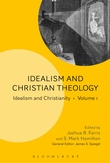
Idealism and Christianity Book Series

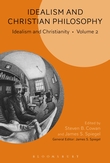
I am happy to announce the release of a two-volume book series entitled Idealism and Christianity, which I edited with the help of my colleagues Steve Cowan, Joshua Farris, and Mark Hamilton. The books are published by Bloomsbury Press and constitute what we hope will be the start of a renaissance of scholarly interest in metaphysical idealism. This is the thesis that mind is most real, and that the 9781628924022entire physical world essentially constitutes the thoughts of that wise and almighty mind—God.

The first volume in the series, entitled Idealism and Christian Theology, explores a variety of issues in theology, including Christology, the resurrection of Jesus, the doctrine of creation, and the knowledge of God. Contributors include Oliver Crisp, William Wainwright, and Keith Yandell. The second volume, Idealism and Christian Philosophy, features essays treating such issues as time, truth, perception, science, miracles, and the mind-body problem. Contributors include Doug Blount, Howard Robinson, Charles Taliaferro, and Keith Ward.

The heroes of the volumes are two 18th century thinkers: George Berkeley and Jonathan Edwards. Both of these 9781628924060great scholars regarded Idealism as amenable to a Christian perspective because it constitutes the most biblical and philosophically plausible way of conceptualizing the world. Idealism effectively addresses skeptical challenges to theism and it provides helpful resources for dealing with all sorts of knotty problems that have plagued philosophers and theologians for centuries.

In addition to the scholarly benefits of Idealism, this perspective also has tremendous personal benefits and is a powerful boon to faith. This was the constant refrain of Bishop Berkeley who concluded his classic defense of Idealism by confessing that his purpose in writing was to “inspire my readers with a pious sense of the presence of God and . . . the better dispose them to reverence and embrace the salutary truths of the Gospel, which to know and to practice is the highest perfection of human nature.” Amen to that, good Bishop!

The Best and Worst of 2015

It’s been another exciting year, and we want to thank you all for reading and, if applicable, posting comments on our blog. Once again, we would like to close out the year with some summary remarks about good and bad stuff related to film, music, books, sports, food, and family.

Best Film Experiences:

Jim: This was a big year in film, and I was fortunate to catch a lot of good ones, both at the theater and on DVD. A highlight in the latter category was watching Richard Linklater’s amazing Boyhood twice in as many days. All of the superlatives critics have laid on this one—“masterpiece,” “extraordinary,” “historic cinematic achievement”—are accurate. If you haven’t seen it, check it out. Another highlight was the new Star Wars film. With The Force Awakens, J. J. Abrams has saved the Star Wars legacy. He managed to achieve the same organic feel, character-centric storytelling, and campy wit as the originals, all while advancing a narrative that will hopefully keep us captivated for years, if not decades, to come. I also enjoyed Inside Out, which deserves accolades for its unique premise as well as its fine execution. Another major highlight was M. Night Shyamalan’s The Visit, which proved that, after a few stinkers, he can still make a great thriller.

Amy: It feels strange to say I am having a hard time remembering good movie experiences this year. While I loved The Visit as a film, the audience Bailey and I shared the theater with nearly ruined it for me. I wasn’t blown away by Star Wars. I mostly enjoyed things on the smaller screen. The Man in the High Castle for serious-minded alternate reality and Tommy and Tuppence for pure fun. There were some good PBS series this summer and I am holding my breath in hopes that Downton Abbey and Sherlock won’t disappoint this winter.

Jim’s Best Musical Experiences of the Year: The year started slowly but finished strong in terms of discoveries of good artists or new albums from artists I was already into. In the latter category, I finally got Manchester Orchestra’s Cope, which is even more addictive than their albums usually are for me, which is saying a lot. Also, after many recommendations from friends, I picked up an Arctic Monkeys album—Whatever People Say I Am, That’s What I’m Not.  I was not disappointed. And I’ve been getting into the new albums by Alabama Shakes (Sound and Color) and Twenty One Pilots (Blurryface), as well as several albums by Cage the Elephant, which is my most exciting musical discovery in years. A virtue that all of these bands have in common is that they (or, anyway, their main songwriters) have something significant to say. That’s refreshing in an era of predominantly mindless musical fluff.

Amy’s Best Food Experiences of the Year: This year most of my food experiences have been in my own kitchen, the remodeling of which was a major highlight. I have done some experimenting, catered a friend’s wedding and decompressed with some serious baking. We also hosted our first Thanksgiving meal at home and though my rolls were undercooked and I was not impressed with the addition of cinnamon to my usually yummy pecan pie, filling our table with beloved faces and laughter was quite satisfying.

Jim’s Favorite Sports Moments of the Year: I am sincerely hoping that my favorite sports moment of 2015 is yet to come.  This would be Michigan State defeating Alabama in the Citrus Bowl tonight, which is also the NCAA football playoff semi-final. We’ll see. Go Green, roll over the Tide! But if that doesn’t happen, then I would say that watching the Cubs make it all the way to the National League championship series—just a few wins shy of the World Series and thus breaking the “goat curse”—was the 2015 sports highlight for me.

Amy’s Favorite Sports Moments of the Year: Hopefully, Jim will forgive me for this one, but my favorite moment was randomly choosing to represent the Spartans while Jim cheered on the Wolverines in the Michigan intrastate rivalry game and then watching their unbelievable last second win. I felt slightly guilty cheering in his stunned face, but since he is rooting for MSU against Alabama, he must have gotten over it.

Jim’s Most Disappointing Sports Moments of the Year:  I’m not even going to comment on that tragicomic finish in the UM/MSU game… This NFL season has been chock full of disappointments, as none of my three favorite teams—the Colts, Lions, and Saints—will make it to the playoffs.  (Yes, three favorite teams—Amy calls me a promiscuous fan, but I own it proudly). And, regarding baseball, it was pretty deflating to see the Cubs bow out to the New York Mets in the NLCS. However, this made it all the sweeter to see the Kansas City Royals beat them in the World Series.

Amy’s Most Disappointing Sports Moment of the Year: Every year, I tell myself that a true Cubs fan knows they are cursed, has no hope, but cheers for them anyway. Still, hope will find a way to creep in and whisper sweet nothings in my ear only to give way to disappointment…again. This year hurt.

Good and Bad Reads of the Year:

Jim:  As usual, my reading this year was almost exclusively non-fiction, and primarily scholarly stuff, especially having to do with ethics and philosophy of religion. Robert Reilly’s Making Gay Okay: How Rationalizing Homosexual Behavior is Changing Everything (Ignatius, 2014) is one of the best books dealing with ethics, not just sexual issues, that I’ve read in years. Reilly takes a natural law approach to the issue, and the book is replete with bold observations and profound insights. I highly recommend this book to anyone interested in the LGBT issue, whatever one’s perspective might be. My most disappointing read of the year was Thomas Jay Oord’s The Uncontrolling Love of God: An Open and Relational Account of Providence (InterVarsity, 2015).  This book has been touted by some as a step forward for open theism. It is anything but that, as the author’s thesis (that God is essentially limited both in terms of knowledge and power) is problematic in itself. But he also commits glaring mistakes along the way in making his argument (if one can call it that). Steer clear of this one, folks.

Amy: So many good reads this year it’s hard to know where to start. The Wright Brothers by David McCullough. The Sisters Brothers by Patrick Dewitt. The Good Earth by Pearl Buck. Ghost Boy by Martin Pistorius. The Devil in the White City by Erik Larson. Half Broke Horses by Jeannette Walls. Most of the things that I read and didn’t like, I wasn’t really expecting to like in first place. Some disappointing mysteries and less than stellar fiction, but overall this has been a great year of reading for me. Check out my Good Reads page or Book Blurbs here on Wisdom and Folly to see more reviews.

Best 2015 Family Memories:

Amy: The kids and I had some good outings this year. Maggie, Andrew and I visited Dayton, Ohio and took in some Wright Brothers sites as well as Wright Patterson Air Force Museum. We also went to the Dunes in Michigan in the Fall and had a great day climbing in the sand and watching Penny bark at the waves. Teaching Bailey to drive has been memorable, to say the least. Having my niece Rachel living close by as a freshman at Taylor has been pure joy.

Jim: I had lots of good sports (baseball, soccer, and basketball) memories with the boys.  And it was fun to see Maggie become an obsessive Beatles fan. Growing to love our new family member—our standard poodle named Penelope Lane Spiegel (or “Penny Lane,” for short—get it?), whom we adopted a little over a year ago—would probably top the list for 2015. And hiking the Smokies with Amy, the kids and my in-laws was another family highlight.

Best Kids’ Quotes of the Year

As usual, most of the best quotes from our kids this year come from our poet-comedian-dreamer daughter, Maggie (11).  But Andrew (9) got off a few good ones as well:

  • Maggie: “If I were God, the world wouldn’t be nearly so complicated.”
  • Andrew: “Make-up is for people who can’t accept the truth about how they look.”
  • Maggie: “If animals could talk, the world would have a lot more good stories.”
  • Maggie: “This is my favorite hair on my entire head.”
  • Andrew: “Everything that has to do with tomatoes is bad.”
  • Maggie: “A poor man’s wisdom is a rich man’s folly…I’m not sure that that means, but it sound right.”
  • Maggie: “Punching someone in the face is on my bucket list. If I have to, I’ll punch the nurse at my death bed.”

New Year’s Resolutions:

Amy: Not to sweat the small stuff and to keep showing up every day. Maggie and I are embarking on a Bible reading plan this year. Getting through five months with Bailey a continent away (as he attends school in La Paz, Bolivia this Spring) feels like quite the hill to climb so I suppose learning to entrust my kids ever further into God’s plan for their future should be among my loftier goals.

Jim:  Last year my resolution was to read half as much as my wife did this year, which would have meant reading 25 books. I didn’t quite pull that off. Okay, I didn’t even come close. So next year, since it is 2016, I resolve to read at least 16% as many books as Amy. I think I can pull that off, then perhaps add a percentage point each year. By the time the goal becomes unrealistic again, I’ll be able to blame my failure on senility. Yeah, that’s the ticket.

Happy 2016 everyone!

Book Blurbs

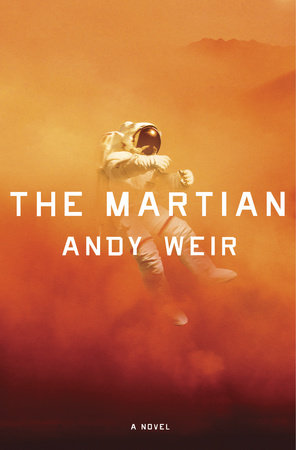
The Martian by Andy Weir: When I saw the preview for the Matt Damon movie based on this book, my thought was, “Bet that is a great story that will be turned into a mediocre movie.” While I can’t give an opinion on the film, I loved the book. If science fiction and action adventure had an alien baby with a good sense of humor and a bit of a potty mouth, it would be The Martian. Enough science to keep 9780804139021this chemistry dummy on my toes and with enough drama to keep me turning the pages as fast as I could read them. If you haven’t seen a preview of the movie or heard of the book, the plot is simple. Mark Watney is separated from the rest of his crew during a mission to Mars. Believing Watney dead, the crew begins their journey home only to discover that he is, in fact, alive. My favorite aspect of the book, besides the fact that the main character is a Chicago Cubs fan, is Watney’s perspective on the obstacles standing in the way of his safe arrival back to earth. While author Andy Weir infuses Watney’s quest to survive with breathless suspense, he never tips the scale in favor of melodrama. The book reads more like a guide on alien planet survival, calmly presenting one’s options when trapped in outer space. A huge thumbs up.

The Sisters Brothers by Patrick deWitt: Finally! A contemporary author, other than J.K. Rowling, whose book releases I will now mark on my calendar. I tracked this book down after hearing the author being interviewed on public radio and when I finished, I promised myself to be kinder to NPR regarding its antidotal news coverage. Wow. If Quentin Tarantino and Wes Anderson got together and wrote a book and then Alfred Hitchcock edited out most of the stylized violence, language and sex, the book would be something like this. Well-developed and gripping characters inhabiting an engulfingly reality of showdowns and amazing discoveries. I don’t even want to summarize it for you for fear of robbing you of the joy of discovering the plot and characters yourself. Just go out and read it. Now.

The Wright Brothers by David McCullough: How does he do it? David McCullough has the gift of taking monumental figures and moments in history, fleshing them out and making them feel like the neighbors next door, all without losing site of the big picture. I the-wright-brothers-9781476728742_hrliterally could not stop recommending this book to people. The Wright brothers are the kind of men you wish we had more of these days. Clever, hard-working, loyal and principled. I took some of the kids to Dayton on fall break to visit their cycle shop and museum. Thanks to McCullough, as we walked around Huffman Prairie, where they practiced with and perfected their flying machine, I felt like I had been there before. The man makes history come to life in the best possible fashion.

Maisie Dobbs series by Jacqueline Winspear: For me, mystery novels are like comfort food, I try not to overdo it, but indulge in them as often as I can. This series is a bit of an enigma. In an attempt to help Maisie Dobbs stand out in a crowded sea of detectives, the author has muddied the waters a little too much for my taste. The main character is part detective, part psychologist, part clairvoyant, and sometimes you can’t tell if you are reading a mystery novel, a study in psychology, or supernatural historical fiction. Having said that, I keep reading them so there must be some merit there after all. Like Grandma’s cheesy potato casserole, too good to turn down, but after a while you just have to say enough’s enough.

Finding Mom by Stephen Messer: One of my book club’s selections this year, this book was written by a Taylor University history professor who graciously led our group discussion. When he was only six years old, Messer’s mother committed suicide and after 50 years of silence, he set out on a journey to discover more about her life, family and struggle with depression. Finding Mom is a quick read which helps you see the tragedy of suicide from all sides. An inspirational story of healing that kindled a desire for many of us in the group to discover our parents outside of their role as mom or dad and more as people in their own right.

The Mighty and the Almighty by Madeleine Albright: I have to confess the pickings were slim in the audiobook section when I chose this book. I also have to confess I only had a vague recollection of who exactly Madeleine Albright was before I started. The topic, the role of religion has played in foreign affairs past and present, as well as Albright’s opinion of what role it should play in the future, is an interesting one. It was made more interesting to me coming from the other side of the political aisle. There were your predictable jabs at the right and not surprisingly all the examples of good diplomacy came from the left, but I appreciated Albright’s desire to present a fair and balanced case for religion in the public square. Nothing earth shattering and somewhat outdated given the current state of the affairs in the Middle East, but it was a good exercise in walking a mile in someone else’s political viewpoint.

The Light Between Oceans by M. L. Stedmen: This book deals with a classic case of good people making a very bad choice. An interesting story centering on the isolated yet beautiful life of a lighthouse keeper and his wife off the coast of Australia. It will probably come more to life when I get a chance to discuss it with the person who recommended it to me. A few unconvincing characters and turn of events, but I would read it again.

The Night of One Hundred Thieves by Devon Trevarrow Flaherty: This book is by a friend whom I both love and respect, as a person and a writer, so I have no excuse for having taken this long to getting around to reading it. When I saw Devon recently after several years, I thought, “I love everything she has to say! Why on earth have I not read her book?” The genre, medieval fantasy (is that really a genre or did I just make that up), is not really my cup of tea so it should speak to the book’s quality that I read it. A bit Chaucer meets Tolkien. Devon has created a world that feels real with a character who feels the same. Looking forward to making up for lost time and reading her other novel, Benevolent.

Book Blurbs

I will confess to two things: I am terribly behind on my book reading goal for the year. During the first half of the year, for reasons only known to the nether regions of my subconscious, I could not make myself read more than a few pages a day. The warmer weather of summer has revived my desire to read. Either that or all the long hours sitting at baseball practices with no other option available. While I am now reading, this leads to my second confession. Apparently summer has also brought on a desire to stay within the lighter genres. No Tolstoy or Rand for me this year, sir. So with those disclaimers, I offer you my latest book blurbs.

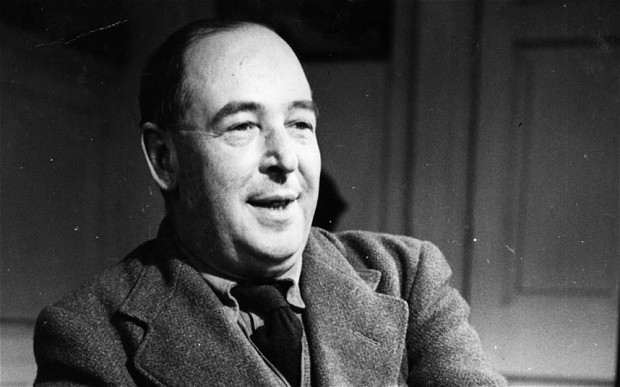
The Silver Chair, The Magician’s Nephew, The Horse and His Boy, and The Final Battle by C.S. Lewis: Seriously, how does he do it? Books that go down as smooth and refreshing as a frosty chocolate milkshake on a hot day, but with bits of nutrition blended in so naturally

Getty Images
Getty Images

one can hardly believe they are good for you. These definitely make my desert island book list. The Bible, Lewis, Austen, and pizza and I could settle in quite nicely, thank you very much. And maybe a milkshake machine if one is feeling generous.

Until the Beginning by Amy Plum: Not sure how many words would be too many to be considered wasted in reviewing this book. I have probably already spent more than it deserves. This comes from one who does not look down her nose at well-written juvenile fiction. This is the sequel to Plum’s book After the End, which I didn’t love but found at least intriguing, I am only glad to know there will not be a third in the series.

The Christmas Sweater by Glenn Beck: This too was a disappointment. I am a Beck fan, more the man than the writer, but still have found his books enlightening and good discussion fodder. I was curious to learn more about his background and Beck has made no secret of the biographical nature of this novel. I listened to this one (please don’t tell Goodreads) and have noticed that flawed dialogue can seem more so when read aloud so maybe that was part of the problem. Nevertheless, an interesting book but one I was glad to be done with. Will stick with his non-fiction from now on.

7 Events that Made America America by Larry Schweikart: I know nothing about this author. Picked up this audiobook at random from the library. Fascinating book. Loses me at times with the thickness of its analysis but keeps it light enough for me to understand. Love the 51eMFZI3xRL._SX324_BO1,204,203,200_long view perspective on the political impact of such seemingly non-related events as Eisenhower’s heart attack and government regulation of food and the 1963 Beatles-led British invasion and the fall of communism in Eastern Europe. For anyone interested in politics, particularly those with a conservative interpretation of our constitution, this is a great read.

The Dead in their Vaulted Arches by Alan C. Bradley:  I have read all the books in this series and will continue to do so. Bradley’s Flavia du Luce feels like the quirky girl next door. Glad to know her but equally glad not to be legally responsible for her person or liable for her often ill-advised attempts at crime solving. The author must be a bit quirky himself to have pulled this unique British young lady of the early 1950’s out of his mature, Canadian brain. Would love to sit down to a cup of tea with him sometime, after first checking to be sure it wasn’t poisoned.

The Harbinger by Jonathan Cahn:  Jim has been urging me to read this book, and I have picked it up a few times only to put it down again, annoyed by the poor quality of writing and the ridiculously contrived plot. But in deference to his persistence, I am finally reading it. I say Cahn should have gone with a straight non-fiction presentation of his prophetic insights into the events of the last decade but it certainly opens one’s eyes to one strongly plausible interpretation of 9/11 and beyond. I didn’t need convincing that God is behind all history including our own nation’s, but Cahn lays out biblical connections to current events that are quite compelling. I hesitate to be more enthusiastic for fear of being associated with the pop-prophecy crowd, but whatever your perspective on Cahn’s analysis, I don’t see how any American Christian could deny his call for repentance both as individuals and as a nation.

The Life-Changing Magic of Tidying Up: The Japanese Art of Decluttering and Organizing by Marie Kondo: Don’t really think of myself as a person in need of instruction when it comes to decluttering but rather someone imprisoned in a house with five pack rats. I hoped to gain some insights into how best to help them along the path of enlightenment and perhaps save myself a few hundred hours of covertly throwing away all their junk. Little did I know, this book would cause me to reflect more deeply on how I relate to the objects with which I fill my life. Go pick up a copy and call the thrift store to let them know you’re coming. But if you have any good stuff, I call first dibs.

Michaels and Morrissey

There are studies in contrast, and then there are studies in contrast.  During the past six months I’ve read two autobiographies—of sorts—and the similarities and differences have been striking.  The two authors work in very different fields, both of which I follow assiduously.  Neither is professionally an author, and partly for this reason their written reflections on their careers are especially interesting.  The authors are long-time sports broadcaster Al Michaels and singer-songwriter Morrissey.

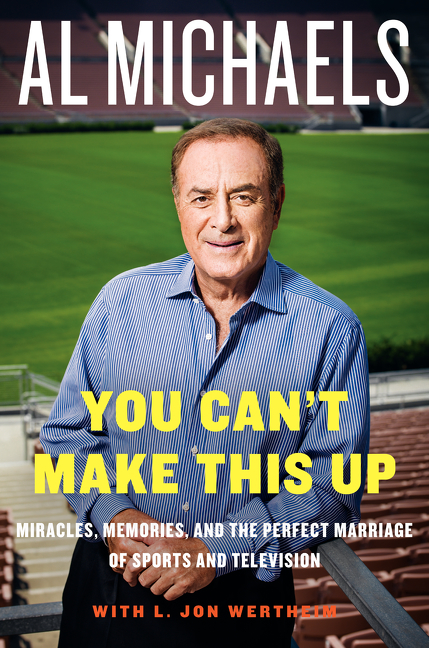
Michaels’ book, entitled You Can’t Make This Up (William Morrow, 2014), recounts his journey from the Flatbush section of Brooklyn, New York through a long career at ABC sports to his present position at NBC.  Michaels is perhaps most well-known for his iconic call at the conclusion of the dramatic U.S. hockey team upset of the Soviets at the 1980 Olympic games: “Do you 9780062314963believe in miracles?  Yes!”  He also recounts his experience at the earthquake-interrupted 1989 World Series and his relationship with O.J. Simpson, as well as many riveting on-the-field anecdotes.

One of the themes of his book is how Michaels’ has managed to abide by the advice that legendary NBC announcer Kurt Gowdy gave him back in the 1970s: “Don’t ever get jaded.”  Michaels is correct in his self-assessment that he’s followed this advice.  Although critical of some sports and network personalities with whom he’s worked, such as the self-possessed Boomer Esiason and the pompous but fascinating Howard Cosell, Michaels has maintained a boyish enthusiasm.  And his critical assessments of some of his peers are far outshone by his genuine appreciation of others with whom he’s worked, from John Madden to Cris Collinsworth—whom most would agree are two of the greats in NFL television broadcasting.

Michaels does note along the way that he is the most widely exposed person in the history of live television—no one has spent more hours on the air (because of his broadcasting all of the major team sports, the Olympics, etc.) than Michaels.  But somehow this doesn’t come across as anything but a truthful observation.  Perhaps because an attitude of gratefulness permeates the pages of You Can’t Make this Up.

Whereas Michaels’ book is calculated to entertain and endear the reader (as well as educate him or her about the history of sports broadcasting), Morrissey’s Autobiography (Penguin, 2014) seems more bent on venting and indulging grudges.  Former front man of the legendary 1980s band The Smiths, Morrissey set out on his own after a media-fueled rift between him and guitarist Johnny Marr.  Since going solo, Morrissey has made consistently high-quality records, featuring his trademark introspectively brooding lyrics, though his later albums have increasingly tackled social and political issues.

The Moz’s prose is, by turns, mesmerizing, tedious, obscure, and hysterical, but always interesting and too often indulgent.  It is, in the end, a book of complaints (especially about the music corporation rip-off machine) and self-justifications, only brightened occasionally by a tersely-put word of admiration about one of Morrissey’s musical heroes or (usually deceased) 519ZinY706L._AA160_friends who somehow managed to avoid severely offending him.  Tellingly, more than fifty pages of the book are devoted to the much publicized legal case involving Smiths drummer Mike Joyce who prevailed in his suit for a higher share of the band’s royalties.  While the Moz does seem to have been treated unjustly, his seething over it (even referring to his former band mate as “Joyce Iscariot”—really?) isn’t helping anyone.  Sadly, Morrissey only succeeds in typifying someone who willfully grants others the ability to steal his joy.

There are certain similarities between Michaels and Morrissey.  For one thing, both men are commentators and analysts who are regarded as compelling “voices” in their respective fields.  Furthermore, both are gifted at getting to the essence of aspects of the human drama.  Michaels is a master at his craft of describing compelling sports narratives, and the Moz, too, is a master in his realm of lyrical composition and vocal delivery.  And in their books they reflect on their careers in a way that sheds a certain light on their genius and also reveals their own sense of their significance.

But the contrasts are glaring.  Michaels’ sense of his significance is more measured and humble than that of the Morrissey, always reminding the reader of his own simple beginnings and the fortunate turns along his professional path.  Morrissey’s is an attitude of self-importance and exasperation that others have so often failed to properly appreciate his talent.  Both are witty, but Morrissey’s humor is famously sardonic, and this is relentlessly displayed in his Autobiography.  As mentioned, Michaels, too, takes time to critique his peers and make note of those who betrayed him, but these are brief and never with the tenacious vindictiveness of Morrissey.  Finally, and this is the key difference, Michaels seems to be a genuinely thankful man, repeatedly expressing his gratitude to those have helped him achieve all he has in his profession.  Not so the Moz.

Here are two famous, talented, and productive individuals who will go down as towering figures in their respective professions.  But just one of them seems genuinely happy.  That same man, not coincidentally, is the one who has managed to follow the old adage to “count your blessings.”  Hopefully, Morrissey will somehow learn to do this as well, and thus find that all-too-elusive joy in this life.  But once one becomes jaded, that’s a hard thing to do.

The Best and Worst of 2014

It’s been another exciting year, and we want to thank you all for reading and, if applicable, posting comments on our blog. Once again, we would like to close out the year with some summary remarks about good and bad stuff related to film, music, books, sports, and family.

Best and Worst Film Experiences:

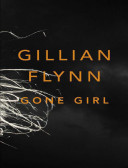
  • Jim:  This was a down year for me in terms of watching films. I viewed a lot of “tweeners” that wouldn’t fall anywhere near the “best” or “worst” categories—e.g., Interstellar, The Grand Budapest Hotel, and The Hobbit: The Battle of the Five Armies.  Probably the best film I watched all year was the Israeli drama Fill the Void, a powerful story of a young Haredic Jewish woman who is pressured by her family to marry the widower of her older sister, who died in childbirth. On a lighter note, but just as memorable, is the endearing Jon Favreau comedy Chef. As for my worst film experience of the year, the choice is easy: Gone Girl, which Amy and I reviewed here and here.
  • Amy:  While Jim was in California, I pretty much anesthetized myself with any television series I could get my Netflixed hands on. While there was a great deal of loving or listing it, hunting for houses and cousins with kitchen, I did watch some quality shows, most of them dark and mysterious. I think the new paradigm of shows created directly for streaming and released in their entirety has real potential. Here are a few to which I became hopelessly addicted, with the usual disclaimer that since they are mostly British, they tend to be a wee smutty and anti-religious, but well-written and well-acted: Hinterlands, The Killing, Happy Valley, The Fall. My best experience, however, was watching Mockingjay: Part One with my older boys. I know it isn’t saying much to say it is the best in the series so far, but it was. There was popcorn and bonding, so take that and stuff it in your high culture hat.

Jim’s Best and Worst Musical Experiences of the Year:  The highlights for me were Morrissey’s World Peace is None of Your Business (despite the Moz’s increasingly sardonic perspective on life) the Black Keys’ Turn Blue (my review of which is here), and U2’s Songs of Innocence (despite the popular trend of hating this album just because it was simultaneously gifted to millions of people). The low point, as it probably could be most years, was catching “highlights” of the MTV awards. Blecch.

Amy’s Best and Worst Eating Experiences of the Year: Best: Finally got to experience (free range) pork belly and it did not disappoint. Like pork chops wrapped in bacon. Thank you, Barn Brassiere in Muncie, Indiana.  Worst: The hundredth Subway tuna sandwich on flat bread I ate with the kids while traveling back from California. Every woman has her fast food sub-sandwich limit and I reached mine somewhere in Kansas.

Jim’s Favorite Sports Moments of the Year:  It was a thrill to see both the Ole Miss and Mississippi State football teams in the top five, with the latter enjoying the #1 position for several consecutive weeks of the season.  I also enjoyed the Kansas City Royals’ exciting run to the World Series.  And as I write this I’m enjoying the Detroit Lions season culminating in a playoff appearance, though I expect the end of their run will make my “most disappointing sports moments” for 2015.

Amy’ Favorite Sports Moments of the Year:  Watching all my kids play soccer this fall. I had to step up my spectator skills in order to do play-by-play for Jim while he was in California. I saw Bailey score his first goal in a high school game, Sam play keeper (a position he and his high threshold of stimulation were born for), Maggie deceive many an opponent with her flighty demeanor, and Andrew take charge of his defense. So fun to watch them all, though the rides home were admittedly a little stinky (but only literally).

Jim’s Most Disappointing Sports Moments of the Year:  Although I’m not a Kansas City Royals fan, I got caught up enough in their improbable playoff run to be really deflated by their falling just short in game 7 of the World Series.  If Salvador Perez swings just half an inch higher on that final pitch, the Royals win the championship on a walk-off two-run homer rather than losing on a feeble pop-out. It’s a game of inches… And speaking of disappointments related to teams I don’t normally root for, it was also painful to watch Peyton Manning’s Broncos so thoroughly dismantled by the Seahawks in the Super Bowl.

Amy’s Most Painful Sports Moment of the Year: Having to tell Jim, who was suffering from amnesia at the time, that Peyton Manning didn’t play for the Colts anymore. He looked so devastatingly baffled. At least he forgot about it five minutes after I told him.

Satisfying Reads of the Year:

  • Jim:  I was delighted to have the time to finally read Melville’s Moby Dick, my reflections on which you can see here.  I also enjoyed Marilynne Robinson’s Pulitzer Prize-winning Gilead—an achievement that is as subtle as it is profound.  The best work in philosophy I read this year was Jason Baehr’s The Inquiring Mind, a rich and insightful work on virtue epistemology.  Also, I greatly enjoyed—and was happy to do a back-cover endorsement for—the book Rethinking Hell, a compendium of important articles and essays defending the doctrine of hell known as conditional immortalism (the view that the damned are eventually annihilated, as opposed to suffering eternally).
  • Amy:  I read so many good books this year. From contemporary fiction to 19th century memoirs, this was a great reading year for me. Here are just a few of my recommendations: The Warden by Anthony Trollope, People of the Book by Geraldine Brooks (though I hated Brooks’ March), Where’d you go, Bernadette? by Maria Semple, a couple by P. G. Wodehouse, 12 Years a Slave by Solomon Northup, Half-Broke Horses by Jeannette Walls, The Year 1000 by Robert Lacey, Crossing to Safety by Wallace Stegner, Extraordinary, Ordinary People by Condoleezza Rice and The Life of Charlotte Bronte by Elizabeth Gaskell.

Best 2014 Memories of Our Kids:

Amy:  Our trip out west was the big one. Sitting on the beach with Jim at Big Sur watching the kids playing in the water and looking for creatures was a near perfect moment. Looking at their happy and surprised faces when Jim told them we were getting a dog was priceless. Not being found first every time during Christmas bedtime hide and seek was pretty sweet too.

Jim:  Traveling through Arizona and California with my family in October, experiencing together such sites as the Grand Canyon, Sequoia National Park, Yosemite National Park, the Pacific coastal highway, and Alcatraz. Our kids have always been good travelers, but they blew us away with their endurance on this extended sojourn.

Best Maggie Quotes of the Year:

In the past we’ve reserved this spot for memorable quotes from all of our kids, but this was such a great year for quotes from our daughter Maggie (who is ten years old), we decided to simply list some of her more memorable ones:

  • “When I grow up, I’m gonna make an exact copy of the earth, then cut it in half with a big knife to see if the center of the earth is really so hot.”
  • “Sometimes being hungry can be satisfying. Unsatisfaction can be satisfying.”
  • “I never talk to myself when I’m alone in my room. I just talk to the Beatles and my stuffed animals.”

Most Satisfying Shared Experiences of the Year: 

  • Amy:  There were quite a few this year: Kayaking through the beautiful mangrove forest and onto the open ocean while in the Bahamas. Seeing so many beautiful places on our trip out west. The night Jim surprised me for my 40th birthday by driving me around to collect lovely, encouraging notes from my friends. However, number one has to be picking him up from the airport in December, knowing he was home to stay.
  • Jim:  Dittos on all of that.

New Year’s Resolutions:

  • Amy:  Somehow managing to maintain the new perspective Jim’s being gone gave me. Appreciate him more, worry about the little things less. Enjoy and encourage my kids more, criticize and hide from them less. Accomplish the fitness goals I set but didn’t quite reach for 2014. Watch more quality films with Jim. Put more time and energy into plans for my professional future and of course, read lots and lots of books.
  • Jim:  To read half as much as my wife did this year, which would mean reading twenty-six books next year. Good luck to me on that.

Happy 2015 everyone!

Good Riddance, Gone Girl

It’s funny how things work out. I had seen Gone Girl on the shelves of various bookstores. I think I even checked it out of the library once but never got around to reading it. When the movie came out, I was intrigued and bought the novel to read on our trip to California. The same week, Jim called to say he had just seen the movie. So here is the first of two reviews—of the book and, in the next post, the film.

booksI am not sure how best to describe my experience. If I wanted to be purely subjective, I would say, “I didn’t enjoy it.” Such a dark and hopeless perspective. There is no good guy to cheer for. Only characters with varying degrees of badness. But to say that I didn’t enjoy it would not be to say that I wasn’t drawn in. As Jim Gaffigan would say, this novel was McDonald’s for the soul. You know it is bad for you but somehow you feel compelled to go back for more.

If you are unfamiliar with the plot, I will do my best to summarize without spoiling. After losing their jobs and a substantial portion of Amy’s trust fund, Nick and Amy, a seemingly happily married couple, move from New York City to a small town in Missouri in order to care for Nick’s dying mother. On the day of their fifth wedding anniversary, Amy goes missing and it isn’t long before everyone, including the reader, begins to question whether Nick is responsible. The story shifts from the past to present with Amy’s diary entries filling in the back story while Nick’s perspective moves forward in the present.

From a purely literary standpoint, the writing is okay. The plot is ingenious on paper but I am not sure the characters pull it off. As with any elaborate storyline, believable, well-developed characters are essential to suspending the reader’s disbelief. I personally think first-person narrative, especially first person “Dear Diary” kind of narrative, makes this much more difficult. It is foreign to our experience of life to hear the thoughts and feelings of others first hand. Even our own thoughts don’t come to us in complete, full sentence form. Unless you are a very gifted and skilled writer, the first-person voice actually places distance between the character and the reader rather than creating the realistic intimacy of developing a character in the same way we get to know real people, through dialogue and perceived actions.

For all the patient unfolding of the plot through most of the book, the ending feels unsatisfactorily hurried and the most unrealistic bit to swallow. I also have to throw in my two cents worth of disappointment at the number of f-bombs Flynn throws around. The book is certainly gritty enough without them.

Overall, this was a gripping vacation read, but that’s all—library worthy but not retail price worthy.

Some Thoughts on Moby Dick

This semester I am working as a Templeton Fellow at the Biola University Center for Christian Thought.  It has been a wonderful experience so far, as I’ve been spending much time in discussion with the other fellows at the CCT and have had time to do a lot of research and writing (mostly on the virtue of open-mindedness, which is my research focus for the semester).  I’ve also been careful to reserve time for reading fiction, which is something I normally don’t have time for during the school year.  A few weeks ago I finished Melville’s Moby Dick, which was quite a journey.  If you’ve never read the book, then it might sound strange when I say that much of it is non-fiction.  In fact, I’d describe it as equal parts cultural history, marine zoology, maritime encyclopedia, and dramatic narrative.  I now know more about the history and practice of whaling (as practiced in the 19th century) than I ever thought I would.  Not only that, but I actually found Melville’s detailed descriptions of the process of catching whales and harvesting the various components (especially the precious spermaceti oil that made sperm whales such valuable ocean quarry) very interesting.

But for all of the stuff about whaling, what I find most compelling about Moby Dick is what has captured the imaginations of most readers of this classic:  Captain Ahab’s obsession with that great albino sperm whale which cost him one of his legs in a previous expedition.  Ahab is a portrait in monomaniacal vengeance—extreme but believable.  In one of my favorite passages, the first mate Starbuck challenges his captain for being so obsessed, and Ahab’s response is memorable:

“Vengeance on a dumb brute!” cried Starbuck, “that simply smote thee from blindest instinct!  Madness!  To be enraged with a dumb thing, Captain Ahab, seems blasphemous.”

“Hark ye yet again—the little lower layer.  All visible objects, man, are but as pasteboard masks.  But in each event—in the living act, the undoubted deed—there, some unknown but still reasoning thing puts forth the mouldings of its features from behind the unreasoning mask.  If man will strike, strike through the mask!  To me, the white whale is that wall, shoved near to me.  Sometimes I think there’s naught beyond.  But ‘tis enough.  He tasks me; he heaps me; I see in him outrageous strength, with an inscrutable malice sinewing it.  That inscrutable thing is chiefly what I hate; and be the white whale agent, or be the white whale principal, I will wreak that hate upon him.  Talk not to me of blasphemy, man.  I’d strike the sun if it insulted me.”

Why does Starbuck suggest that such anger at “dumb brute” is “madness” and possibly blasphemous?  As for its irrationality, that is likely because he recognizes that animals, even highly intelligent ones such as whales, are not moral agents and thus vengeance, as typically understood, is inappropriately aimed at them.  Vengeance only makes sense when one’s target is somehow to blame for something (not that vengeance is ever morally justified; but sometimes it does make sense from a psychological standpoint, if not from a moral point of view).

From Wikipedia
From Wikipedia

But then why suggest that Ahab’s anger is blasphemous?  This is where things get really interesting, in terms of the contrasting worldviews of Ahab and Starbuck.  The latter seems to assume that since animals cannot reason, their actions, especially their interactions with people, are best construed as the indirect activity of God.  So to curse, resent, despise, or seek vengeance against an animal is indirectly to behave so toward God.  Ahab tacitly denies this, calling all “visible objects,” including whales, “pasteboard masks” which hide something “inscrutable,” the mysterious beyond which is precisely what Ahab hates, because whatever it is, it has defied him and not only that but seriously injured and permanently handicapped him.  He says, “that inscrutable thing is chiefly what I hate.”  So he hates what he doesn’t understand.  But more than this, he hates it because he doesn’t understand it.  He resents the mysterious and unfathomable.

All of this is a powerful image of a man despising the mystery of the divine precisely because God defies our comprehension as well as our desire to fully control our lives.  The whale only appears to be Ahab’s nemesis, when in fact the real object of the captain’s anger and vengeance is God.  And when that is the nature of one’s wrath, then literally anything that gets in the way is a potential target, as Ahab himself expresses when he says, “I’d strike the sun if it insulted me.”  Absurd, of course.  But it’s an apt image of the absurdity of hatred directed at God.  It is also portentous, as the reader at this point in the book—only about a third of the way in—gets the feeling that this is not going to end well.  And, of course, it doesn’t.  Both for Ahab and his crew.  Such, too, is the way of human wrath.  It only brings destruction.

Three Great Books on Intellectual Virtue

This semester I have the honor of working as a Templeton Fellow at the Biola University Center for Christian Thought.  Each year the CCT focuses on a different topic, and the theme this year is intellectual virtue and civil discourse.  My research topic, which fits naturally within this theme, is one that I’ve been working on the last few years—open-mindedness.  What does it mean to be open-minded?  Why is it a virtue?  When is it not virtuous to be open-minded?  And is it possible to be simultaneously open-minded and religiously devout?  For some of my thoughts about these questions, look here.

In the course of my research, I’ve read some really good stuff on intellectual virtue.  So I thought I’d provide a brief introduction to, at least in my assessment, three of the best books on the topic.

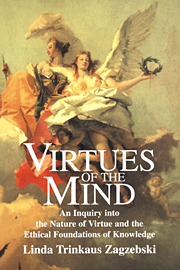
9780521578264Linda Zagzebski, Virtues of the Mind (Cambridge, 1996) — This book is considered by many to be a contemporary classic in the field of virtue epistemology, and for good reason.  Zagzebski not only develops a plausible theory of intellectual virtue, but also offers rich discussions of related and sub-issues along the way, including practical wisdom, understanding, and a critical assessment of Alvin Plantinga’s epistemology.  She conceives knowledge as “cognitive contact with reality arising out of acts of intellectual virtue.”  Although her account overreaches at times, it is nonetheless insightful at nearly every turn.  And, as is the case with all landmark works of philosophy, even her mistakes are instructive.


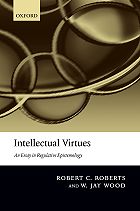
9780199283675_140Robert Roberts and Jay Wood, Intellectual Virtues (Oxford, 2007) — Rather than defending a particular theory of virtue epistemology, Roberts and Wood offer what they call a “regulative epistemology” which aims instead to “generate guidance for epistemic practice.”  For those who are more interested in the practical implications and applications of virtue epistemology, this is a book to check out, which is chock full of insights about the moral life.  After clarifying a number of key concepts, including just what a virtue is, they explore the meaning and practical dimensions of a number of particular intellectual virtues, including intellectual courage, intellectual humility, intellectual autonomy, intellectual generosity, and practical wisdom.


9780199604074_140Jason Baehr, The Inquiring Mind (Oxford, 2011) — In a work that is a bit more theoretical and advanced than the previous two works, Baehr (who is also a CCT fellow this semester) develops and defends what he calls a “personal worth” conception of intellectual virtue.  Along the way he argues for the relevance of considerations of intellectual virtue, whatever one’s view, whether one holds to a reliabilist or evidentialist epistemological theory.  After making his cases for these theoretical points, he explores in-depth two important intellectual virtues:  intellectual courage and open-mindedness.  Baehr’s discussion of the latter of these is especially interesting to me, of course.

These are rigorous, enriching texts which provide theoretical and practical insights—improving our understanding regarding both the nature of knowledge and how we ought to live.  In word, they make us wiser.  Philosophy doesn’t get any richer than this.