Bonhoeffer on Telling the Truth

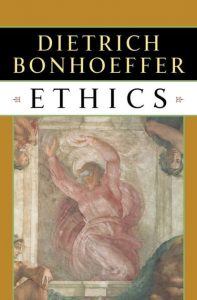
In the final years of his life, Dietrich Bonhoeffer worked on a book on ethics and was never completed, though he made substantial progress on it. It was eventually published posthumously. In his Ethics, Bonhoeffer discusses the question, what is meant by telling the truth? And in the course of addressing this question, he also considers what it means to lie.

Bonhoeffer begins by recognizing that there is a general demand for truthfulness, but he notes that the context of relations is crucial for understanding the demand. Thus, for example, a parent’s claim on a child is different than a child’s claim on the parent when it comes to truthfulness. There are many things that an adult understands about a given subjects that simply cannot be comprehended by a child, and this has implications for just how much a parent is duty-bound to communicate to a child.

The truthfulness we owe God is both truth in principle and concrete, since God has placed us in real, concrete relations with one another. And this is a deeply moral matter because “the ethical cannot be detached from reality,” and when we speak we express an account of reality. Therefore, Bonhoeffer says,

the real is to be expressed in words. That is what constitutes truthful speech. Every word I utter is subject to the requirement that it shall be true. Quite apart from the veracity of its contents, the relation between myself and another man which is expressed in it is in itself either true or untrue. I speak flatteringly or presumptuously or hypocritically without uttering a material untruth; yet my words are nevertheless untrue, because I am disrupting and destroying the reality of the relationship between man and wife, superior and subordinate, etc. An individual utterance is always part of a total reality which seeks expression in this utterance. If my utterance is to be truthful it must in each case be different according to whom I am addressing, who is questioning me, and what I am speaking about (360).

Significantly, then, Bonhoeffer essentially affirms what is known as the correspondence theory of truth. On this view, dating back to the ancient Greeks, a statement is true if and only if what it asserts corresponds to some actual or “real” state of affairs.

Context is crucial when it comes to truthful speech, Bonhoeffer tells us. “Every utterance or word lives and has its home in a particular environment” (361). This is why it is very difficult to say what actually constitutes a lie. “The usual definition of the lie as a conscious discrepancy between thought and speech is completely inadequate. This would include, for example, even the most harmless April fool joke” (363). So, Bonhoeffer says, “joking has nothing whatever to do with lying, and the two must not be reduced to a common denominator.”
Nor can we define lying as “deliberate deception of another man to his detriment,” since this would imply that even the deception of an enemy in war is wrong. Bonhoeffer concludes that “the lie cannot be defined in formal terms as a discrepancy between thought and speech” (364). In fact, he says, such discrepancy is not even a necessary condition for lying, since one may be quite truthful when intentionally misleading someone, such as through omissions or ambiguity.

The truth about lying, says Bonhoeffer, exists “at a far deeper level than in the discrepancy between thought and speech.” The essence of lying consists in consciously denying God’s reality, whether through speaking or otherwise. Note that this follows directly from Bonhoeffer’s correspondence theory of truth and Bonhoeffer’s conviction that what is real is just is what God has made actual—the world which God has “spoken” into existence (cf. Gen. 1).

It further follows, then, that a “lie is a contradiction of the word of God, which God has spoken in Christ, and upon which creation is founded. Consequently, the lie is the denial, the negation, and the conscious and deliberate destruction of the reality which is created by God and which consists in God, no matter whether this purpose is achieved by speech or by silence.”

Again, “God’s reality” is the world which God “spoke” into existence. The world is, as it were, God’s speech, his public word. So when we deny, negate, or misrepresent reality, we contradict God’s words. To lie is to directly challenge the Lord, perhaps even to implicitly declare oneself to be God. Here we see why lying is such a serious thing and why the trait of being a consistent truth-teller is a significant moral virtue.

Bonhoeffer’s account also helps us to understand a few things about the biblical account of Satan, the ultimate challenger of God and his reality. In Scripture we learn that Satan is fundamentally a liar and called by Jesus “the father of lies.” Without a proper understanding of the significance of truth and truth-telling, the moniker of “liar” might appear to be a random or even petty vice with which to identify the arch enemy of God. However, when we understand that truth is God’s reality and that a lie constitutes a fundamental challenge to God, we recognize how appropriate this description is, as is the very name of Satan’s, which means “deceiver.”

Bonhoeffer’s account also highlights the significance of Jesus statement, “I am the way and the truth and the life” (Jn. 14:6). We learn in John’s gospel that all things were made through Christ (Jn. 1:3), and the Apostle Paul tells us that all things were created in Christ, through Christ, and for Christ (Col. 1:16) and that “in him all things hold together” (Col. 1:17). In short, Christ is the ontological ground of all that is. So we might even say that he essentially is reality. And this is to say, on Bonhoeffer’s account of truth, Christ literally is truth.

These insights place a premium on truth-telling that is seldom acknowledged, perhaps because lying is so common. Evidently, we are natural born liars, and most people lie on a regular basis. In one sense, this shouldn’t shock us, since Scripture tells us that we are all innately moral rebels. “All have sinned and fall short of the glory of God” (Rom. 3:23), and we challenge God every time we sin, whether by lying or in other ways. But in another sense, the essentially Satanic nature of lying should shock us and even terrify us about our natural moral condition. Whenever we lie, after all, we are essentially doing Satanic work.

These points should reinforce our commitment to honesty, sincerity, and truth-telling. While there are certainly plenty of appropriate contexts for discrepancies between belief and speech, such as when joking, as well as when playfully deceiving in non-verbal ways (e.g., in athletic contests and surprise parties), genuine lies are an affront to the Lord and should not be a part of our lives.

Review of Nancy Pearcey’s Love Thy Body

Every so often there appears a book which provides such an insightful cultural diagnostic that you wish everyone would read it. For me, Nancy Pearcey’s Love Thy Body (Baker, 2018) is one such book. Pearcey’s thesis is that numerous problematic trends in our culture, from the pro-choice movement to transgenderism to the hook-up culture, are all driven by a low view of the body. Specifically, a philosophical concept which she calls “personhood theory” serves as the common rationale for these movements. Personhood theory, she says, “presumes a very low view of the human body, which ultimately dehumanizes all of us” (p. 20).

Through most of history it was generally understood that to be a human being is to be a person. But in the 20th century—especially the early 1970s—philosophers began to differentiate these two things, introducing the body-person dichotomy. This concept was pivotal in the 1973 Supreme Court decision Roe v. Wade, which legalized abortion throughout the country (proposing that the fetus is human but not a person under the 14th amendment).

From there, the body-person dichotomy has driven secular views on many other issues, including, euthanasia, physician-assisted suicide, homosexuality, transgenderism, and the hook-up culture. Pearcey says, “Christianity holds that body and soul together form an integrated unity—that the human being is an embodied soul. By contrast, personhood theory entails a two-tiered perspective that sets the body against the person” (p. 21). (Thus, it is important to note, Pearcey does affirm mind-body dualism. What she is critiquing is body-person dualism or, which is what she dubs “personhood theory.”)

The biblical, Judeo-Christian view is teleological, seeing purpose in the human body as well as the rest of nature, since it is designed by God. The modern root of personhood theory is Darwinism, which sees all of nature as an “amoral mechanism.” According to Pearcey, “if the body has no intrinsic purpose, built in by God, then all that matters are human purposes.” This means that the human body may be “manipulated and controlled to serve the human agenda, like any other natural resource” (p. 24).

This view is dehumanizing, because it implies that mere humans do not have rights.  Only persons do. But a constant theme throughout Scripture is that our bodies matter.  Nature is good. Our physical beings are created by and treasured by God.

Christianity emerged in a cultural context dominated by a low view of the body, due to the influence of Platonism and Gnosticism. With Jesus’ ministry of physical healing, his own physical resurrection, the Pauline concept of the body as God’s temple, and the doctrine of the resurrection of the body, among other things, the Bible puts a strong emphasis on the inherent sacredness of the human body. In the early modern period, the ideas of Descartes and Kant undermined this biblical view. More recently, Darwinism and contemporary materialistic philosophies rejected it altogether, and as our culture embraces materialism we see its dehumanizing effects.

Pearcey discusses some of the practical ways that personhood theory and its low view of the body are manifested in contemporary culture:

  • Euthanasia: If the body is separate from the person, then if an individual’s cognitive functions are gone the person is gone. So terminating the life of their body is acceptable.
  • Physician-Assisted Suicide: If the body is separate from the person, then I can dispose of my body whenever I autonomously choose to do so.
  • Infanticide: Since a newborn baby cannot reason and has no self-concepts, it is not yet a person and therefore may be destroyed.
  • Hooking Up: If the body is separate from the person, then I can freely involve my body sexually with others, and this need not affect me personally. Sex is just something I do with my body.
  • Pornography: If the body is separate from the person, I can view and even act in pornographic videos, since these are just bodies.
  • Prostitution: If the body is separate from the person, I can sell my body or use others for sex, since these are just our bodies.
  • Homosexuality: If the body is separate from the person, then my sexual desires and preferences are more important than my biology (genetics and genitalia) in determining who I may have sex with.
  • Transgenderism: If the body is separate from the person, then my biology is irrelevant to my actual gender.

Pearcey notes several bizarre and problematic implications of the personhood theory. One of these is that it undermines women’s rights. If a “woman” is no longer defined biologically, then we cannot identify sex-based oppression. Moreover, even biological “men” can claim that their women’s rights are violated if they identify as women, just as such individuals are permitted to use women’s bathrooms in many states.

The influence of personhood theory has been vast in Western culture. Yet no one can agree on exactly what constitutes a “person”! Philosophers have proposed all sorts of conditions and criteria, but there is no consensus. In contrast, on the Judeo-Christian view that all humans are persons, there is clarity as to who are persons, and it is scientifically verifiable. For this reason, Pearcey maintains that the body-person dichotomy is anti-science.

Love Thy Body provides a much-needed constructive critique of a prevalent perspective in contemporary American culture. Although it contains many significant philosophical insights, the book is written in a semi-journalistic style which is fit for a popular audience. My only critique is that it is that the book is a bit heavy with examples which illustrate Pearcey’s points such that the discussion sometimes seems repetitive. It could have been tightened by 50 pages or so. But this is a relatively minor flaw which should not dissuade readers. I highly recommend this book!

Three Great Books About Marriage

Recently I attended a wedding of a former Taylor student, and this naturally got me thinking again about marriage.  It also prompted some reflection on books I’ve read on the topic.  I haven’t read many marriage books, but several of the ones I have read are really good.  Here are my top three.

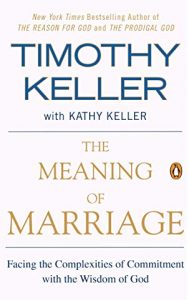
Tim Keller, The Meaning of Marriage – This book features Keller’s characteristic earthy realism, lucidity, and insight.  Among the points he rightly emphasizes are (1) the importance of your spouse being your best friend, (2) the way that marriage demands transparency and constancy between husband and wife, (3) the power of a good marriage to benefit the children, both morally and psychologically, and (4) the essential roles of forgiveness and repentance in a healthy marriage.  All of these things add up to the unique capacity of marriage to catalyze deep personal transformation into Christ-likeness.  The book closes with a frank and often humorous discussion of sex in marriage.  It also features an entire chapter on a topic you don’t encounter often in marriage books: singleness.  Here Keller highlights the goodness of singleness and how we need to remember that earthly marriage is actually “penultimate,” an image of the real thing—our eternal union with Christ.  This is an excellent book for contexts ranging from premarital counseling to veteran married couples interested in deepening their theological understanding of their relationship.

Sherif Girgis, Ryan Anderson, and Robert George, What is Marriage? – Unlike Keller’s book, this one is more philosophical, aiming to defend the traditional conception of marriage as essentially a union between one man and one woman.  The authors offer a profoundly well-reasoned natural law case for this conviction.  Their succinct definition:  “Marriage is, of its essence, a comprehensive union: a union of will (by consent) and body (by sexual union); inherently ordered to procreation and thus the broad sharing of family life; and calling for permanent and exclusive commitment, whatever the spouses’ preferences.” In addition to demonstrating the rational grounds for monogamous heterosexual union, the authors illustrate the danger and irrationality of departing from this norm.  This is an ideal volume for those interested in understanding the rationale for public endorsement of the traditional view of marriage.

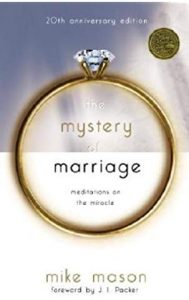
Mike Mason, The Mystery of Marriage – This remarkable volume is not only a great book on marriage, it is one of the best books of any kind I have ever read.  Though he bills himself as an amateur on the subject and primarily a creative writer, Mason is actually master psychologist and student of human nature.  The book is effectively a phenomenology of married life, which pivots on the fundamental insight that human beings have a natural tendency to deny the personal reality of others (which, Mason notes, is tantamount to “antagonism toward God”).  Since marriage necessarily involves an invasion of one’s privacy, it fundamentally challenges this tendency, so one must either be transformed or be crushed by the experience.  Thus, Mason calls marriage “one of God’s most powerful secret weapons for the revolutionizing of the human heart.”  It is, he says, “a wild audacious attempt at an almost impossible degree of cooperation between two powerful centers of self-assertion.”  And that is why a good marriage is mysterious, even miraculous.  Mason’s book is recommended not just to those interested in learning more about the nature of marriage but to anyone who appreciates profound insights into the human condition and the meaning of life.  Yes, it is that good.

The Best and Worst of 2018

It’s been another exciting year, and we want to thank you all for reading and, if applicable, posting comments on our blog. Once again, we would like to close out the year with some summary remarks about good and bad stuff related to film, music, books, sports, food, and family.

Film Experiences:

Jim:  This year I saw numerous films and few of them were disappointments. My expectations were low going into several of these, which contributed to my delight at their quality. One of these was Solo: A Star Wars Story, which wonderfully matched the Star Wars campy humor aesthetic at its best. Another was Incredibles 2, which blew me away in terms of how naturally it followed and even improved upon the seemingly unmatchable first film. What took them so long?! And my expectations were especially low with regard to A Star is Born, but under Bradley Cooper’s superb direction, combined with some strong acting and singing performances by Cooper and Lady Gaga, what seemed from the start to be a really bad idea (why remake such a bad film?) became a stunning triumph—an authentically portrayed tragic tale at a time in Hollywood history when tragedy seems to be a dead genre. Bravo! Two other highlights for the year for me were Phantom Thread (Daniel Day-Lewis is truly a master of his craft) and The Ballad of Buster Scruggs (the Coen brothers—directors of the film—are masters of theirs).

Amy:  Jim stole a few of my choices for great film experiences, but here are a few others he didn’t mention. I spent a lot more time watching the small screen than the big screen this year. However, two highlights among blockbusters were Avengers: Infinity War and Mission: Impossible-Fallout. Neither was the best movie ever, but once you have committed to a series, you have to see it through, right? The Searchers and My Life as a Zucchini were two small screen gems we enjoyed as a family. I discovered Sneaky Pete which is a brilliantly produced con series and Patrick Melrose. The kids and I devoured The Great British Baking Show and all I can say is it was scrummy! We also made sport with several Hallmark movies this Christmas (one point if you can predict upcoming dialogue, two points for predicting plot developments) which are a bit like your Aunt Betty’s cheese ball: unoriginal and bland but for some reason you can’t stop yourself from consuming it.

Jim’s Best Musical Experiences of the Year:  One of the highlights of the year was taking my daughter, Maggie, to see Taylor Swift in concert at Lucas Oil stadium in September. Maggie cried through much of it, while I simply enjoyed the show. Seeing Bailey, Sam, and Andrew develop as musicians (guitar, drums, and piano, respectively) has been wonderful. As for new music that I’ve especially enjoyed, by far my biggest discovery of the year was the Avett Brothers. I have been vaguely aware of them for years but I never really dug into their stuff. Then I discovered their song “No Hard Feelings” at a time in my life when I really needed it. This prompted a deep dive into their catalogue and I’ve been astounded by the musical beauty and lyrical wisdom of their work ever since.

Amy’s Best Food Experiences of the Year:  This summer, a friend and I catered two weddings, with our husbands and kids playing supporting roles.  So much work, so much time, so much fun. Kind of like marriage, actually. Being trusted to play a significant role in one of the biggest days of a couple’s life is a true honor . . . not to mention the joy of discovering homemade pickled beets and chicken shawarma. Yum yum.

Jim’s Favorite Sports Moments of the Year:  The Chicago Cubs had a strong regular season, but I’ll leave it at that (see disappointing sports moments below), and the New Orleans Saints have been dominant in the regular season as well, and I’m hopeful that their season this year won’t end in a crushing last second defeat like last year (see below as well). Sam’s Eastbrook high school soccer team won sectionals again, which was fun.  And his first year on a travel team was great for him as well.

Amy’s Favorite Sports Moments of the Year:  Ironically, my favorite sports moment involved watching my team lose. We had a challenging spring semester and making a run for the border (to Canada) with Jim for our anniversary was a much-needed break. Attending my first NHL game (Detroit vs. Montreal) was icing on the cake. Go Red Wings!

Jim’s Most Disappointing Sports Moments of the Year:  The Chicago Cubs early dismissal from the playoffs via a loss in the wild card game against the Colorado Rockies was disappointing. But it wasn’t terribly surprising, as all season long they seemed to lack the timely hitting that great teams consistently come up with. And the New Orleans Saints’ sudden ousting from the playoffs in January due to the “Minneapolis Miracle” TD pass reception by Stefon Diggs was one of the most difficult moments in my life as a sports fan. Oh well, there’s always next year, and I’m hoping this year will be it for my Saints.

Amy’s Most Painful Sports Moment of the Year:  I really thought (and hoped) the Cubs would make a deep run in the playoffs, but I enjoyed watching the Red Sox win it all. On a more personal note, Andrew’s travel basketball team lost in double overtime despite the other team going down two players and he ended up with a concussion, a first for the both us.

Good and Bad Reads of the Year:

Jim:  One of my favorite reads this year was Christian Faith and Social Justice: Five Views, edited by Vic McCracken. The book displays just how widely varied are the perspectives on social justice, even within the Christian community. And it doesn’t even include a chapter on the natural law perspective, which is probably the book’s main weakness. Here is my full review of the volume. Another superb scholarly text I read this year was Linda Zagzebski’s Epistemic Authority, which explores the role of authority in belief formation. Next to Alvin Plantinga, Zagzebski is probably my biggest contemporary hero in Christian philosophy and, more specifically, virtue epistemology. Everything she does is lucid and profoundly insightful. The worst book I read this year (and probably for many years) was Willie James Jennings’ The Christian Imagination. It is a work which is unfortunately highly touted in many circles, but which lacks anything like a coherent argument for its thesis. I also read many superb (and a few not so good) scholarly articles pertaining to hell and open-mindedness, my primary scholarly projects these days.

Amy:  I read so many great books this year, some for pleasure, some I had to muscle through, and some that were a little bit of both. Mindset by Carol Dweck and A Failure of Nerve by Edwin Friedman were two that challenged my narrative-oriented brain but were well worth the effort as was Reflection on the Psalms by C.S. Lewis, though in a more spiritually edifying way. Black Like Me by John Howard Griffin and Up from Slavery by Booker T. Washington were sobering reminders of the history of prejudice in our country which both, ironically, left me hopeful about the potential of our future. The Choice by Dr. Edith Eger is one of the best books I read this year and one I couldn’t stop recommending to people. Our family entered the world of the Enneagram with The Road Back to You and I have loved all things P. G. Wodehouse this fall and winter. Lethal White, the next in the series by Robert Galbraith, aka J. K. Rowling, did not disappoint.

Best 2018 Family Memories:

Amy:  Our 20th wedding anniversary trip in March was wonderful especially our trip to the Toronto Museum of Art and hiking around Montreal. This year was full of transitions for us as a family. Bailey graduated from high school started at Taylor this fall. His absence is felt by us all and yet we are excited to see him moving on to bigger and better things. I wrapped up homeschooling with Maggie and Andrew and with their entrance into our local public school, I have taken on the role of cheerleader rather than teacher, a role I quite enjoy unless it means explaining linear equations, to myself and Maggie, at 11:30 at night. The kids and I took a trip over fall break with my folks and enjoyed beautiful scenery and one another’s company. We have all also loved having my niece, Rachel, living with us this year.

Jim:  Our trip to Canada in March was a rewarding and timely excursion. On the way home, we visited Ausable Chasm, the “Grand Canyon of the Adirondacks,” which we both enjoyed immensely. Also, seeing our sons Sam and Andrew develop as athletes (soccer for Sam and baseball, basketball, and soccer for Andrew) has been a lot of fun. And having Bailey as a student in my History of Philosophy class at Taylor was also a memorable, if sometimes strange, experience. Also, building a chicken coop and acquiring some chicks (which are now full-grown, ready-to-lay, hens) has been quite the adventure. Lastly, taking part in a two-day retreat of silence at the Abbey of Gethsemani monastery in Kentucky two weeks ago with my father-in-law, brother-in-law, and our six sons was a highlight as well. The extended time of prayer, Bible study, and silent meditation was spiritually enriching and cleansing. And the bourbon chocolate fudge made by the monks was a nice bonus!

Best Kids’ Quotes of the Year

Here are some of the best quotes of the year from our kids, which come from Maggie (14) and Sam (16):

  • Maggie: “I wish cancer would get cancer and die.”
  • Sam: “The worst things happen to people when they forget how small they really are.”
  • Maggie: “Moms know. Dads understand.”
  • Sam: “No one is anonymous under the divine eyes.”
  • Maggie: (in a conversation about sexual ethics) “Truth does not have an expiration date. It’s not frickin’ milk.”
  • Maggie: “If someone kidnapped me and held me against my will but gave me ice cream regularly, I would stay.”

New Year’s Resolutions:

Amy:  I want to strive to be more disciplined in scripture reading. I am working on turning worries into prayers and with my career as a homeschooling mom coming to an end, I am figuring out what I want to be when I grow up.

Jim:  Once again, my primary goal this year is to be more regular with posts on Wisdom and Folly. But I really mean it this time!


Happy 2019 everyone!

Book Notes

Black Like Me by John Howard Griffin: This was just what the doctor ordered for many reasons. Hearing of Griffin’s experiences as he traveled through the south in the late 1950’s disguised as a black man was a powerful and grief-filled reminder of our nation’s past sins and the historic burden blacks have carried. It was also an uplifting reminder of how far we have come. While I did feel conflicted reading from the perspective of someone merely pretending to be black, I certainly admire Griffin’s courage in seeking to bring to light the injustices suffered by so many.

I am Charlotte Simmons by Tom Wolfe: I had a love/hate relationship with this book. Set on the campus of an elite, fictional Ivy League university, it tells the story of the title character and the many ups and downs of her freshman year. Tom Wolfe is a master storyteller, creating characters who feel genuine and yet act as perfect stereotypes of their demographic. The innocent country girl who wants to fit in. The frat boy who wants to get laid. The athlete who wants to keep his starting place on the team. The journalism nerd who wants to make his mark (and get laid). Wolfe captures them all and writes a story which is simultaneously personal and yet emblematic. This was why I loved Charlotte Simmons. What I hated was the deluge of profanity and moral perversity filling the pages from cover to cover. I am sure it is absolutely authentic, but it was so profoundly filthy that at times I had to step away from reading in order to give my sense of propriety a chance to catch its breath. I seriously doubt anything would have been lost had Wolfe dialed back the vulgarity, but it still one of best books I have read in recent years.

A Failure of Nerve by Edwin Friedman: There are only a few books in life about which I can say “Reading this changed my life.” A Failure of Nerve is one such book. In many ways, it seems an unlikely candidate. It can be rather dry and reading it was slow going given the number of times I had to double back and reread sections in order to be sure I understood them. But the profound insights into human nature I have gained from Friedman are ones to which I have come back to over and over in recent days. I now give myself pep talks, saying things like “Don’t triangulate here! Don’t triangulate!” or “Quick, self-differentiate!” Just as I believe that God has woven universal truths in the arrangement of the stars and the design of a single cell, I believe He has created patterns and complexity within our psychologies, both personal and interpersonal, which are waiting to be discovered. Friedman has taken a microscope to those patterns and laid out his discoveries for all to see. Whatever your vocation in life, you will find this book to be a game changer.

Endurance by Alfred Lansing:  I actually meant to read a different book by the same title but enjoyed this one nonetheless. While it filled me with a deep gratitude for the fact that I am not an explorer, nor do I intend to become one, I gained new found respect for men like Ernest Shackleton and the twenty-seven men who traveled with him in 1912. I think what struck me most regarding this story was the fact that not only did they all survive, but in their will to live they never seemed to sacrifice their humanity. I did wish the book provided more of an education regarding the technical aspects of the voyage but it’s a good introduction to an amazing story. Perfect for reading from the comforts of your climate controlled environment.

Two New Publications on Sexual Ethics

Two new publications of mine deal with issues related to sexual ethics.  One of these is an article entitled “Great Cloud of Moral Witness,” just published in Touchstone magazine.  In the article I develop an historical argument for the traditional Christian view of sex and marriage, noting that for nearly 2000 years no significant Christian theologian or biblical scholar defended the permissivist view on 61t3WhQRhXL._SX331_BO1,204,203,200_human sexual relations.  That is, for all of Christian history until just recently, all major Christian thinkers who addressed the subject have agreed that sexual relations are only appropriate within a marriage between one man and one woman.  I argue that for Christians this uniform consensus of scholarly opinion creates a strong presumption in favor of the traditional view and that those who nonetheless reject it display arrogance or ignorance (or perhaps some combination of both).

Another essay of mine, entitled “The Sexual Pluralist Revolution: Reasons to be Skeptical,” appears in the just-released volume Venus and Virtue, edited by Jerry Walls, Jeremy Neill, and David Baggett and published by Cascade Press.  (The germ of this piece was a W&F blog post in May 2014.  My Touchstone article, however, goes into some depth in highlighting major Christian theologians and biblical scholars who defended the traditional view.)

The Venus and Virtue book consists of sixteen chapters written by men and women from a variety of disciplines (e.g., theology, philosophy, biblical studies, psychology, counseling, youth ministry, etc.), each addressing a different aspect of the sexuality issue.  Section headings include “Biblical and Theological Foundations for Human Sexuality,” “Christian Sexuality for Singles,” “Christian Sexuality for Persons with Same-Sex Attraction,” and “Pastoral Wisdom for Christian Sexuality.”  I highly recommend this resource for pastors, young adult ministers, college professors, and Sunday school teachers.


The Best and Worst of 2017

It’s been another exciting year, and we want to thank you all for reading and, if applicable, posting comments on our blog. Once again, we would like to close out the year with some summary remarks about good and bad stuff related to film, music, books, sports, food, and family.

Film Experiences:

Jim:  This year I saw a lot of intense films, including Baby Driver, Dunkirk, and It, which are intense in very different ways. I appreciated the innovation of Baby Driver—an action adventure film meticulously choreographed to an eclectic but somehow seamless musical soundtrack. The WWII film Dunkirk is powerful in its realism, but suffers for lack of character development. And despite its over-the-top frenetic scare scenes, It has a surprisingly human touch. But the film’s highlight is Bill Skarsgard’s performance as Pennywise the Clown. Split is a riveting psychological thriller with a surprise connection with director Shyamalan’s earlier film, Unbreakable. Really looking forward to the upcoming film Glass, which will be the third film of what is now being called the Eastrail 177 Trilogy. But my favorite film experience of the year was Star Wars: The Last Jedi. This installment gives us more superb acting performances (even from Mark Hamill), surprising plot twists, and—in Adam Driver’s Kylo Ren—the most complex and compelling villain in a Hollywood film since Norman Bates.

Amy:  My highlight features the small screen and is probably a bit more sentimental than entirely critical. Stranger Things Season Two is likely to be the last series I watch with all the kids and piling in front of the TV with all four of them to cheer on Mike and the gang will long be a long-cherished memory. I do consider Stranger Things a well-produced as well as well-acted show worth the trouble of coordinating everyone’s schedules and staying up past bedtime. Another favorite for sheer entertainment value was Guardians of the Galaxy Volume 2 which we all watched in the theater. On a more serious note, my experience of film was forever changed this year with the avalanche of sexual harassment claims coming out of Hollywood. I am both sickened and frustrated by the accusations of seemingly innumerable women, and this cements my belief that the City of Angels is the most ironically named metropolis in America.

Jim’s Best Musical Experiences of the Year:  Lots of good music from old artists and new. I’ve enjoyed U2’s Songs of Experience, which seems more like the second half of a time-released double album (along with Songs of Innocence). “Red Flag Day” is instantly one of my favorite U2 songs. I also, at last, discovered the genius of Taylor Swift, whom I now regard as one of the best songwriters of our time. (More on that later in a separate post.) My son Bailey introduced me to the gritty and soulful Robert Finley, whose Goin’ Platinum sounds like it came right out of the early 70s, thanks to the retro production of Dan Auerbach (of the Black Keys). My son Sam turned me on to Foxygen, a band that can traffic in more musical genres in one song than most bands explore in an entire career. For a stimulating taste of their Rundgren-flavored R&B check this out. And then from the Next Saviors of Classic Rock category, there is Greta Van Fleet. They still are recording their first full-length album, but the early hype seems well deserved. Here’s a nice sample. (And, no, you’re not the first to note the similarity to Led Zeppelin, especially the Plant-like lead vox.) But the very best musical experience of the year was seeing Manchester Orchestra in concert at the Newport Music Hall in Columbus, Ohio with my son Sam who is as big a fan of the band as I am. Finally, I’ve enjoyed seeing our boys improve on their instruments—Bailey on guitar, Sam on drums, and Andrew on piano—even teaching himself some challenging sections of Tchaikovsky’s Nutcracker Suite. Good stuff.

Amy’s Best Food Experiences of the Year: Will you think me completely full of myself if I confess that my favorite meals this year were prepared by yours truly? I tackled Indian samosas this year and have made myself sick on their deliciousness on more than one occasion. Getting a stamp of approval for my homemade tortillas from a native Mexican had me on cloud nine for days. The highlight for eating out this year was my birthday meal which had less to do with the food and more to do with the company. My sister and brother-in-law joined Jim, my folks and me for the holidays for the first time in more than a decade which was food for the soul well worth the wait.

Jim’s Favorite Sports Moments of the Year:  Not many major sports highlights for me this year, unfortunately. But seeing the New Orleans Saints’ resurgence has been fun. I believe they have a decent shot to go on a playoff run and make it to the Super Bowl this year. Seeing Bailey and Sam play soccer together on the Eastbrook high school team, which advanced all the way to the state regional finals. Also, seeing my friend Chris Holtmann hired as the Ohio State head basketball coach was exciting. He’s probably going to take them to the top eventually, as hard as that is for me to say as a U-M fan! Chris is a man of moral integrity, and I love seeing that rewarded.

Amy’s Favorite Sports Moments of the Year:  Okay, I am clearly getting soft in my old age because my favorite sports memories all involve my kids. Andrew pitched crucial closing innings in his team’s championship game which they won. Bailey’s and Sam’s soccer team won their sectionals tournament for the first time in school history and lost the regionals final in a nail-biting shootout. Maggie’s and Andrew’s team made it to the semi-finals and watching them play together was pure joy.

Jim’s Most Disappointing Sports Moments of the Year:  It was fun to be able to celebrate the Cubs’ 2016 World Series championship for an entire year, but alas, all good things in sports must come to an end. But they’ll be back! Lots of other disappointments: It was tough to see the Colts tank this season with the absence of the slowly convalescing Andrew Luck. Same with the Detroit Tigers, who are now rebuilding. My Red Wings are also struggling as well. But the most disappointing single moment this year was watching victory stolen from the Detroit Lions in their game against the Atlanta Falcons because of a ridiculous 10-second “run-off” rule that I expect will be changed or qualified after this season.

Amy’s Most Painful Sports Moment of the Year:  Watching Tom Brady and the New England Patriots win the Super Bowl…again. Seriously think the NFL should consider term limits, unless your last name is Manning.

Good and Bad Reads of the Year:

Jim:  In addition to the usual countless scholarly articles I read his year, I found time to read more classics and a few contemporary works. I did a lot of reading of major works by the ancient Roman thinkers Cicero and Seneca, the latter of whom is my favorite Stoic author. Seneca’s essay “On Providence” is one of my very favorite works of philosophy. Both insightful and therapeutic, I recommend it to anyone who struggles in this world—that is, of course, everyone.  I enjoyed reading two classic works from the early 20th century—Erich Maria Remarque’s classic All Quiet on the Western Front and Booker T. Washington’s inspiring Up From Slavery. I also really enjoyed What is Marriage? by Girgis, Anderson and George, a powerful defense of traditional marriage. Currently, I’m reading Edwin Friedman’s A Failure of Nerve, which is profound and insightful regarding so many aspects of contemporary American culture.

Amy: This year I fell seriously short of my usual reading habits but did enjoy several of those I did manage to finish. I read several of the Anne of Green Gables books. Delightful. I read The Case for Christ aloud to Andrew and while it was a discipline at times, seeing him make connections in sermons and other contexts was priceless. I find most contemporary fiction deeply disappointing and was pleasantly surprised by a friend-recommended read, The Storied Life of A.J. Fikry. Just in time for January book club meeting, I finished The Path Between the Seas, David McCullough’s tome on the building of the Panama Canal which was fascinating, inspiring and tragic all rolled into one hefty work.

Best 2017 Family Memories:

Amy: Once again, we welcomed family and friends as my niece lived with us for J-Term this year and a friend of Bailey’s from Bolivia joined us for the semester. They weren’t the only “guests” we welcomed this year. In May, Penelope, our beloved standard poodle, gave birth to nine, yes nine, puppies. Watching them come into the world, grow and find new homes was a source of seemingly ceaseless wonder and joy, especially the new homes part. But, without a doubt the most profound family memory I experienced this year was the passing of Jim’s mom. I arrived just in time to hold her hand and read the psalms to her before being the sole witness of her passing into eternity. She was one of my favorite people and I felt humbled and honored to be present at her death.

Jim:  A major highlight of the year for me was learning to ride a unicycle. I’ve always wanted to do it and decided this was the year. While this wasn’t really a “family” thing, the learning process did involve Amy and the kids in various ways. Watching their reactions—from concern about my safety to cautious encouragement to awe at my mastery of the danged thing was amusing. Other highlights: our family trips to Tennessee, watching Bailey and Sam play together on the Eastbrook soccer team, watching Andrew win a 3rd consecutive baseball championship (this time on his 12U team), and seeing Bailey crowned as Eastbrook homecoming king, which was more humorous than anything else.

Best Kids’ Quotes of the Year

As usual, the best quotes from our kids this year come mainly from our poet-comedian-dreamer daughter, Maggie (13).

  • Maggie: “I think most people spend most of their time figuring out ways to save time.”
  • Andrew: (After listening to the Lil Yachty song “I spy”): “If that is what music is coming to, kill me.”
  • Maggie: (After I told her repeatedly to clean her room): “It’s not messy; it’s just organized in a way that you can’t comprehend.”
  • Maggie: “I hate being so funny.”

New Year’s Resolutions:

Amy: I am resolved to cherish this last year of having Bailey home full time and celebrate this new stage of life for him without getting too sappy or embarrassingly sentimental. Good luck with that, Amy. I also am looking toward the end of our years of homeschooling in a year and half and starting to consider what I want to be when I grow up.

Jim:  My resolutions this year are to be more regular with posts on Wisdom and Folly and to purge some of our possessions, especially by trimming our book collection. We’re not pack-rats, but simplicity is a virtue.

Happy 2018 everyone!

Review of McLeod-Harrison’s The Resurrection of Immortality

Mark McLeod-Harrison’s new book, The Resurrection of Immortality (Cascade, 2017) is a welcome contribution to the growing literature related to personal eschatology. His concern in the book is to explore the question of human immortality. Historically, parties to the debate have generally affirmed either that human beings are essentially immortal or conditionally immortal. Those taking the first view maintain that by nature human beings will live forever. As human beings we naturally possess the property of immortality. Conditionalists deny this, maintaining that humans may or may not live forever. God grants immortality to some, depending on certain conditions (e.g., redemption in Christ).
McLeod-Harrison defends a third alternative, which denies that immortality is intrinsic to human nature but says immortality is an enduring property possessed by human beings. On this view, immortality is an extrinsic property, one which God confers on human beings based on other properties that God gives us. And much of the book is devoted to constructing an argument for this claim—an argument that is philosophical, rather than theological, in nature. Though purely philosophical in methodology, McLeod-Harrison’s argument is nevertheless “in-house,” aimed specifically at Christian scholars in that it assumes certain basic claims of Christian theology—the existence of God, the reality of an afterlife, and the biblical doctrine of salvation.

The author admirably devotes the first couple of chapters to laying conceptual groundwork for his argument, especially defining key terms. Since “immortality” is a privative concept (like “infinite” or “unbiased”), he begins with a careful review of the concept of “mortality” and the modal varieties of meanings potentially associated with the term. Thus, he notes, we may understand mortality as referring to the possibility, actuality, or necessity of the death of the body. Alternatively, we may understand mortality vis-à-vis the soul and its possible, actual, or necessary destruction. In the second chapter, McLeod-Harrison lays out, in somewhat parallel fashion, the varieties of immortality. This conceptual backdrop is very helpful preparation for the ensuing discussion and is one of the strengths of the book.

The author’s main target of refutation is conditional immortality, which he defines as the view that humans may possibly suffer soul-death. In chapter three he addresses this claim head-on, considering whether God can cause humans to cease to exist. He addresses the question primarily in terms of God’s “moral purview to cause humans to cease to exist” (29). Though understanding that the moral and metaphysical conditions for God’s destruction of human persons are distinct, he rightly notes that “if it is morally permissible for God to bring about soul-death for humans, then it seems that it also is metaphysically possible for God to bring about soul-death” (29). Here the author appeals to Kantian notions regarding the relationship between “ought” and “can.” So although his argument in this chapter appeals primarily to what is in God’s moral power, the author regards his findings as having significant implications regarding what is metaphysically possible for God.

For the rest of my review, including my criticisms of McLeod-Harrison’s arguments, go here.

Seneca on Anger

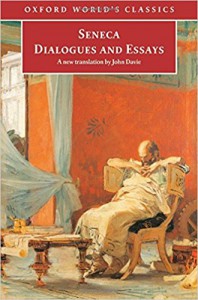
This semester in my Principles of Ethics class I’ve been incorporating some new readings, including several works by the ancient Stoic philosopher Seneca.  A lot of his stuff is not only insightful but also practically beneficial, not to mention beautifully written.  His essay “On Anger” is an excellent case in point.  Personally, I think he goes too far in suggesting that all anger should be avoided, but I think we all can agree that much, if not most, human anger is counter-productive.  And we all would benefit from improving in the area of anger management, especially in these days of division and rancor.  Below I have highlighted some of Seneca’s thoughts on the subject which you may find helpful.  (All quotes below are from the Oxford edition of Seneca’s Dialogues and Essays, translated by John Davie.)

Why Anger Should be Avoided

  1. Anger inflicts harm on oneself: anger makes one a prisoner of one’s own passion. It is more painful to 516fhtlbDsL._SX328_BO1,204,203,200_surrender to anger than to resist it: “every sense of grievance grows to self-torture” (32). “The anger I feel is more likely to do me harm than any wrong you may do me” (40).
  2. It is a sign of greatness to be resistant to all disturbances: “a lofty mind, always composed and established in a peaceful location, suppresses all that produces anger, and so is moderate, well-ordered, and earns respect; none of these things will you find in an angry man” (23).
  3. Anger turns men into savages: Gaius Caesar and many other leaders have allowed their anger to the most extreme cruelties, which extends even to fury on entire nations. Anger begets “every sort of evil, fire and sword. Trampling shame underfoot, it defiles men’s hands with murder . . . and leaves no place free from crime” (50).

Anger is Susceptible to our Control

  1. Many others have pardoned worse sins than you’ve suffered: People have forgiven criminal offenses, so “should I not pardon laziness, carelessness, or chattering?” (39). Even Harpagus controlled his anger when he was forced to eat his own sons, which the Persian king had killed, cooked, and served to him.
  2. You are able to tolerate other forms of irresponsibility, such as “a sick man’s lunatic behavior, a madman’s crazed words, or children’s petulant blows. . . . What difference does it make what fault it is that makes a person behave irresponsibly?” (40).

Guidelines for Avoiding Anger

  1. Take note of the things that provoke you: “It is an advantage to know one’s illness and to destroy its strength before it has scope to grow” (27).
  2. Use humor as a defense: “Let most affronts be turned into amusement and jest.”
  3. Resist the tendency to suspicion and exaggeration: “Very many men manufacture complaints, either by suspecting what is untrue or by exaggerating the unimportant. Anger often comes to us, but more often we come to it” (28).
  4. Put yourself in others’ shoes: Usually anger results from an “unjustified estimate of our own worth” and “an unwillingness to put up with treatment we would happily inflict on others” (28).
  5. Remember that everyone does foolish things: “Even the wisest men do wrong.” “No one is so ripe in judgment that his self-possession is not driven by misfortune into some heated action” (39). “All of us are inconsiderate and imprudent, all unreliable, dissatisfied, ambitious—why disguise with euphemism this sore that infects us all? All of us are corrupt.” (40).
  6. Remember your mortality: Resisting anger will make you more lovable. Better to “spend the brief span we have left in rest and peace” (50). Anyway, the one who offended you will die one day, whether or not you burn with anger toward him.  “Soon we will spit out this little spirit. In the meantime, while we have breath, while we are among our fellow men, let us behave as men should; let us not be a cause of fear or danger to anyone; . . . and let us tolerate with a great mind our short-lived misfortunes” (52).

Berkeleyan Idealism and Christian Philosophy: My Overview in Philosophy Compass

Last year saw the publication of the two-volume Bloomsbury series on Idealism and Christianity, for which I was chief editor. My co-editors (Steve Cowan, Joshua Farris and Mark Hamilton) on the two volumes happily discovered that there is no shortage of Christian scholars today who espouse the idealist perspective, whichcoveraffirms that the physical world is entirely dependent on a conscious Mind (also known as “God”) or, otherwise put, consciousness is most real and the physical world is essentially divine ideas made public (i.e., perceivable by finite minds).

So far, our volumes have created just the sorts of conversations we intended to stimulate. In fact, one of our colleagues—Chad Meister, Philosophy professor at Bethel University—recently informed us that he has “converted” to Berkeleyan idealism. And many others are intrigued and attracted to idealism for a variety of reasons.

So these are exciting days for idealism (also known as “immaterialism”). So much so that I was commissioned to write an article for Philosophy Compass on idealism and Christian philosophy. Last week the article was published, and you can access it here. As I note in the abstract, my essay “provides an overview of some of the ways Christian philosophers have deployed immaterialism to solve problems and generate insights in metaphysics, philosophy of mind, philosophy of science, philosophy of religion, and philosophical theology.” Indeed, the explanatory power of idealism is formidable and is its most convincing feature. That is, at least in my judgment. Perhaps my article will be of some help to you as you look into it yourself.