Tis the Season

The honking geese overhead, the smell of pumpkin spice in the air and the terrifying Halloween decorations in our neighbors’ yards declare the arrival of my favorite season: that’s right, folks, it’s football time! Oh yeah, and it’s fall.

My appreciation for the gridiron has developed over time. With Neyland Stadium, home of the University of Tennessee Volunteers, just down the road from my childhood home, and Friday night football games a rite of passage in my middle and high school years, football was definitely part of my cultural upbringing. But marrying a sports fanatic—my term, not his—has deepened my appreciation for the game itself to include more than the halftime show and concession stand.

The year we got married, the Indianapolis Colts conveniently drafted Peyton Manning, making my transition from high school and college fan to the NFL an easy one. We didn’t have any “channels” when the kids were growing up, so watching was a bit of a challenge, more of a special occasion date night event. But now in our empty-nest phase, Jim and I love nothing more than pulling up our TV trays and settling in to watch our favorite teams compete.

Like all great loves, there is always a rub, a thorn in the flesh to remind you that there are no perfect pleasures this side of heaven. NFL football has a few for me: Tom Brady’s annoying face, ridiculous “insights” from commentators like “Well, Joe, I’m going out on a limb here, but I’m going to say that the team who scores the most points is going to win today.” But for me, there is no greater fly in the ointment, no bigger pain in the neck or downpour on my viewing parade than . . . commercials.

Football and commercials go hand in hand like Montana and Rice, Brady and Gronk and Mahomes and Kelce, culminating in the Super Bowl of advertising, which is, well . . . the Super Bowl. But recently, a certain trend, with a few exceptions, has ruined the pairing for me.

No, it’s not the ubiquity of the medication ads and their endless side effects, which frankly sound much, much worse than whatever rash or other issue you are setting out to cure. It’s the never-ending parade of celebrities that has me reaching for the yellow flag and calling a penalty on the field.

Celebrity endorsements are nothing new, but recently I’ve noticed a significant uptick in the number of actors and professional athletes appearing on the small screen. If they aren’t trying to bankrupt us with betting apps, they are selling us insurance, sandwiches, beer, and credit cards. I’m waiting for the ad that just rolls them all into one with Samuel L. Jackson placing a bet with his Capital One card while eating a sandwich with Jake from State Farm driving shotgun on their way to pick up Jackson’s rash medication.

It is, of course, every person’s right to earn a little extra cash by lending his or her name to a product they believe in. But there are a few things that rub me the wrong way about it: The borrowed capital of a “personality” greatly reduces the creativity of the ads. I know commercials aren’t up for Oscar nominations, but when corporations ask us to shell out cash for whatever they are selling, it would be nice to feel like they have put a little work into it. Using a celebrity spokesperson feels like cheating. There’s no catchy plot twist or carefully crafted plot line. It’s just “See. Famous Guy likes it. You will too.” Even companies like State Farm and Progressive have fallen into this by making celebrities out of their spokespeople, though I will give Progressive a bit of a pass for their hilarious “Homeowners Turning into Their Parents” series. I have seen feature films that are less entertaining and insightful than those classics.

Speaking of feature films, the second thing that bothers me about this trend is that it demeans the actors’ craft to see them playing themselves while hocking GLB-1s, Dunkin’ Donuts and Uber Eats, especially since that particular pairing seems to create a vicious cycle of overeating and weight-loss drugs. It pulls the curtain back on the film industry, shattering the illusion that these are artists rather than glorified salesmen. Sure, we all know they aren’t doing movies for free, but the audience would like to believe that at the heart of their performance is a love of the medium, not just the paycheck. As a side note, this isn’t true for professional athletes, but in their case it feels like double-dipping. You are already getting paid millions to play in the games we are watching (after paying a gazillion dollars for every cross-referenced streaming service known to mankind). Can’t we just pretend like that’s enough till you retire and blow through your wealth faster than Jahmyr Gibbs running the 40-yard dash?

Finally, it is the pretense that celebrities are just everyday folks. They drive down the road singing “Living on a Prayer” just like we do. Ok, so they do it with John Bon Jovi on board, but still, they can relate. And when they ask us to gamble away our hard-earned dollars or book a trip using airline miles we earned buying groceries at the Piggly Wiggly, they aren’t asking us to do anything they haven’t done. Of course, they are gambling while sitting on millions in the bank, traveling in private jets to exclusive resorts and haven’t stepped foot in a real grocery store in years, but hey, they are just like us. It isn’t that I resent their millions. But can you stop pretending to be my financial equal? Jason Kelce isn’t making cupcakes for his friends, Peyton Manning isn’t buying a Bud Light at the local bar, and Danny DeVito isn’t eating at Jersey Mike’s. Ok, Ben Affleck is eating at Dunkin’ Donuts but he drove there from his L.A. mansion.

So here is my advice: advertisers, take all those millions you are paying Charles Barkley and hire some talented writers and let them do their thing. Celebrities? Stick to the big screen and the arenas and let some unknown play a more convincing everyman. Or if we must see your face during commercial breaks, let it be for companies you actually use or, even better, created. Ryan Reynolds might have a mean-girl wife, but props to him for actually creating something.

If you won’t do it for your stockholders or me, do it for my poor husband who just wants to eat his snacks and root for his team, without me complaining in his ear. He would consider my silent contentment something to truly cheer for.

Malice Towards None

Flipping the calendar from August to September brings a mixture of emotions. We say goodbye to family reunions and road trips, and hello to back-to-school sales and football season. Extra hours of sunlight after dinner, fading into fall colors and pumpkin spice everything.

This year marks two momentous September anniversaries that many Americans will observe with sadness: the 25th anniversary of 9/11 and the first anniversary of Charlie Kirk’s assassination. Charlie’s death doesn’t hold the same weight in scale or significance as the terrorist attack on the Twin Towers and the Pentagon, but it is, at least among conservatives, an “I remember where I was when I heard the news” moment.

As an avid consumer of conservative online content, primarily through YouTube podcasters, the months following Charlie Kirk’s assassination have been unsettling, to say the least. I cried along with my favorite podcasters, trying to absorb what we wish we could unsee. They, of course, were mourning not just the loss of a colleague and fellow conservative, but a friend. I was mourning the loss of a respected leader and the glorious feeling of hope and positivity that had predominated the Republican Party after President Trump’s inauguration.

But then came his memorial service, and an atmosphere of such profound unity and power. It was as if Charlie’s death had unleashed the Spirit in a way that was almost tangible. Testimonies started popping up across social media from folks who had previously judged Charlie a racist transphobe who were now actually watching his messages and doing a 180 in their opinions of him, many reconnecting with family members they had cut off over political disagreements. We saw the explosive growth of TPUSA chapters across high schools and college campuses. And most importantly, we saw renewed spiritual interest and what appeared to be genuine spiritual revival among the young.

They say tragedies come in threes. None of us saw Charlie’s gruesome and shockingly public death coming. Nor the unexpected sense of heartbroken determination that followed. And then a third wave that no one could have predicted. No, not the wave of vile celebrations of his death, the callous mockery and glorification of the violence that not only ended a man’s life, but also the hopes for his future accomplishments, not to mention the psychological impact of those who witnessed it, both in person and online. To say nothing of the devastation to his family and friends. Anyone who has given more than a few minutes of their time to politics in the last decade could have predicted that. Disgusting? Yes. Surprising? No.

No, the wave I refer to is the seismic wave of division that has deluged the conservative podcastsphere in the wake of Charlie’s death. The turf war over his legacy has spiraled into deep rifts in opinion, not just over “What would Charlie say” about this issue or that, but also over the party’s future direction and leadership. We have seen it destroy previously strong alliances among conservative commentators, leaving many of us on the sidelines, scratching our heads over who to believe or align with.

I do not want to weigh in on accusations regarding conspiracies and larger plots surrounding Charlie’s death. But I do want to offer my perspective on navigating the hellscape of online conservative discourse. Perhaps it will help you avoid being a casualty of this current conflict.

One could say this conflict isn’t a war of good guys and bad, but rather a trial, a courtroom drama in which both sides are making their case. And in this trial, we should focus not on the  motives of either party but on the evidence they present. While I think there are some very bad actors taking advantage of this dispute, I see this less as a criminal trial of good guys and bad and more of a civil trial with points to be made on both sides. As we, the jurors of conservative votes, weigh the arguments, I think it is critical to judge not by inferred motives but by facts.

It is easy to point the finger and say, “So and so is all about the clicks,” and on the other side, “So and so is being controlled by the Jews.” But these statements are much harder to back up with anything resembling evidence. And why should I care about the motives behind someone’s commentary if what they are saying is true and vice versa if what they are arguing for is false or outright evil?

Take Megyn Kelly. I have been a near-fanatic follower of Megyn’s for years. She has been a constant workday companion, keeping me up to date on all things political and newsy. I didn’t always agree with her stances, but that was one of the things I liked about listening to her, especially because she often featured guests who didn’t share her perspective, which I appreciated.

Many have criticized her silence regarding Candace Owens’ accusations, specifically those directed at Erika Kirk. But I believed her espoused devotion to Charlie and admiration of his widow to be sincere. I granted her the benefit of the doubt despite other podcasters that I follow calling her out. I even granted her the benefit of the doubt when her stance on Israel began to change. While I think there is an undeniable connection between criticism of the nation and hatred of Jews, I don’t believe that everyone who is guilty of the former is guilty of the latter. I remember well Megyn’s on-air response to 10/7 and the days that followed. She was clearly disgusted and grieved. I had no evidence of her antisemitism, and therefore I refrained from imputing motives for her change in position. I strongly disagree with her on the war in Iran and Israel’s influence over U.S. foreign policy, but I don’t believe it is worthy of personal criticism.

What is clear, however, is that many do feel this way. I have watched as a number of her regular guests have simply stopped appearing on her show. This has left her with guests less likely to challenge her opinions, significantly diminishing the level of discourse and providing balance to her perspective. While the quality of her show isn’t their responsibility to bear, this splintering of discourse into ever smaller silos reveals a significant weakness in independent media. In an environment lacking equal collaboration, the host is surrounded by employees who, at best, admire and trust their boss’s perspective and, at worst, merely seek to echo the opinions of the person on whom their jobs depend. And this is true of the audience as well. The host, depending on views, likes, and subscription rates, will be sorely tempted to bend, if not break, in the direction in which the wind is blowing.

As we approach this macabre anniversary, let us honor Charlie’s legacy by engaging in public discourse with both our minds and our hearts. Let us allow reason and evidence to dictate our opinions, but let our hearts guide our tone and grant the benefit of the doubt to the motives of those with whom we disagree. As another victim of political assassination, Abraham Lincoln, once charged the nation, let us move forward “with malice toward none, with charity to all.” In this way, we can defeat our enemies, both domestic and foreign, and most importantly, the enemy that lurks within each of our hearts, seeking to devour us all.

Time Waits for No One

I enjoy watching enhanced, colorized versions of very old videos like this and this and this.

They provide a healthy dose of perspective—a reminder that our time on this planet goes by very quickly. One day you are young and, before you know it, you are gone.

The flight of time and the human mutability it entails is a timeless theme in literature and music. I was first struck by this theme as a young teenager listening to the Rolling Stones song “Time Waits for No One.” While not renowned for tackling serious themes in their songs, much less in a profoundly poetic way, this one really got my attention:

Star-crossed in pleasure
The stream flows on by.
Yes, as we’re sated in leisure
We watch it fly.

Time waits for no one, and it won’t wait for me.

Time can tear down a building
Or destroy a woman’s face.
Hours are like diamonds.
Don’t let them waste.

Time waits for no one
No favors has he.
Time waits for no one
And it won’t wait for me.

Men, they build towers to their passing
Yes, to their fame everlasting.
Here he comes chopping and reaping.
Hear him laugh at their cheating.

And time waits for no man
And it won’t wait for me.
Yes, time waits for no one
And it won’t wait for me.

Drink in your summer.
Gather your corn.
The dreams of the night time
Will vanish by dawn.

But time waits for no one,
And it won’t wait for me.

This song’s message grows only more powerful as the years roll on. For the two young men who composed it, Mick Jagger and Keith Richards, are now in their mid-80s.

A much older and far more influential song conveys the same message in the form of a prayer:

Show me, Lord, my life’s end
and the number of my days;
let me know how fleeting my life is.

You have made my days a mere handbreadth;
the span of my years is as nothing before you.
Everyone is but a breath,
even those who seem secure.

This song, now known as Psalm 39, was written 3000 years ago by David, King of Israel. He, too, was once young and seemingly invincible, but time didn’t wait for him either.

Nor will it wait for us. The lesson? David’s son, Solomon, summed it up well when he said,

Death is the destiny of everyone;
the living should take this to heart. (Eccl. 7:2)

That same writer, Qoheleth, concluded that book by declaring,

Now all has been heard;
here is the conclusion of the matter:
Fear God and keep his commandments,
for this is the duty of all mankind.
For God will bring every deed into judgment,
including every hidden thing,
whether it is good or evil. (Eccl. 12:13-14)

Although our lives fly by, the way we live while we are here does have eternal ramifications. If ever there was incentive to take seriously one’s pursuit of the Good, this is it.

E Pluribus Unum

E Pluribus Unum. Out of many, one. In a time when our national motto seems in danger of splintering, I am grappling with what it means to be one out of the many, how to maintain the strength of one’s convictions while seeking some sort of unity with those whose convictions are pulling them in the opposite direction. How do we all pull together for a secure and peaceful country that will last for future generations when, at the moment, we seem to be using our oars to bash one another over the head rather than as a means of propelling us forward?

In his recent interview with Joe Rogan, Secretary Robert Kennedy spoke of his surprise discovery that, to paraphrase, all Republicans weren’t greedy Bond villains, rubbing their hands together and only looking to line their pockets and oppress the poor. Despite being the descendant of Democrat royalty, he has found that they share many common aims. I’m sure that if you asked many Republicans, they would share equally hyper-stereotypical impressions of their impression of those on the left.

So I thought it might be a helpful exercise for me, and hopefully for you, to consider the values behind some of the most hotly contested issues of our day and see if, despite dramatically differing conclusions, there are shared principles somewhere in the middle. By doing so, I don’t seek to convince anyone of my conclusions but first to convince myself that my stances are a result of considered examination rather than knee-jerk party line adherences and, secondly, to show those who disagree with me that, despite our disagreement, we share at least some common goals or assumptions. Let us do battle in the arena of ideas rather than attempt to assassinate one another’s character and motives.

Misogyny is an evil reality and should be weeded out. I would define misogyny simply as a degrading attitude towards women as inferior, deserving of objectification and disdain. Surely this is something we can all agree is wrong. How can we be “unum” if we aren’t moral equals? While I am sure most can agree on the definition, the diagnosis and cure are where we differ. I see the masculinization of women in film and popular culture (the omni-competent female action hero who defies biology by besting men in physical as well as mental feats while maintaining a flat, near emotionless cool) as grossly misogynistic. I also believe the movement to include biological men in women’s sports and spaces to be a similar victimization based on sex. You can disagree, but hopefully you can see that a defense of this position doesn’t have to be rooted in hatred; it can be just the opposite—a deep respect and love for women who possess unique and distinct qualities that make them, yes, strong and capable in many ways, but also vulnerable and in need of protection in others.

Speaking of those we seek to protect, I think we can all agree that it is the duty of the strong to protect the weak and defenseless. As a conservative and a Christian, this principle is based on both the biblical mandate to protect widows and orphans and the theological principle that human beings are created in the image of God. It leads me to be pro-life, valuing the unborn as image bearers and seeking to protect them in their helplessness. It is also the basis of my stance on illegal immigration which victimizes so many: the working class who are forced to compete for jobs with those willing to accept lower wages, victims of the crimes committed by those in our country illegally, as well as the illegal immigrants themselves, especially women and children, who suffer horrific brutality on their journey northward, are often subject to trafficking and at a minimum find themselves living in the shadows of our society due to their legal standing, or lack thereof. You may share this desire to protect and serve these groups while landing at dramatically differing viewpoints, but let us together lay down the weapons of slander and gross misrepresentation to reason. Let us turn our ire to those who seek to exploit rather than on those who seek to defend.

Democracy is worth defending. What a noble and, frankly, obvious statement for all patriots to affirm. And yet I have heard this slogan pointedly leveled at the occupants of both sides of the aisle by those who believe themselves to be Lady Liberty’s knight in shining armor. For me, this is the basis of my position on voter ID laws, honoring our laws and those who enforce them, as well as the lawful exercise of our Constitutionally guaranteed freedoms, such as freedom of speech and religion. One’s exercise of these rights must be honored, while acknowledging and respecting the rights of others to do the same.

I would love to hear your honest thoughts on these principles. I know this has been a useful experiment for me, and I hope it has been for you as well. While writing, I have attempted to put myself in the shoes of those with whom I strongly disagree and, rather than dismiss their solutions, look at the foundation on which they are built. Perhaps by doing so, we can all agree to get in the same canoe, put our oars in the water and row together. If done correctly, we can course correct for one another, allowing neither to go too far in one direction or another. Many working to create and preserve the one. God bless you, and God bless the United States of America.

The Best and Worst of 2025

It has been another exciting year for the Spiegel family—more transitions and making new friends. In August Jim commenced his work as Executive Director of the Center for Faith & Life at Geneva College in Beaver Falls, Pennsylvania. He has rolled on to the Board of the Kalos Center and now hosts the Kalos Center Podcast on a part-time basis. Amy continued her work in Institutional Advancement at Hillsdale College but now working remotely in a role well-suited to her interests and skills. Maggie is a sophomore majoring in English at Wayne State University. Sam graduated from Taylor University last January. He is currently working for State Farm Insurance in Detroit and planning to attend graduate school next Fall. Bailey has been rooming with Sam in Detroit while working at Mad Nice Italian Restaurant, building on his art portfolio, and applying to MFA programs. And Andrew is a freshman at Hillsdale College, where he will likely major in Philosophy and Religion. We are excited about all of these developments, as our kids continue to grow into interesting and ambitious adults. Our family conversations about art, culture, philosophy, theology, and politics are more stimulating and enriching than ever. As usual, we are closing out the year with summary remarks about good and bad stuff related to film, music, books, sports, food, and family.

Film Experiences 

Jim: I’ll go from bad to best here, starting with Killers of the Flower Moon (2023) a somniferous waste of three hours, despite Leonardo DiCaprio’s lead role. Much better was Smile 2 (2024), which Maggie convinced me to see. I’m not into horror and generally avoid the genre, though my cousin Scott Spiegel (who, sadly, died this past year) made a Hollywood career out of directing horror films. My daughter seems to be the one in our family who inherited Scott’s love of horror. Anyway, Smile 2 scared me spitless. And Naomi Scott’s lead performance as a demonically tortured pop star was brilliant. I was enthralled by Anatomy of a Fall (2023), a carefully crafted French legal drama about the mysterious death of a husband and father. The acting was tremendous, and the film’s gradual plot revelations land hard. The film is also instructive regarding French criminal court procedure, which is fascinating. I’ve enjoyed the first season of Pluribus, the latest series from the mind of Vince Gilligan, the creator of Breaking Bad and Better Call Saul. The thought-provoking science fiction premise of Pluribus alone makes it worth watching. My favorite film this year was Small Things Like These (2024), an historical drama set in Ireland in the 1980s. It is an exquisitely directed and acted film that reaches into your soul.

Amy: I find myself at a distinct disadvantage because Jim has already named several of my favorites from this year, Small Things Like These being at the top of the list by a mile. I also enjoyed Everything Everywhere All at Once, which was flawed, but creative and well-acted. I am happy to report that Wake Up Dead Man, the third in the Knives Out series, was a vast improvement over the second, which is like saying eating ice cream is a vast improvement over a root canal. We’ve been enjoying Ken Burns’ American Revolution series on PBS, though it has taken us twice as long to watch because I keep insisting that we pause, fact-check and discuss every five minutes. Another highlight on the doc scene was I Like Me, a documentary about the life and work of John Candy. Named for a line from one of our family’s holiday favorites (Planes, Trains and Automobiles), it was exactly like so many of his great performances: funny, tragic, and touchingly human. The highlight of my film-viewing this year was actually at the movie theater, a rare occurrence these days. Andrew and I saw an unintentional double-feature spanning two nights when Mission Impossible: Final Reckoning self-destructed with just ten minutes to go and we had to come back the next night. We came early and amused ourselves by “guessing” upcoming plot twists. While not the best movie in the series, the stunts are out of this world and Tom Cruise’s dedication to his craft is commendable.

Food and Music

Amy’s Best Food Experiences of the Year: This year saw a lot of meals with friends and family which become more meaningful to me as they become less frequent. My mom, Sam and I had the pleasure of eating at Bailey’s restaurant with him as our server, which was very fun. I also got the chance to eat at Pierpont’s at Union Station in Kansas City with work colleagues. The excellence of the food was only surpassed by the exceptional service. But my highlight would be the discovery of The Deck Down Under, a hole-in-the-wall restaurant located a few miles from our home in Jonesville where we shared a couple of meals first with the boys just prior to their moving to Detroit and then with Andrew and his girlfriend to celebrate his high school graduation. Again, great food and service (truffle fries so good you want to duck under the table and lick the plate), but it was the conversation and laughter I will treasure most. 

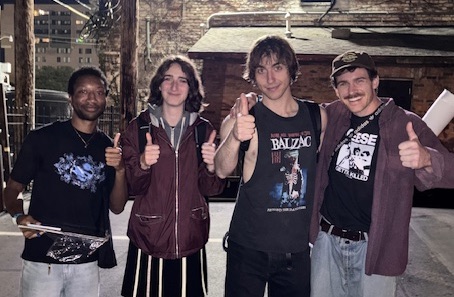
Jim’s Best Musical Experiences of the Year: I didn’t get out to see any concerts this year, but I did discover a lot of exciting new artists (well, new to me anyway), including Annika Kilkenny, Maya Hawke, Rob J Madin, Ray Lamontagne, Great Grandpa, Lily Allen, Birdtalker, Hurray for the Riff Raff and, my favorite: Geese. Their album 3D Country caught my attention at the suggestion of my son, Sam. Then came their current album, Getting Killed. Unlike their previous stuff, the band’s approach on this album feels entirely improvisational. Think Lift to Experience meets Van Morrison’s Astral Weeks with a dash of The Grateful Dead. Front man and lyricist Cameron Winter is a unique, compelling persona, confirmed by the fact that he was recently parodied on SNL. Sam and Bailey saw Geese live in Detroit a few months ago. And Sam was able to get a pic with the band after the concert, as you can see here.

Sports

Jim’s Favorite Sports Moments of the Year: 2025 was another year of “almosts” for my teams. While that meant disappointment for all of them in the end, the playoff run by the Indiana Pacers was a thrilling surprise. Since at the time of writing this the Indiana Hoosiers are #1 in the country and have a good shot at winning the college football national championship, I’ll call that my favorite sports “moment” of the year. Here’s to hoping that they don’t become my most disappointing sports memory of 2026! 

Amy’s Favorite Sports Moments of the Year: Over Thanksgiving, we had the joy of hosting my folks from Tennessee and the misery of watching every one of our teams lose. I’m not sure it counts as a sporting event, but cheering Sam and Andrew on during their first marathon this summer was a treat and seemed a rare instance in which the fans really do make a difference. Speaking of fandom, this year has seen a significant development for me as a sports fan. After years of existing in an NFL allegiance limbo, I have decided to become a Lions fan. I abandoned the Colts after a half-hearted effort to transfer my support from Peyton to Andrew Luck, only to be followed by a brief and lackluster commitment to the Carolina Panthers. Mainly, I want to have someone I can cheer on with Jim, and so the Lions it is.

Jim’s Most Disappointing Sports Moments of the Year: Amy’s notion that one can simply “decide” to become a fan of a team is interesting and worthy of analysis. But moving on . . .  My Detroit Lions getting bounced by the Washington Commanders in the first round of the NFL playoffs last January was probably the hardest loss of the year for me. The Indiana Pacers’ loss in game 7 of the NBA finals was disappointing, too, but like most people, I expected they’d lose, since Oklahoma City was so heavily favored and, okay, the better team. Still, it hurts to be that close and fall short.

Amy’s Most Painful Sports Moment of the Year: Hands down, it was my attendance of Andrew’s track meets this year. Who came up with this format?? One is expected to attend the entire 12-million-year-long meet, conveniently located seven hours from your house and bonus points for cold and rain while your child competes for approximately the wink of an eye, and the snacks are terrible. If any of my eventual grandchildren decide to run track, they will find me waiting in the car with an encouraging hug and a cup of hot chocolate.

Good Reads

Jim: Because of my work hosting the Kalos Center Podcast, I read more widely than usual this year. Oh, so many good books. I loved Anne Hendershott’s The Politics of Envy, which discusses the vice of envy as it manifests in many cultural contexts, from the academy to politics to social media. Robert Woodson’s Woodson Principles is an inspiring and practical summary of his proven approach to urban renewal, and Don Eberly and Ryan Streeter’s The Soul of Civil Society is a superb complement to this, providing many wise insights about civic engagement and democratic culture. I was deeply edified by John Perkins’ One Blood, perhaps the most biblically faithful work I’ve read dealing with race relations. And by “race”—following Perkins—I mean the human race). On the theological front, Michael Kruger’s Canon Revisited on the origin of the New Testament canon is the best volume I’ve read on the fascinating and sometimes bewildering topic of biblical canonicity. Dan Doriani’s Work: Its Purpose, Dignity, and Transformation is a superb introduction to a biblical theology of work. And I loved D. A. Carson’s Exegetical Fallacies, a book which I had never read in its entirety. Now I understand why so many scholars call this a “must read” for anyone interested in—and especially anyone who professionally does—biblical exegesis. My only real disappointment of the year was Christopher Watkin’s Biblical Critical Theory. While this book made good fodder for group discussion with the group of Columbus pastors I led as part of the Center for Christian Virtue’s Minnery Fellowship, I found many aspects of Watkin’s methodology to be disappointing.

Amy: Like Jim, I read a wide range of books this year. One of these was Birding to Change the World by Trish O’Kane. I couldn’t agree with this woman’s politics less, but I couldn’t stop reading the book and pondered it for weeks afterwards. My family is likely to write her hate mail for my new obsession with a bird-watching app I can’t get enough of. I loved The Hallmarked Man by Robert Galbraith, aka J.K. Rowling. She’s a literary genius who creates characters I can’t get enough of. What else can I say? Erik Larson’s The Splendid and the Vile is a very interesting look at Churchill leading up to and during the Battle of Britain. Allie Beth Stuckey’s Toxic Empathy is a succinct but powerful examination of virtue gone wrong. Lee Strobel’s Seeing the Supernatural is sobering and encouraging. And Harriet Beecher Stowe’s classic Uncle Tom’s Cabin and Garrett M. Graff’s The Only Plane in the Sky are my current reads in progress. Both of these are gripping portrayals of some of our country’s darkest days and the courageous efforts of many who lived through them.

Best 2025 Family Memories

Jim: Our annual Bell (Amy’s side of the family) summer reunion was a lot of fun again, this time spent at Donkey Town, an aptly named rental property in southern Indiana. Having the whole family together for Thanksgiving at our new home in Beaver Falls was a definite highlight, especially given the fact that our latest batch of eight Goldendoodle puppies were at peak cuteness and rambunctiousness at the time. By mid-December we delivered seven of them to their thrilled new owners, and we kept one—Pippet, named for the ill-fated dog in the film Jaws. Hopefully, our pup won’t meet such a gruesome end. We’ll be careful to avoid taking her to Amity Island during the summer months.

Amy: Empty-nesting with Jim as we settle into our new home in Pennsylvania has been a blast. While I was very sad to say good-bye to Michigan and a bit daunted by the prospect of starting over again, being reunited after a year of Jim splitting each week between his job in Ohio and our house in Michigan has been nothing but wonderful. Adjusting to the kids being gone has been hard, but I love seeing each of them forging their own paths in new settings and supporting them as adults rather than shepherding them as children. I also had the terrifyingly profound experience of delivering eight puppies by myself when our beloved Goldendoodle decided to give birth while Jim was out of town. And yes, Donkey Town was everything the name says and more.

New Year’s Resolutions

Amy: The upheaval of the last five years has served as an excuse for making less than stellar choices in the area of nutrition and exercise for me. Hoping to turn that around this year along with reading more and scrolling less.

Jim: I have committed to fasting (as a spiritual discipline) more consistently in 2026. It is amazing how much moral-spiritual power there is in this practice—sharpening the mind and improving self-control, which of course is a key fruit of the Spirit.

Happy 2026 everyone!

Before and After

Every life has a few before-and-after moments, some that are shared with others and some that are more personal. There are some before-and-afters that seem small but which have profoundly shaped my life. Before and after discovering the world of independent film. Before and after reading Jane Austen. Before and after realizing that food from other countries is better than chicken fingers.

Some moments are deeper and more life-changing. Before and after becoming serious about my Christian faith. Before and after becoming a wife and then a mom. Before and after 9/11, an experience many of us have had, in our own way, together. Wednesday was a day of two before-and-after moments. First, one moment, I was emailing a Hillsdale donor about the impact a single life can have on the world. The next, I was reading a message from Jim saying that Charlie Kirk had been shot. Then, I got on Twitter and inadvertently watched a video of Charlie being shot. One moment, I was waxing poetical about the price of liberty and the next I was watching someone paying the ultimate price. Before and after.

While we won’t know for days, months, or even years how Charlie’s death will reverberate throughout history, I know with certainty how it will echo through mine.

The fact of his death laid bare the stakes we are playing for in our current public discord. Labels of Republican and Democrat no longer really apply. You are now either on the side of life or the side of death. The contrast is too stark to ignore. This should be good news. Surely the cause of life is something most reasonable people can rally around. Aren’t the rights to “life, liberty and the pursuit of happiness,” all things that were just stolen from Charlie Kirk, things we all want to see secured for us all? We might disagree about how to pursue those things, or how to secure them for others, but good gravy, can’t we all say in unison, “I don’t want public figures being gunned down in public because they said something someone else disagrees with”?

So I resolved that I will hold out two hands from this day forward: the first will be a fist so tight that, to quote Ferris Bueller, if it held a lump of coal “in two weeks you would have a diamond.” In that fist, I will hold my unalienable rights, given by God to me and all my fellow citizens. And those rights will only be taken from me by force. I will not strike out with that fist, but I will cling to those rights for me, for my kids, and for all my fellow Americans to whom I will extend that second hand, in an attempt to bridge whatever divide separates us—in a desire to find a way to unite around values and principles we all hold dear. I will not join with those who seek to snatch my rights of life, freedom, and expression, but I will look for common ground wherever it can be found.

I said that I experienced two before-and-after moments on Wednesday. The first when I got the news and the second when I witnessed it with my own eyes. Despite initial news to the contrary, after seeing that video, I knew that Charlie Kirk was dead. Dead and yet . . . in all the horror of that moment, I felt as if I watched Charlie come alive. And that was the second “after.” Seeing that Charlie had not lost anything and he gained everything. My second resolve was to live in the light of that reality, that I have nothing to lose that anyone can take.

In times of discouragement or doubt, I can often be found, driving with the windows down, singing badly, but with great gusto, the Avett Brothers’ song “Ain’t No Man” the chorus of which is:

There ain’t no man can save me. There ain’t no man can enslave me. Ain’t no man or men that can change the shape my soul is in. There ain’t nobody here who can cause me pain or raise my fears. ‘Cause I got only love to share.

While I usually find this song quite uplifting and inspiring, it isn’t entirely true. There is a man who can save me. A man who died for the sake of the truth, and it wasn’t Charlie Kirk. It was the man who saved Charlie and me and anyone who will call upon His name. This is the man who was waiting for Charlie on Wednesday. He is waiting for us all. And this man, Jesus Christ, said of those who will trust Him, “I give them eternal life, and they will never perish, and no one will snatch them out of my hand.” May we all reach out, as Charlie did, and take that hand until He sees us home.

Connecting the Dots

Several years ago, the Spiegel family spread out across multiple countries and continents in an unprecedented flurry of world travel. Jim was in Greece, Bailey in Israel, and Sam was in Bolivia while Maggie, Andrew and I kept the home fires burning back in Indiana. Multiple times a day, I would pull up our family chat and check the location of my family members. I got a rush of joy and a feeling of connecting to my far-flung husband and offspring as I watched them move jerkily across the screen like a technological version of the Marauders Map from Harry Potter. I am not sure that I could solemnly swear I was up to no good, but I did develop a terrible addiction. I became a “location dot” addict.

Something about seeing this tiny dot, so far away, made me feel closer to them. When everyone came home, I started checking to see if they had left soccer practice and were on their way home for dinner. Or if they were cutting it close for curfew. Now that we are quasi-empty nesters, I sometimes wake up in the middle of the night and double-check that they have all made it home safe and sound. Ironically, my mom has started doing the same to me. I get texts from her saying, “Are you working from home today?” or “Traffic bad? Why are you stopped in the middle of the interstate?”

I recently learned this is a “thing.” When referring to my locations addiction at work, a male co-worker said, “What is it with women and dots?” Until he asked, I didn’t realize there was a thing with women and their dots. I thought it was just me.

If this is, in fact, a female phenomenon, I imagine there is more than one answer to that question. Typically, women are “running the show” when it comes to the family schedule, coordinating drop-offs and pick-ups, mealtimes and bedtimes, invites, and events. So it makes sense that they would look for a “leg up” in keeping all their family ducks in a row. I will confess to sending an innocently worded “Almost home?” which, given the location of the recipient, could also have read “Why haven’t you left yet?” Entirely a truthful reflection of my knowledge of their whereabouts? No. Highly effective way to both avoid an argument and get them to hightail it home? Heck yeah.

But beyond the convenience as a tool of the homemaker, I think there is something deeper, more visceral that calls to our maternal nature when we seek to “find my.” If you aren’t an Apple user, “Find My” is the app for Mac users to find their devices, items (e.g., air-tagged car keys, etc.) and people. Perhaps it is a stretch, but this app presents women with a temptation eerily similar to that first forbidden fruit of Eden. Tempted by Satan to disobey God, Eve was told that in doing so, “your eyes will be opened and you will be like God, knowing good and evil.” (Genesis 3:5) What Satan predicted came true, Eve’s eyes were opened and she did gain the knowledge of good and evil, but she, along with all the women that followed, sure paid the price. Her relationship with God, Adam, and all of nature, even her own body, was irrevocably altered for the worse. The blessing of womanhood, our beauty, frailty, and unique reproductive role was turned against us in God’s curse and its devastating consequences.

Now I am fairly certain that I do not fall under God’s judgment each time I reach out and check my family’s locations. And I seriously doubt they are struggling under the burden of His wrath because I like to know where they are. But I do think there is a clear connection between Eve’s failure and my own obsession, both are rooted in a lack of trust and a longing for control. Eve didn’t want to obey; she wanted to rule. I don’t just want to know; I want to control. Somehow, I have convinced myself, however subconsciously, that by knowing where they are, I am protecting those I love. As if by knowing where they are, I am watching over them as well. But I am not, because I am not God. Only He can protect. Only He is in control. He not only knows how to find us, He knows how to bring us home. I am just an observer of dots. He is the one connecting us all.

Weezer’s Albums Ranked Worst to Best

The first time I heard a Weezer song was in the Fall of 1994 at the university where I taught at the time. The song was “Undone” and while it was playing I asked a student, “Who is that band?” He sneered and said “Weezer” dismissively. The next day I went out and bought the album and was immediately amazed by what I heard. Over 30 years and hundreds of songs later, the band is still going strong and I love them more than ever. But many people still sneer at Weezer or at least don’t take them seriously. Why is this?

Several reasons, I believe. For starters, there is the band name, which is goofy. It originated with Rivers Cuomo’s father who would call his son “weezer” when Rivers was a little kid. Rivers liked the sound of it, so the rest is history. Another likely reason is that Weezer’s music is fun. Many of their songs are witty, satirical, or silly, and even on many serious songs there are funny turns of phrases that make us smile, all of which adds up to a band that has a generally campy aesthetic. This has been consistently reinforced by many of Weezer’s album covers, album titles, and their practice of repeatedly releasing self-titled albums, leaving it to journalists and fans to nickname them by their predominant colors. But perhaps the biggest reason why Weezer isn’t taken seriously is their unlikely front man. Shy, reclusive, self-deprecating, and well-educated, Rivers Cuomo is the archetypal anti-rockstar. Or, at least, his persona directly contradicts what we have learned to expect from a rock band’s central figure.

In light of all of this, those who are bound by rock culture categories will naturally be inclined to dismiss Weezer, perhaps seeing them as something of a jester in the court of modern rock. Add to this the fact that Rivers Cuomo doesn’t look cool. He looks more like an accountant or IT guy than anything we usually associate with rock stardom. Which is why it is so easy to miss the fact that he is a bona fide triple threat: A strong vocalist, a superb songwriter, and an excellent guitarist. Sadly, he is underrated in all three of those categories. But so it goes. Such must be the fate of anyone who so readily embraces the image of a dork.

Be all of that as it may, Weezer is a band to be taken seriously. Serious enough to be regarded as one of the great bands of all-time. This is despite the fact that their discography is wildly uneven in terms of quality, including several gems and some absolute stinkers. But, alas, every band whose career spans 30+ years has some bad albums to their discredit. What is fascinating about Weezer, however, is that, unlike most (all other?) bands, they have made their best music in their later years. Yet another way in which these guys don’t fit the mold.

Well, enough of this preamble. Let’s get down to business with my ranking of Weezer albums from “worst to first.” Unlike others who have done such rankings, I will lay out my assessment criteria so you’ll know the basis of my evaluations. I am using these four criteria: 1) musical quality, 2) lyrical quality (an often overlooked but critical aspect of song quality), 3) production quality, and 4) overall originality or innovation.

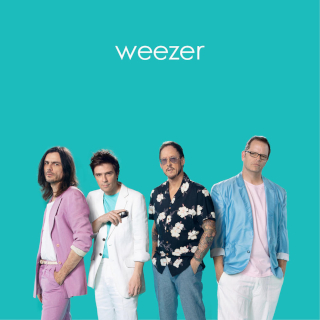
Weezer [The Teal Album] (2019) – Not rated due to incommensurability. In other words, as an album of covers it requires assessment by a somewhat different set of criteria than albums of original compositions. Among cover albums, I suppose I would arrive at a middling score of a C+ or B- (using a letter grade to help me resist any temptation to place it somewhere in the following ranking).

Now for the rest of the albums, I start from the worst and work upward. Brace yourself, Weezer fans; the first few may hurt. But hang in there. It gets better as you go!

Hurley (2010) – 1.6

In 2010 Weezer hit bottom with this misbegotten amalgam of bland melodies and trite lyrics. An album with literally no bright spots, it is as if they randomly selected a 10th grade kid from Podunk, USA and said “Here, write lyrics for 14 songs; you have one hour,” and this was the result. I can only think the band was somehow in need of money, or perhaps they did it on a dare and intentionally made a bad album. Whatever the explanation, Hurley goes down about as well as a diarrhea smoothie.

Death to False Metal (2010) – 2.7

To round out a year best forgotten in the history of Weezer, the band released this collection of re-recordings of leftover tracks from throughout their career. Biggest stinkers: “Everyone,” “Unbreak My Heart,” and the torturously wretched “Losing My Mind”—an excellent candidate not only for Weezer’s worst song but for the worst song of the decade by any artist. Even thinking about it puts me in a bad mood.

Make Believe (2005) – 3.5

Another poor effort overall, but with a few bright spots, including the opening track, “Beverly Hills,” which is Weezer’s satirical homage to Hollywood subculture. The next song, “Perfect Situation,” also works—a decent singalong. But from here it’s all downhill with non-stop lyrical drivel—clusters of cliches and lazy rhymes set forth in mostly somniferous packages with occasionally serviceable guitar lines. Make Believe is an album that makes you feel bad for the band—an aimless and uninspired recycling of mediocre ideas. The guys sound bored, though pretending otherwise. Make believe, indeed.

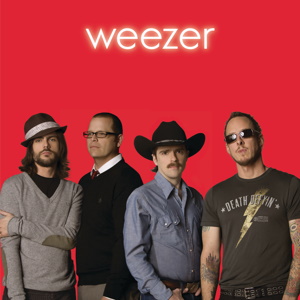
Weezer [The Red Album] (2008) – 5.5

A brief semi-recovery from the dreary aesthetic lowlands of Make Believe, the “Red album” has no cohesive identity but should be commended for its bold experimentation. It is Scott Shriner’s breakout album as a bassist and has some truly great moments. The album is replete with power chords, which is fine, but low on Rivers’ melodic lead work. The high points are clever power pop tunes like “Troublemaker” and “The Greatest Man that Ever Lived” (an epic tune, despite the talk-over, which is usually poison to a pop song but here adds to the comic effect). “Pork and Beans” is inane but it works somehow. The corny tribute “Heart Songs” kills the mood, and the three non-Cuomo songs in the middle of the album, though all earnest efforts, feel more like novelties and don’t strengthen the record.
Raditude (2009) – 6.1

Perhaps Weezer’s most critically panned album, I believe Ratitude is usually unfairly assessed. For all its quirks and strange turns, the album knows what it is: a party album. And an almost decent one at that. Weezer is goofing off here, and we love it. The production team, led by Jacknife Lee, temporarily rescues the band from its creative coma with crunchy textures, strong dynamics, and varied arrangements. Probably Weezer’s most danceable album. Definitely their best workout album. (Try it. I burn calories just listening while sitting still.) Most importantly, on this record Cuomo rediscovers some of his lyrical wit. The songwriting is generally helped by contributions from folks outside the band.

Weezer [The Green Album] (2001) – 6.4

Complicated by psychological wounds sustained from confused critical responses to Pinkerton, the “Green Album” was destined to be a safe, catchy retreat that takes no musical chances. It strives to be a high energy college rock album but is unwittingly marked by Cuomo’s melancholic disillusionment from unjust treatment of Pinkerton and, consequently, feels disingenuous. Despite good melodies and sweet harmonies throughout, there are too many vapid rhymes and lyrical cliches (including the most overused chorus lines on pop radio—e.g., “can’t you see,” “I’m lost without your love,” etc.) to be anything more than a mediocre album.

Van Weezer (2021) – 7.0

After a five year (and four album) hiatus from guitar-centric music, Weezer returned to their stylistic home base with this pure rocking collection. Sans the acoustic closer, the songs are uniformly metal-inspired, many of which showcase Cuomo’s superb lead guitar work. If the album title signals the fact that the album is a sort of tribute to the metal genre, the opening track, “Hero,” belies this: “. . . I tried to be a hero, but I was lying to myself. I walk alone.” It’s a powerful, and well-articulated confession in song. Something of which the young Rivers Cuomo seemed incapable. Besides “Hero,” however, there are just a few real highlights, including the Van Halen knock-off “The End of the Game” and the Ozzy-inspired “Blue Dream,” but, thanks to the guitar work and mostly decent lyrics, no real losers.

Pacific Daydream (2017) – 7.8

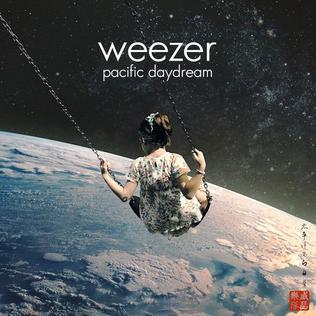
Though the opening song is named for an electric guitar, this album is decidedly not a guitar album. It’s more about dance grooves and synth pop. But it works. It has a consistent dreamy pop atmosphere. In that sense it is aptly titled. Lots of clever lines: “Everyone wants to be cooler than everyone else. It’s a hip-hop world, and we’re the furniture” (“Beach Boys”), “You’ve gotta choose between the Internet and me” (“QB Blitz”), and “You don’t have to die to go to heaven” (“Weekend Woman”). The album highlights are “Weekend Woman” and the closer, “Any Friend of Diane’s,” a danceable ditty featuring a classical guitar solo that, strangely, fits the song perfectly. An appropriate ending to an album that is surprising at many levels. Many critics complain that it’s a stylistic reach for the band. A reach, perhaps. But not out of their reach.

Pinkerton (1996) – 8.1

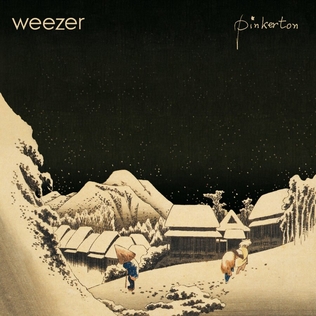
As a huge fan of the Blue Album, when Pinkerton was released, I was as surprised as anyone at the lo-fi turn the band took. But I was heartened by the clear indication the band refused to sell out. I also liked the raunchy keyboard sound that pervades the album and, of course, the lyrical vulnerability conveyed with raw vocals and minimal instrumental effects. It all showed these guys were for real and not just a pop rock outfit, daring to seriously address exasperation with the promiscuous rock star lifestyle (“Tired of Sex”) and sexual attraction to a minor (“Across the Sea”), among other difficult topics. So as negative reviews emerged, I was perplexed. But history has been kinder to the album, as its real quality has become evident to most music critics.

Maladroit (2002) – 8.3

Ironically titled given the depth and range of the album, Maladroit was a refreshing sign of musical growth, including the band’s first forays into heavy metal. It is also Pat Wilson’s breakout album on drums. His work on “Dope Nose,” “Keep Fishin’,” and “Burndt Jam” is especially strong. And the rhythmic turnarounds on “Fall Together” are super cool. Add to this some excellent lead guitar work and a lot of fun, nonsensical wordplay, and you have another distinct artistic advance for the band. The only significant low point is “December,” an unfortunately corny, if admittedly catchy, album closer. Cuomo sings, “Only trust can inspire soggy lungs to breathe fire.” Soggy lungs? Ohh-kay. An earnest but failed attempt at an inspiring rock anthem. In time, however, Weezer would succeed at this, and in big ways. Persistence pays!

Weezer [The Black Album] (2019) – 8.7

Horribly underestimated by most critics, in part no doubt due to a lack of interest or appreciation for lyrical quality, the “Black Album” was another step of maturation for Rivers Cuomo as a lyricist and the band as a whole for musical innovation. The album features more imaginative and creative humor, on a level with their “White Album” from three years earlier. Like that one, the “Black Album” is melodically and instrumentally rich and varied. There are lots of strong dance grooves to go with some excellent musical hooks. Also, some great lines, like: “the future’s so bright I gotta poke my eyes out” (“Can’t Knock the Hustle”), “life will make a beggar of rich men, bring the sovereign to his knees; and all the gold and all of the platinum melt like a chocolate sea” (The Prince Who Wanted Everything”), and “I don’t believe in mysticism, only in what science proves—like the sex appeal of your sick dance moves” (“Byzantine”).

Everything Will be Alright in the End (2014) – 9.3

Weezer’s “comeback album” after more than a decade of artistic doldrums. Was it Ocasek’s production? Cuomo’s brush with death? Creativity enhancing meditation? Who knows. Well-crafted songs, creative dynamics and arrangements, smart and sometimes introspective lyrics, inspired guitar solos, and ambitious vocals. The second half of the album might be the band’s strongest 6-song sequence, with two of the songs enhanced by female vocals. “The British are Coming” is one of Weezer’s very best—featuring a gorgeous melody, perfectly sung, and one of Cuomo’s most brilliant guitar solos, finished off with a killer outro. This is immediately followed by “Da Vinci”: Cuomo has written many songs about the unreachable, ineffably sublime girl, but this is his finest, complete with references to Stephen Hawking, the Rosetta Stone, the eponymous painter, and even the Gospel. All wrapped in an addictive cluster of melodies. Following this are the plaintive “Go Away,” featuring guest vocalist Bethany Cosentino, the genre-defying “Cleopatra,” and the touching “Foolish Father.” It all culminates in a soaring three-song suite to close the album. Wow.

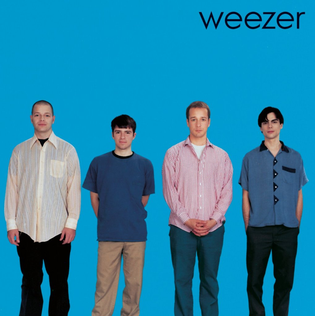
Weezer [The Blue Album] (1994) – 9.5

What can be said that hasn’t already been said about this legendary Weezer premier? One of the all-time great album debuts, full of raw, youthful, catch-us-if-you-can energy. Uncommonly clever, if sometimes nonsensical, compositions packaged in walls of fuzzy power chords, pierced with hooky guitar solos, street-level vocals, all sprinkled with occasional dissonant guitar lines. Masterful production by the late, great Ric Ocasek, the ideal musical mentor for these determined grunge and 80s rock-inspired rookies who had no idea what lay ahead of them as a major rock band.

Weezer [The White Album] (2016) – 9.7

The ultimate “beach album” (as inspired by the band’s manager, Jonathan Daniel), complete with fully realized lyrical concepts, fresh melodic innovations, and, yes, some beachy themes.  Modern rock just doesn’t get any better than this. The album completes Cuomo’s decade-long trek from lyrical sloth to a genuinely smart, insightful, and even quotable songsmith. “We’ve  got the wind in our sail like Darwin on the Beagle and Mendel experimenting with the pea” (“Wind in Our Sail”), “We’re as happy as a couple Hare Krishnas” (“Good Thing”), “She swam away and flexed her mermaid tail” (“Summer Elaine and Drunk Dori”), “You’re the sun that I’m orbiting. I burn in your heat. Supernova and cosmic dust, you spawn galaxies” (“Jacked Up”). And then there’s Weezer’s single greatest song: “Thank God for Girls”—a lyrical journey that warrants an essay’s worth of analysis by itself. The White Album is not just a batch of hook-laden, super-singable, beach-inspired tunes. It is, at last, a lyrical effort worthy of the Harvard University English major graduate that is Rivers Cuomo.

OK Human – 9.8

Who would have thought Weezer was capable of something this smart and sophisticated? A baroque-style, fully orchestrated set of strikingly thoughtful compositions. And no electric guitars! The rich musicality throughout creates the ideal pallet for Cuomo’s substantive and moving lyrical ventures that include immersions in literature (“Grapes of Wrath”) and music (“Playing My Piano”) to insightful social commentaries on digital devices (“Screens”) and the psychological effects of statistics (“Numbers”) to a touching personal reflection about feeling past one’s prime (“Bird with a Broken Wing”). All of these songs are sandwiched between the plaintive opener “All My Favorite Songs” and the hopeful roundelay “Here Comes the Rain,” which, like several other tracks on the album, subtly packs a profound lyrical message. The string and horn orchestration and dynamics are exquisite, featuring seemingly endless layers of melodies and instrumental textures that perfectly serve the songs. Producer Jake Sinclair deserves as much credit as anyone here. The very idea of Weezer doing an album like this might have once seemed comical. (Yes, there are plenty of funny moments, but only because of Cuomo’s clever wit.) The truth is it all feels very natural and, well, authentically human.
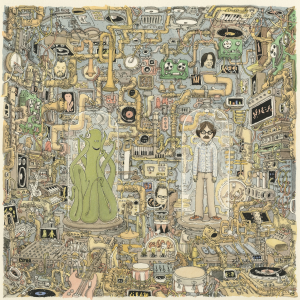
SZNZ (2022) – 9.9

Technically, the SZNZ EPs are four separate releases. But because of their unifying theme and the fact that all of the songs came out of the same recording sessions, I regard SZNS as a single, albeit time-released, work. Indeed, Weezer’s greatest work. A consistently innovative blend of progressive rock, orchestral rock, baroque, and chamber music, with dashes of heavy metal, all with consistently strong lyrics. This is Rivers Cuomo at his most literate, smart, witty, personal, and compelling. SZNZ is loaded with seemingly endless pockets of melodies. Nearly every song has some interesting dynamic, whether a surprising arrangement, a challenging syncopation, an unexpected modulation, or creative musical sidebar, and usually a unique intro and/or outro. But nothing forced or pretentious. Just persistent, often stunning musical innovation. Lyrically, nearly every song is thought-provoking, many profoundly so, as in the case of “Lawn Chair” (on the origin of human suffering) “What’s the Good of Being Good,” (why be moral?), and “Should She Stay or Should She Go” (on Adam’s dilemma if Eve had succumbed to temptation in the Garden of Eden but Adam did not: “I could kick her ass out, move on with my life. Or I could follow her into the night”). Some more lyrical doozies: “I wish I could say it all to you in iambic pentameter. I’d improvise high notes like Thelonious when he’s jammin’ it” (“Iambic Pentameter”), “Why was I ever born and why did God make me? He must’ve been high when he dropped me down here” (“Dark Enough to See the Stars”), and “Lollygag in the lee of a highland ’til my ghost takes flight. In the sky I’m as high as a titan feeding on the fire, shattering those iron bars through the sky like shooting stars” (“Wild at Heart”). In addition to all of this, Cuomo’s voice is in top form. Underrated as he is as a guitarist, he’s probably just as underrated as a vocalist—like many great rock singers, not because of technical excellence but because of the personal connection he achieves and his ability to consistently match his vocal dynamics and emotion to each song’s meaning and mood. Simply put, SZNZ is an extraordinary achievement. If Weezer never records again, they will have gone out at their artistic peak. Brilliantly done, guys.

They Aren’t Just Eating the Dogs and Cats

My mind is often a colliding mix of thoughts and ideas, swirling around in a chaotic soup inside my head. This morning while sitting on a balcony looking out at the Gulf Coast of Florida, Jung’s “devouring mother,” the words of the apostle Paul, and Springfield, Ohio all coalesced into what follows.

Sitting in God’s beautiful creation, I was reading 2 Timothy 3 which outlines “the last days” and what will characterize them. Some of the things listed, frankly, have characterized human civilization since Adam and Eve decided to have a snack from the wrong tree in Eden: lovers of self, lovers of money, proud, arrogant, abusive, disobedient to their parents, ungrateful, unholy, etc. What struck me, however, was the following: “…lovers of pleasure rather than lovers of God, having the appearance of godliness but denying its power. Avoid such people. For among them are those who creep into households and capture weak women, burdened with sins and led astray by various passions, always learning and never able to arrive at a knowledge of the truth” (vs. 4-7).

Could there be a more apt description of the current state of our nation and many in the evangelical church in America? Women, burdened by their guilt with no one calling them to repentance are not only being led astray but leading the charge to assault the most vulnerable among us, our children. Through the ungodly teachings of the woke, which has infiltrated our thoughts on parenting and motherhood, whichever side you land on politically, these women have been persuaded to follow harmful paths, carrying their children along with them into a desolate and dangerous land.

As a frequent consumer of Jordan Peterson’s lectures and podcast, I have become familiar with the concept of the devouring mother. The basic idea, as I understand it and will use it here, is of a mother who has come to depend so heavily on her children for her sense of self-worth that she consumes them with toxic “care” rather than nurturing them into healthy and self-sufficient individuals. Think the “bad” mom in the story of Solomon willing to divide the baby in 1 Kings 3 or Gothel of “Mother Knows Best” fame from Disney’s Tangled.

So, you ask, how does this relate to 2 Timothy’s weak women and the hellscape of morality in modern America? Here are a few current issues where I believe we can see the devouring mother doing battle against, rather than for, her children:

Abortion: I’m not sure I need to say more. Literally a mother killing her child in its most dependent and vulnerable state. What is different now is that women are no longer being told this is a final escape hatch only to be used in case of emergency. We are being encouraged to celebrate doing that which should be devastating even to contemplate. The aim of “rare and necessary” has become “common and discretionary.” Women are being told to rejoice and defend our ability to destroy life; we should instead be marveling and protecting our sacred and unique ability to procreate and carry life.

Trans rights: The response of many women to the onslaught of trans activism is a head-scratcher for me. Allowing their compassion for those they see as marginalized to blind them, these women have aligned themselves with one of the most misogynistic movements in history. I could take a whole post to outline this argument but standing against the mockery and erasure of womanhood, the predatory nature of “gender affirming care” providers who with little thought subject vulnerable young girls to life altering medical procedures, and the physical, emotional and psychological endangering of women in sports and public spaces should be a stance with whom any clear thinking woman agrees. There also seems to be a vampiristic segment of mothers who are encouraging their children to disavow their biological sex. Don’t believe me? Just look at the disproportionate number of celebrities with trans children. These real-life stage moms are exploiting their children’s confusion for social standing rather than helping them navigate their way, as beings created by God in His image, through the confusing waters of childhood and adolescence.

Social media: A non-partisan issue we should all be able to get behind is the harmful effects of social media on the mental health of women, especially young girls. This is an area where I feel most ashamed as a mother and child of God. I have allowed social media to eat away at my soul with envy and greed. I have used my kids as props for online clout building and failed to shelter them from the destructive repercussions of social media consumption. Ironically, it was my daughter who helped to lift the scales from my eyes when she asked me, years ago, to not post pictures of her online. It started me questioning why it was that I wanted to in the first place. I should have been the one protecting her rather than “selling” her image to prove I was worthy of others’ approval. This is to say nothing of the use of social media by predators or the devastating effect of social media on the mental health of children.

After the second presidential debate, I became obsessed with Donald Trump’s delivery of the line “They’re eating the dogs. They’re eating the cats. They’re eating the pets.” Whatever your opinion of the man, you have to admit, he knows how to coin a phrase and create a slew of chuckle-worthy memes. Though the truth of that claim might be in dispute, there is no disputing the perilous danger our children find themselves in, partially due to the cowardice of weak Christian women, myself included. The world is eating our children and our failure to stand up and protect our children, whatever the cost, is a stain on the sacred reputation of motherhood and we must do all we can to remove it. We must refrain from devouring them ourselves and protect them. We must teach them and one another how to live as God’s children. When reminded by Jim that our kids will one day cut the apron strings and fly the coop, I would often say, “Yes, but on the battlefield they always call for their mothers.” Ladies, our children are crying out to us from the battlefield and we must heed their call or they will perish alone.

The devouring mother will not be defeated through politics. This is not a power structure issue; it’s an issue of the heart. And in some ways that’s good news. When it comes to influencing the hearts and minds of our fellow believers, we the Church are in charge, not the political powers that be. Let us stand against the devouring mother and see her transformed into the nurturing, protector she was meant to be. Let us guard her heart with truth and wisdom, as we guard our own, and in doing so we guard her children from destruction.

Women’s Work

For years, when our children were small, Jim and I would share a hurried kiss and a “Have a good day” as he left for campus and I began a day at home with the kids. We used to joke that as we went our separate ways, each of us would look at the other with wistful pity and mutter under our breath “Sucker!”

Sure, there were days when, with a heart full of envy, I imagined him gathered around the water cooler (this was truly imagining because they didn’t have a water cooler) with his colleagues, discussing current events, quoting Plato and basking in the luxury of adult time. I am less sure that there were days where he sighed with regret as he pulled out of the driveway, watching the kids and I head out for a walk to the library or a playdate with friends. But for the most part, we were quite comfortable in our roles. He was the main breadwinner, supporting our family financially, not to mention influencing the minds of countless students and readers through his lectures, books, and articles. I was a stay-at-home mom, supporting our family through the various little tasks of home life, planning meals and doing laundry, not to mention educating our kids through elementary and middle school. We were, and still are, a great team, sharing the responsibilities and burdens, as well as the joys and rewards, of raising a family and pursuing a life of purpose and accomplishment.

I have no doubt that Jim, were he left on his own, would not have accomplished as much professionally without my support. Were he to have been a single dad, most of his time and energy would have gone into raising his kids, with little surplus for research and writing. I consider his accomplishments, all the publications, awards, etc., to be shared accomplishments in which I played a vital, though not equal, role. Obviously, he could have been a non-dad and had many more hours for his intellectual pursuits, but without the depth of experience, not to mention the love and encouragement, a family brings which I think has shaped him into a greater man than he would be otherwise.

Similarly, had I been a single mom I’m not sure the kids and I would have made it out of their formative years alive. Putting aside the obvious financial support Jim provided, allowing me the privilege of focusing on raising our family, his emotional and spiritual support was instrumental in my development as a wife, mother, and more generally as a human being. He is quick to credit me with influencing our kids to a greater degree than he has and that is perhaps somewhat true given the sheer quantity of time I was able to spend with them. But that time was made possible through the hours he spent lecturing, grading, doing research, and so on, not to mention the profound impact he has had on me as the spiritual head of our family. Our roles have shifted over the years, with the kids off to school, though I am still more focused on the daily routines of our family while he is focused on providing for our family through a myriad of ways.

This division of labor has worked, with varying degrees of success, for thousands of years. Men and women working together to nurture the next generation. Of course there have been abuses and imbalances of power, but the modern tendency to sneer at “women’s work” in the home as oppressive or demeaning is yet another symptom of the overall mass misogyny of our times. Nowhere is this more apparent in the current petition calling for the dismissal of Kansas City Chief’s player Harrison Butker over comments he made as the commencement speaker for Benedictine College which you may read in full here.

Those supporting this effort have called his comments “sexist, homophobic, anti-trans, anti-abortion and racist.” Well, they at least they got the anti-abortion part right. I won’t go into all their claims but would like to address their accusation that Butker’s remarks were sexist. Many

National Catholic Register

have pointed to the hypocrisy of those leading the charge for Butker’s firing given the numerous instances of domestic abuse and unlawful and violent behavior on the part of countless NFL players which has garnered little attention from the press or fans. What’s most interesting to me about the outcry on the part of some regarding Butker’s comments, however, is hypocrisy in another form.

They believe that a man celebrating the sacrifices and achievements of his wife is sexist. They believe that a woman’s value is to be found in her paycheck and not in her eternal investments in the lives of those entrusted to her care. In other words, they believe that women should be judged by the historically male dominated standards of career and, for lack of a better word, “worldly” accomplishments. Do they think that Butker holds his wife hostage at home? Do they think so little of women’s intellect that we are incapable of deciding for ourselves how we will divide our time and energy? Do they see so little value in the great joys of motherhood and homemaking? This seems the epitome of sexism!

In a world where men have decided that they can simply declare themselves women, invade our private spaces, steal our opportunities in sports and demand our acceptance of them as our equal, can we not at least acknowledge that being a modern woman can take many forms? Can we not celebrate those who work inside the home alongside those who choose to do so outside the home? In a world which demands acceptance of all manner of lifestyle choices, can we not allow for the rights of the traditional alongside the pantheon of “alternatives”?

The petition demanding his firing calls for unity rather than divisiveness. I couldn’t agree more; as our founding fathers put it, “Out of the many, one.” One body with many parts, all working together to function as a whole. This to me is the unity of purpose Harrison Butker wished to celebrate by praising his wife and all she has done from the sidelines to support and enable him and their family. In my eyes, she is playing the better game and winning. There are of course other roles that women can play, roles which hold great value and purpose. But I say Isabelle Butker is the star quarterback for her team. Perhaps you disagree but as for me, I’m a big fan!