
Review of Michael Austin’s God and Guns in America

The recent wave of violent protests has brought in its wake a surge of shootings in major U.S. cities and a spike in gun sales around the country. This prompts, yet again, questions about gun violence and gun rights in America. So Michael Austin’s God and Guns in America (Eerdmans, 2020) is a welcome book at this time. It is a work that provides much needed philosophical-theological analysis of many aspects of this complicated subject. Austin is critical of current American laws regarding gun ownership, but he is not in favor of abolishing the Second Amendment right to bear arms. Instead, he says, “the best way forward is to balance the right to bear arms with our rights to life, liberty, and the pursuit of happiness” (14). And he proceeds to explore multiple dimensions of the issue from a distinctly Christian perspective.

In the first chapter, Austin sets the stage for his book’s discussion by elucidating “Christian nationalism” and its problematic connection to the gun rights movement in America. He also highlights some key moments in the legal history of the Second Amendment Supreme Court decisions, most notably the relatively recent SCOTUS recognition of the individual rights view, which “interpret[s] the Second Amendment as protecting the individual right to own a gun” (12). Prior to this, Austin notes, the Court took a “collectivist view” of the Second Amendment, which maintains that the right to bear arms applies not to individual persons but to organized groups or communities. According to Austin, it was the 2008 District of Columbia v. Heller decision which was decisive in this regard.

Austin turns to a discussion of the nature of rights in chapter two, “The Right to Own a Gun.” He helpfully distinguishes between different kinds of rights, most notably legal rights and moral rights. Here he discusses what is likely the strongest foundation for gun rights: the right to life. As Austin puts it, “if a gun is needed for securing someone’s right to life, then we may be able to derive the right to own and use a gun from the right to life” (25). But he rightly points out that “if we accept the argument, it does not follow that the status quo regarding gun laws is acceptable.” Indeed, there must be some limits on the right to bear arms, just as there are limits on other rights. No one believes that individual citizens should be able to own and use missile launchers or nuclear bombs, but nearly everyone agrees that (reasonably qualified) citizens should be able to own and use pistols, shotguns, and rifles. So where does one draw the line? That is the key question in the gun control debate. In the end, says Austin, we need to balance gun rights with other rights and responsibilities, such as the right not to be shot and the moral obligation to use guns in self-defense only as a last resort. It is with this tension in view that Austin discusses stand-your-ground laws, noting a major problem with such laws—that “it is not always clear when one is truly in danger” (29). He concludes this pivotal chapter by granting that “there is a reasonable moral right to own a gun and that this right should be reflected in the law” but that “this is entirely consistent with the placement of legal limits on who can own and use a gun . . . for the purpose of defending life” (31). This is a reasonable, balanced, and popular general position on the issue, of course.

In chapter three, entitled “Guns, Lies, and Bad Arguments,” Austin reviews ten flawed arguments that are frequently used on either side of the gun debate in America. Some of these, such as that “violence is on the rise in America” and that “violence never solves anything” are just patently false. The homicide rate in America at the time of Austin’s writing was comparable to that in the 1950s. And violence sometimes does solve problems, as in the case of the defeat of the Axis powers in WWII and in many lesser known cases where would-be mass shooters have been taken out by security guards or lay people with guns. Other weak arguments make irrelevant points or false dichotomies, such as that “no law can stop all gun violence” and “it’s not a gun problem, it’s a heart problem.” Interestingly, Austin includes among the supposed “bad arguments” the claim that “guns protect us from tyranny and genocide.” While this is surely a common argument, which is no doubt wielded poorly by many people, it is not necessarily a poor argument in itself. But Austin is very critical of it.

Next, Austin discusses the various options for a Christian theology of violence. Here he discusses pacifism and just war theory, noting some of the major proponents of these views in the history of Christian thought. Pacifists generally eschew the use of violence and killing. Just war theorists affirm the justifiable use of violence and even killing, but they advocate a variety of delimiting criteria which must be met in order for violent actions to be morally acceptable. Rather than opting for one of these approaches, Austin advocates what he regards as a third option, which he calls “peace building.” Peace building, says Austin, “allows for violence only as a last resort and includes a very strong preference for nonviolence” (66). This is a curious distinction, since standard versions of just war theory explicitly recognize the exhausting of all peaceful alternatives as a necessary condition for justified violence. So, despite Austin’s suggestion that his view is an alternative to just war theory, it is actually a version of this view which places a particularly strong presumption in favor of non-violence.

Later in chapter 4, Austin discusses the appropriateness of congregants carrying firearms in corporate church worship services. It is a fascinating discussion of alternative perspectives which leads to a discussion in chapter 5 (“The Bible and a Gun”) of a variety of biblical arguments that have been made to justify the use of firearms as a means of self-defense (specifically, 1 Tim. 5:8; Heb. 10:32-34; and Luke 22:35-38). Austin concludes (rightly, I believe) that each of these biblical arguments is problematic, and he wisely comments at the end of the chapter that “many Christians seem to espouse views that are more reflective of one of the kingdoms of this world than of the kingdom of Jesus” (106).

In chapter 6 (“Christ, Character and a Colt-45”) Austin inquires into whether Jesus Christ would carry a gun. Austin concludes that he would not. Moreover, he maintains that “when [Jesus] told Peter to put the sword away, Jesus was disarming every Christian. . . .  They should lay down their lives, dying, not killing, in the name of Christ” (109). Austin’s argument is that such a posture of non-violence and even self-sacrifice is not only more reflective of Christ but is also a better fit for the development of other Christian virtues, including empathy and compassion. In this chapter, Austin wrestles with the challenge of the appropriateness of using guns in self-defense. He grants that this might sometimes be appropriate. But he concludes with this probing question which seems aimed at those who make the self-defense argument for the use of firearms: “Are we trusting in guns for things that we should be relying on God to grant us?” (119). This is challenging, to be sure. However, Austin avoids a likewise challenging counter: Should such reliance on God even extend to refusing to use guns to defend others (such as our own children) whose lives are being threatened? Just as in international contexts the duty to defend the innocent presents the greatest challenge to anti-war pacifism (e.g. defending Europe against the Nazis in WWII), the duty to protect the innocent and powerless in personal contexts presents the strongest challenge to personal pacifism. Presumably, this is one reason why Austin rejects outright pacifism.

In the book’s final chapter, “More Than Thoughts and Prayers,” Austin provides an extensive list of practical legal steps for dealing with our nation’s gun violence problem. These include universal background checks, restrictions regarding who can purchase a firearm, a federal “red flag” law, repealing “stand-your-ground” laws, a federal gun safety course, a ban on high-capacity magazines, and the exploration of assorted technological means of preventing the usability of stolen guns (e.g., the Bison Fingerprint Trigger Lock). Each of these proposals deserves extensive study, of course, but even this brief discussion is helpful. Austin concludes the book with a discussion of some relevant moral-theological considerations, appropriately reminding us that the more fundamental problem underlying gun violence is the human heart.

Michael Austin is to be commended for this much-needed work, which addresses one of the more divisive and complex issues of our time. He admirably strives for balance throughout the book and only occasionally fails in this aim (e.g. in his characterization “Christian nationalism” and his assessment of the anti-tyranny argument for gun rights). As is typical of Austin’s published works, his thinking is clear, organized, and insightful. I recommend this book to anyone who is interested in working out a theologically informed stance on gun rights and the problem of gun violence.
Covid-19, Churches, and Hardware Stores

Here is another point about the issue of government bans on Church worship services that in my two previous posts I have taken for granted but which I evidently need to make explicit. Do these bans really accomplish much given how little time each week is devoted to corporate worship? And does the small reduction of risk achieved by such bans compensate for the loss of religious freedom they entail?

Consider the fact that during the pandemic hardware stores like Lowe’s, Home Depot, and Menards are open every day of the week for 11-14 hours each day with thousands of customers coming and going throughout the week, while church services, which average just 75 people, are not permitted to meet for even one hour each week. When it comes to presenting a real danger to a community in terms of spreading the Covid-19 virus, the risks at a small church service are negligible compared to those at such large hardware stores. Yet the former are closed while the latter are bustling with activity all over the country.

One might argue that our society needs hardware stores to stay open far more than we need weekly worship services. First, such a response presupposes that corporate worship is not necessary for human flourishing, which begs the question of my original argument in my April 25 post. Secondly, even if one grants that corporate worship services are not as essential to human flourishing as home improvement supplies, then can we not at least grant that worship services are 1/60th as valuable as hardware stores? If so, then this would warrant permitting a 90-minute worship service once per week (to maintain the proper value ratio vis-à-vis a Lowe’s, Home Depot, or Menards, which are open 80+ hours per week).

So, fellow Christians, if you support the ban on church worship services while you’re supporting keeping open such hardware stores (and your shopping at one of these stores during the week is a tacit admission that you do), then this would seem to imply that you have a rather low view of the importance of corporate worship. For some of my critics, perhaps that is the real crux of our divergence on this issue, and that is fine. But for those who say they place a high value on corporate worship, something has to give here.

If you are really that concerned about human contact hours and the risk this presents regarding spreading the virus, then it would be far more efficient to create a stricter limit on the operating hours of retail stores. Therefore, I would suggest this modest compromise: Reduce the operating hours of large retail outlets by just one hour per day and lift the ban on corporate worship services. This would create a net reduction in the number of contact hours during which the virus can be spread while preserving the public good of corporate worship. Everybody okay with that?

More Thoughts on Government Bans of Worship Services

In his powerful plea to keep churches open during the Coronavirus pandemic, First Things editor R. R. Reno declared that “the massive shutdown of just about everything reflects the spirit of our age, which regards the prospect of death as the supreme evil to be avoided at all costs.” It is interesting to note, however, that in this country we don’t take this approach with any consistency.

Let’s suppose we could be confident that Covid-19 is, say, three or even five times as deadly as seasonal flu and thus likely to kill tens of thousands more Americans if the bans on corporate worship are lifted. Would this justify these mandates? Well, consider some other legal behaviors in this country which result in the deaths of large numbers of people. Every year approximately 40,000 Americans die in traffic accidents. This figure could be greatly reduced by simply lowering the speed limit 10 or 15 mph. But no one is clamoring for this in the interest of saving innocent lives. Why? Because we cherish our freedom to drive fast and arrive at our destinations quickly, even though doing so endangers ourselves as well as others.

Or consider the fact that there are approximately 480,000 deaths in the U.S. each year due to tobacco use. We have chosen to keep tobacco use legal despite this high mortality rate. Why? Again, because we cherish our freedom to use these products. Similar points can be made regarding the legality of alcohol and fatty foods in this country.

The point is that there are many activities which cost hundreds of thousands of American lives every year, but we keep them legal despite this because of the pleasure we get out them and simply because we cherish freedom. So why not permit religious worship services even if this costs more lives? Is not the freedom to engage in the corporate worship of God at least as valuable as the freedom to drive fast, smoke a cigarette, drink a beer, or eat a cheeseburger?

Here many Christians appeal to the alternative of on-line worship as a reasonable alternative to traditional corporate worship. Aside from the fact that on-line worship is an inherently poor substitute for worshiping in the physical presence of fellow believers, there is the further problem that two church sacraments—baptism and communion—cannot be administered via on-line services. For those church traditions where communion is done on a weekly basis and necessarily administered by an ordained minister, this is a serious loss. Even in those traditions where communion is administered monthly, as the corporate shutdowns continue, the loss is felt there as well. Perhaps your particular church tradition is not highly sacramental, but for tens of millions of Americans communion is a means of grace. This is vital spiritual nourishment, and government mandates are depriving them of this. That is a big deal, a serious blow to their relationship with God. This is another reason why I am surprised that more Christians aren’t challenging the shutdowns of corporate worship services.

Are Government Bans on Religious Worship Services Morally Appropriate?

During the Covid-19 pandemic many state governments across the country have banned church worship services. Some states have prohibited religious services altogether, while others have placed severe restrictions on the number of people who may gather to worship. While the constitutionality of this unprecedented move is certainly open to debate, one may question whether such bans are morally appropriate. Thus, we may ask, do religious practitioners have a moral obligation to abide by these mandates even if they are constitutional?

Here is an argument which challenges the moral appropriateness of the bans on religious services:

  1. Civil government has a moral duty to permit what is essential to human flourishing.
  2. The corporate worship of God is essential to human flourishing.
  3. Therefore, civil government mandates which forbid corporate worship are immoral.
  4. Christians do not have a duty to abide by immoral government mandates, particularly those which proscribe fundamental aspects of their religious practice.
  5. Therefore, Christians do not have a moral duty to abide by a government mandate to abstain from corporate worship.

What follows from the conclusion here is that congregants at local Christian churches don’t have an obligation to abide by the government mandate to avoid meeting for corporate worship.

This is a logically valid and, I believe, sound argument. That is, the conclusion follows from the premises and, it seems to me, each of the premises is true. I assume most Christians will grant the first and fourth premises, as would all Christian ethicists and theologians I know of. So that leaves the critic with the burden of demonstrating that the second premise is false. Presumably, many atheists and religious skeptics will reject this premise, in some cases because they believe that religious practice of any kind is actually harmful. That’s fine. My main audience with this argument is fellow religious practitioners.

But is the Covid-19 pandemic somehow serious enough to justify a qualification to the second premise and thus warrant certain bans on worship services? In other words, might this pandemic provide a special exception to the general truth that corporate worship services enhance human flourishing? This question naturally leads us into a discussion of a whole nest of issues that are epidemiological, immunological, microbiological, economic, and statistical in nature. This is why we must pay close attention to recent reports and scientific studies showing the mortality rate of the Coronavirus is much lower than previously thought. Several recent studies suggest that the mortality rate of this virus is comparable to that of common strains of flu. Other reports suggest a higher mortality rate than seasonal flu, though still no more than .08%. But is this difference significant enough to warrant a general ban on religious services? It’s difficult to see how it could be when other options are available. For example, why not rather encourage high risk people (i.e., the elderly and those with pre-existing medical problems) to stay at home while allowing others to resume practice of corporate worship?

If Covid-19 mortality rate data is inconclusive in terms of justifying general bans on corporate worship services, then the social harms caused by the shutdowns should give us further pause as regards warranting an exception to the general good of corporate worship. There is also the economic dimension of shutdowns, which some economists believe could trigger a depression. Furthermore, the shutdowns are taking a serious public mental health toll in our country.

All things considered, there is evidence to suggest that the shutdowns, not just of worship services but other sectors of society, are more harmful than helpful, potentially more devastating to American society than any flu virus could be. This creates strong supplemental support for my argument’s second premise, which given any reasonable Christian view of government already enjoys a strong presumption in its favor. Therefore, only very strong empirical evidence could nullify it’s applicability to our current situation. And that, I submit, no one has provided, despite what our political leaders and the American mainstream media have been telling us.

The Best and Worst of 2019

It’s been another exciting year, and we want to thank you all for reading and, if applicable, posting comments on our blog. Once again, we would like to close out the year with some summary remarks about good and bad stuff related to film, music, books, sports, food, and family.


Film Experiences

Jim:  Most of the new films I saw this year were good. The biggest loser of the year was Joker. Yes, Joaquin Phoenix’s acting is superb, but the script is poor, the violence is gratuitously graphic, and the plot has more holes than a cheese grater. Ugh. But a big thumbs up for the film Us, which is freaky scary but somehow fun at the same time. From here on out, I’ll be seeing every Jordan Peele film as a matter of principle. I enjoyed Star Wars: The Rise of Skywalker and consider it an appropriate finish to the nine-part saga that took four decades to complete. But the best film I saw this year was Rian Johnson’s Knives Out, a superbly written who-dunnit which isn’t impeded by its star-studded cast. A close runner-up was Once Upon a Time in Hollywood. Who can build a comical, poignant, and redemptive story around a despondent fading Hollywood star and the Manson murders in the ill-fated summer of 1969? Quentin Tarantino, that’s who.

Amy:  Several of my best movie experiences were with Jim this year so we have quite a bit of overlap with Star Wars: The Rise of Skywalker, though I wasn’t as keen on it as Jim, Knives Out, which I thought was great, and Once Upon a Time in Hollywood. I did have some small screen experiences that were quite good: Unbelievable, Great British Baking Show, The Good Place, and Monk were a few of the shows I enjoyed this year.


Food and Music

Amy’s Best Food Experiences of the Year:  Like most exceptionally delightful food experiences, the one that tops my list this year was a combination of delicious food, wonderful company, and conversation enjoyed in an ideal setting. Jim, some of the kids, and I were invited to join a graduating student and his family for dinner at Bluebeard in downtown Indianapolis. The food was simple but quirky in its creativity (roasted cauliflower and mint!) but one of my favorite parts of the evening was that rather than ordering individual meals, we got a few bites of everything. It was a night we won’t soon forget shared with people dear to our hearts. A close second was a breakfast shared with Sam while visiting him in Bolivia. A good croissant with homemade jam is hard to beat but throw in a son you haven’t seen in months who can’t wait to share with you all of his adventures and it’s a meal to remember.

Jim’s Best Musical Experiences of the Year:  This was an exciting year for new album releases by many of my favorite artists, including the Black Keys’ solid but not ground-breaking Let’s Rock, the Avett Brothers’ sometimes preachy Closer Than Together, and Taylor Swift’s Lover, which I reviewed on this blog a few months back. My favorite album of the year was Vampire Weekend’s Father of the Bride. It is a rich, thoughtful, and memorable record—perhaps the band’s best, which is saying a lot. But the highlight of the year for me was seeing Bob Dylan in concert at Ball State’s Emens Auditorium in November. This is the sixth time I’ve seen Dylan in concert, and I continue to be amazed at his endless rearrangements and reinventions of his songs. Incredible.


Sports

Jim’s Favorite Sports Moments of the Year:  I loved watching Drew Brees break two NFL records in the same game two weeks ago, as he eclipsed the all-time career touchdown passing mark and had the all-time highest completion percentage for a single game (29 for 30!) in the New Orleans Saints’ defeat of the Indianapolis Colts on Monday Night Football. Incredible.

Amy’s Favorite Sports Moments of the Year:  I watched Andrew play a lot of basketball this past winter which is always a treat, especially when there is fresh popcorn involved. He also treated me to Buffalo Wild Wings to watch the NFL playoffs which was a pleasure.

Jim’s Most Disappointing Sports Moments of the Year:  The New Orleans Saints were robbed of an NFC championship and Super Bowl appearance due to a blown pass interference call against the Los Angeles Rams last January (which did result in a league rule change, which I guess counts for something). This makes for the second consecutive year in which the Saints have finished their season in heartbreak fashion, as the 2017-18 season ended with the “Minneapolis Miracle.” Ugh. The retirement of Colts quarterback Andrew Luck was another disappointment, but hope was renewed by the emergence of Jacoby Brissett as a solid starting quarterback, only to be dashed by a rash of injuries to several Colts offensive players. Oh well.

Amy’s Most Painful Sports Moment of the Year: Seeing Joe Maddon dismissed as the Cubs manager was a knife to the heart. Andrew Luck’s retirement has seen my interest in the Colts fall to zero, having grandfathered him after Peyton.


Good Reads

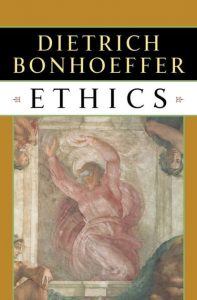
Jim:  As usual, most of my reading this year pertained either to classes I was teaching or publication projects I was working on. Regarding the latter, I read dozens of journal articles and book chapters on divine and human agency, in preparation for a book chapter I’ve nearly finished on George Berkeley’s view on the subject. As for new reads for classes, I enjoyed Dietrich Bonhoeffer’s Ethics, a work that is especially intriguing because it was written during the final years of Bonhoeffer’s life when he was wrestling with one of the most excruciating of moral issues, namely how to respond to a tyrannical national leader. Knowing that Bonhoeffer ultimately took part in a plot to kill the Nazi Führer casts a fascinating light on his discussion of the legitimacy of civil disobedience. My favorite book among those I read this year was James Waller’s Becoming Evil: How Ordinary People Commit Genocide and Mass Killing—a work that is as insightful as it is disturbing regarding human nature.

Amy:  My reading this year is clearly delineated into two eras: pre-working and post. In the first category are some of my favorite reads in quite some time: The Great Divorce by C.S. Lewis,  Life on the Mississippi by Mark Twain, The Goldfinch by Donna Tartt, The Unlikely Pilgrimage of Harold Fry by Rachel Joyce and Rules of Civility by Amor Towles and several by P. D. Wodehouse. The post-working era is dominated by books on sales and business which I would never have predicted enjoying but which have taught me a great deal, both professionally and personally. A few favorites have been: Sell or Be Sold and Be Obsessed or Be Average by Grant Cardone, The Entitlement Cure by John Townsend, and The Top Ten Mistakes Leaders Make by Hans Finzel. I also listened to the entire Harry Potter series while driving for work and loved every magic filled minute of it despite the fact that J. K. Rowling uses the word “sniggered” entirely too often.


Best 2019 Family Memories

Jim:  Like his older brother, Bailey, did a few years ago, our son Sam spent the Spring semester living in La Paz, Bolivia attending Highlands International School. It was fun to witness his personal development through this experience and especially thrilling to hear him speak Spanish fluently upon his return in June. Then this past Fall semester we hosted a friend that Sam made during his time in Bolivia. It was fun knowing that the experience here in the U.S. for Sam’s friend would be as life-changing as was Sam’s experience in Bolivia.

Amy: I got to visit Sam in Bolivia this spring which was a thrill. Being gone so much for work this fall has honestly made any time with the kids feel like a gift, except when I’m tired and they are being annoying—ha ha. Our Christmas felt special with Bailey home from college and watching the kids connect with one another more as adults than kids; their shared humor, conflicting opinions, and overall weather-beaten affection is something to behold.


Best Kids’ Quotes of the Year

As usual, most of the best quotes of the year come from Maggie:

  • Maggie: “What’s the difference between a Presbyterian and a normal person?”
  • Bailey: “I could spice up cardboard and make it taste better than anything you’ve ever eaten.”
  • Maggie: “If you don’t do anything wrong, then you won’t get caught doing it.”
  • Maggie (Regarding my giving her some spending money): “Dad, you’re like a young male grandma.”
  • Maggie (after my sugar-holic daughter hypocritically lectured me about the sugar content in a food product I was buying): “I don’t obey the rules, but I know the rules.”


New Year’s Resolutions

Amy:  To continue to introduce more discipline into my time management. To figure out how to keep up my love of reading and cooking despite working full-time. To be ambitious in my Bible reading plan for this year.

Jim:  To pray more, to fast more, and to remember that this world and our time in it is, as Kanye West puts it, a “God dream.”


Happy 2020 everyone!

Bonhoeffer on Telling the Truth

In the final years of his life, Dietrich Bonhoeffer worked on a book on ethics and was never completed, though he made substantial progress on it. It was eventually published posthumously. In his Ethics, Bonhoeffer discusses the question, what is meant by telling the truth? And in the course of addressing this question, he also considers what it means to lie.

Bonhoeffer begins by recognizing that there is a general demand for truthfulness, but he notes that the context of relations is crucial for understanding the demand. Thus, for example, a parent’s claim on a child is different than a child’s claim on the parent when it comes to truthfulness. There are many things that an adult understands about a given subjects that simply cannot be comprehended by a child, and this has implications for just how much a parent is duty-bound to communicate to a child.

The truthfulness we owe God is both truth in principle and concrete, since God has placed us in real, concrete relations with one another. And this is a deeply moral matter because “the ethical cannot be detached from reality,” and when we speak we express an account of reality. Therefore, Bonhoeffer says,

the real is to be expressed in words. That is what constitutes truthful speech. Every word I utter is subject to the requirement that it shall be true. Quite apart from the veracity of its contents, the relation between myself and another man which is expressed in it is in itself either true or untrue. I speak flatteringly or presumptuously or hypocritically without uttering a material untruth; yet my words are nevertheless untrue, because I am disrupting and destroying the reality of the relationship between man and wife, superior and subordinate, etc. An individual utterance is always part of a total reality which seeks expression in this utterance. If my utterance is to be truthful it must in each case be different according to whom I am addressing, who is questioning me, and what I am speaking about (360).

Significantly, then, Bonhoeffer essentially affirms what is known as the correspondence theory of truth. On this view, dating back to the ancient Greeks, a statement is true if and only if what it asserts corresponds to some actual or “real” state of affairs.

Context is crucial when it comes to truthful speech, Bonhoeffer tells us. “Every utterance or word lives and has its home in a particular environment” (361). This is why it is very difficult to say what actually constitutes a lie. “The usual definition of the lie as a conscious discrepancy between thought and speech is completely inadequate. This would include, for example, even the most harmless April fool joke” (363). So, Bonhoeffer says, “joking has nothing whatever to do with lying, and the two must not be reduced to a common denominator.”

Nor can we define lying as “deliberate deception of another man to his detriment,” since this would imply that even the deception of an enemy in war is wrong. Bonhoeffer concludes that “the lie cannot be defined in formal terms as a discrepancy between thought and speech” (364). In fact, he says, such discrepancy is not even a necessary condition for lying, since one may be quite truthful when intentionally misleading someone, such as through omissions or ambiguity.

The truth about lying, says Bonhoeffer, exists “at a far deeper level than in the discrepancy between thought and speech.” The essence of lying consists in consciously denying God’s reality, whether through speaking or otherwise. Note that this follows directly from Bonhoeffer’s correspondence theory of truth and Bonhoeffer’s conviction that what is real is just is what God has made actual—the world which God has “spoken” into existence (cf. Gen. 1).

It further follows, then, that a “lie is a contradiction of the word of God, which God has spoken in Christ, and upon which creation is founded. Consequently, the lie is the denial, the negation, and the conscious and deliberate destruction of the reality which is created by God and which consists in God, no matter whether this purpose is achieved by speech or by silence.”

Again, “God’s reality” is the world which God “spoke” into existence. The world is, as it were, God’s speech, his public word. So when we deny, negate, or misrepresent reality, we contradict God’s words. To lie is to directly challenge the Lord, perhaps even to implicitly declare oneself to be God. Here we see why lying is such a serious thing and why the trait of being a consistent truth-teller is a significant moral virtue.

Bonhoeffer’s account also helps us to understand a few things about the biblical account of Satan, the ultimate challenger of God and his reality. In Scripture we learn that Satan is fundamentally a liar and called by Jesus “the father of lies.” Without a proper understanding of the significance of truth and truth-telling, the moniker of “liar” might appear to be a random or even petty vice with which to identify the arch enemy of God. However, when we understand that truth is God’s reality and that a lie constitutes a fundamental challenge to God, we recognize how appropriate this description is, as is the very name of Satan’s, which means “deceiver.”

Bonhoeffer’s account also highlights the significance of Jesus statement, “I am the way and the truth and the life” (Jn. 14:6). We learn in John’s gospel that all things were made through Christ (Jn. 1:3), and the Apostle Paul tells us that all things were created in Christ, through Christ, and for Christ (Col. 1:16) and that “in him all things hold together” (Col. 1:17). In short, Christ is the ontological ground of all that is. So we might even say that he essentially is reality. And this is to say, on Bonhoeffer’s account of truth, Christ literally is truth.

These insights place a premium on truth-telling that is seldom acknowledged, perhaps because lying is so common. Evidently, we are natural born liars, and most people lie on a regular basis. In one sense, this shouldn’t shock us, since Scripture tells us that we are all innately moral rebels. “All have sinned and fall short of the glory of God” (Rom. 3:23), and we challenge God every time we sin, whether by lying or in other ways. But in another sense, the essentially Satanic nature of lying should shock us and even terrify us about our natural moral condition. Whenever we lie, after all, we are essentially doing Satanic work.

These points should reinforce our commitment to honesty, sincerity, and truth-telling. While there are certainly plenty of appropriate contexts for discrepancies between belief and speech, such as when joking, as well as when playfully deceiving in non-verbal ways (e.g., in athletic contests and surprise parties), genuine lies are an affront to the Lord and should not be a part of our lives.

Civil Public Discourse and the Virtue of Open-mindedness


This past weekend I gave a presentation at the Association for Practical and Professional Ethics in Chicago.  My presentation was entitled “Civil Public Discourse and the Virtue of Open-mindedness.”  Here I will summarize the content of my talk.

Today there is a lot of anger and division about political and moral issues.  How do we demonstrate civil discourse in the midst of this? Our natural responses to conflict are essentially fight or flight.  We either withdraw from those with whom we disagree or we challenge them to show them where they are wrong.  But neither approach is constructive because withdrawal kills dialogue and challenge makes people defensive.  In neither case is civil discourse achieved.

I argue that the proper alternative is open-minded engagement.  I affirm Jason Baehr’s definition of open-mindedness as a willingness to transcend one’s default cognitive standpoint on an issue (The Inquiring Mind, Oxford, 2011).  A person who is open-minded in this sense displays a readiness to take seriously alternative perspectives and a willingness to welcome new evidence that could overturn their current beliefs.  Although people generally admire those who display such open-mindedness, it is difficult to do so because our current belief set is comfortable, open-mindedness challenges our intellectual pride, and open-mindedness requires moral work, specifically development and application of the virtues of self-control and patience.

Obviously, we should not be open-minded about everything (e.g., being open to the idea that my spouse is actually an alien or that rape is morally acceptable).  We should be foreclosed about many things.  But regarding issues where reasonable people disagree, we should strive to keep an open mind.  I argue that in such cases open-mindedness is an intellectual duty.  This is because each of us has many false beliefs, as evident in the fact that we all disagree with many people who are at least as intelligent and responsible as we are.  Other factors also guarantee that I have false beliefs about various issues, including the fallibility of my reasoning skills and perceptual abilities, as well as the fact that I don’t have the time or ability to thoroughly vet all of my beliefs.

Some other reasons to be open-minded are that this trait is critical for learning, and open-mindedness follows from the Golden Rule: I want others to seriously consider my truth claims and welcome the evidence I present to them, so I should do the same regarding others’ truth claims and arguments.

So how does one become more open-minded?  Here are three practical tips for transcending one’s default perspectives: (1) intentionally build your moral imagination, (2) practice active listening—resolve to speak less than your conversation partner, and (3) be Socratic—develop the art of questioning (which can also expose problems in others’ views).

Finally, it is important to remember that open-mindedness is effective for changing others’ minds.  This is because open-mindedness is disarming; it prevents others from becoming defensive.  It can also be contagious.  If you display an open mind, then your neighbor is more likely to do so also.  But even where minds don’t change, open-mindedness improves civility because it makes us less defensive, makes us feel less threatened by those with whom we disagree, and enhances our capacity for calm and patient dialogue.

The Ten Cultural Commandments of 21st Century America

American Citizens,

A little more than 130 years ago, through my pugnacious oracle, Friedrich Nietzsche, I announced the death of God in the West. In recent times, this prophecy has finally been realized in America, though, of course, not in the form of widespread disbelief in the Judeo-Christian deity. Alas, verbal affirmations of the deity’s existence abound as always. Rather, the death of God has occurred in the form of practical rejection of the moral standards of this being. For years, many have labored to serve this culture’s new lord—the self—though without the benefit of official guidelines for conduct. Therefore, at last, I now proclaim to you a new and definitive set of standards—a “transvaluation of all values,” one might say—which, through the faithful assistance of Hollywood, major news networks, and, especially, American institutions of higher learning, has now fully triumphed. Here, then, for your thoughtful consideration and lifelong devotion, are the Ten Cultural Commandments of 21st Century America:

  1. Thou shalt love thy own moral autonomy with all thy heart and reject all notions of external or absolute moral authority, for thou art entitled to all things of thy own choosing.
  2. Thou shalt remember that humans are merely highly evolved animals and thus have no fixed essence or nature.
  3. Thou shalt honor empirical science above all other means of knowledge acquisition and therefore render due suspicion on all truth claims related to value, design, or purpose in nature.
  4. Thou shalt not regard any metanarrative as exclusively true or even as more true than its alternatives, except to the extent that such may reinforce belief in the relativity of all values.
  5. Thou shalt respect every truth claim as valid if it is supported by appeal to one’s identity as part of any classifiable group, except, of course, that of white, heterosexual, Anglo-Saxon males.
  6. Thou shalt accept all sexual choices and family arrangements as morally legitimate so long as they are freely and voluntarily made.
  7. Thou shalt declare any expression (spoken or written) to be offensive if it makes you or anyone anywhere at any time the least bit uncomfortable, regardless of any consideration of context, nuance, or factual content.
  8. Thou shalt regard all human problems and failures as arising from flawed social arrangements rather than as resulting from an innate moral defect in the human species.
  9. Thou shalt prioritize personal feelings and experiences over logic and reason in all public discussions regardless of the subject matter.
  10. Thou shalt determine thy own identity and meaning in life, so long as when this is worked out in practice thou dost not transgress any of the above commandments.

Americans, this is the way to self-fulfillment. Fix these words in your hearts and minds, tattoo them on your upper arms, and create abbreviations of them for your vanity license plates.

Now go thou into the world, teaching others to follow these commandments, while ridiculing and destroying the careers of those who fail to respect them.

Triumphally yours,

Zarathustra

New Publication on the Ethics of Virtual Reality Technology

Last week an article of mine, entitled “The Ethics of Virtual Reality Technology: Social Hazards and Public Policy Recommendations,” was published in the journal Science and Engineering Ethics. In the article I discuss a number of issues related to virtual reality technology that are of serious moral concern and which, I argue, warrant the implementation of industry regulations. Here is the article abstract:

This article explores four major areas of moral concern regarding virtual reality (VR) technologies. First, VR poses potential mental health risks, including Depersonalization/Derealization Disorder. Second, VR technology raises serious concerns related to personal neglect of users’ own actual bodies and real physical environments. Third, VR technologies may be used to record personal data which could be deployed in ways that threaten personal privacy and present a danger related to manipulation of users’ beliefs, emotions, and behaviors. Finally, there are other moral and social risks associated with the way VR blurs the distinction between the real and illusory. These concerns regarding VR naturally raise questions about public policy. The article makes several recommendations for legal regulations of VR that together address each of the above concerns. It is argued that these regulations would not seriously threaten personal liberty but rather would protect and enhance the autonomy of VR consumers.

As for the regulations I recommend in the article, they include (1) a standardized rating system for VR technologies, (2) minimum age requirements for some VR products, (3) informational and warning labels, (4) public disclosure mandates, and, depending upon the degree to which VR technology merges with social networks, (5) “no share” laws regarding user data gleaned by VR companies.

To this day I have yet to experience VR technology first hand. This avoidance was not entirely intentional, but now I am pleased that I finished this research project before doing so, as I was somewhat wary of how the experience might bias my thinking about the subject. I am happy to say that all of the arguments and recommendations I make in the piece are based entirely on the research data I explored. But now that the article is published, I’m eager to do give VR a try. Anyone out there want to invite me to join them for a trip to a virtual world? I’m ready to don a headset and make the plunge!